
The complete guide
Choosing a Travel Lock Box for Small Valuables
A phone, wallet and a few pieces of jewellery can be awkward to keep track of when you are away from home. Loose items get spread across bags, bedside tables and pockets. A travel lock box gives them one place to go, with a lock between the contents and casual access.
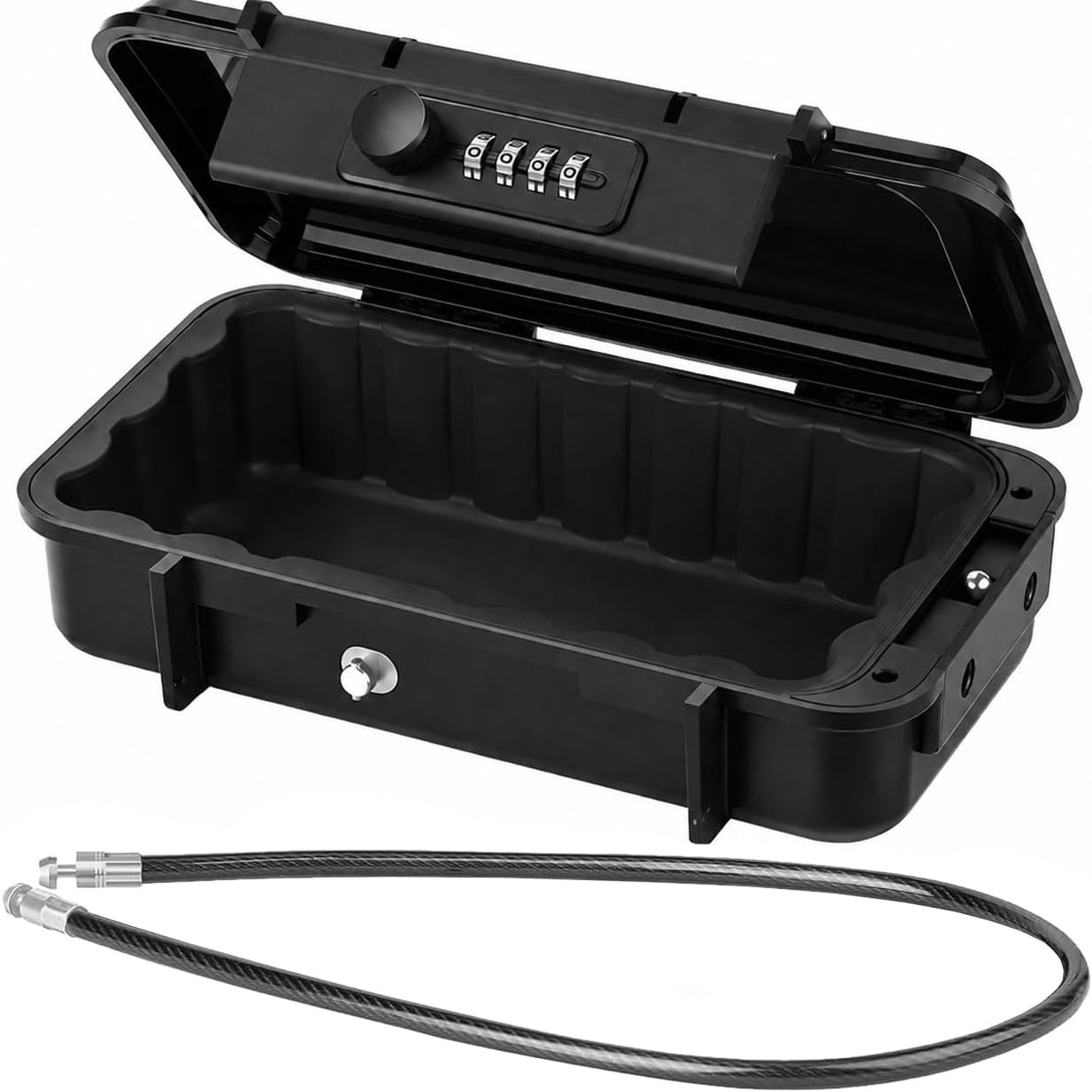
This model combines a four-digit mechanical code lock with a removable cable. It is small enough to consider for travel, but choosing well means looking beyond the lock alone. Fit, carrying weight and the limits of the protection all matter.
What a portable lock box can do
A portable combination safe gives you a dedicated space for small belongings. Instead of putting each item in a different bag pocket, you can keep them together and close the lid. That can make packing and checking your essentials simpler.
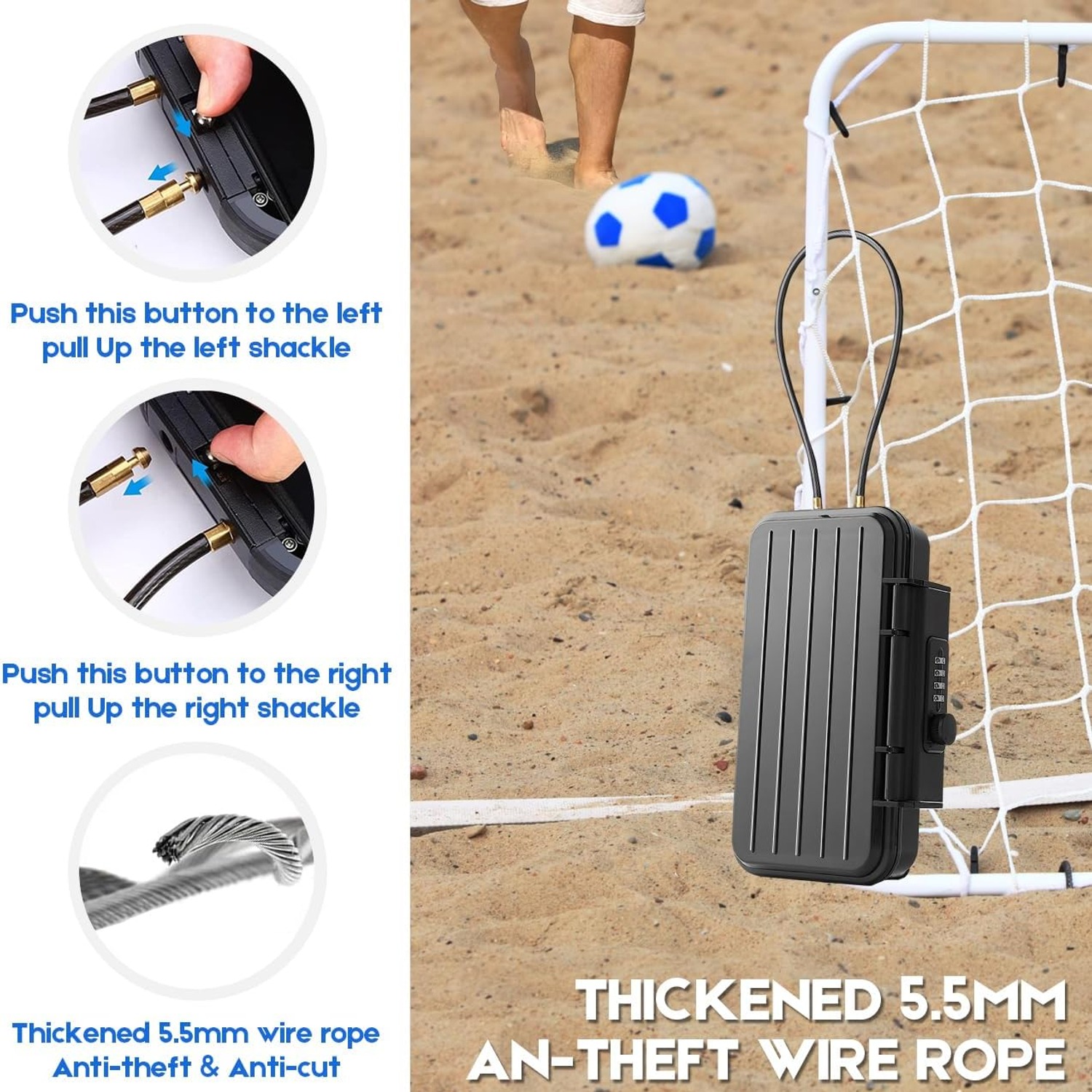
The cable adds an attachment option. When connected to a suitable fixed point, it means the case is not simply sitting loose. The quality of that setup depends on the anchor as well as the cable and case.
Keep your expectations realistic. No burglary rating or security certification is supplied for this model. It should not be treated as a substitute for a fixed, security-rated safe, particularly for items that would be costly or difficult to replace.
Understand the combination lock
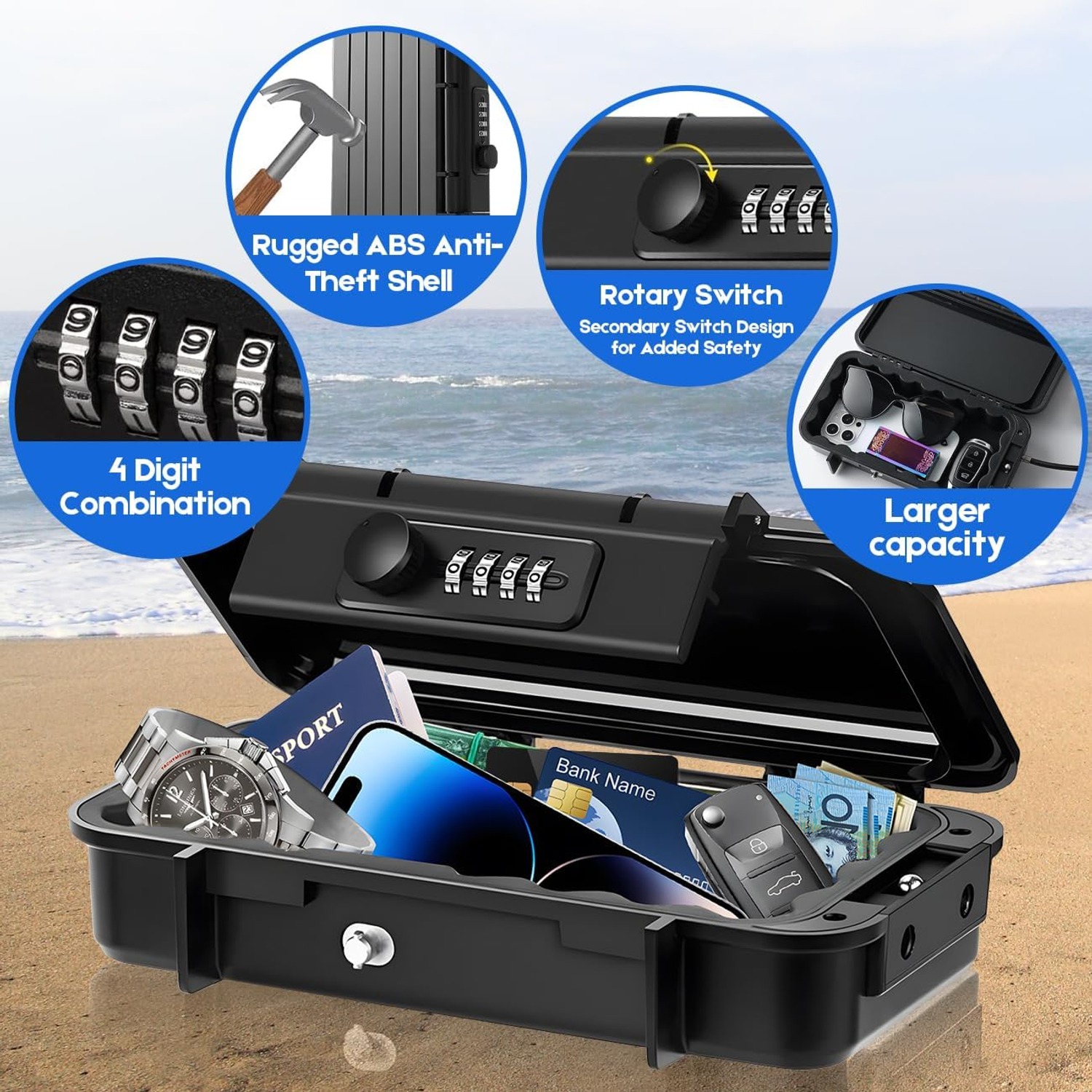
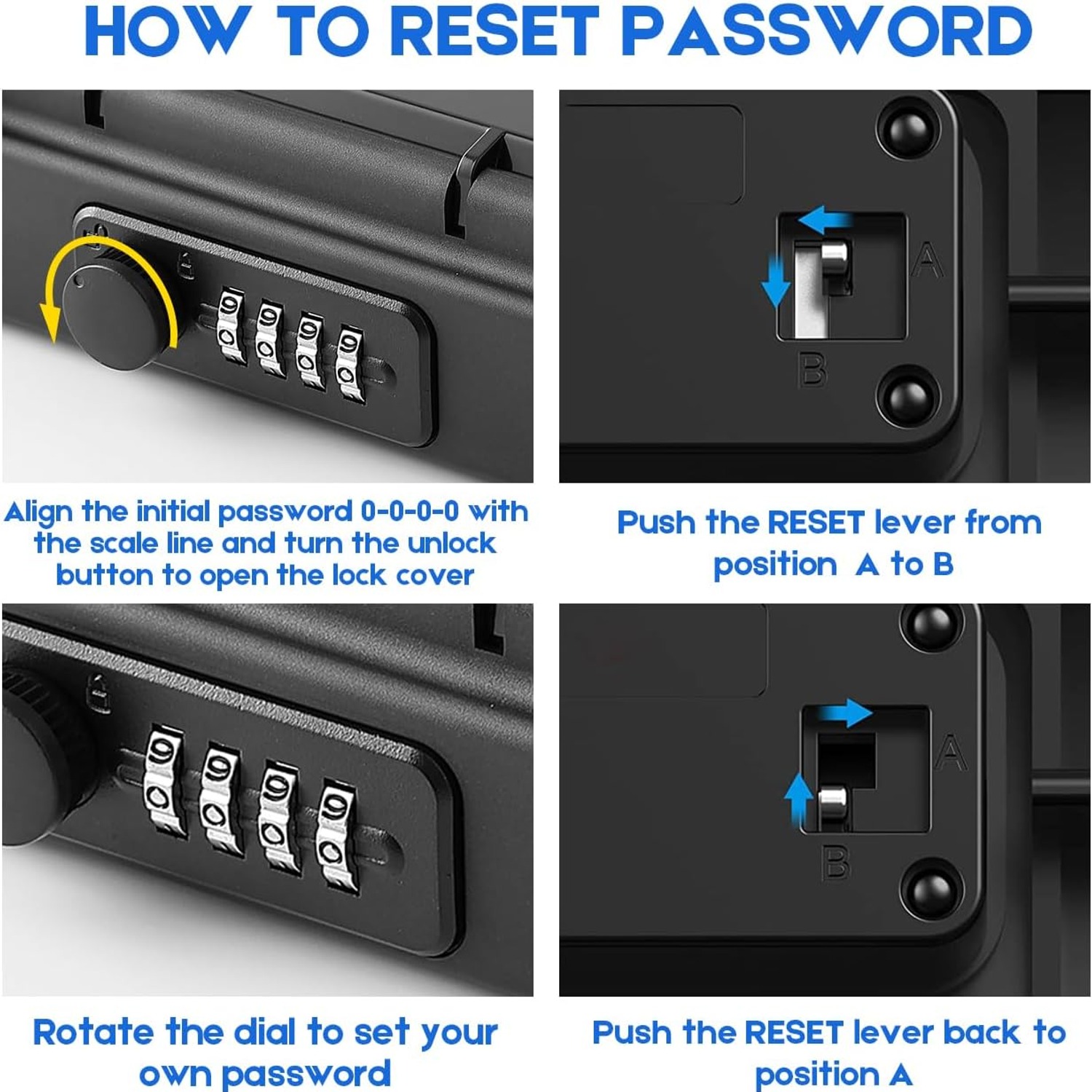
The source describes a mechanical four-digit lock with a code you can change. The initial combination is listed as 0000. Use the instructions supplied with the actual case to check the starting code and the reset steps.
Set it up before your first trip, while you have time to work carefully. Choose a code that is not easy for someone else to guess. Keep a secure record somewhere separate from the case, rather than inside it.
Test the new combination several times with the lid open. Then check normal closing and opening with the box empty. The reference copy warns that access may not be possible if you forget the code, and it does not describe a recovery method.
One supplier field mentions key control, while the main lock description and operating guidance describe a combination. No key is listed as included. If backup key access is essential, confirm that point before buying.
Check the space your belongings need
Start with the items you actually plan to carry. Measure your phone with its cover on, not just the bare device. Check a wallet while it is filled, since cards and folded notes can add noticeable thickness.
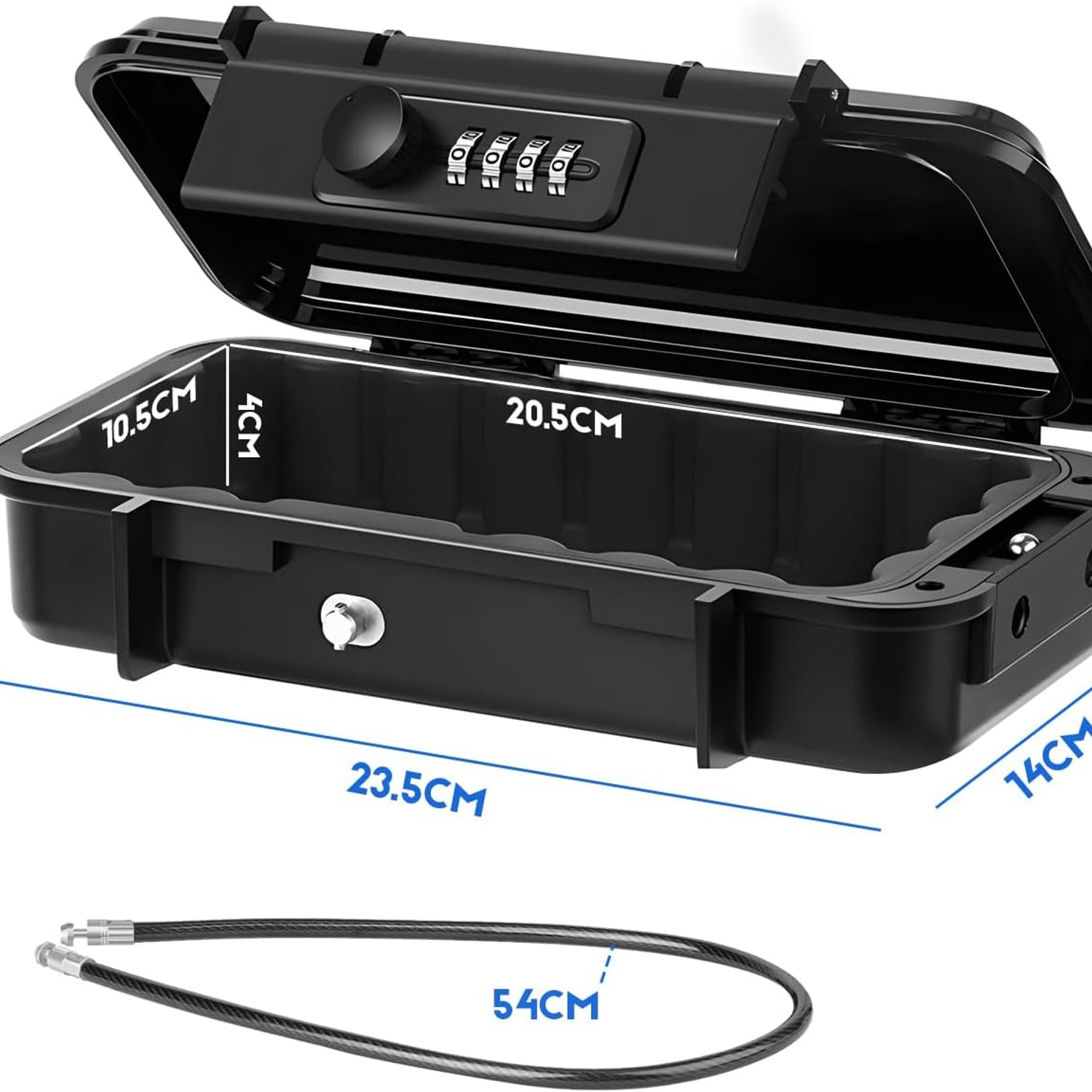
The product details list an outside size of 14 x 23.5 x 6 cm. Reference copy gives a slightly different exterior size of 24 x 14 x 5.8 cm. That difference matters if you want the case to fit a shallow drawer or a close-fitting luggage pocket.
Reference interior dimensions are 20.5 x 10.5 x 4 cm, and the listed capacity is 0.86 L. Treat those as planning figures rather than a promise that a particular collection of items will fit. Confirm usable space if your device is close to a limit.
A wallet storage box needs spare room around the contents. You should not have to press down on a phone or push jewellery against the lid to close it. Try arranging your everyday items within a measured outline before ordering.
Think through the cable attachment
The removable cable is listed at 54 cm long. That gives you a useful measurement to check at home, rather than guessing whether it will reach around a chosen anchor.
Consider the whole route the cable must take. Part of its length may be needed to pass around the anchor and connect back to the case. A point that looks close can still be awkward if the cable must bend around a broad support.
For a hotel room lock box, inspect the proposed attachment point rather than assuming any furniture leg will work. A loose, removable or open-ended support may not provide the attachment you expect.
Follow the supplied connection instructions and check that the cable is properly secured. Never use the cable as a reason to leave valuable items unattended in a setting you would otherwise avoid.
Match the case to your routine
This case weighs 750 g before you add anything inside. That may suit luggage or a car journey, but it deserves thought if you are travelling with a light day bag. Check the packed weight, not just the empty case.
A dorm room safe may stay in one place most of the time. In that setting, storage space and a suitable anchor may matter more than carrying weight. A frequent traveller may put more value on how neatly the case packs among clothing and other essentials.
Cars are among the listed uses, but the record gives no temperature limits. Consider what you plan to store, especially if it includes a phone or other heat-sensitive belongings. A lockable case does not remove the risks of leaving valuables in a parked vehicle.
Read water-protection claims carefully
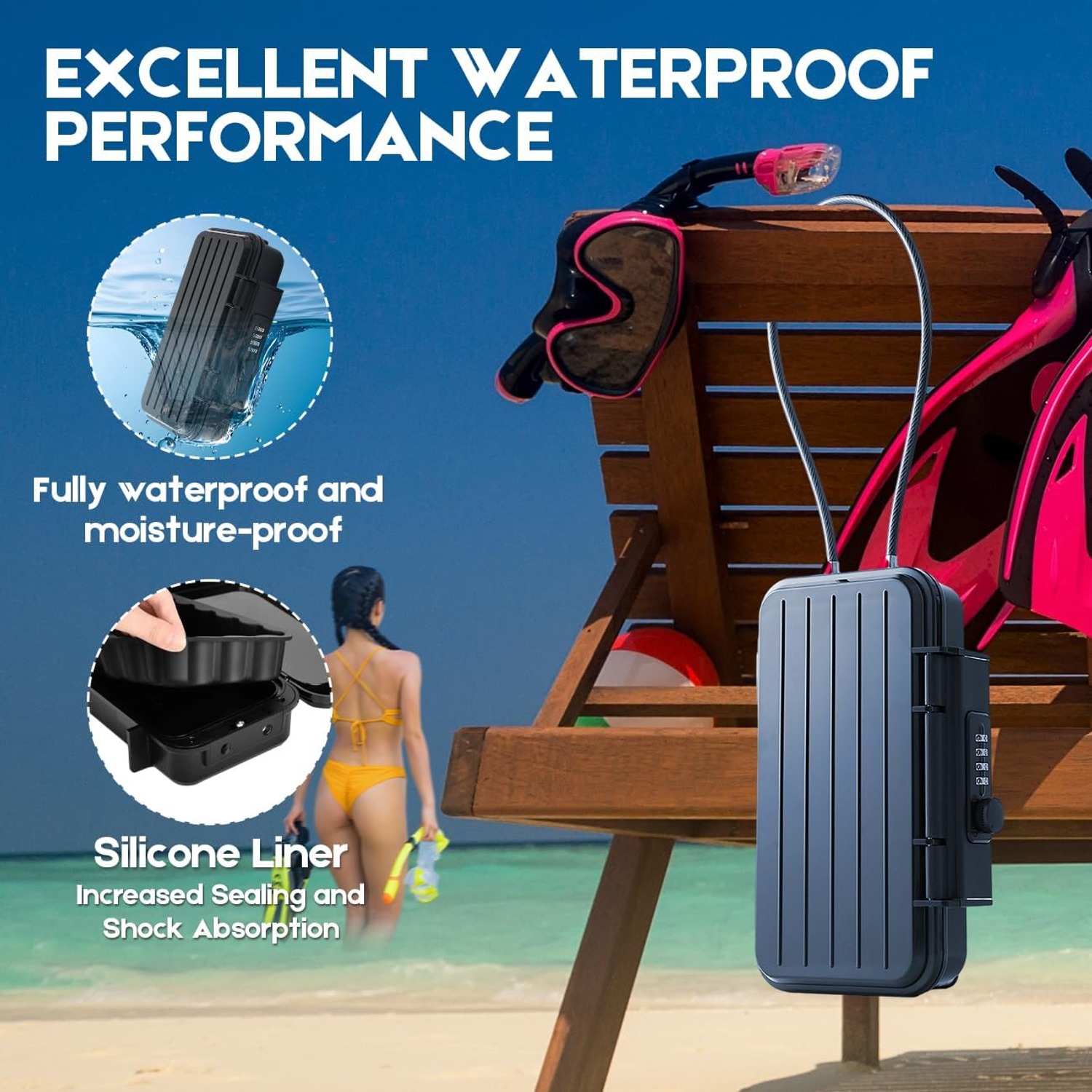
The supplier describes this model as waterproof. However, the record does not include a water test rating, depth limit or permitted immersion time. Without those details, there is no basis for treating it as an underwater case.
That distinction matters when choosing a beach lock box. Sand, wet hands and water exposure are different problems. A product description alone does not tell you how a closure will perform after grit gets caught along its edges.
Keep the lid edges and lock area clean. Before closing, check for sand or debris that could interfere with the closure. Avoid deliberately submerging the case, and use storage with a stated rating if your plans depend on tested water protection.
The same care applies to the shockproof claim. An interior lining is described, but there is no drop-test height or impact rating. Pack delicate contents thoughtfully and avoid dropping or throwing the case.
Use it for organisation, not just locking
A travel valuables case can be useful even when the main problem is keeping track of things. Having one agreed place for a wallet and jewellery reduces the number of pockets and drawers you need to check before leaving.
Decide what belongs inside before you travel. If you fill the space with items you rarely need, you may end up carrying the case without room for the essentials it was meant to hold.
For use as a portable cash box, remember that no sorting tray or separate cash compartments are listed. It is a general storage case, not a till. Think about whether loose notes and coins will suit the way you intend to use it.
Build a simple opening routine
Get familiar with the lock while the case is empty. Practise aligning the code clearly and opening the lid without pulling hard. This is easier to learn at home than when you need your wallet in a hurry.
The reference instructions mention that the sealed lid may resist opening. They suggest checking the correct code, gently tapping the top to help release the seal, then lifting the lid. Follow the supplied guidance and avoid prying at the closure.
After use, check that nothing is trapped across the lid edge. Close the case according to its instructions and confirm it is locked before relying on it. Keep your code private when opening the box around others.
Care and checks between trips
Use a soft damp cloth to clean the outside, then dry it before putting it away. Pay attention to dirt around the lock and cable connections. Avoid harsh cleaning methods unless the supplied instructions permit them.
Inspect the cable, lid and closure before each trip. If something looks damaged or does not work as expected, resolve it before placing valuables inside. Do not force a stiff mechanism or assume damage is only cosmetic.
The record lists a one-year warranty but does not explain its terms. Check coverage and claim steps if these affect your decision. Delivery lead time is also unspecified, so confirm the checkout estimate before ordering for a departure date.
The short version
This cable lock box offers a four-digit combination lock, a removable 54 cm cable and a lined interior in a 750 g case. It is intended for small valuables in settings such as travel, hotels, dorms and home.
Choose it by checking your belongings against the available space and planning a suitable cable attachment. Confirm the conflicting dimensions if fit is tight. Most importantly, treat the untested water, impact and security claims with care, and choose rated storage when your needs call for proven protection.