
The complete guide
Choosing a Document Case for Important Papers
Important papers tend to end up wherever there was space at the time. A passport goes into a drawer, an insurance letter stays on the desk, and property records disappear into a folder nobody has labelled. Finding one item can mean searching several rooms.
A document case gives those papers a shared home. This model combines a hard shell, folding folders and a mechanical combination lock. It is designed to keep records and small essentials together, but choosing it well means looking beyond the product name. Fit, access and the limits of the protection claims all matter.
Start with what you need to store
Before choosing a hard shell document organiser, gather the things you want to put inside. You do not need to sort every page yet. Start by seeing how much space the collection takes up.
A few passports and certificates need a different layout from years of household bills. Thick envelopes, plastic sleeves and bound documents also take up more room than loose sheets. Think about what you need to reach often and what can stay filed for months.
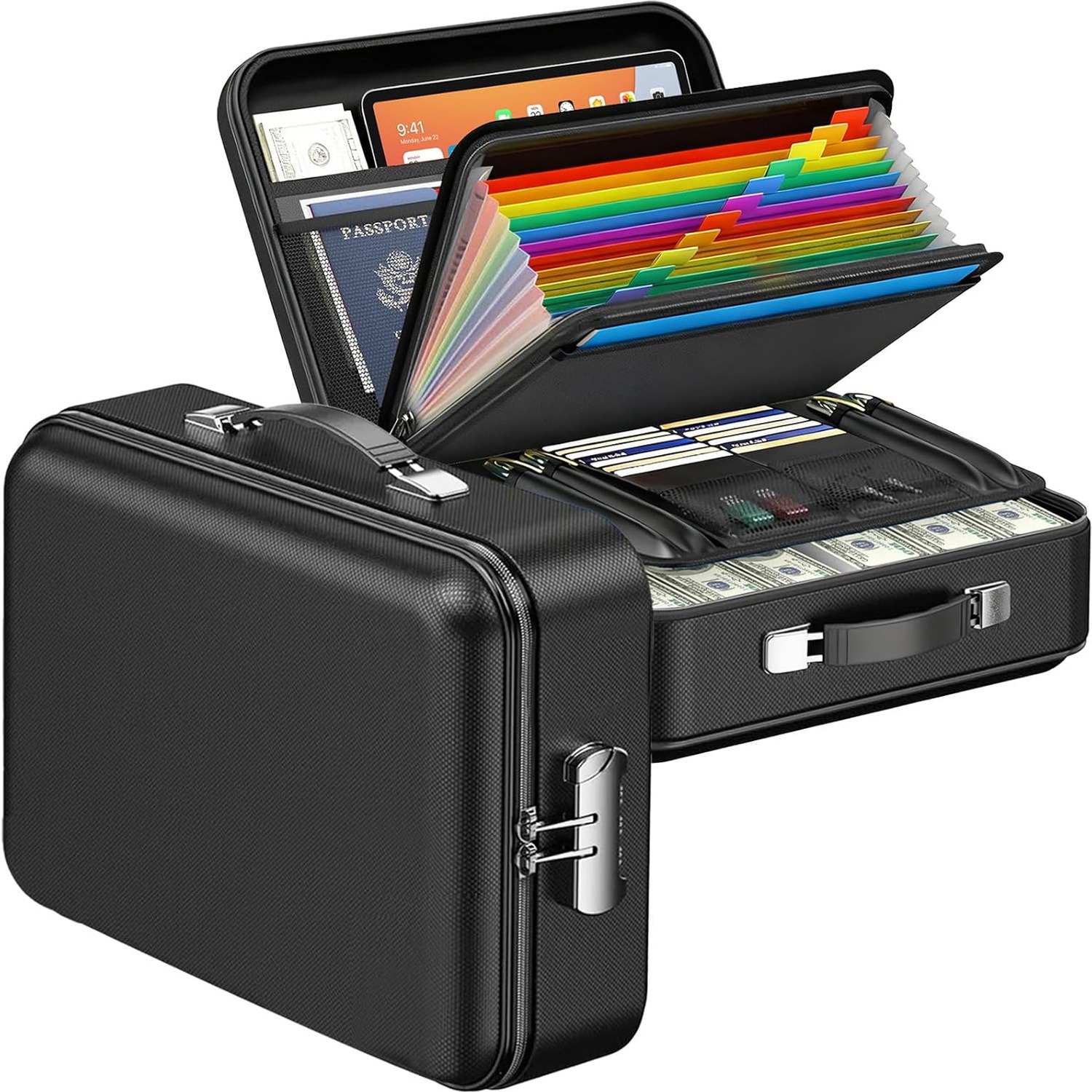
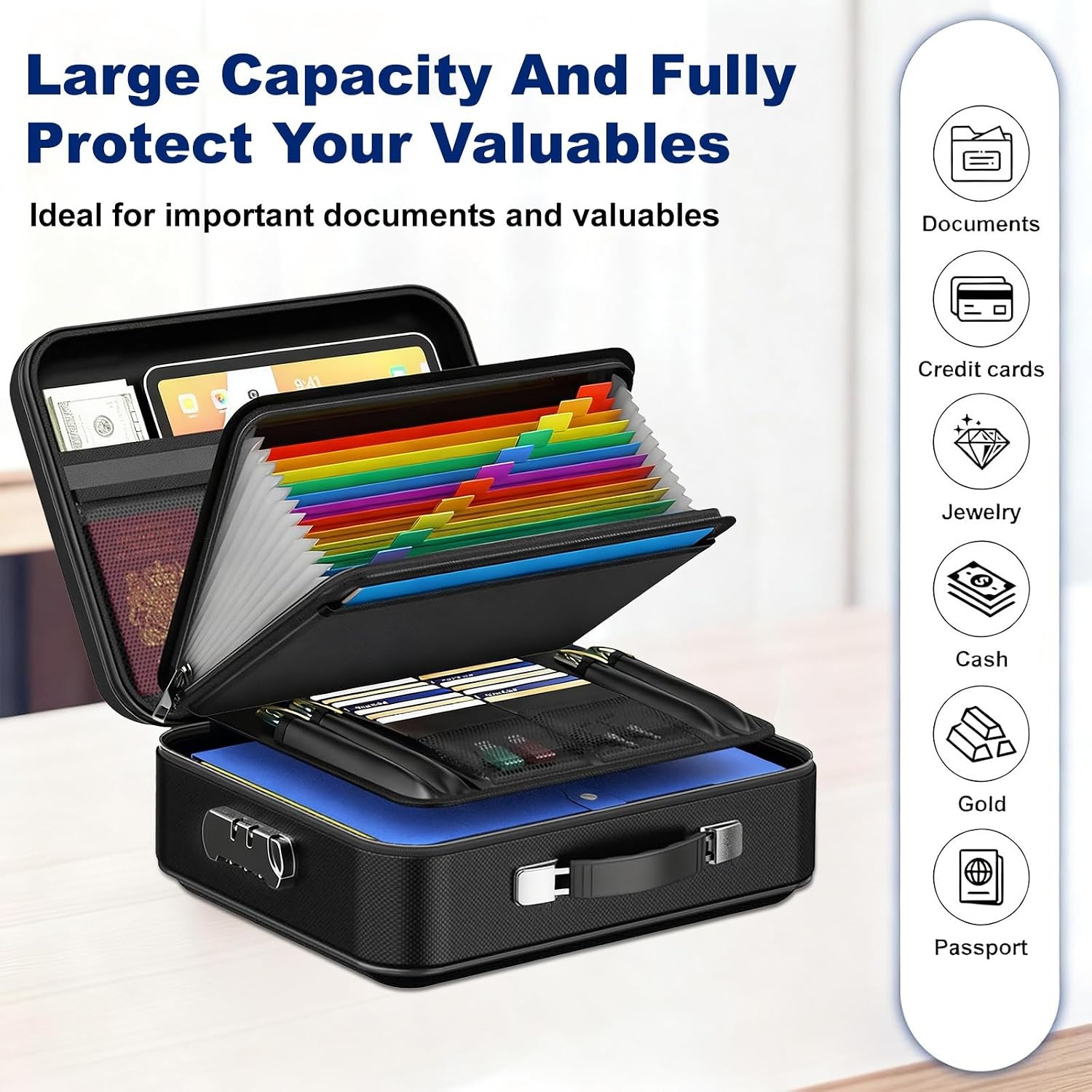
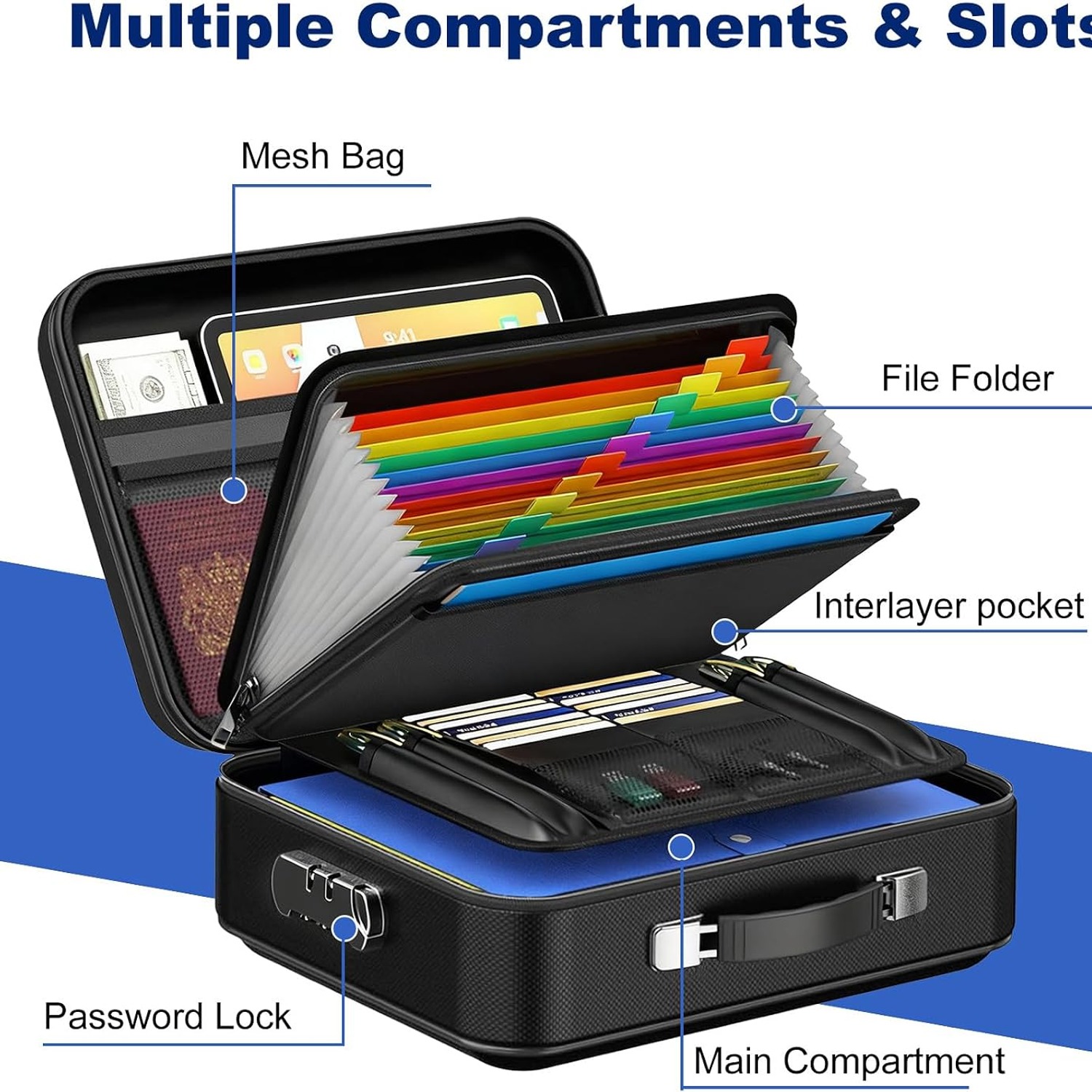
This case has 12 folding folders, four small mesh pockets, 16 ID card slots and four pen holders. That layout gives you several ways to separate contents. It does not establish a total page capacity, so avoid assuming that every section can be filled heavily at once.
Understand what the hard shell does
A hard shell gives a document box a structured form. That can be useful when you prefer a defined container rather than a flexible pouch. It also gives your filing system a clear boundary, which can help stop loose papers from spreading into other storage areas.
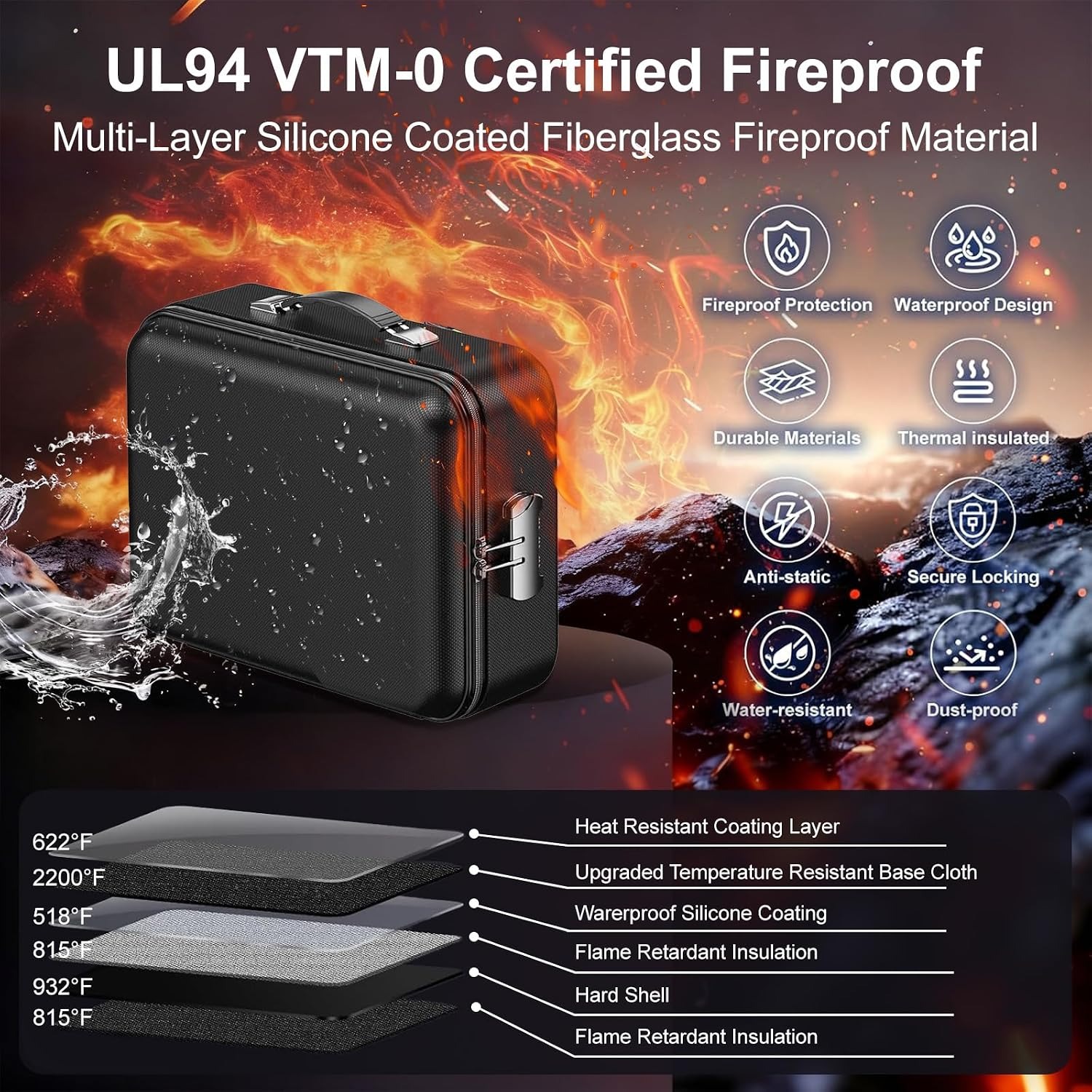
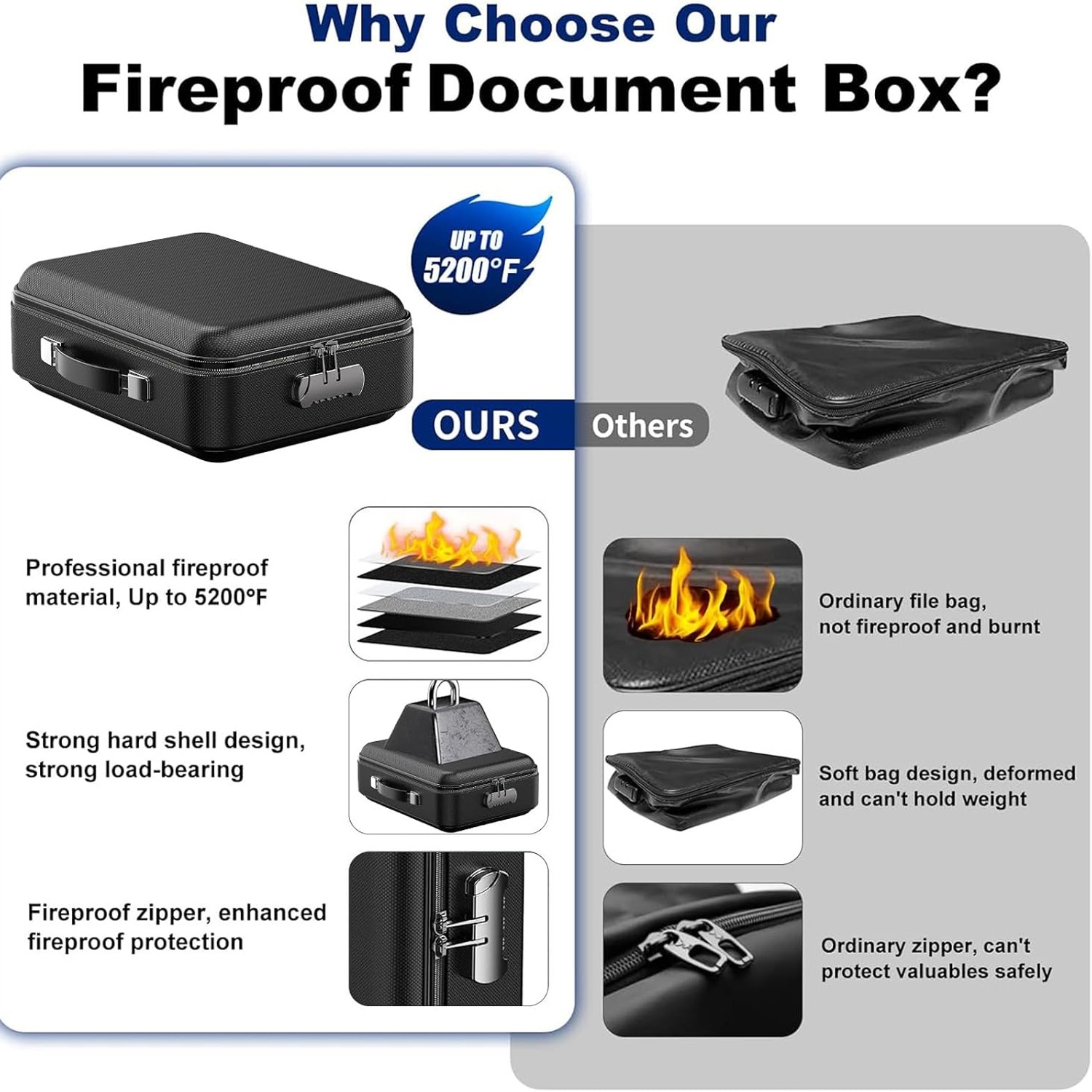
The enclosure material is listed as silicone-coated fiberglass. The product details describe a hard shell and water protection, but they do not provide a measured impact-resistance rating.
Treat the shell as part of the storage design, not as proof that the contents cannot be damaged. Avoid dropping the case, piling heavy objects on it or forcing it into a space that bends the closure. Good handling still matters.
Read fire protection claims carefully
The phrase “fireproof document case” can sound like a promise that papers will survive any fire. That is not a safe assumption. Fire protection depends on test conditions, heat exposure and the temperature reached inside the container.
This record does not establish a verified fire-endurance rating. It also does not provide reliable supporting evidence for a particular temperature and duration. For that reason, this guide does not repeat the supplier's temperature claims as a buying promise.
If you need a case for insurance requirements or irreplaceable originals, ask for relevant test documentation. Check whether it applies to the complete product and whether it covers paper storage. A material-level flame test alone does not tell you how the contents will fare in a building fire.
Know the limits of water protection
The supplier describes this model as waterproof. However, no water-ingress rating, tested depth or immersion duration is specified.
That distinction matters. Protection from a splash is not the same as protection while submerged. A flooded room can expose a container to water in ways that normal storage never will.
Keep the case somewhere dry and away from known leak points. Do not test it by putting it in a bath or leaving it outdoors. Store only dry items inside, since moisture introduced with the contents can still affect paper. If flood protection is central to your purchase, get clearer test information before deciding.
Check paper and device fit
The supplier lists compatibility with letter and legal-sized documents. This makes the case worth considering as a legal document organiser, but paper size is only one part of fit.
Folders with tabs, protective sleeves and oversized envelopes can extend beyond the edges of a sheet. A bulky stack may also use space needed by adjacent pockets. Measure the largest item you plan to store, not just an ordinary page.
Laptops appear in the device compatibility details, but supported screen sizes and usable internal measurements are not specified. Do not buy on the assumption that a particular laptop will fit. Ask for current internal measurements and compare them with the device, including any sleeve you plan to use.
Build a filing system you will keep using
The most useful household document storage is the kind you can maintain without much effort. Complicated categories often fail because nobody knows where a new letter belongs.
You might divide papers by household member, then reserve a few sections for shared records. Another approach is to group them by topic, such as housing, insurance, health and education. Choose the method that matches how you search for things.
Leave some space for new documents. A completely full case gives you no room to file the next renewal notice or updated certificate. Review the contents now and then, remove duplicates and dispose of sensitive papers safely when they are no longer needed.
Give small belongings a clear place
Loose cards and small items can disappear between papers. The 16 card slots and four mesh pockets offer separate places for these belongings, while the four pen holders keep writing tools apart from the main files.
For a passport storage case, think about how quickly you need to find each person's documents. Keep related papers close together rather than putting every small item into the first empty pocket.
The supplier also mentions two USB ports, but their function is unclear. Do not assume that the case includes charging equipment or powered connections. If that detail matters to you, request a clear description before ordering.
Use the combination lock with care
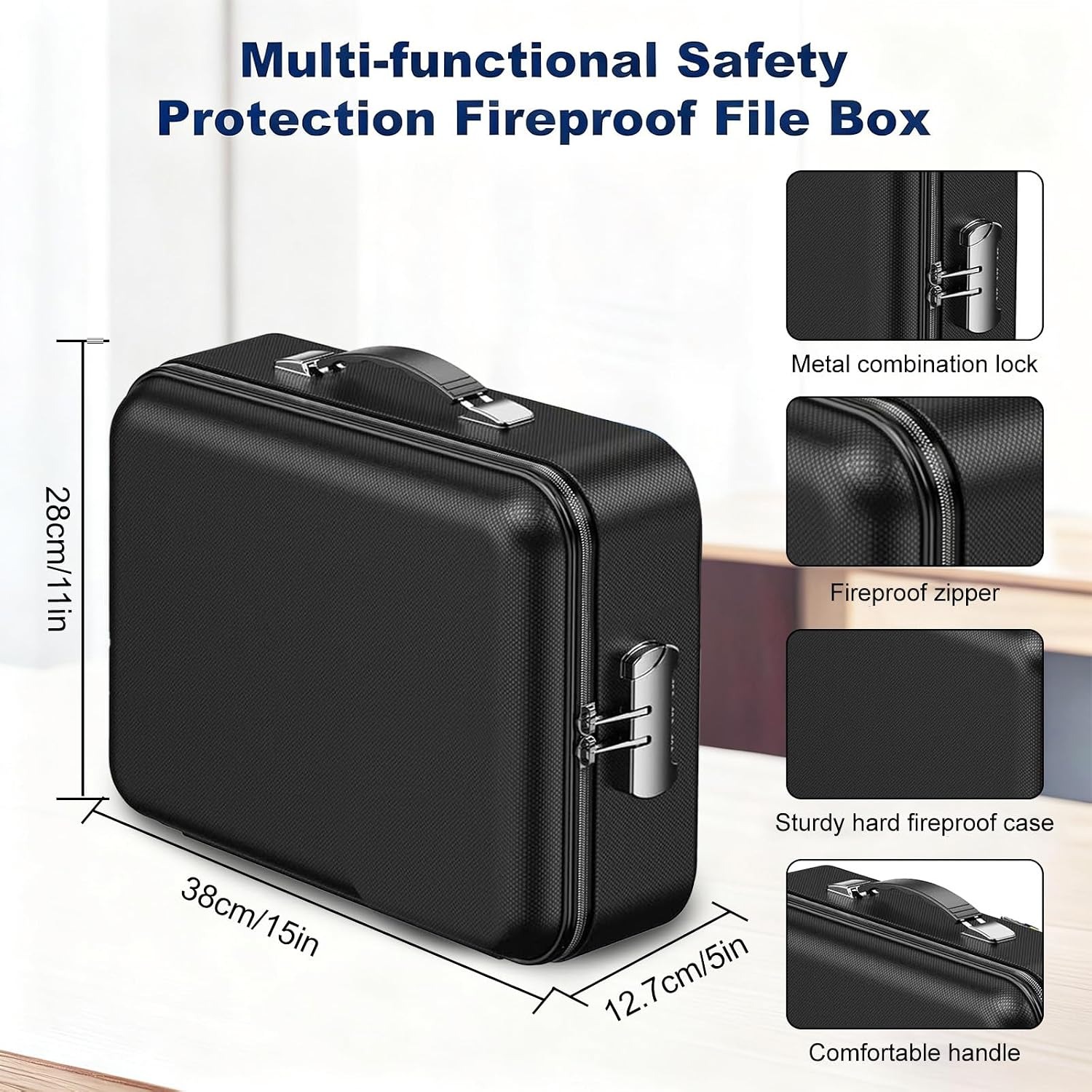
A combination lock removes the need to keep track of a separate key. It does create another responsibility, though. You need to remember the code and make sure the people who need access know how to use it.
Follow the supplied instructions rather than guessing how the reset mechanism works. Set and test the code while the case is empty. Keep a secure record of it somewhere separate from the box.
This combination lock document case has no stated burglary-resistance rating. Its lock should not be treated as proof of protection against determined theft. For jewellery, large amounts of cash or other high-value belongings, consider whether a rated safe better matches the risk.
Decide where the case will live
A portable document box is only useful if you know where it is. Pick a regular storage location that is dry, accessible and suitable for the weight of the filled case.
The empty weight is 1.71 kg. Paper can add a lot more weight than expected, especially when many sections are full. Consider this if you plan to move the box often or use it as a document case for travel.
Avoid choosing a location solely because it is hidden. If another household member needs a record while you are away, they should know where to find the case and how to gain authorised access. Balance privacy with practical access.
Keep document storage separate from emergency promises
Having records together can make everyday tasks easier. It may also help you know where essential paperwork is when plans change suddenly. That does not make any case an emergency guarantee.
Keep copies of important records through suitable separate storage methods. Where possible, know how to obtain replacements for documents that would be difficult to lose. A single container should not be the only part of your record-keeping plan.
In a fire or other dangerous event, personal safety comes first. Do not delay leaving a dangerous area to retrieve the case. Organisation is useful preparation, but belongings are not worth putting yourself at risk.
Care for the case and its contents
Simple habits can help keep a family document organiser useful. Wipe the outside gently with a soft cloth when needed, and let it dry before putting it away.
Avoid harsh cleaners unless the supplied instructions permit them. Keep debris away from the closure, and do not force it shut over an overfilled interior. If closing the case takes pressure, remove some contents and check what is blocking it.
Open the case periodically to review the papers and look for signs of moisture. Check that the lock works before returning the box to storage. Follow any care directions included with the product, since this record does not contain a detailed maintenance manual.
Check the purchase details
The listing includes one case and states a two-year manufacturer warranty. The warranty terms, exclusions and claim process are not provided here. Ask for those details if they affect your decision.
Delivery timing and return conditions also need checking on the storefront. In particular, confirm fit before relying on the case for a specific laptop or bulky folder collection.
The short version
This case suits a buyer who wants divided paper storage, a hard shell and a keyless lock in one box. Its folders, pockets and card slots offer a clear starting point for home office file storage or household records.
Choose it for the layout you can confirm. Check measurements where fit matters, understand the limits of the fire and water claims, and use a rated safe if your needs call for verified protection.