
The complete guide
Choosing a Cash Box With Tray for Everyday Cash Handling
Loose coins, folded notes and receipts can turn a simple cash sale into an awkward search. At a stall or fundraiser, that slows down the queue. At home, it makes it harder to know how much cash you have and what it is set aside for.
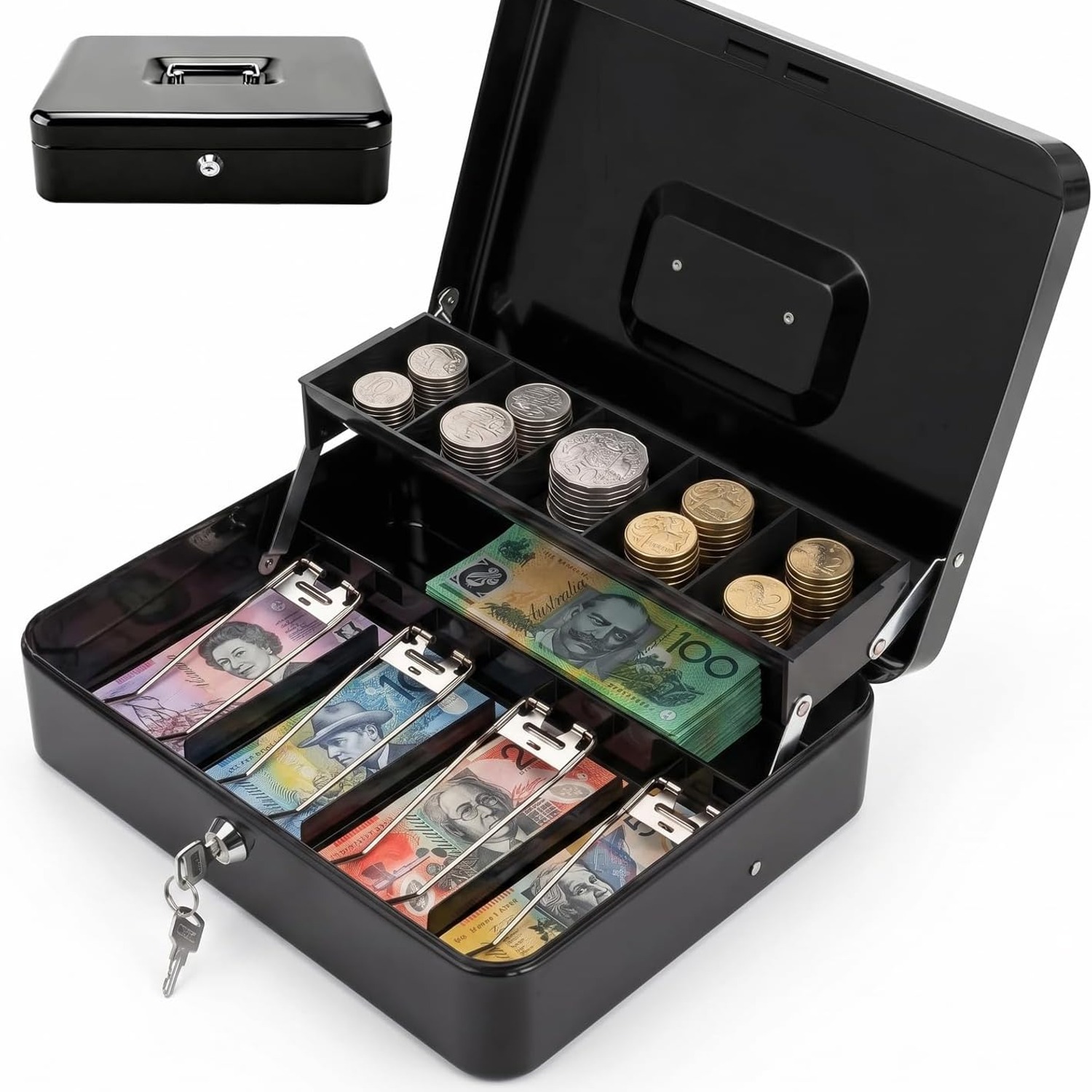
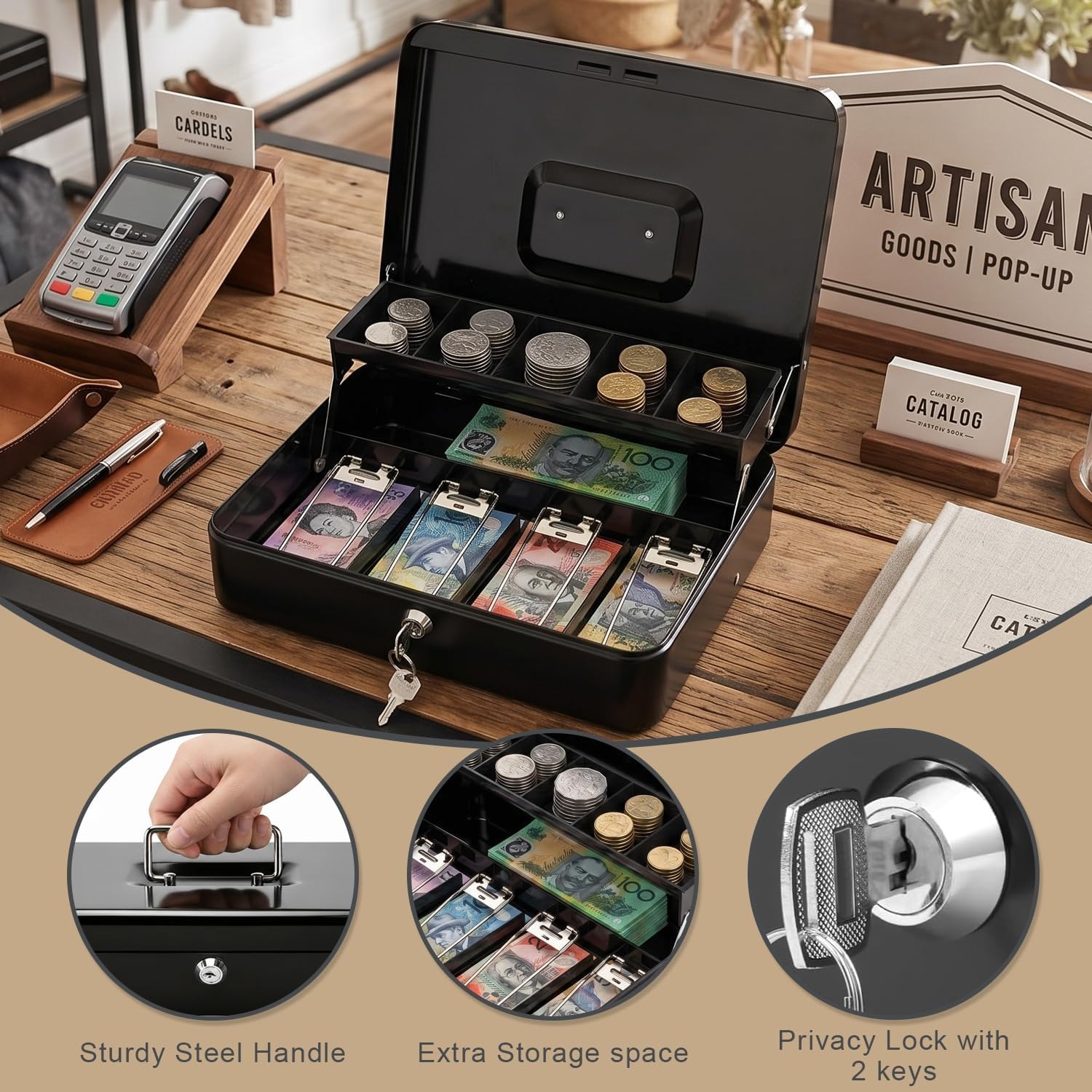
A cash box with tray gives each part of your float a place. This model combines five coin compartments, four bill clips and lower storage in a portable, key-locking box. It is a straightforward option for people who want to handle money by hand while keeping their setup tidy.
The important question is whether its layout fits the way you work. Here is what to check before you choose it, plus a few habits that make daily use easier.
Start with your cash-handling routine
Think about a normal session rather than the busiest day you can imagine. How many coin denominations do you use? Do customers mostly pay with notes? Will one person manage the money, or will several helpers take turns?
Those answers matter more than the outside appearance of the box. Five coin sections may suit your usual change mix, but you may need to share a section if you handle more than five denominations. Four bill clips give you places to group notes, though they do not set a fixed system for you.
A petty cash box also has a different job from a sales box. Petty cash often involves receipts and occasional withdrawals. A sales box sees repeated opening, change-making and counting. Decide which task comes first so you can arrange the available space around it.
How the tiered layout works
This tiered cash box uses a cantilever tray. As the box opens, the tray moves to reveal the storage arrangement rather than leaving everything stacked in one deep compartment.
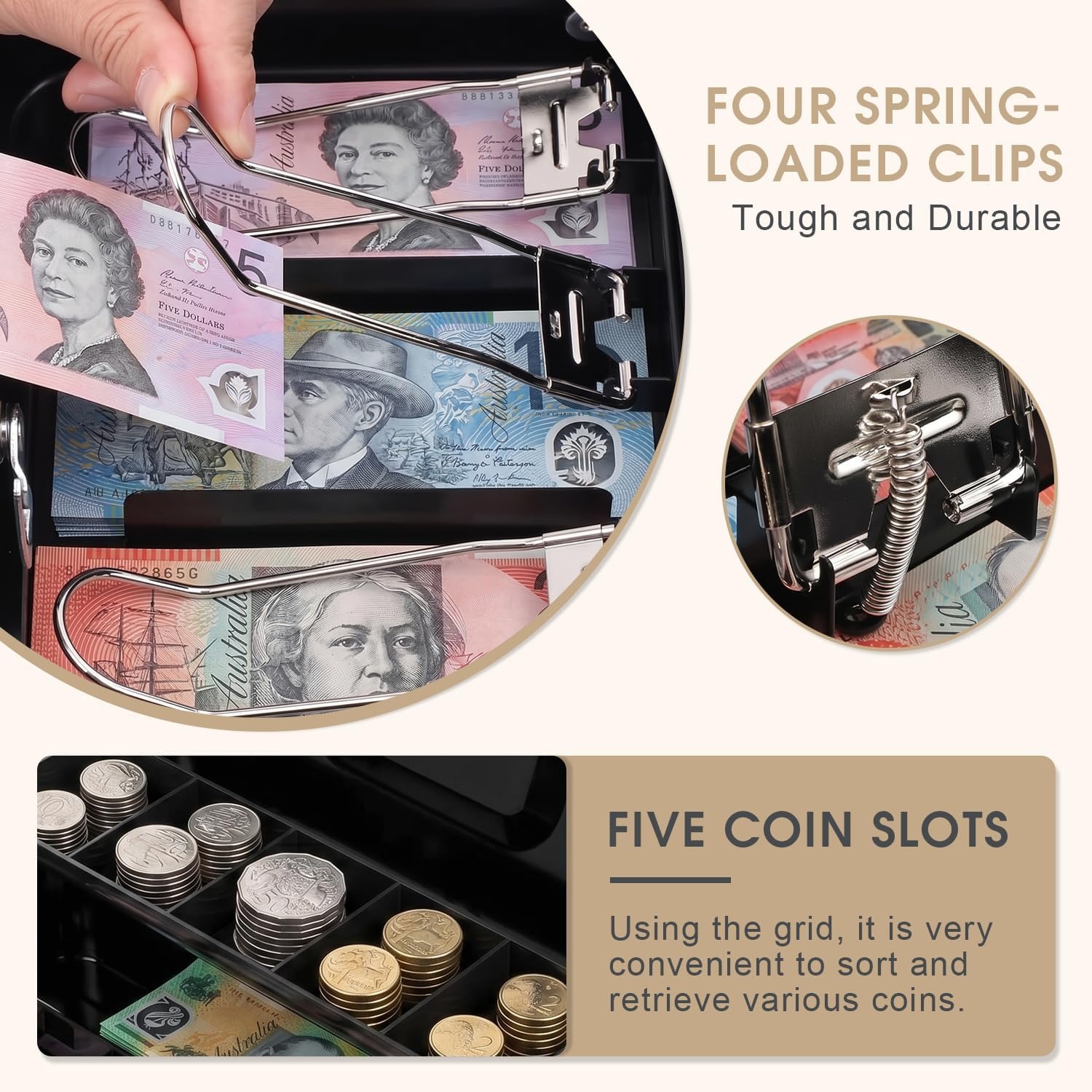
The five coin sections help separate change. Below, four spring-loaded clips hold banknotes together. The supplier also describes lower storage for larger notes, tickets and small valuables.
That layout can make it easier to see what you need during a transaction. Still, the mechanism needs room to move. The listed dimensions describe the box itself, not the full space required when it is open.
Before setting up on a narrow counter, check that the lid and tray have clear space. Keep bags, signs and stock away from moving parts. A tidy table helps you make proper use of the layout.
Check the size beyond the footprint
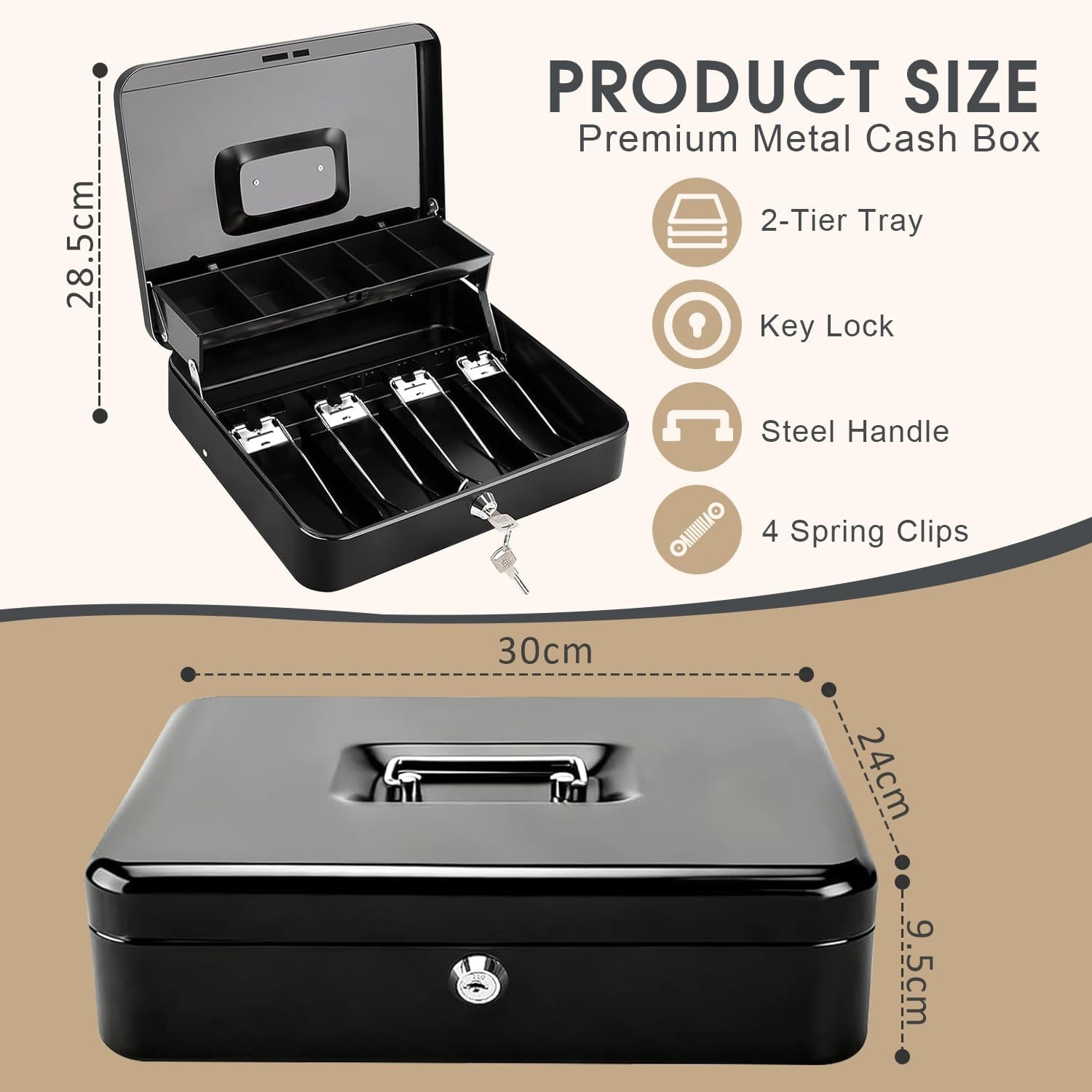
The box measures 24 x 30 x 9 cm and weighs 1.8 kg. Those are useful starting points when deciding where to store it or how to carry it to an event.
Measure the actual opening of a drawer or cupboard, not just its widest interior point. Drawer runners and door hinges can reduce the usable space. If you plan to keep the box inside a crate, allow room to reach the handle and lift it out.
Also consider the loaded weight. Coins add weight, so a portable cash box that feels manageable when empty may feel different after a day of trading. Plan the route between your storage area, vehicle and sales table.
Internal compartment sizes are not supplied. If you need a particular banknote, ticket book or document to fit flat, confirm that detail rather than judging from the outside measurements.
Set up coins and notes before you begin
A useful cash layout is one that you can remember without thinking. Place coin denominations in a consistent order and keep the same arrangement from one event to the next.
Do the same with the four bill clips. Choose an order that suits the notes you commonly receive. If more than one person handles sales, explain the layout before the first transaction.
Count your starting float and record it somewhere separate. That gives you a clear point of comparison when you count the takings later. A cash organizer keeps money separated, but it does not keep accounts for you.
Avoid filling each section to the point where coins rise above the dividers or notes interfere with the lid. More space between items can be more useful than squeezing every available item into the box.
Where this box makes sense
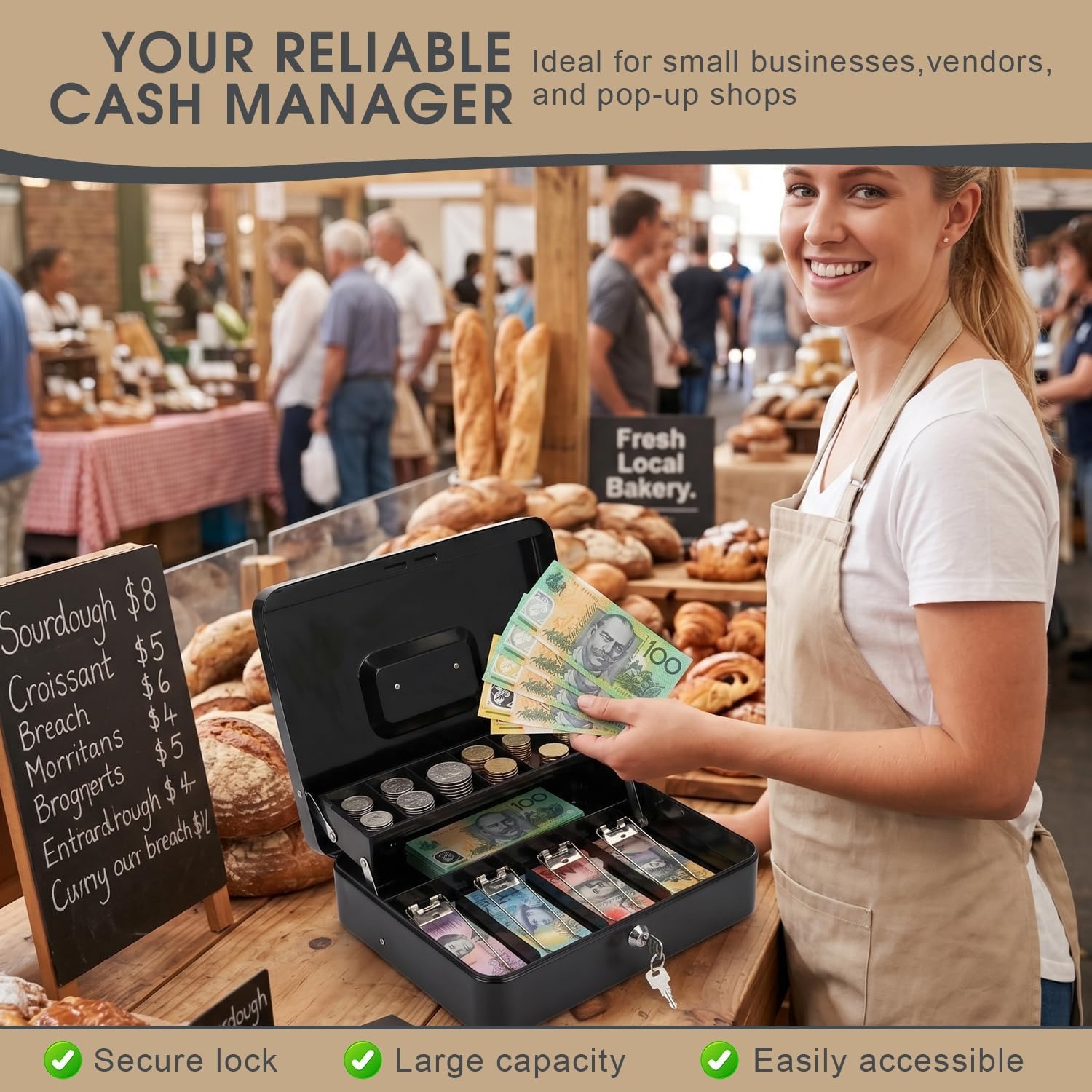
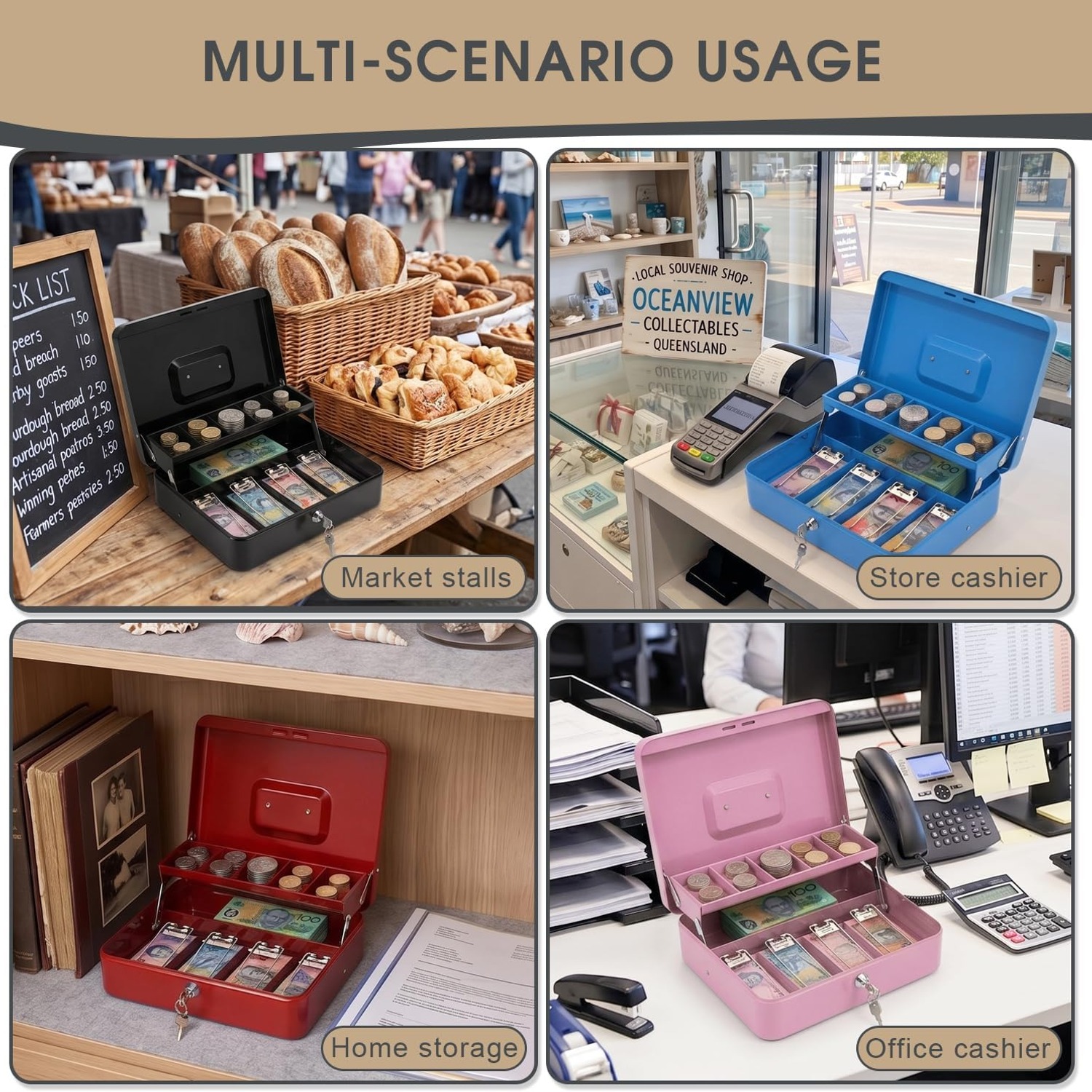
A market stall cash box needs to be easy to set up and simple to understand. The divided layout suits a manual sales routine where the seller needs ready access to change.
At a yard sale, the same principle applies on a smaller scale. You may only need a few coin denominations and a place for notes. The lower storage can keep tickets or other small items apart from the active float.
For a fundraiser, consistency matters when helpers change shifts. A clear layout and a written handover total reduce confusion. Decide who is responsible for the keys as well as who can accept payments.
At home, the box can keep household cash in one place. It may also suit a small office petty cash routine. In each case, combine physical organization with a simple record of money added and removed.
Understand what the key lock does
The mechanical lock lets you close off access with a key. The supplier describes two matching keys, which gives you an everyday key and a spare.
Keep that spare outside the box in a separate, controlled place. A spare key stored with the money does little to help when the main key is missing. If several people need access, agree on a handover method.
A key lock cash box should not be confused with a rated safe. No burglary, fire or water protection rating is specified here. Its role is cash organization with keyed access, not guaranteed protection against theft or damage.
Because the box is portable, supervision still matters. Keep it close during trading and avoid leaving it alone on a table. For larger sums or overnight storage, consider your wider cash-security arrangements.
Using it at outdoor sales
The supplier lists outdoor events among the intended uses. Its spring-loaded bill clips help hold notes together, which is useful when cash would otherwise lie loose on a table.
That does not make the whole setup weatherproof. Protect the box from rain and avoid placing it on wet ground or damp fabric. Choose a sheltered spot where possible.
Position the box so customers cannot easily reach into the open sections. At the same time, leave yourself enough room to give change without twisting or reaching across stock.
If you use a cover over your table, check that it cannot catch in the tray mechanism. Small setup choices can make a long trading session less awkward.
Know when a different setup may suit better
This cash register box provides physical storage and sorting. It is not described as an electronic register, receipt printer or transaction-recording system.
If you need sales reports, automatic totals or stock tracking, plan for a separate system. The cash box can be part of that routine, but it does not replace those functions.
Likewise, if you need measured spaces for many denominations, confirm the compartment sizes first. A five-section tray will not suit every currency mix or every sales pattern equally well.
For occasional sales, a simple manual layout may be enough. For a busy operation, think about how often you will need to clear excess notes, replenish change and reconcile the contents. Choose for the whole process, not just the moment a customer pays.
Care and storage between uses
Basic care starts with keeping the tray and lock free of loose debris. Empty the box before cleaning so you can spot coins or scraps caught near moving parts.
Wipe the surface with a soft cloth, then dry it. Avoid abrasive products and do not soak the box. Moisture left around the lock or joints is best avoided.
If the lid does not close easily, stop and inspect the contents. A folded note, raised clip or misplaced coin may be in the way. Forcing it closed can put needless strain on the mechanism.
Store the box in a dry place. Keep your cash records separately, and make a habit of checking where both keys are before the next event. The supplier lists a three-year manufacturer warranty, but the full terms should be checked before purchase.
The short version
This metal cash organizer brings together five coin compartments, four bill clips and lower storage in a 24 x 30 x 9 cm box. Its tiered tray, carry handle and key lock suit a range of manual cash routines.
Choose it if that layout matches your float and you have enough room to open it comfortably. Check internal fit if you have a specific storage need, and remember that a locking cash box is not a rated safe.
With a consistent layout, a counted starting float and sensible key control, it can give everyday cash handling a clearer structure.