
The complete guide
Choosing a Compact Key Lock Safe for Everyday Valuables
Small valuables have a way of ending up in different places. A passport goes in a drawer, spare cash sits in an envelope, and jewellery gets tucked into a bag. When you need something, the search starts again.
A compact safe box gives those items a dedicated, lockable place. This model uses a physical key and has a listed capacity of 6.6 litres. Its small size may suit a cupboard, wardrobe or office storage area, provided there is room to open it and a suitable place to mount it.
The important question is whether it fits both your belongings and the kind of protection you need. Here is what to check before deciding.
Start with the things you want to store
Before comparing safes, put the intended contents together on a table. Include any covers, pouches or cases you expect to keep with them. A passport in a thick travel wallet needs more room than a passport on its own.
Think about access, too. If you reach for one item often, you should not have to empty the safe each time. Leave enough spare space to find and remove things without catching them against the door.
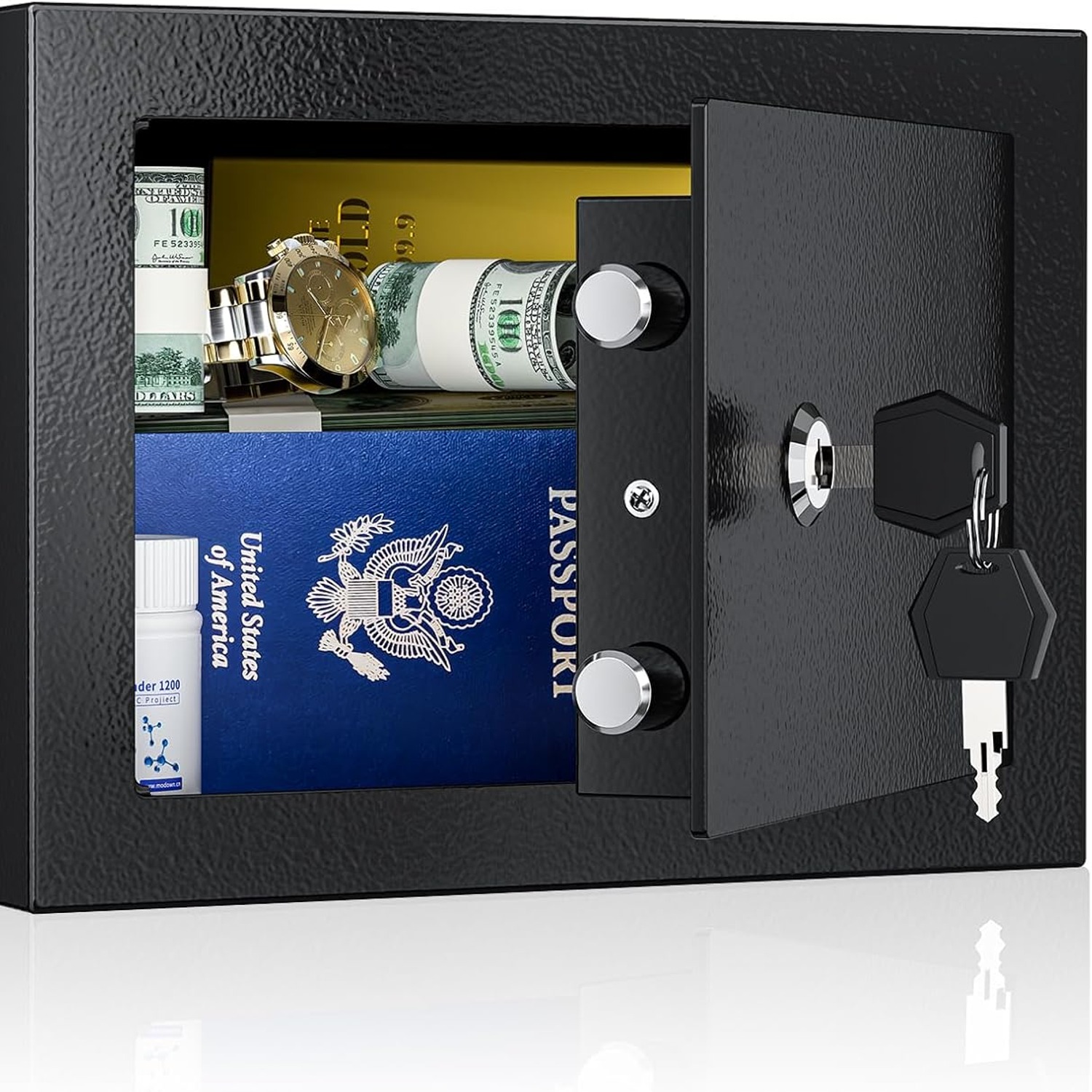
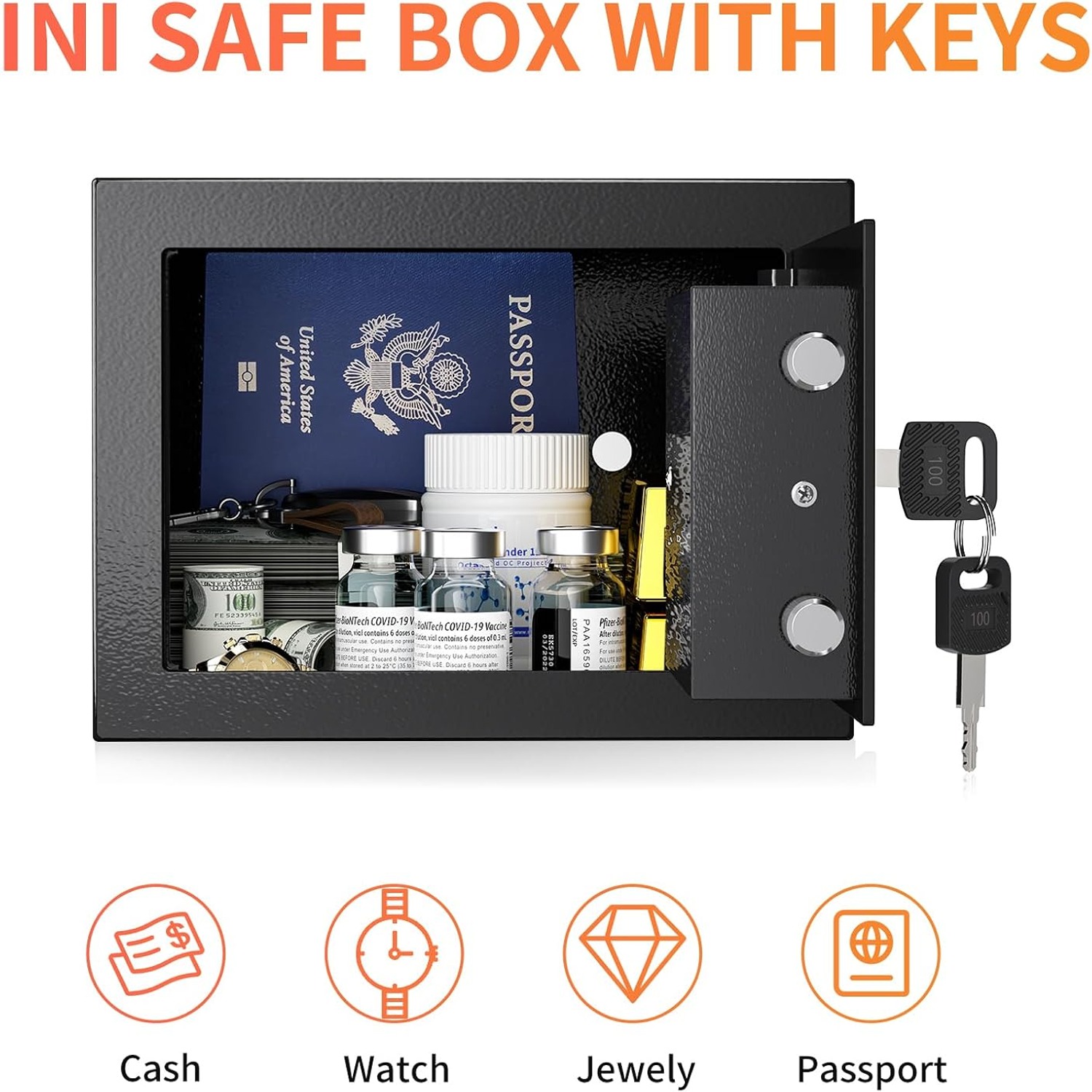
This small valuables safe is described for cash, passports, jewellery and similar belongings. That makes it worth considering for a modest collection of personal items. It is less suited to someone who wants to store folders, large boxes or a growing stack of paperwork.
Choose around what you actually own, not an imagined future use. If your pile is already close to the available space, a larger safe may be a more comfortable choice.
Read the measurements before the capacity
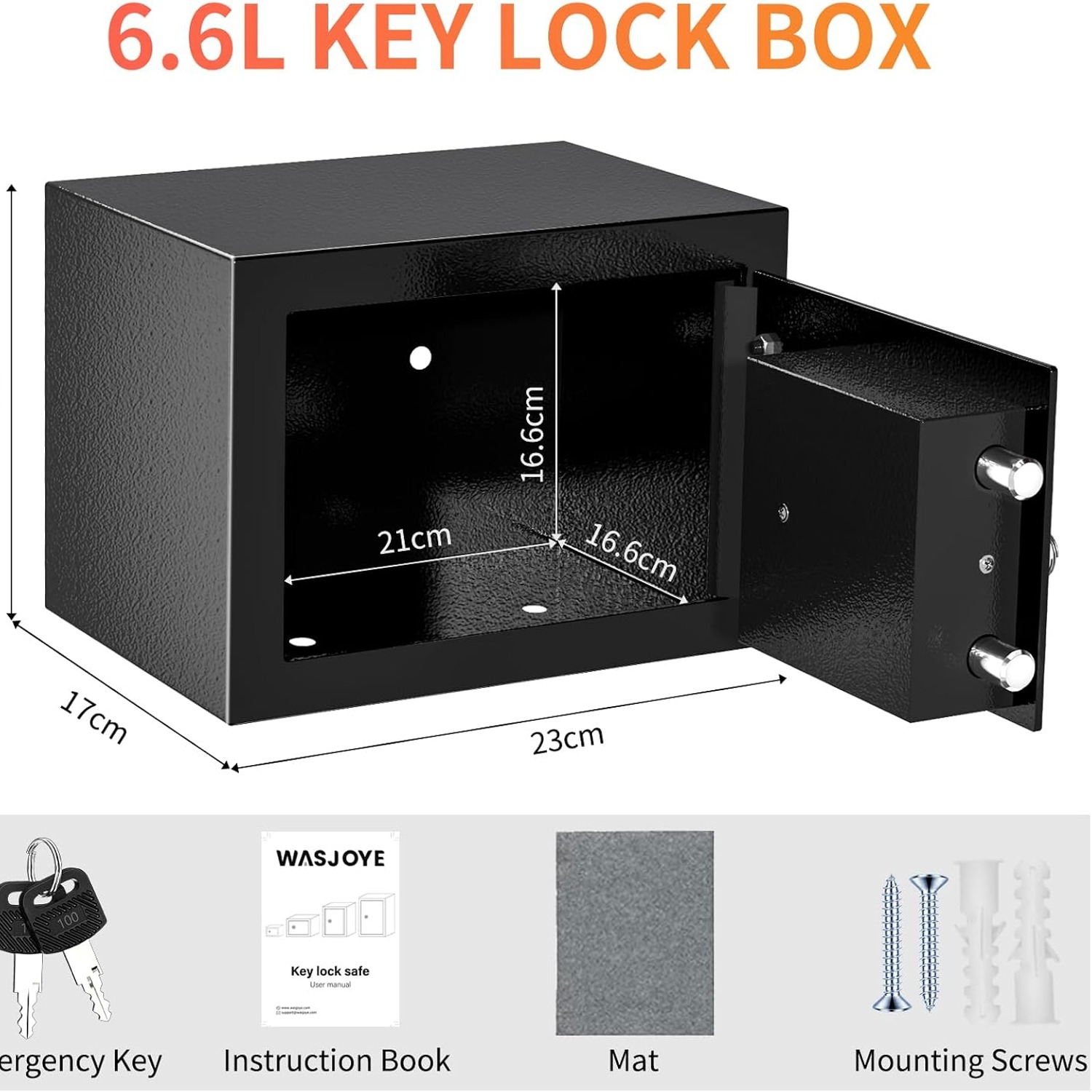
The external dimensions are listed as 17 x 23 x 17 cm. The maker gives internal dimensions of 16.6 x 13 x 22.6 cm. These measurements tell you more about fit than the capacity figure alone.
The main product details state 6.6 litres, although one sentence in the maker reference gives a conflicting capacity. For that reason, use the measurements as your starting point and confirm any close fit before buying.
A simple paper or cardboard outline can help you judge the footprint on a shelf. Remember that the door must open and your hand must reach the key. A space that just holds the closed safe may still be awkward in daily use.
The door opening size is not given by the maker. A rigid box that seems to match the internal measurements may not pass through the opening, so ask for confirmation if clearance is tight.
Know what a key lock offers
A key lock safe keeps access simple. There is no keypad code to remember or share. The maker lists two keys, which lets you keep a spare separately.
That simplicity comes with a practical responsibility. You need to know where the working key is, and you need a sensible place for the spare. Keeping both beside the safe weakens the point of locking it.
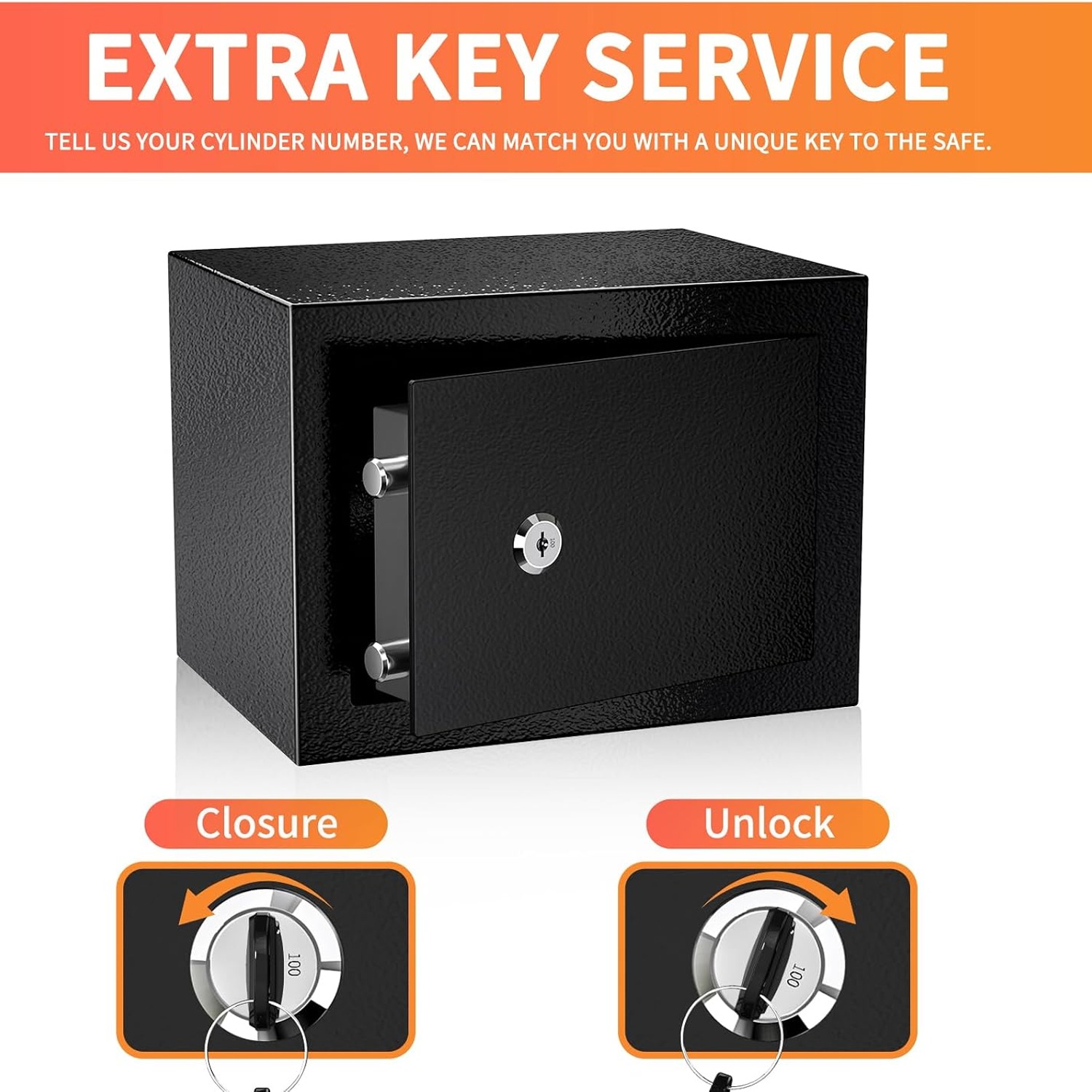
The maker describes clockwise turning to open and counterclockwise turning to lock. Read the included manual before use and test the lock with the door open first. Once you begin using it, check the door is properly locked before leaving it.
No replacement-key service is described in the maker's description. Treat the keys as essential items rather than assuming replacements will be easy to obtain later.
Look at the body without assuming a security rating
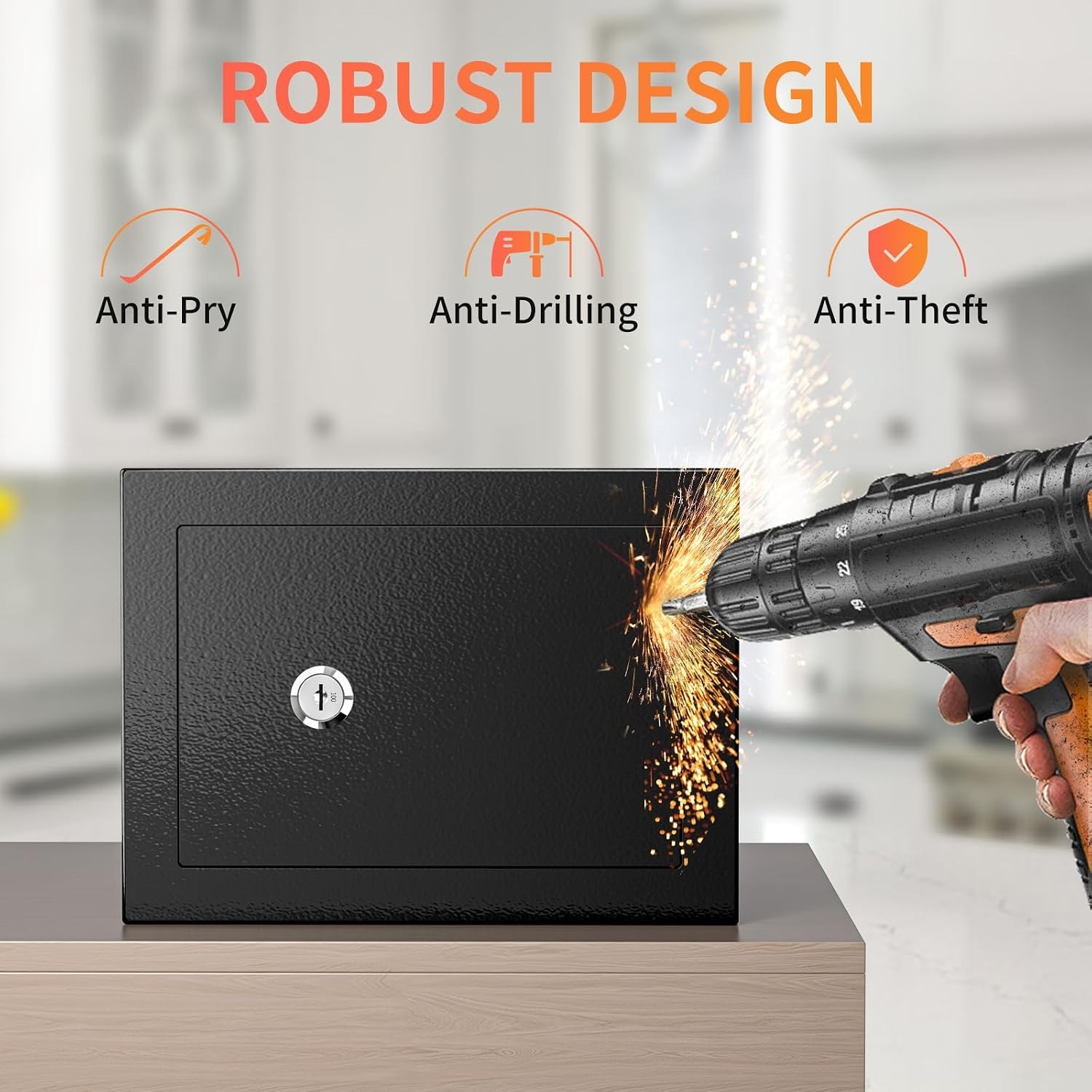
The product details specify alloy steel construction. They also describe a pry-resistant door, concealed hinges and a scratch-resistant powder-coated finish.
These are useful features to compare, but they are not the same as a tested burglary rating. The maker does not provide steel thickness, an independent security certification or an insurance approval.
A small steel safe should be chosen with realistic expectations. It provides a locked place for suitable belongings, but the description does not establish how long it would resist a determined attack.
If your insurer sets rules for storing particular valuables, ask about those rules before ordering. Start with the required rating, then look for a safe with documents that clearly support it.
Plan the mounting position
The safe weighs 1.8 kg. Its compact size is convenient for placement, but it also makes mounting an important part of your decision.
The maker describes two pre-drilled holes in the back for wall or cabinet installation. Four expansion bolts are listed among the accessories. The presence of bolts does not mean they suit every wall type or piece of furniture.
Check the surface, its condition and the fixing method before drilling. A thin cabinet panel may not provide the same support as a suitable structural surface. If you are unsure, ask a qualified installer to assess the location.
For a wardrobe safe, check clothes and shelves will not block the door. For office storage, think about who can reach the key and whether the chosen cupboard provides enough room to use the safe comfortably.
Separate theft concerns from fire and water concerns
Different safes address different risks. This one is explicitly listed as not water resistant. Keep that limit in mind when choosing its location.
Avoid places exposed to splashes, damp or likely leaks. A low position near plumbing may be convenient, but it could be a poor choice for passports or paper records.
No fire rating is specified either. Steel construction on its own does not establish that the contents will be protected from fire. Do not read “safe” as a promise of fire protection.
If fire or flood damage is your main concern, look for documented testing that matches that need. This model's listed storage and locking features should not be stretched into claims the maker does not make.
Check the alarm detail before relying on it
The maker's specification table includes an audible alarm. However, the maker does not explain what triggers it, how it is powered or how it is controlled.
Those missing details matter if an alarm is central to your choice. A short feature label is not enough to tell you how it will behave in your home.
Ask for the operating instructions or confirmation from the retailer before buying for this feature. Until that information is available, assess the product mainly on its stated key lock, construction, size and mounting arrangement.
Match the safe to your daily routine
A passport safe works best when the contents are easy to check before a trip. Allow room for the travel documents you use together, and avoid assuming a bulky organiser will fit.
For jewellery storage, consider whether you want to keep items in their own cases. The package includes a protective floor mat, but no separate jewellery compartments are described.
As a cash storage box, it may suit notes and small pouches. A rigid cash tray is a separate fit question, so measure it first.
If you need a personal document safe for full sheets of paper, note that unfolded A4 pages will not lie flat within the listed dimensions. A larger model would be the more practical starting point for files and certificates you do not want to fold.
Set it up before filling it
When the safe arrives, compare the contents with the package list. The maker lists the safe, two keys, four expansion bolts, a protective floor mat and a user manual.
Read the instructions and check both keys before storing anything important. Confirm that the door closes without contents pressing against it.
Arrange your belongings so the lock and door can move freely. Overfilling a small safe can make access frustrating, even when everything technically fits.
Once installed, keep the spare key away from the safe and from the working key. Review that arrangement if your household or office access needs change.
Keep care simple and dry
Use a soft, dry cloth for routine cleaning. Avoid harsh abrasives that could damage the finish, and keep water away from the lock.
If the key becomes stiff, do not force it. Check that the correct key is fully inserted and that nothing is pressing against the door. Seek advice if the problem continues.
Check mounting fixings periodically for movement. If the safe becomes loose, address the installation rather than continuing to rely on it.
The maker states a 12-month warranty, but full terms are not given by the maker by the maker. Keep your order details and check the retailer's warranty and returns information.
The short version
This compact safe box is worth considering when you want key-locked storage for a small set of everyday valuables. It has a listed 6.6L capacity, alloy steel construction and rear mounting holes.
Measure first, allow door clearance and plan a suitable installation. Keep its limits in view, especially the lack of water resistance and the absence of a stated fire or burglary rating. The right choice is the one that fits your belongings and your protection needs without guesswork.