
The complete guide
Choosing a Small Fire Resistant Pouch for Documents and Valuables
Important papers have a habit of ending up in different places. A passport goes in a drawer, cash stays in an envelope, and a small certificate gets tucked into a folder you rarely open. Finding everything becomes a task just when you need to leave or deal with something urgent.
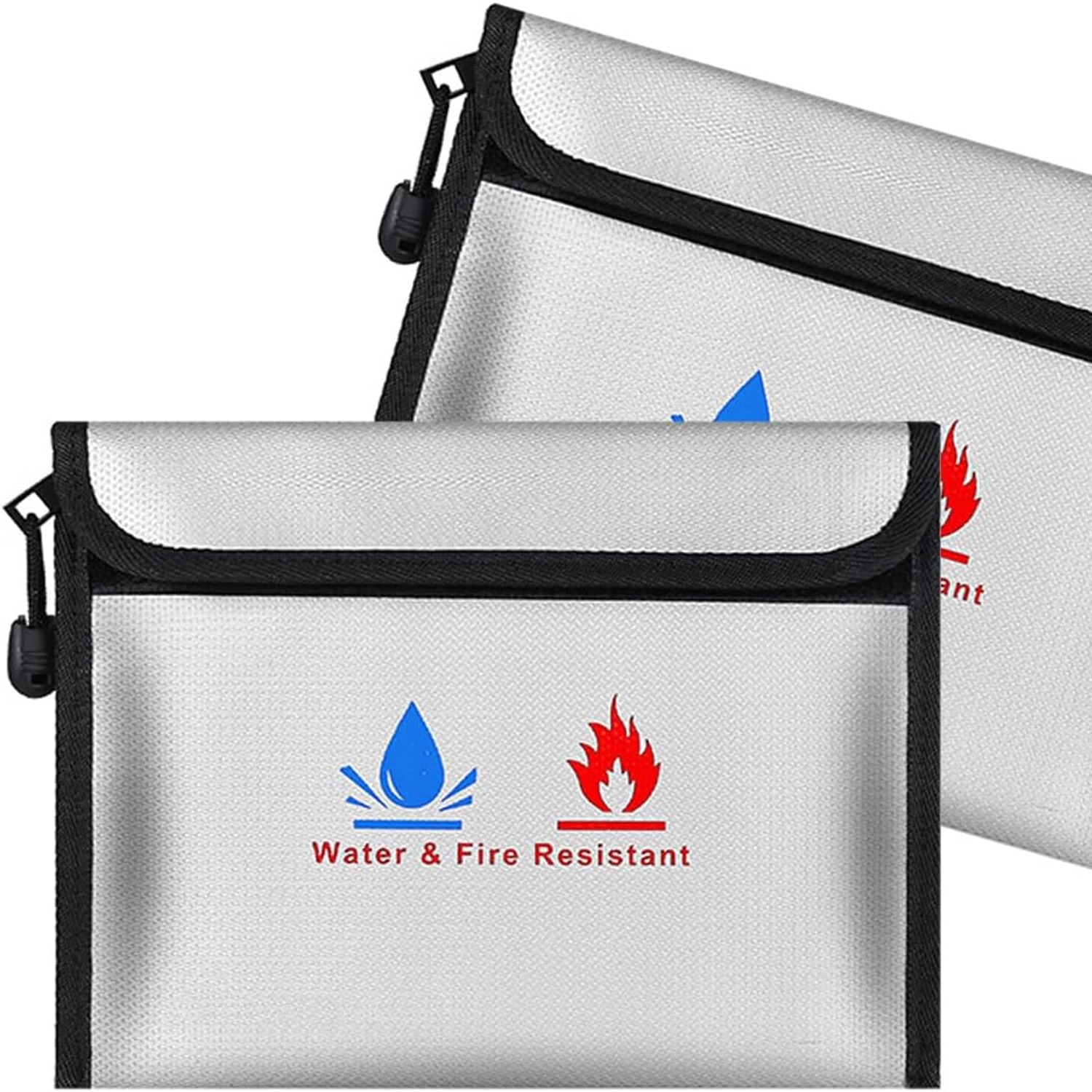
A small document bag can make that part easier. It gives selected items a known home. This Fireproof Pouch Set includes two pouches, so you can divide your belongings rather than put everything into one pile.
The key is choosing it for the job it can reasonably do. Size, usable space and the limits of the protection claims all matter. Here is how to decide whether this pair fits your storage needs.
Start with what you want to store
Before choosing any document pouch, gather the items you plan to put inside. Lay them together and look at their size, thickness and shape. A few loose papers take up very different space from a passport in a thick cover.
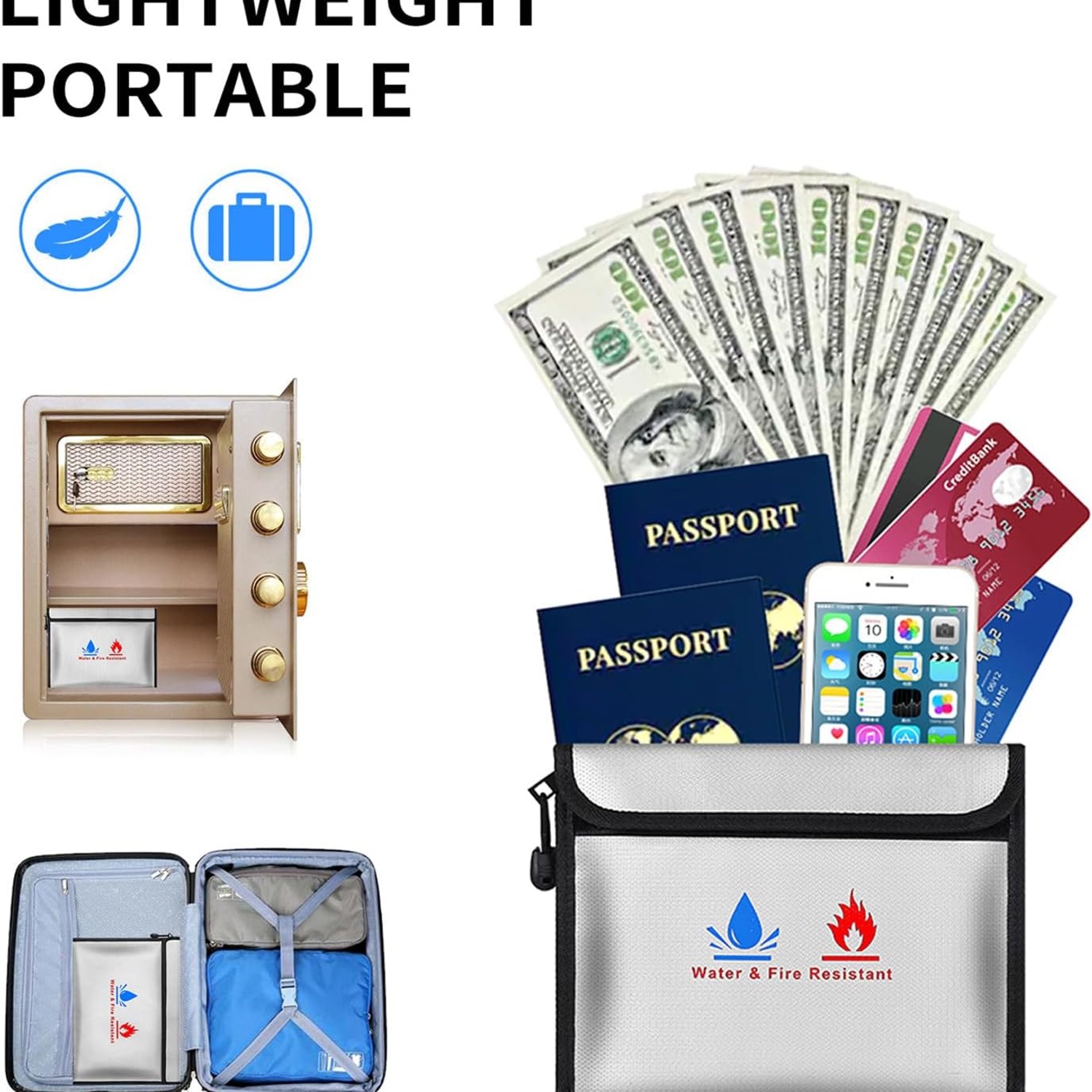
The supplier suggests cash, passports, certificates, insurance papers and jewellery. Those examples describe possible uses, not a promise that every version of each item will fit. Some certificates are full-size sheets. Insurance documents can run to many pages.
Think about access as well. If you use a passport storage pouch for travel, you may want it separate from papers that stay at home. The two-piece format lets you make that split without unpacking everything whenever your plans change.
Know which dimensions you are reading
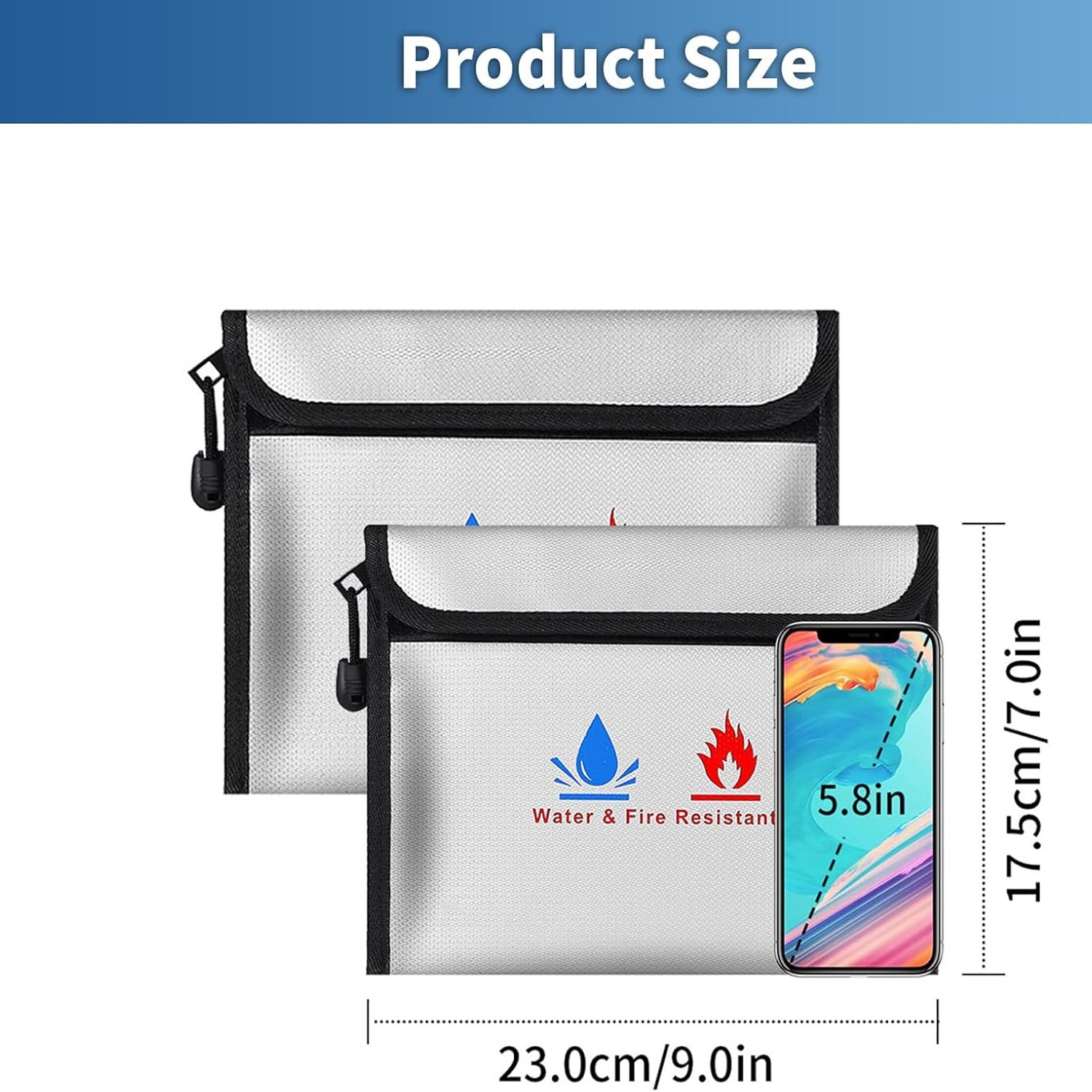
Each pouch is listed at approximately 23 x 18 cm, or 9 x 7 inches. The package dimensions are 24 x 18 x 3.2 cm. These are different measurements, and neither tells you the exact usable internal space.
That distinction matters near the edges. Seams and the opening can reduce the room available for contents. An item that matches the outer size exactly may not fit comfortably inside.
An A4 sheet measures more than the listed pouch size, so it will not lie flat. If you want to store A4 papers, you would need to fold them. For originals that must stay flat, a larger document holder is the more suitable choice.
A useful check is to mark out 23 x 18 cm on paper. Place your intended contents within that outline, leaving spare room around them. This is only a rough screen, but it can rule out an obviously unsuitable size.
Understand what fire resistance means here
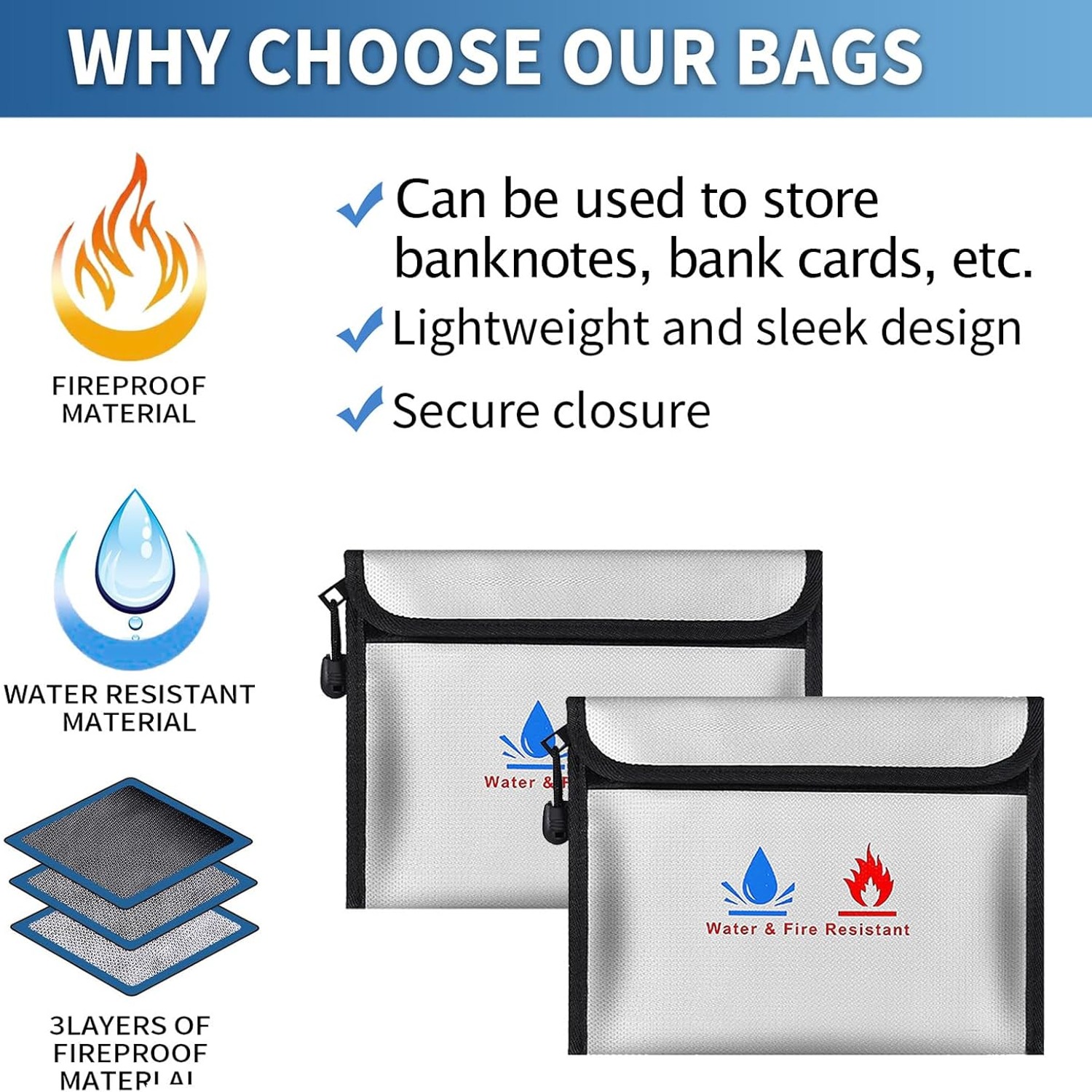
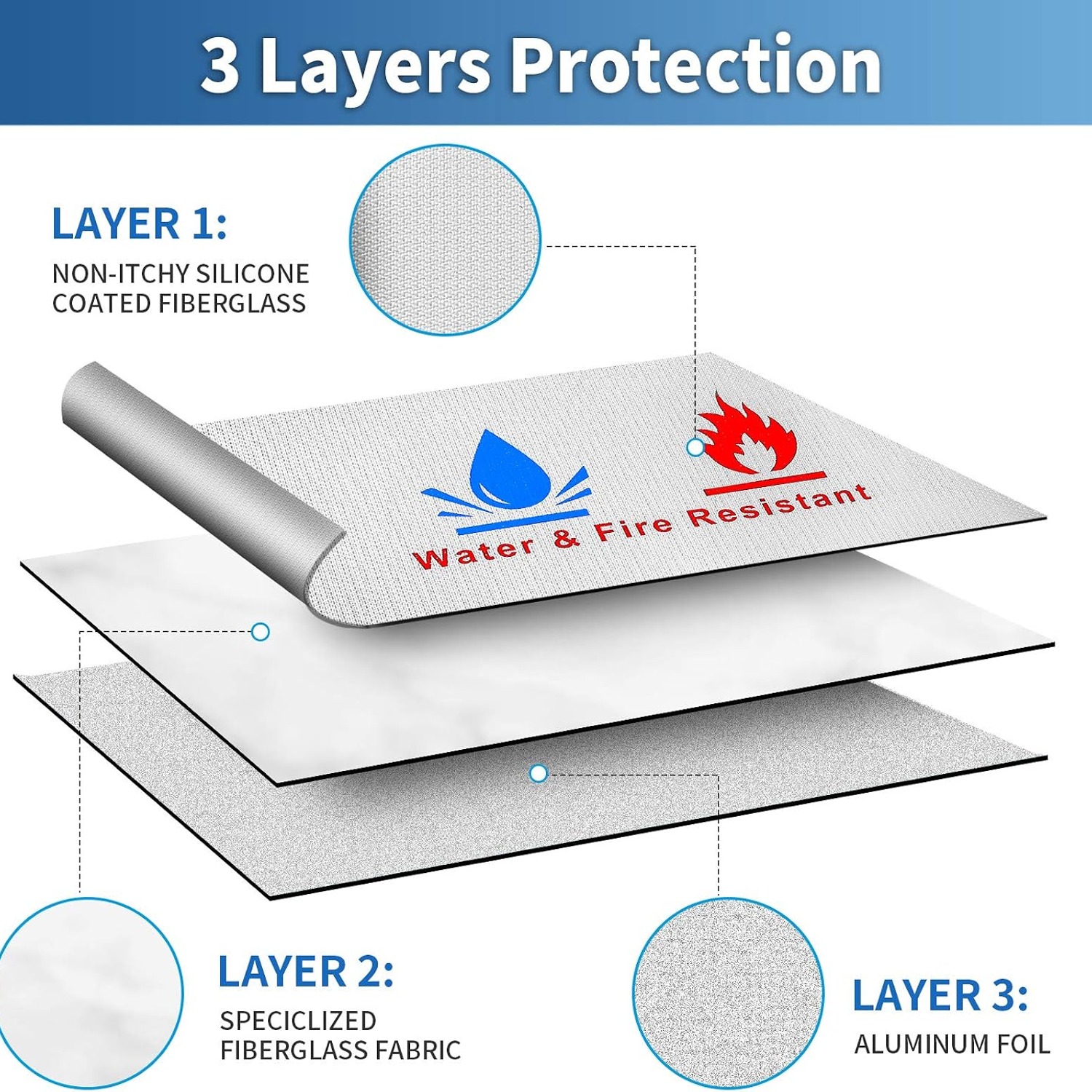
The supplier describes a silicone-coated fibreglass exterior and an aluminium foil interior. It markets the pouches for resistance to fire and water. Those are supplier claims, and the supplied record does not include independent test evidence.
A temperature number alone does not tell you how documents will fare in a real fire. Exposure time, the way a product is tested and the temperature reached inside all affect the result. A claim without that context is not the same as a verified document protection rating.
For that reason, treat this fire resistant document pouch as an extra storage layer. Do not assume that its contents will survive every fire. If you need a defined level of protection, look for independently tested storage with clear limits that match your needs.
Never try to confirm the claim with a lighter, stove or open flame. A home test is unsafe and cannot establish a reliable rating.
Keep water resistance in perspective
Water resistance is another area where wording can create false confidence. A pouch described as water resistant should not automatically be treated as a dry bag or a container suitable for submersion.
The supplied record does not establish verified protection against flooding or prolonged soaking. Closure details are also not specified. Those gaps matter when you are deciding where to keep paper records.
Choose a dry storage location away from obvious leak risks. If a pouch gets damp during normal handling, remove vulnerable papers where safe and allow everything to dry before repacking. Do not store damp documents in a closed pouch and expect the storage layer to solve the moisture problem.
Use the pair to reduce clutter
Two pouches can be more useful than one larger mixed collection when the contents have clear roles. You might use one as a cash storage pouch and the other for travel papers. Another approach is to separate items used often from those rarely needed.
Keep the system simple enough to remember. If you divide papers by a rule that makes sense only on packing day, finding them later may still be difficult.
Avoid making either pouch a catch-all for loose objects. A portable document holder works better when you can see what belongs there and notice what is missing. Review the contents after a trip or a paperwork change, rather than letting old receipts build up around current records.
Decide whether it suits your routine
This set may suit someone who wants small, flexible storage for selected belongings at home, at work or while travelling. The supplier describes the pouches as foldable, and the listed item weight is 230 g.
A foldable document bag is a different choice from a rigid case. It can be practical when you want a flexible format, but you should not assume it gives crush protection. Nor should you assume there are internal dividers or padded sections, as these are not specified.
For a travel document organiser, consider how often you need access. If you want separate card slots, visible pockets or a particular closure style, confirm those details before buying. This record does not establish those features.
Pack for fit rather than maximum capacity
No capacity figure or maximum contents thickness is supplied. That makes a careful fit check more useful than guessing how much you can squeeze inside.
Start with the items you most need to group. Add them without forcing the pouch into shape, then check whether it closes properly. If the contents strain the closure, reduce the load rather than pushing harder.
Keep sharp edges away from the pouch surfaces. Jewellery may need separate wrapping or a small holder to stop pieces rubbing together, since dedicated padded compartments are not listed.
Do not use the pouch's fire-related name as a reason to store hazardous items inside. A document storage product should not be assumed to be a battery safety enclosure or a container for flammable substances.
Choose a sensible storage place
A pouch is easier to use when it has a consistent location. Pick somewhere appropriate for your household and make sure the people who need access know where it belongs.
For an emergency document pouch, the aim is to reduce searching, not to create a reason to delay leaving. In a fire or other dangerous event, people come first. Never go back into danger to retrieve papers, cash or valuables.
Keep copies of important records where appropriate, with attention to privacy and access. A physical storage pouch and a backup serve different purposes. Neither removes the need for the other when losing an original would cause serious difficulty.
Care for the pouch and its contents
Simple handling habits help you keep track of wear. Check the surface, seams and closure area before use. If something looks damaged, reassess whether the pouch is still suitable for the items you planned to store.
For routine dirt, remove the contents and wipe gently with a soft cloth. Avoid harsh cleaners and unnecessary scrubbing. Specific machine-washing or drying instructions are not provided, so do not assume those methods are suitable.
Allow the pouch to dry fully before returning papers. Check contents now and then too, especially after travel or damp conditions. Storage should make inspection easier, not mean important records stay out of sight for years.
Check the details before ordering
The most useful buying questions are practical. Will the contents fit with room to close? Do your papers need to stay flat? Are you looking for organisation, a stated protection rating, or theft protection?
This record does not specify a lock, usable internal measurements, brand, colour or warranty. Delivery lead time is also not supplied. Check current storefront information for delivery estimates and the applicable returns process.
If you are buying a jewellery storage pouch or small certificate holder as a gift, explain what it is intended to do. Practical organisation is a useful benefit without promising protection that has not been verified.
The short version
Choose this two-pouch set if you want compact storage for selected small documents, cash or valuables. Check the listed 23 x 18 cm size carefully and leave room for the opening and closure.
Use it as part of a sensible storage routine, with dry surroundings, regular checks and backup records where needed. For specific fire, water or security protection, choose a product with verified ratings rather than relying on the word “fireproof” alone.