
The complete guide
A Practical Guide to Choosing a Fireproof File Organiser
Important papers have a way of spreading out. A passport ends up in one drawer, an insurance policy in another, and the document needed for an appointment is somewhere in a pile. The problem is not always a lack of storage. Often, it is a lack of one clear filing system.
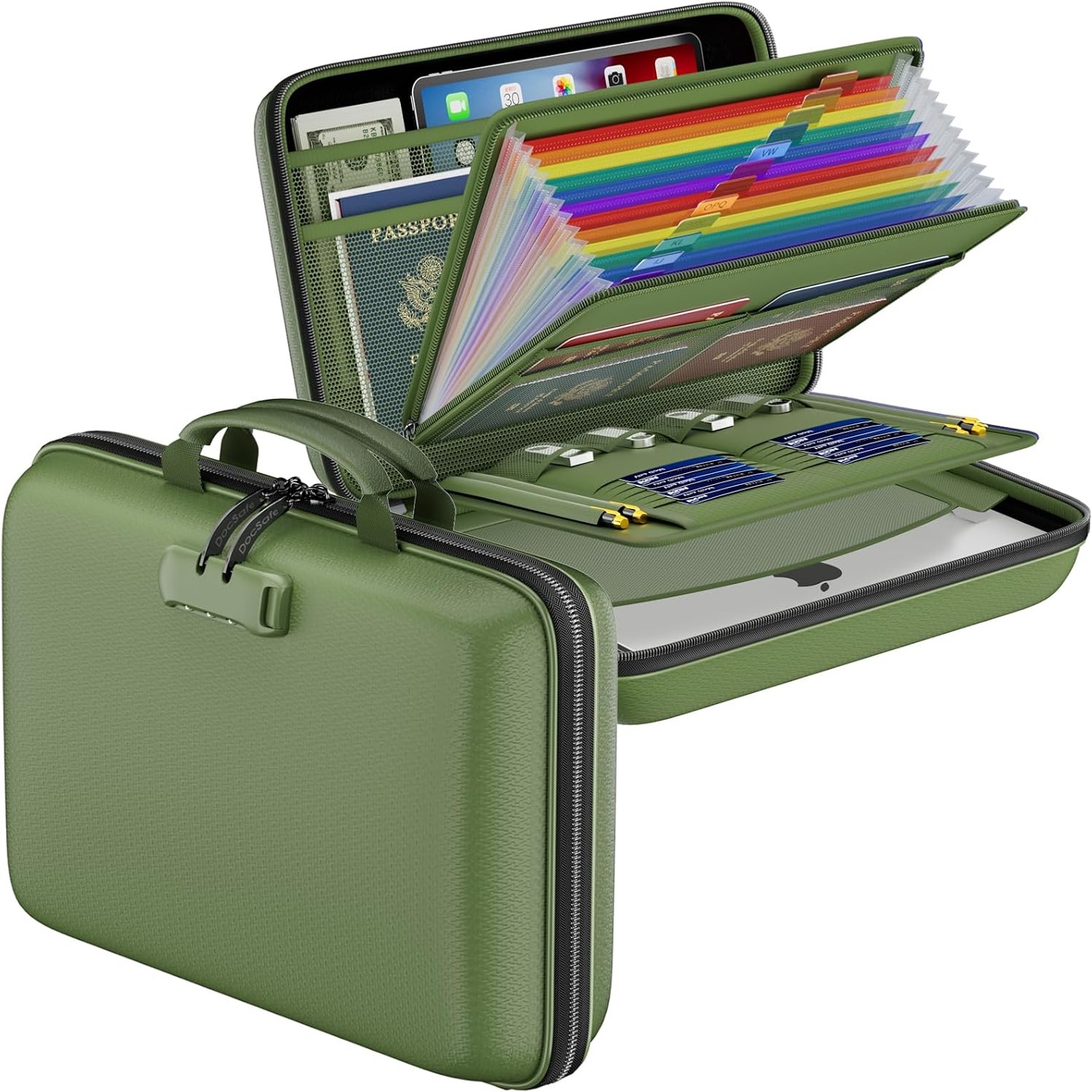
A Fireproof File Organiser brings selected records into a single portable case. This model adds labelled accordion pockets, smaller storage sections and a combination lock within a hard-shell exterior. Before buying, it helps to look beyond the product name and consider fit, access and the limits of its protection claims.
Start with the paperwork you actually need to store
Begin by gathering the documents you want to keep together. Spread them out and group them by purpose. You might separate identity papers from household records, or keep current office work apart from records you rarely need.
This simple step tells you more than a capacity figure can. A handful of certificates needs a different layout from years of statements. Passports and cards also need somewhere secure within the case, rather than sitting loose between sheets.
An important document storage system should be easy to maintain. If it takes too much effort to put a paper away, the loose pile tends to return. Choose categories that reflect how you look for things, not a filing method that feels impressive but is hard to remember.
How the accordion layout helps
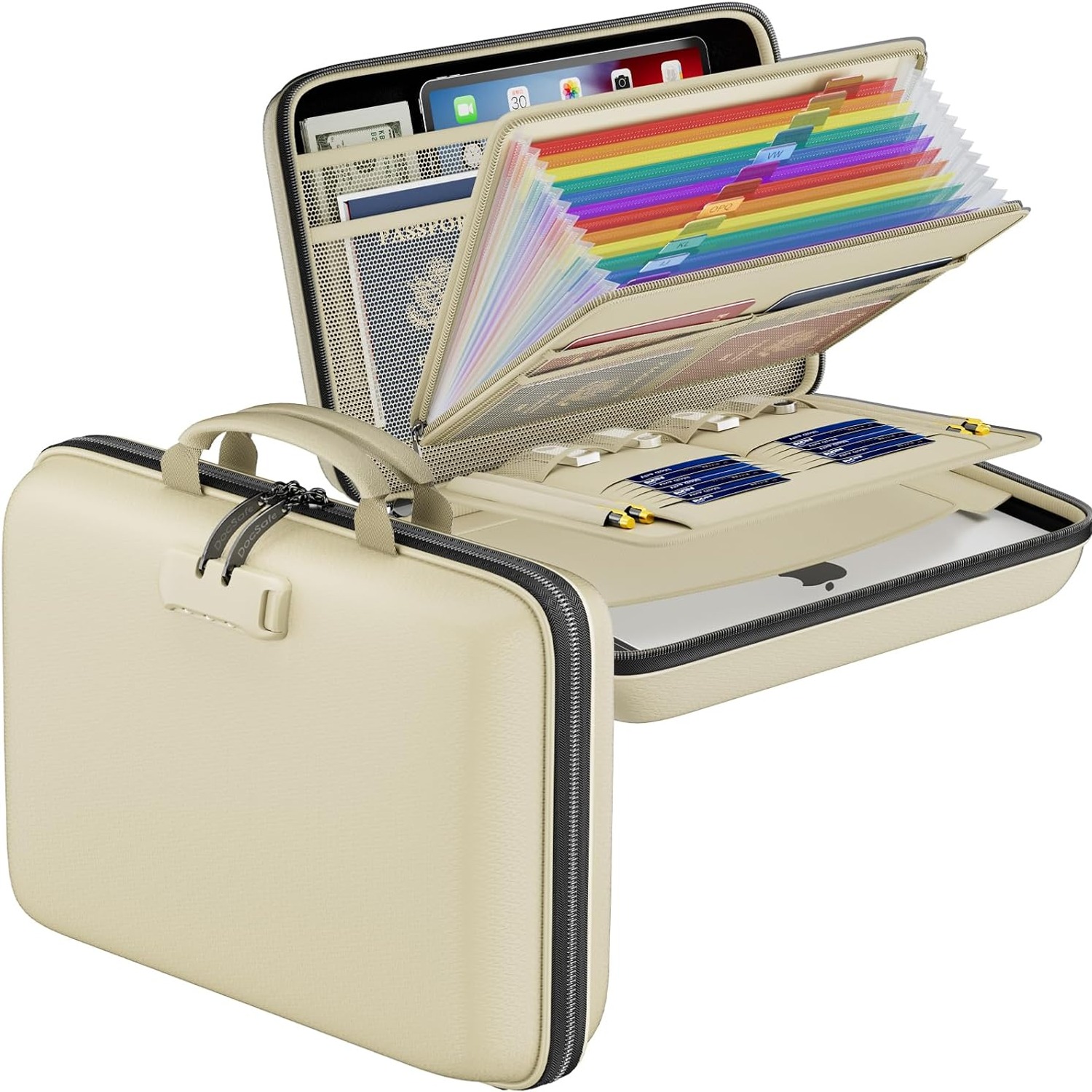
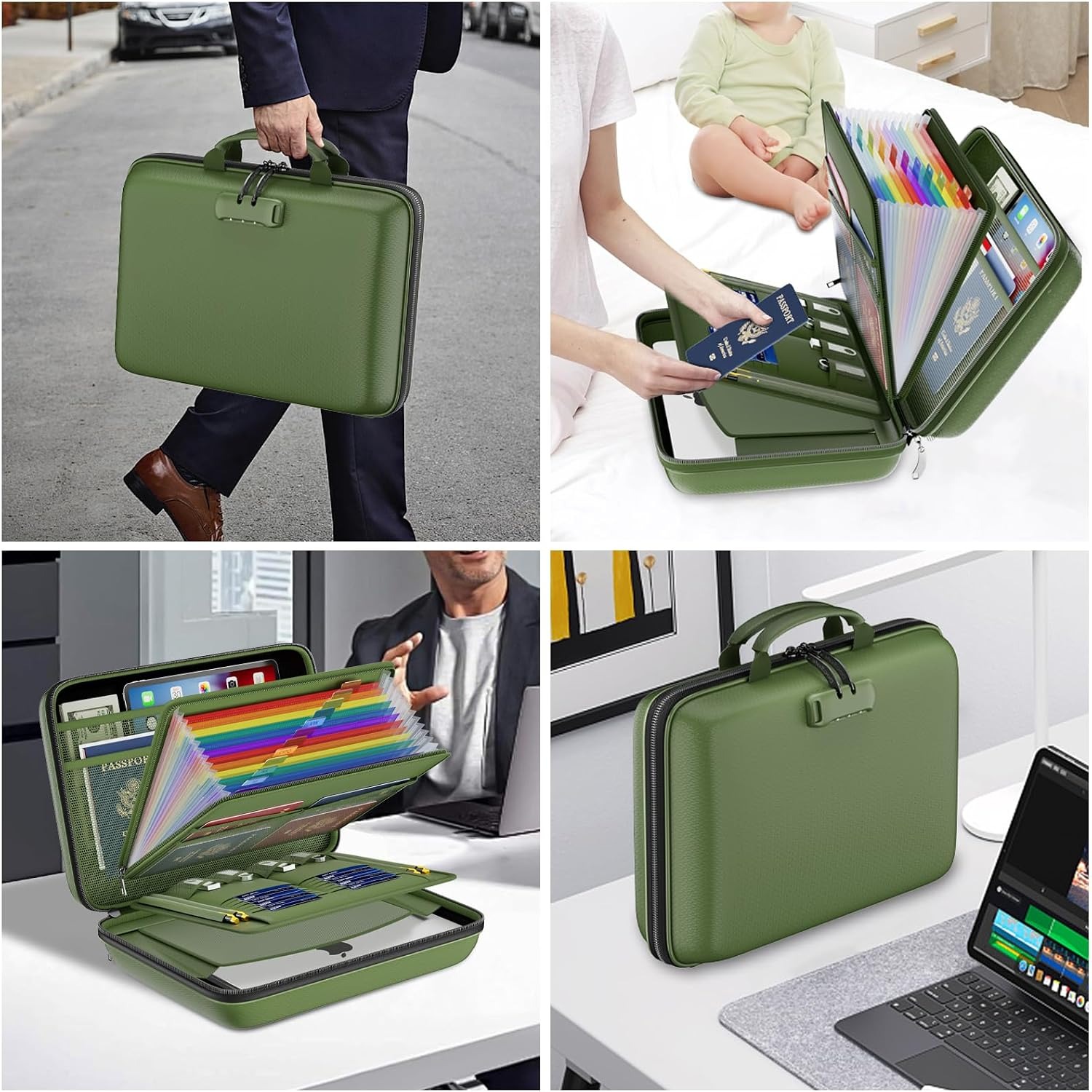
This organiser has 13 labelled accordion pockets. These divide the main filing area into separate groups, so you can look through one category without removing every document.
A labelled accordion file works well when each section has a clear job. Broad labels can be easier to keep current than very narrow ones. For example, a household section may be more useful than several almost-empty pockets for individual bills.
There are also smaller storage areas. The maker lists four passport holders, 14 card slots, four pen slots, mesh bags, a zipper pocket and a main pocket. These offer places for items that would otherwise slide to the bottom of a file case.
The details also list 14 compartments. That should not be read as 14 accordion pockets. The specific accordion count is 13, with the other sections described separately.
Understand what “fireproof” does and does not tell you
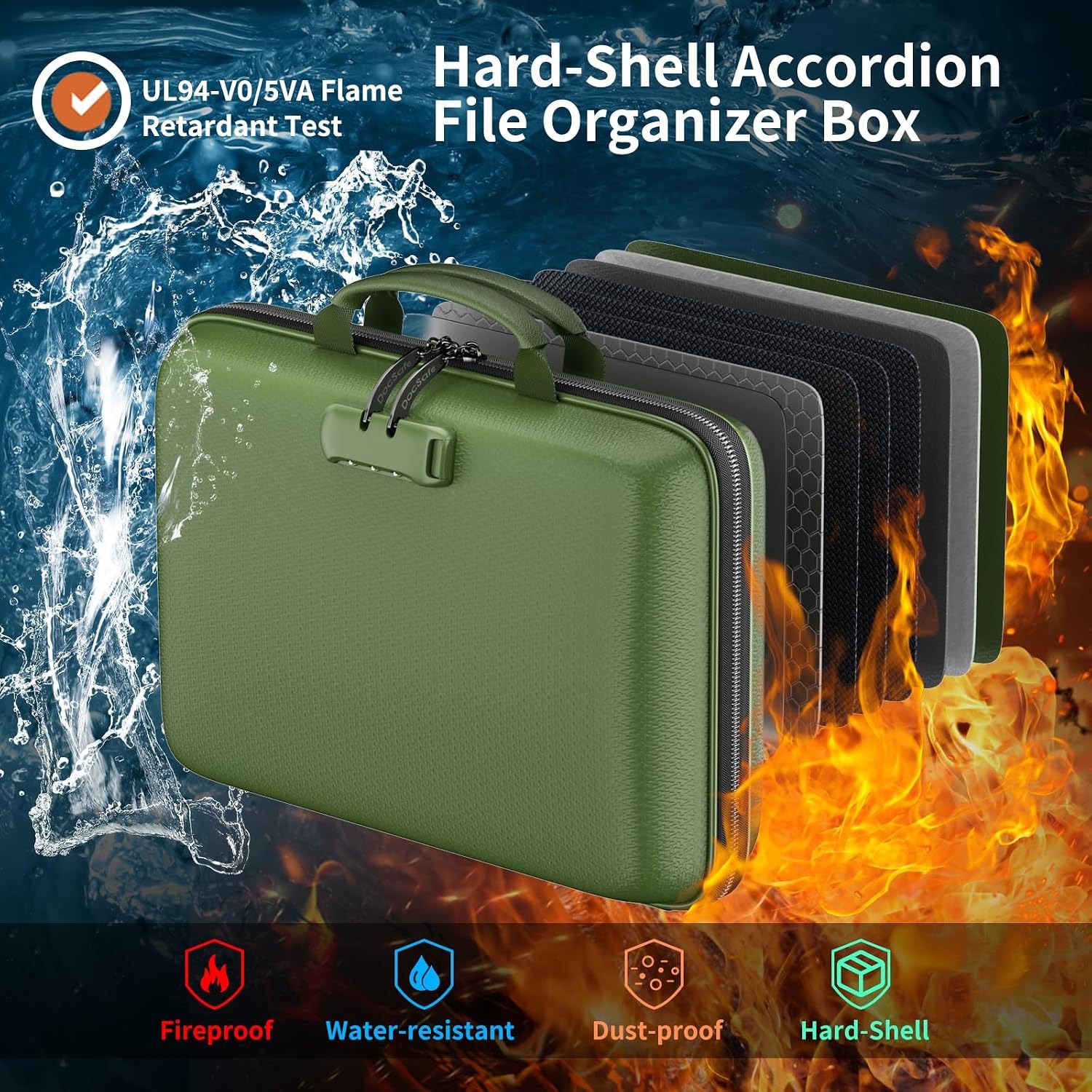
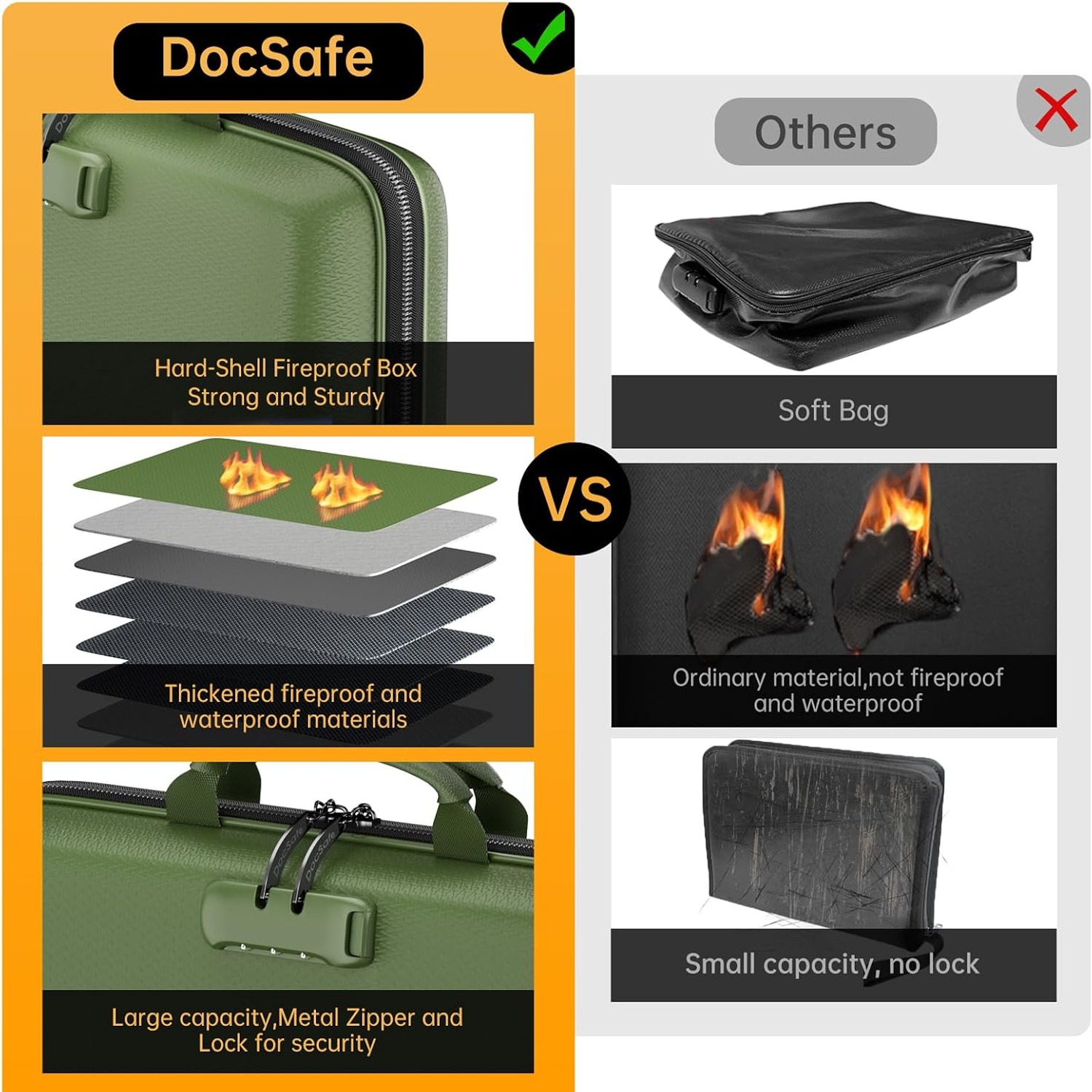
The Fireproof Document Box name describes the product category, but it does not establish a tested level of protection on its own. The maker describes silicone-coated, heat-insulating cotton material combined with a hard shell.
The maker does not provide a verified fire-resistance temperature or protection duration. It therefore cannot tell you how long documents would remain protected in a particular fire. Conditions vary, and a portable file case should not be treated as a rated fire safe.
That distinction matters when choosing where to store irreplaceable originals. If you need a specific level of fire protection, look for a product with documented testing that applies to the complete storage unit and your intended contents.
For everyday planning, think of this case as an organiser with maker-described protective materials. Keep separate copies of vital information where appropriate. Never enter or remain in an unsafe building to retrieve paperwork.
Water resistance has limits too
The product details describe a water resistant document case. They do not describe a waterproof container.
That means you should not plan around protection during immersion or flooding. The maker's description also does not give a water-resistance test level or a duration for exposure. A closed zipper is not enough evidence to assume a watertight seal.
Choose a dry storage location away from obvious sources of leaks. Avoid leaving the case on a floor where water could collect. These basic placement choices remain useful even when a storage product has water-resistant materials.
If water protection is your main concern, compare products using specific, documented water-protection information rather than a broad description alone.
Check dimensions before capacity
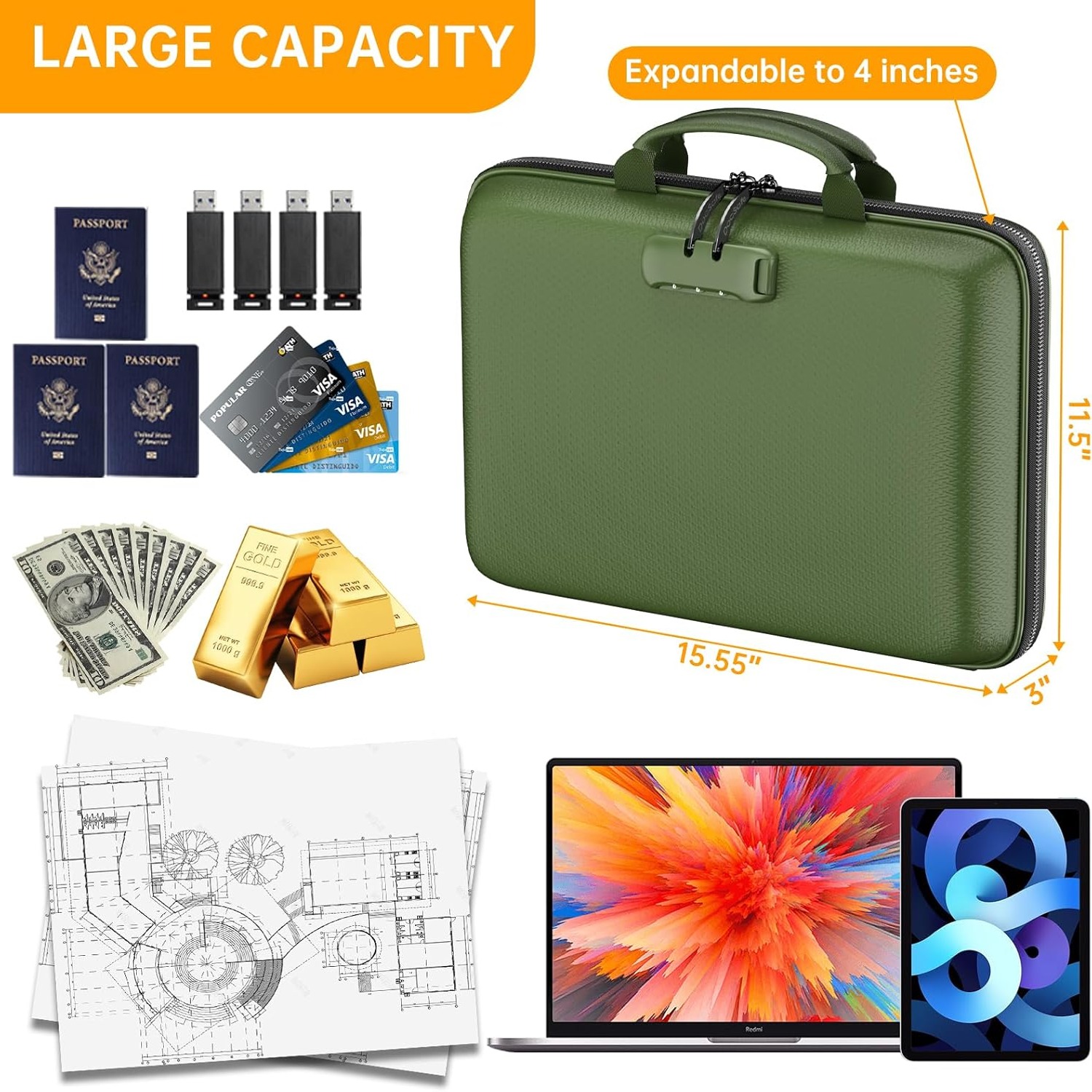
The listed outer dimensions are 39.5 × 7.6 × 29.2 cm. The maker also gives an inch size of 15.5 × 11.5 × 3 and says the thickness can expand up to 4 inches.
These are outer measurements. The shell, lining, dividers and closure take up space inside. A folder that matches the outside length closely may still be too large for an internal pocket.
The maker includes a 15 L capacity figure, but usable internal dimensions are not given by the maker. Treat that figure as a maker-stated specification, not a promise that a particular stack or device will fit.
Measure your largest documents, including any sleeves or covers you intend to keep. Rigid folders need more clearance than loose sheets. Legal-size paperwork deserves particular care because the maker's description only suggests that it may fit.
Choose for paper first, then other items
The maker suggests storage for documents, passports, cards, small valuables and a laptop. That does not mean every item can be packed together, or that any laptop size will fit.
If you want to carry a device, measure its full width, depth and thickness. Screen size alone is not enough. You will also need space for documents without pressing them against the device or straining the closure.
For most buyers, it makes sense to plan this as a hard shell document organiser first. Add smaller items only after you know that your essential papers fit comfortably.
A case that closes easily is more useful than one packed to its limit. Leave enough room to remove a file without pulling out everything around it.
Think about access and the combination lock
This lockable document box has a built-in combination lock and a double metal zipper. A keyless closure can be convenient when you do not want another small key to keep track of.
However, no forced-entry or security rating is specified. Do not assume that the lock provides the same protection as a substantial security safe. Portability and high-security storage are different needs.
Read the supplied manual before setting the combination. Test the code while the case is empty, and make sure you understand the opening process before storing anything important.
An accordion file with lock also needs a sensible access plan. Consider who may need the documents if you are away, and arrange access without leaving the code openly attached to the case.
Who this format is likely to suit
A family paperwork organiser can be useful when several people share responsibility for records. Clear labels help each person find and return the right papers.
For home office use, it offers a way to group selected files without dedicating a drawer to them. It can also suit someone who takes paperwork to appointments and wants to move a whole set together.
The top and side handles support carrying in different orientations. The listed empty weight is 907 g, so remember to include the weight of your contents when deciding how portable the packed case will be.
It is less suited to someone seeking a large archive or a fixed security safe. If your records already fill several deep folders, first reduce the collection or choose storage designed for that volume.
Make the pocket system easy to use
Set up the case before filling it. Decide which categories deserve their own pocket and which can share one. Keep frequently used papers in sections you can identify quickly.
A passport document organiser is most helpful when travel records remain current. Remove expired booking sheets and outdated copies rather than letting them crowd the documents you still need.
The same applies to office and household files. Review the contents from time to time, especially after a move, renewal or other change that creates new paperwork.
Avoid storing unrelated small items simply because there is a spare slot. A tidy layout is easier to check, and you are less likely to overlook a missing document.
Care for the case and its contents
Follow the included instruction manual for product-specific care. For routine cleaning, empty the case and gently wipe the exterior with a soft cloth.
Avoid soaking it or using abrasive cleaners. Let the case dry before returning paper documents, and keep it away from direct heat. Do not try to test its protective claims with a flame or water.
Watch how the zipper closes. If you need to pull hard, reduce the contents rather than forcing it. Overfilled pockets are also harder to browse and may put pressure on paperwork.
Keep your storage location practical. Portable document storage is easier to use when the case has a regular place, rather than being tucked somewhere different each time.
The short version
This Fireproof Accordion File combines 13 labelled pockets, dedicated small-item storage, a combination lock and carry handles in a hard-shell case. It is an option for keeping selected household, office or travel documents together.
Check fit carefully, allow space around your papers and read the lock instructions before use. Most importantly, keep the protection claims in perspective. Water resistance is not waterproofing, and no verified fire-protection duration is provided here.
Choose it for a filing layout that suits your routine, with separate backups and storage choices for records you cannot afford to lose.