
The complete guide
Choosing a Key Lock Box for Shared Access
A spare key needs a better plan than a hiding place
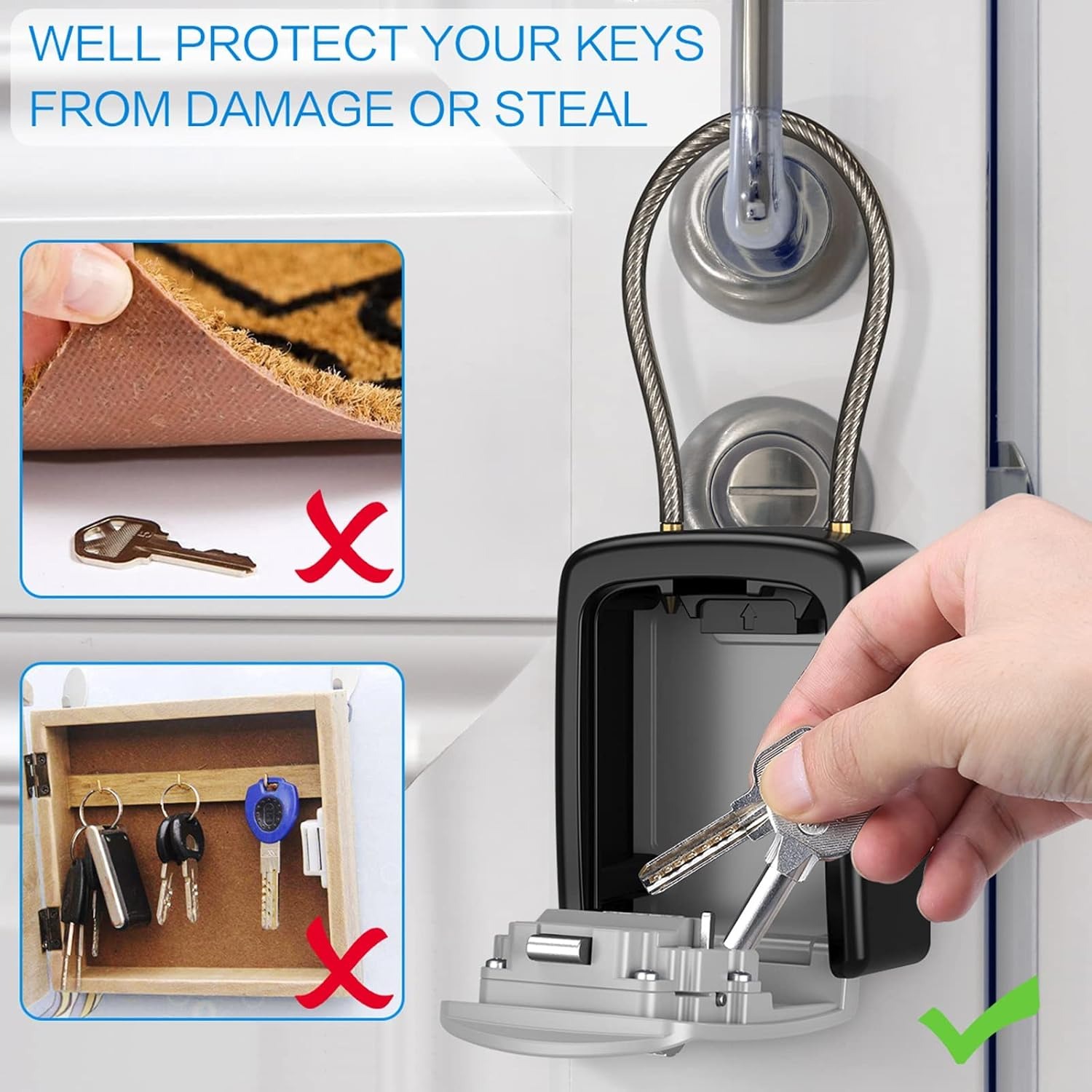
Leaving a key under a pot may feel convenient, but it also leaves you wondering who could find it. Handing out several copies creates a different problem. You have to remember who has each one and arrange to get them back.
A key lock box with shackle offers another way to manage the handover. The key stays in a defined place, and trusted people use a combination to collect it. That can help when a pet sitter visits, family arrives before you get home, or someone needs to enter a holiday property.
The right choice depends on more than the number of dials. Your keys must fit, the hanging point must suit the attachment, and the box must meet your expectations for security. This guide explains what the listing tells you and what is worth checking before purchase.
How this portable key safe works
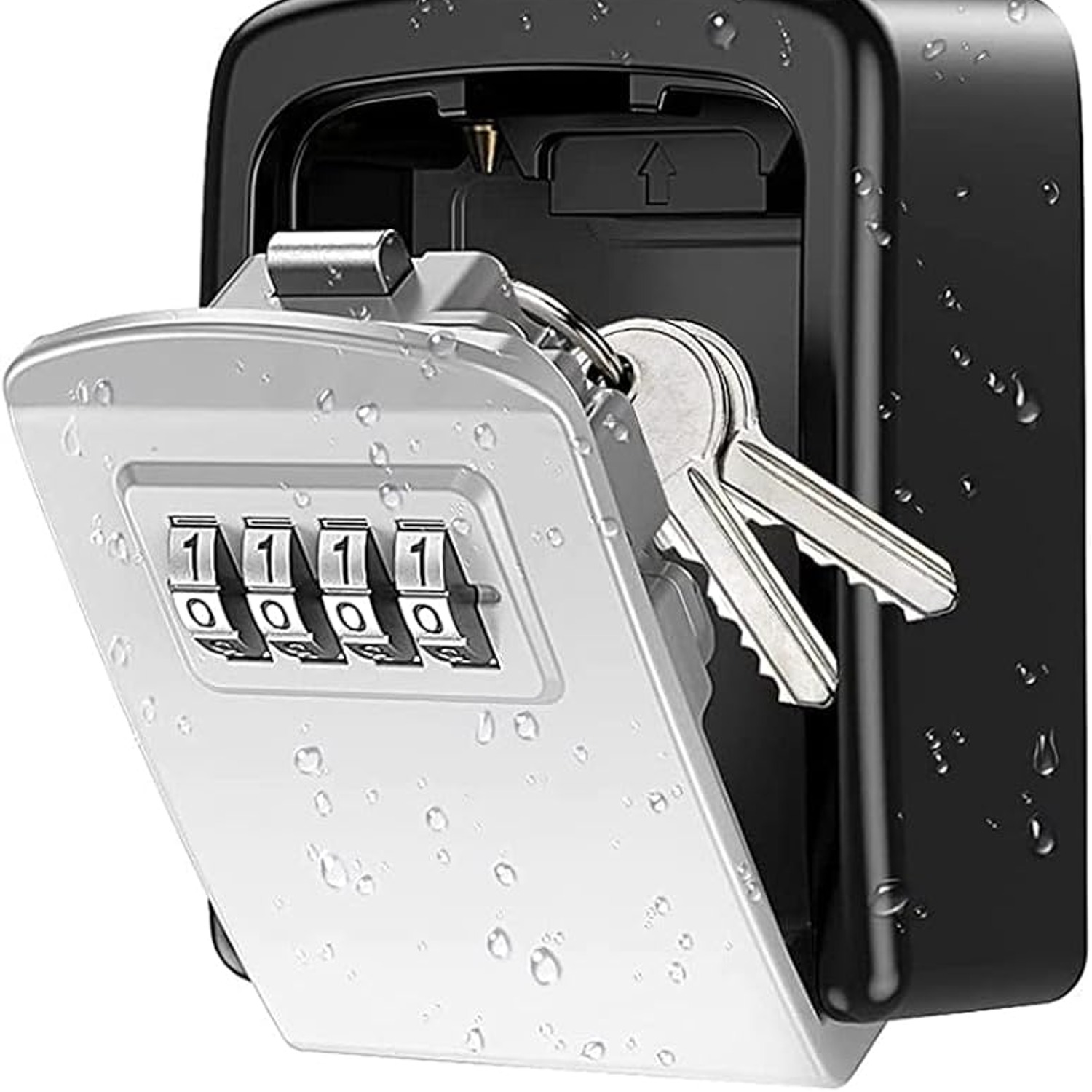
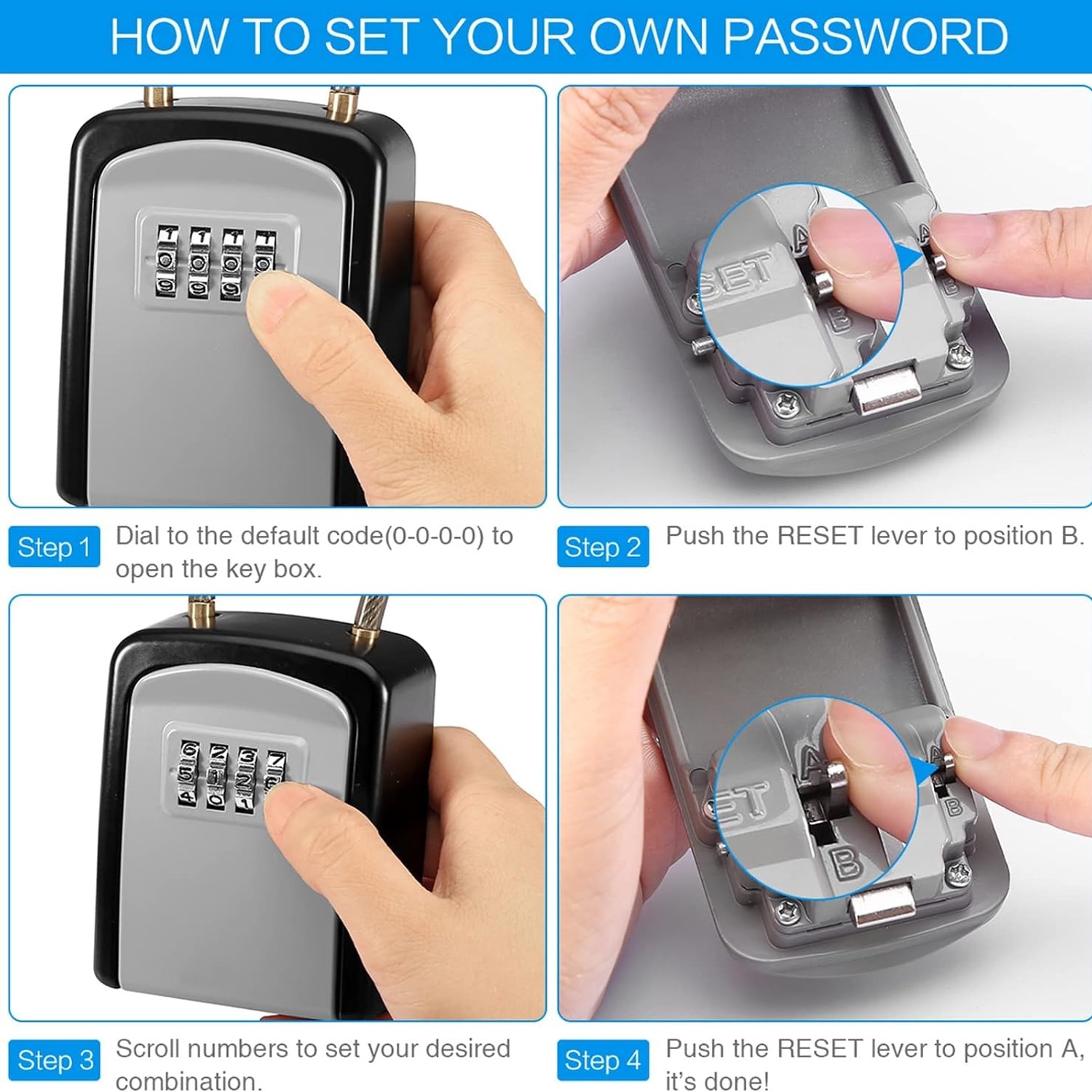
This model is described as a four-dial combination key storage box. The dials offer up to 10,000 possible settings, and the code can be reset when your access needs change.
In everyday use, the idea is simple. A trusted person opens the box using the code, takes the key and returns it after use. You should agree on that last step in advance. Even a well-placed box cannot help the next visitor if the key has been left inside the house.
The supplier describes a shutter that covers the dials. Close it after use to help shield that area from weather. Follow the supplied instructions for the exact opening, resetting and closing steps rather than assuming they match another box you have used.
Check the keys before counting them
The listing states a capacity of up to five house keys. Treat that as a guide, not a promise that every set of five will fit. Key heads, long blades and rings all take up space.
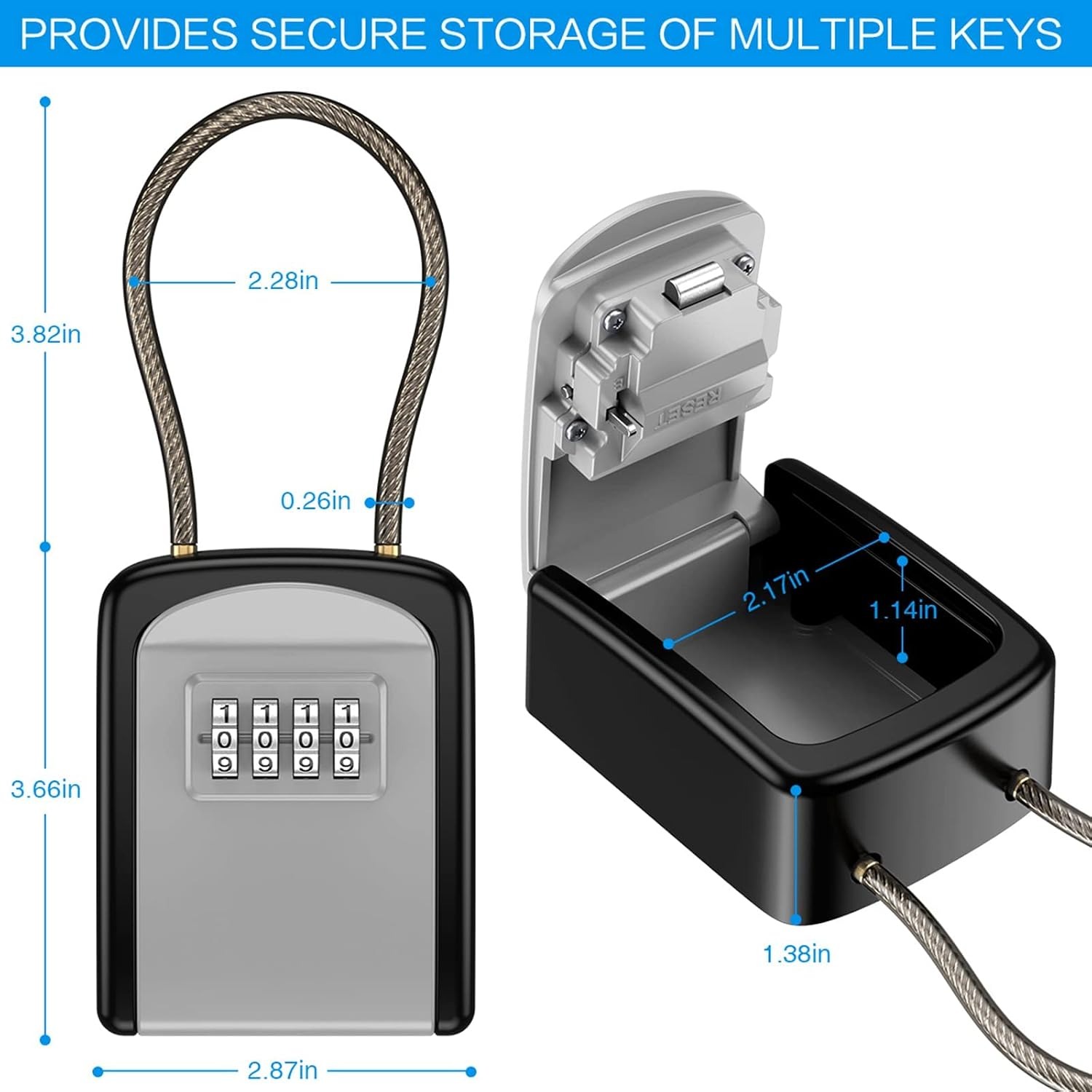
Approximate internal dimensions are given as 2.17 x 1.38 x 1.14 inches. Measure the full items you want to store, including plastic covers and attached rings. If you are storing a key bunch, consider whether a single spare key would be enough for the intended visit.
A small key lock box may look roomy beside a bare house key yet feel tight with a car fob. The supplier mentions car keys, USB drives and access cards, but each needs its own fit check. Avoid planning around an item that only just matches the stated measurements.
The compartment should close without forcing the contents against the mechanism. Leave enough room for a visitor to remove and replace the key easily.
Choose the hanging point with care
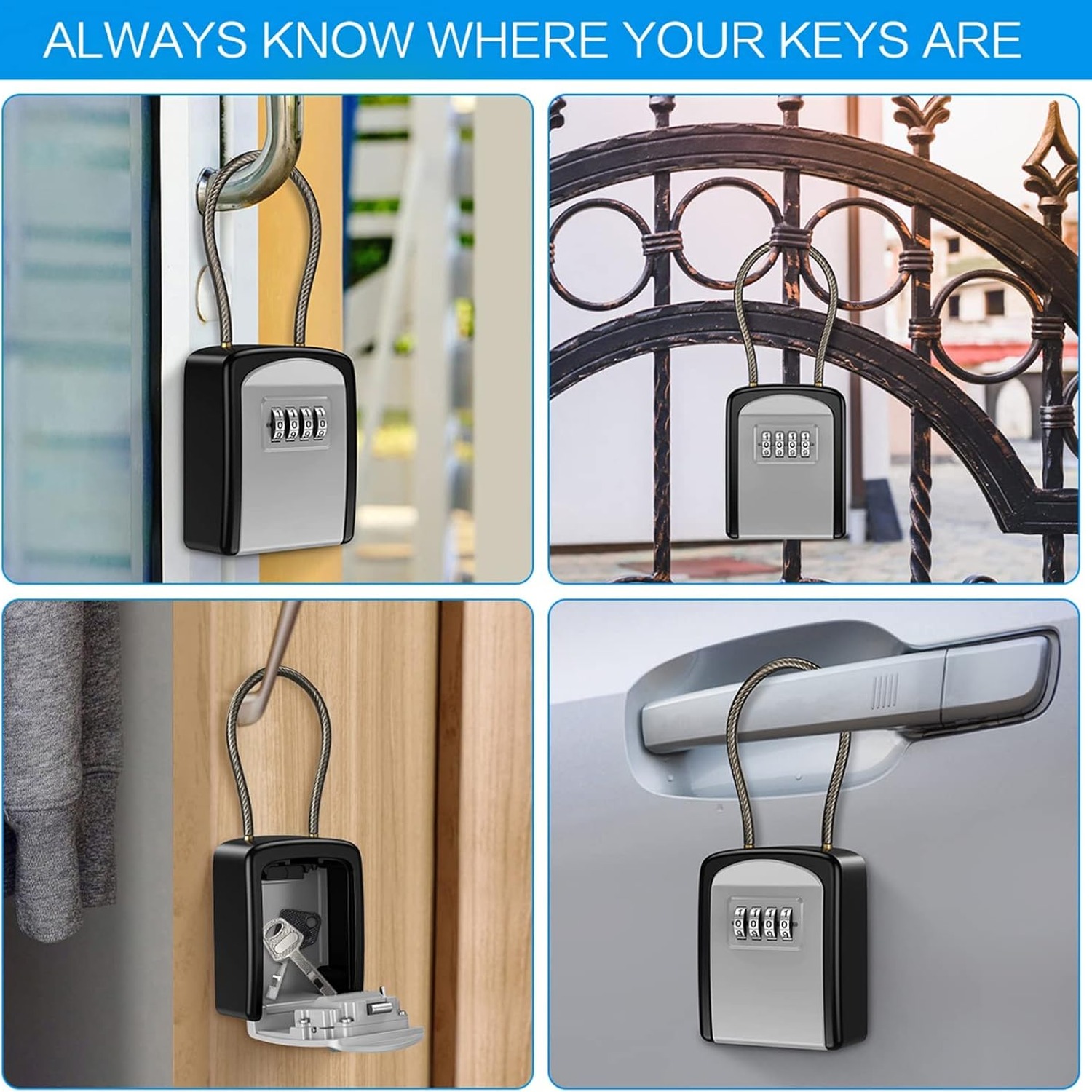
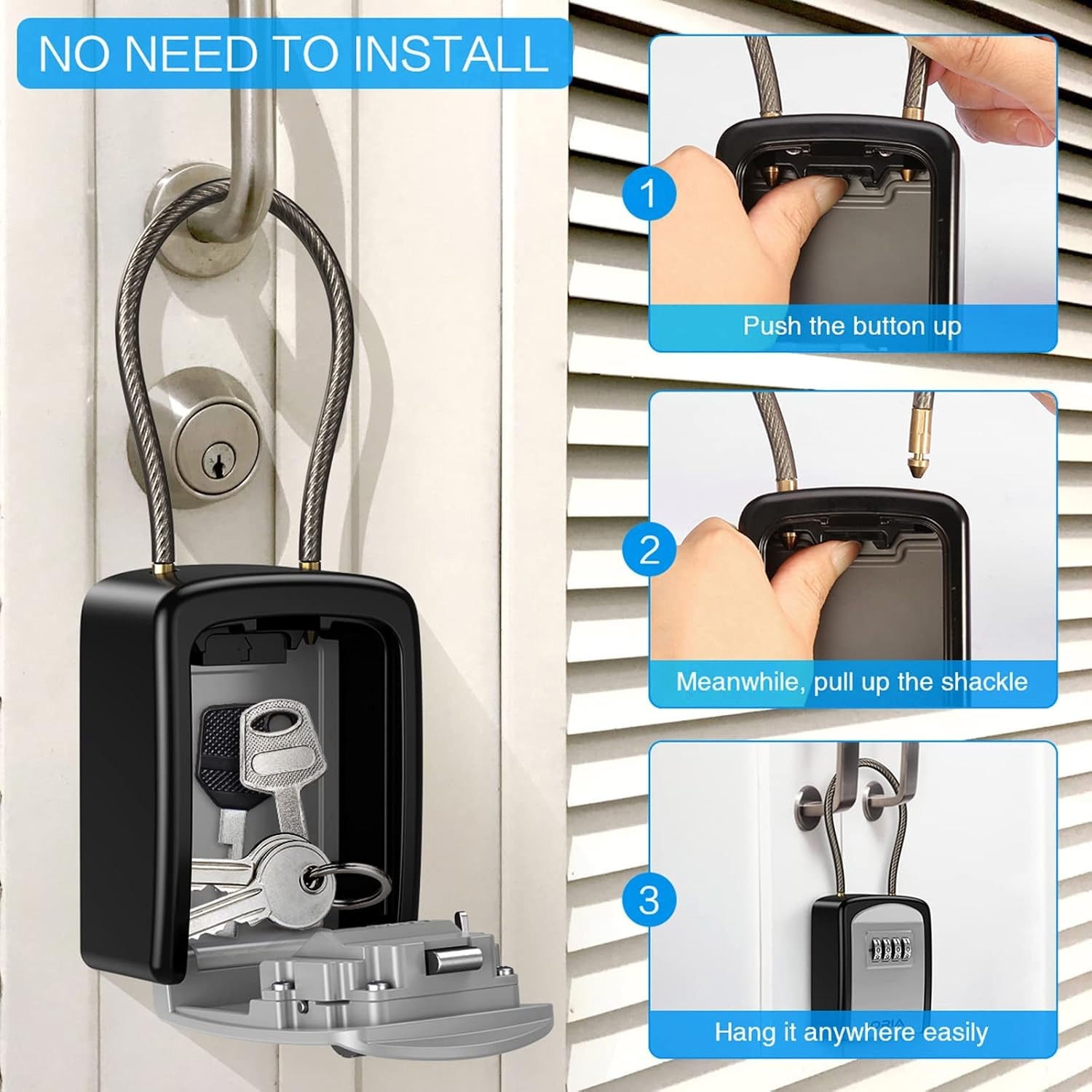
The removable chain is a useful part of this hanging spare key holder. The supplier describes it as an option for hanging the box where needed. However, chain length, thickness and opening measurements are not provided.
Before buying, look at the actual fixing point. Is it suitable for an attachment? Can a visitor reach the box without awkward bending? Will the box knock against a door, block a handle or interfere with a latch?
A door key safe should not make the door harder to use. Think about movement when the door swings, not just how the box would sit while everything is still. Also check any rules that apply to shared entrances or rented property.
The record also lists wall mounting. That does not confirm which fittings are included or how installation should be done. If wall mounting is your plan, confirm the instructions and hardware before making holes.
Match it to the people who need access
A pet sitter key safe can make visits easier when your schedule changes. Give the sitter clear directions and let them try the process before you depend on it. A quick practice visit can reveal a poor location or confusing instructions.
For family use, agree on one routine. The key goes back into the box, the closure is checked and the dials are moved away from the opening code. Keeping that routine consistent matters more than writing a long set of rules.
A holiday home key box brings another consideration. Different visitors may need access at different times. Plan when you will change the code and who will check that the key is still inside.
This is a physical key handover system. The record does not describe access logs, remote code changes or electronic visitor management. If you need those features, compare a different type of product.
Understand what the security details mean
The supplier describes a zinc alloy body and hardened-steel shackles. It also uses durability claims, but the record provides no independent security grade or tested attack-resistance rating.
That distinction matters. Construction details tell you something about the product, but they do not prove how long it would resist a determined attempt to open it. Likewise, 10,000 possible codes do not make the whole access arrangement secure on their own.
Placement, attachment and code sharing all affect the plan. Avoid an obvious code such as a repeated digit or a number displayed on the property. Share it only with people who need it, and change it when that need ends.
If an insurer, landlord or workplace requires an approved key storage device, ask what standard it must meet. Do not assume this portable combination lock box qualifies when certification is not stated.
Think of outdoor use as a placement decision
The supplier lists this model for indoor and outdoor use. It describes a protective shutter and uses waterproof wording in the product details. There is no stated water-ingress rating or immersion test in the record.
For that reason, a sheltered location is a practical starting point. Avoid places where water pools or where the box would sit in direct spray. A shutter helps cover the dials, but it is still worth checking the box after severe weather.
An outdoor key safe also needs to remain easy for the intended person to use. Think about lighting, reach and whether the numbers will be easy to see at the usual arrival time.
Do not place it somewhere hazardous simply to keep it out of sight. A sensible position balances access, discretion and protection from the weather.
Set up the code before relying on the box
Read the instructions fully before changing the combination. Resetting methods vary between products, so experience with another resettable key safe is not a substitute for this model's directions.
Choose the code in private and keep a secure record away from the box. Avoid leaving it in a message or note that others can easily see. If you send it to a visitor, include only the information they need.
Test the new setting with the compartment open before putting keys inside. Then check normal opening and closing while you still have another way into the property.
For an emergency access key box, this preparation is especially important. No code recovery process is specified here, so do not make it your only access option without a backup plan.
Keep care simple and regular
Wipe the exterior with a soft cloth when needed, then dry it. Keep dirt and grit away from the dials and close the shutter after each use.
Check the hanging attachment and closure from time to time. Look for damage, unusual movement or anything that makes opening and closing harder. If something feels wrong, deal with it before the next person depends on the key.
Avoid forcing a crowded compartment shut. Rearrange the contents or remove unnecessary rings instead. A spare key lock box works best when the key can be collected and returned without a struggle.
Follow any care directions included with the product. The record does not specify a lubricant or cleaning chemical, so there is no reason to add one without checking the instructions.
Confirm the details that affect your order
The listed external dimensions are 7.5 x 6.5 x 3 cm, and the item weighs 299 g. Product details list white, while the separate colour attribute is blank. Confirm the selection if appearance is important.
Delivery lead time is not specified in this record. Check the current estimate for your address, particularly if you need the box before a trip or a sitter's first visit. Leave time to inspect it and practise the setup.
The supplier mentions a 1-year warranty and a 45-day money-back offer. Confirm how those terms apply to your order and which contact handles a claim. Keep the order details and packaging until you have checked fit and operation.
The short version
This four dial key box suits planned spare-key access where the listed size and hanging arrangement fit the job. Its resettable combination, removable chain and dial shutter are the main features to weigh up.
Measure your keys, assess the fixing point and check any security requirements first. Then make a clear routine for sharing the code and returning the key. A little planning makes shared access easier to manage.