
The complete guide
Choosing a Push Button Key Safe for Shared Access
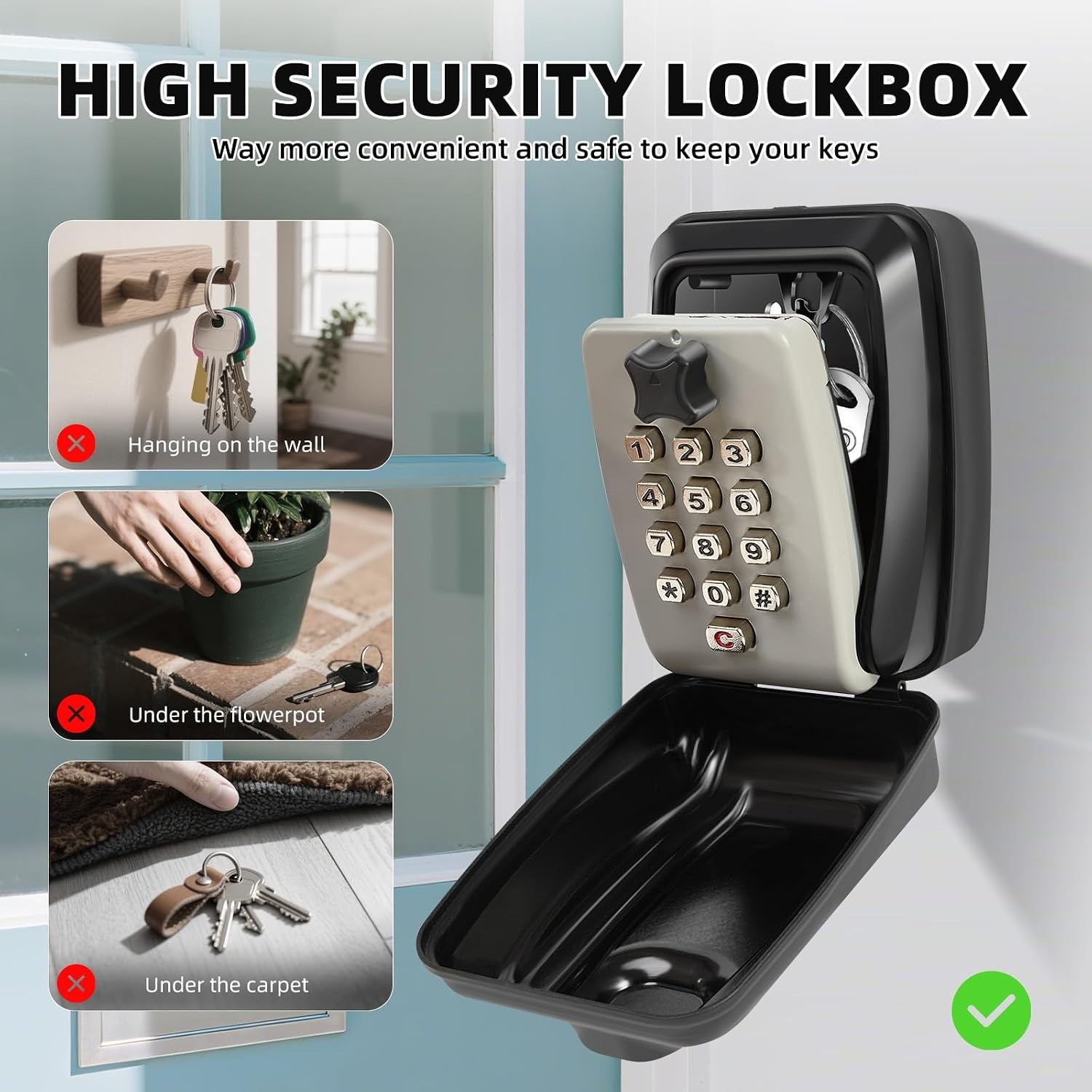
A spare key is useful only if the right person can reach it when needed. Leaving work to let someone in, waiting for a guest to arrive or passing one set of keys between family members can turn a small task into a daily nuisance.
A push button key safe offers another way to manage those handovers. It keeps keys in a fixed place behind a combination lock, so people with permission can collect them without meeting you first.
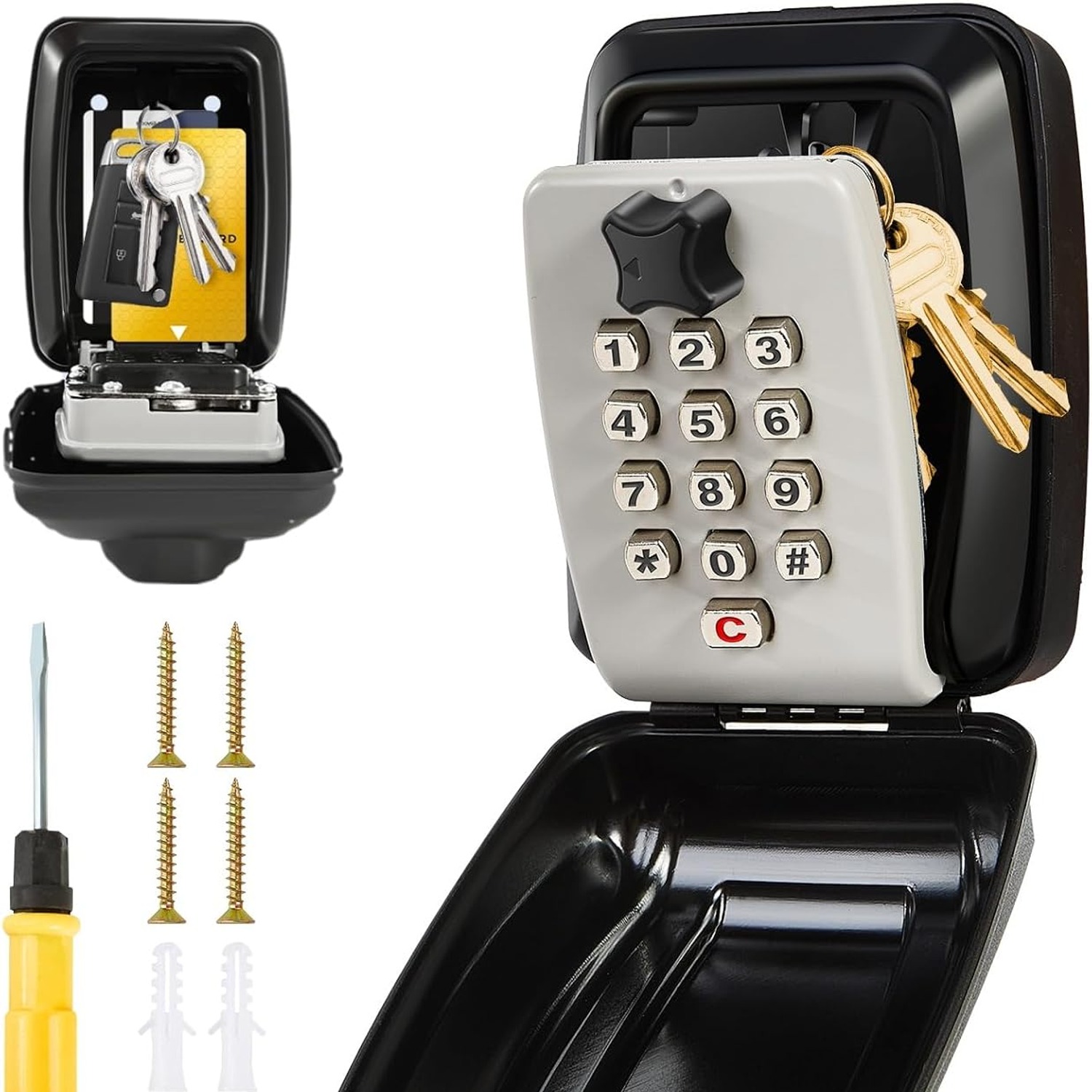
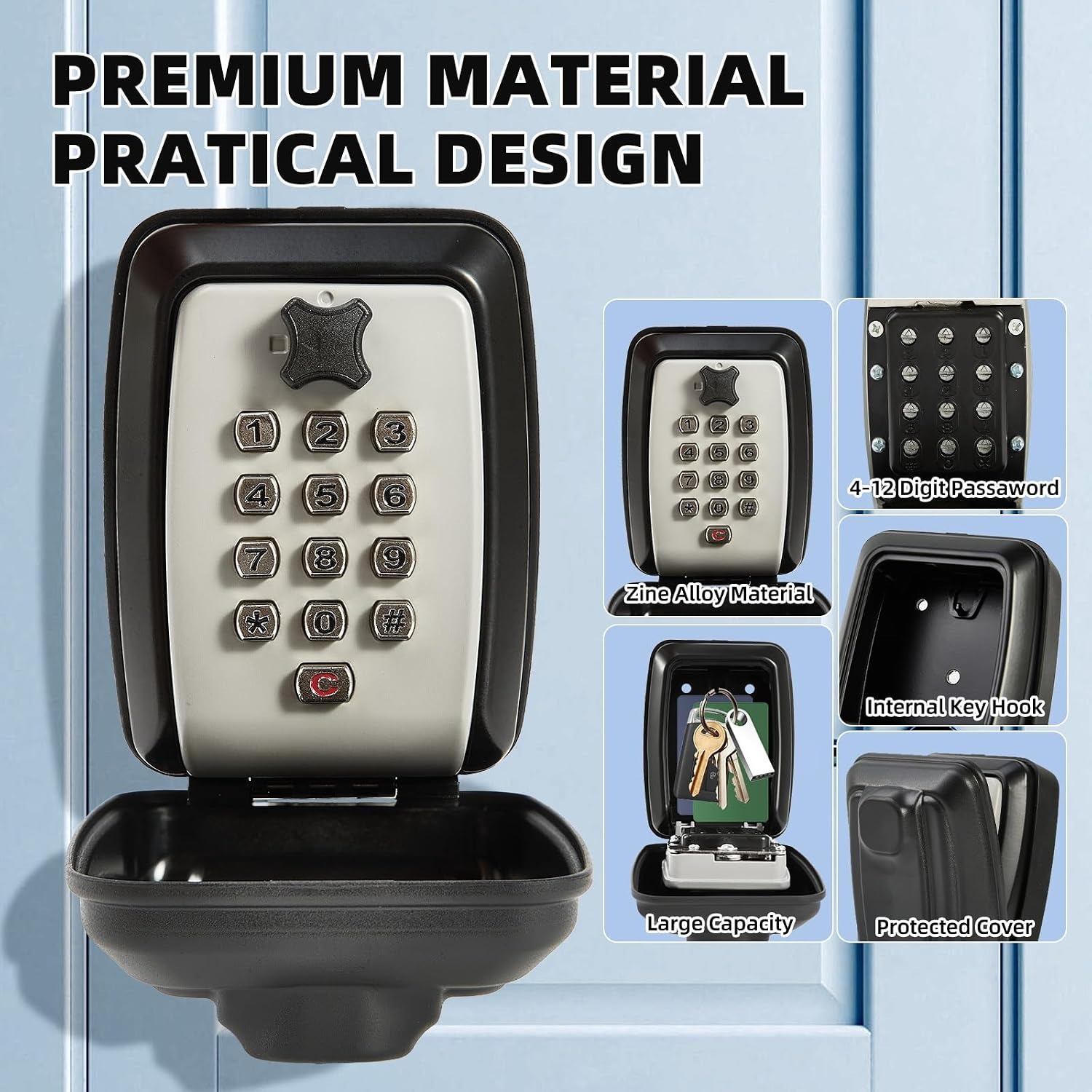
This model has a changeable code, a weather cover and space described as suitable for multiple keys or cards. Before buying, it is worth looking beyond those headline features. Fit, placement and careful code sharing all matter.
How a push button key safe works
The basic idea is simple. You place the key inside the box, close and lock it, then give the combination to someone who needs access. They use the push buttons to open the box and collect the key.
That removes the need for a separate key to the storage box. It does not remove the need to manage access. Anyone who knows the current code may be able to reach the keys, so the combination deserves the same care as the keys themselves.
This resettable key safe allows the password to be changed. The exact setting process and permitted code format are not supplied in this record. Read the instructions that arrive with the product rather than assuming it works like another box you have used.
Who this type of box suits
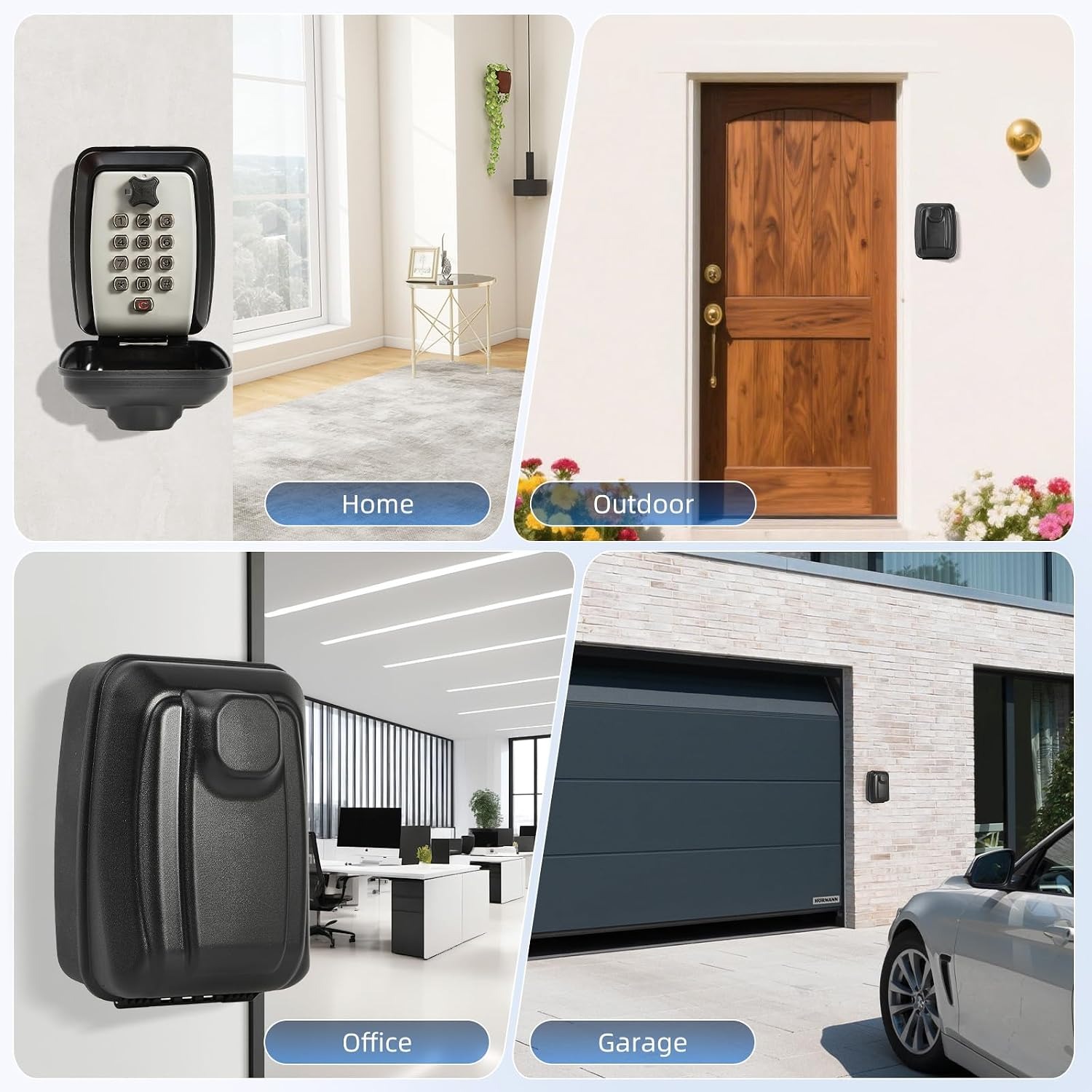
A home key safe can help households that share a spare key. It may also suit a planned visit when someone needs to enter while you are out. Think about who needs access and how often before deciding where to place it.
For a garage key box, the aim may be to keep a shared key close to the space it opens. Office key storage calls for a little more planning. Someone should be responsible for knowing who has the code and changing it when access ends.
Hotel use is also listed. A holiday property key safe may help with guest arrivals, but it still needs a clear handover routine. Guests need private directions, working instructions and a way to ask for help if they cannot open it.
Check capacity before choosing
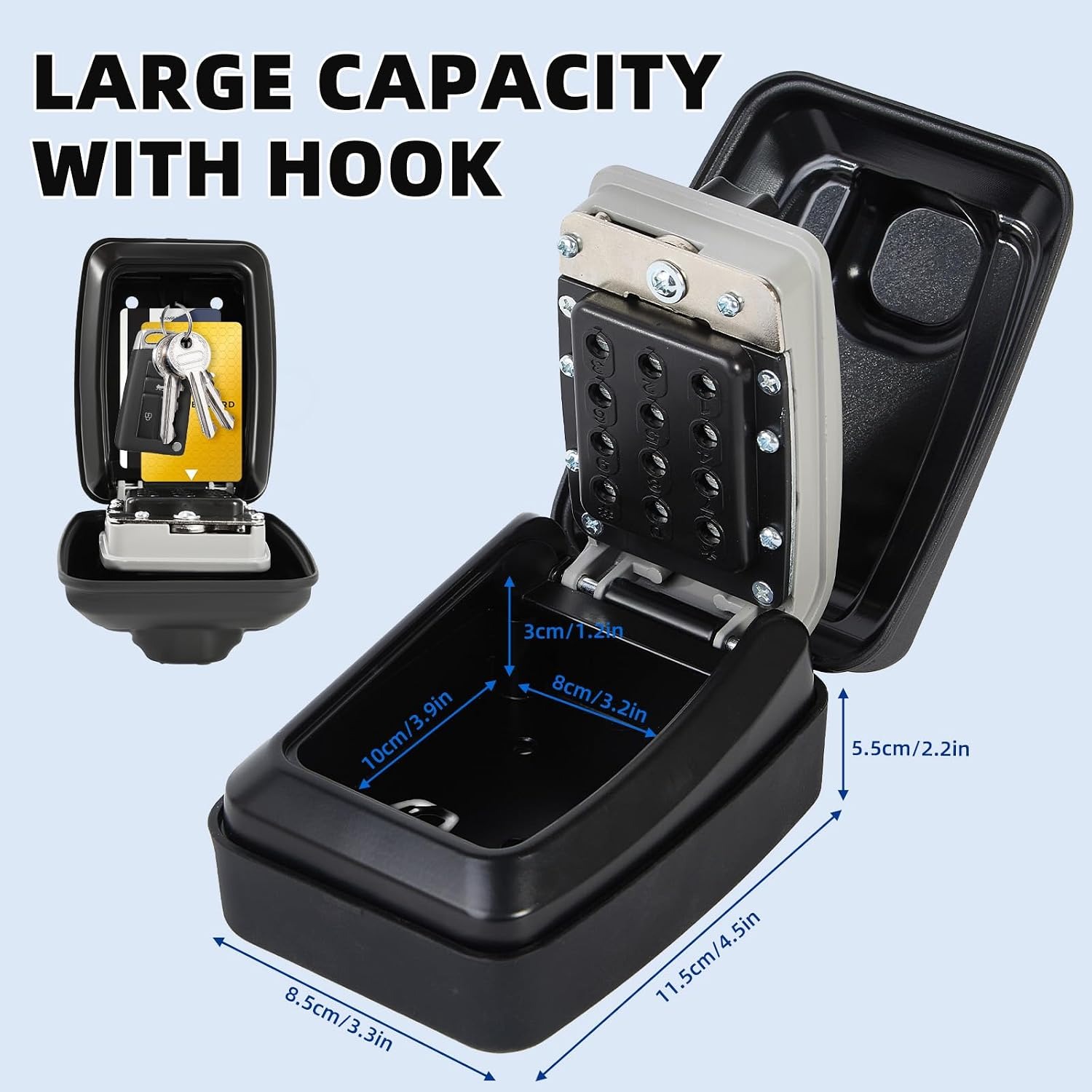
The product heading uses “Large Key Safe”, while the description refers to room for multiple keys or cards. Neither tells you exactly how your own items will fit. No internal or external dimensions are supplied.
Lay out the items you plan to store. A plain door key takes up a different amount of space from a bunch with a thick ring, plastic key heads and a car fob. Cards also need enough flat space to sit without bending.
If you need a card storage key box for one particular access card, ask for internal measurements before ordering. The same applies to a bulky key bundle. Photos can help you understand the layout, but they are not a reliable scale.
Leave room for the door to close freely. A box that only shuts when the contents are pushed hard against it is not a sensible fit.
Understand weather resistance
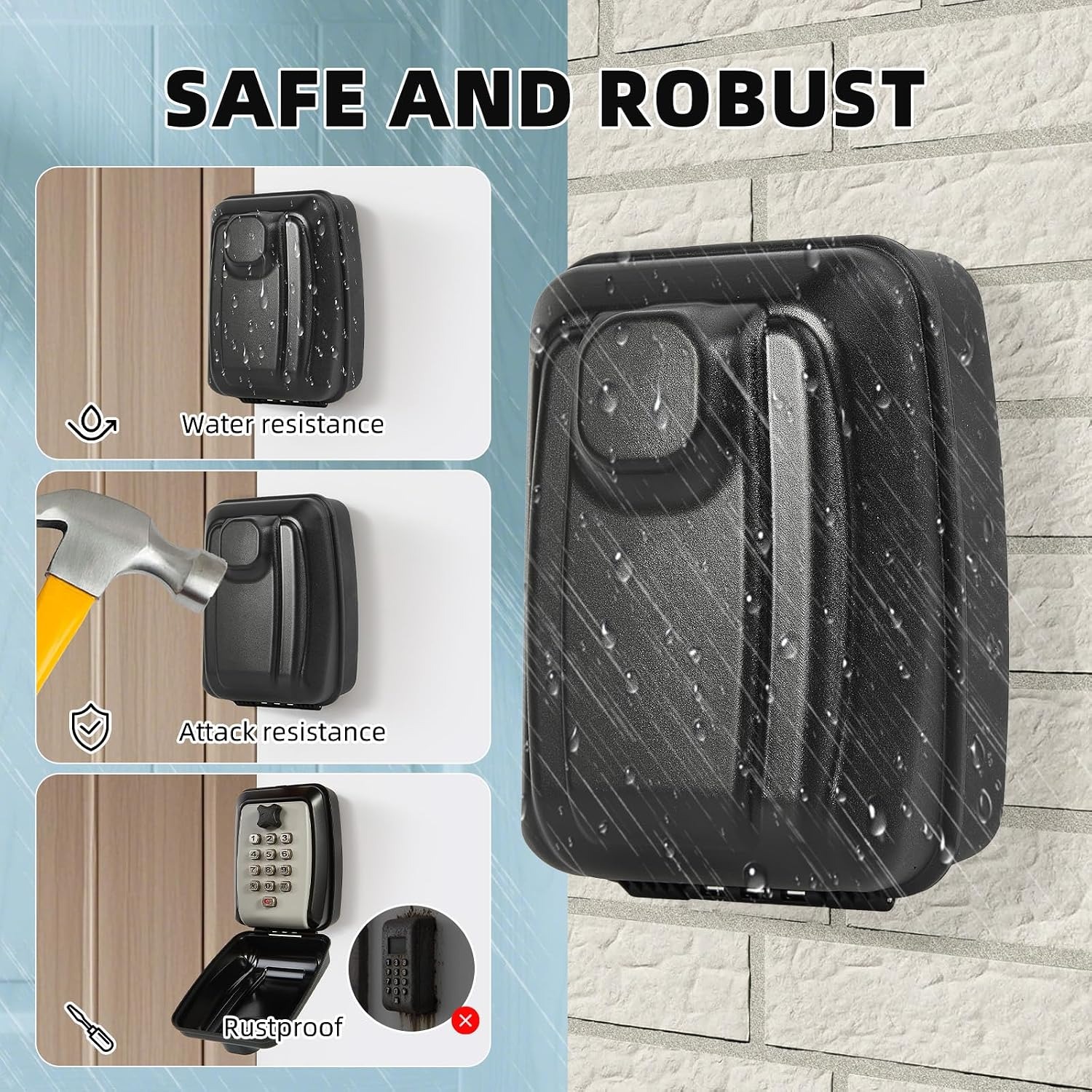
This model is listed as weather resistant and includes a weather cover. Those are useful features to consider for an outdoor key safe, especially where the buttons could collect dirt or face rain.
Weather resistant does not mean waterproof in every situation. No tested water-ingress rating is supplied, and the record does not establish suitability for immersion, standing water or every exposed location.
When choosing a position, consider shelter as well as access. A less exposed spot may reduce direct contact with rain and debris. Keep the cover closed after use and inspect the box as part of your normal property checks.
If the site faces harsh conditions, seek more detailed suitability information before committing. The cover alone cannot answer every question about long-term exposure.
Choose the mounting position carefully
A wall mounted key safe needs a suitable wall. Four screws and four expansion plugs are listed as included, but that does not mean they suit every surface.
Check what the wall is made from and whether it is sound. A fixing method that suits one type of masonry may not suit timber, a hollow wall or damaged material. If you are unsure, ask someone qualified to assess the installation.
Permission matters too. Tenants and people managing shared buildings should check before drilling. It is easier to settle that question before purchase than after the box arrives.
Choose a position that authorised users can reach and operate without stretching awkwardly. At the same time, think about whether someone entering the code would be in plain view of passers-by. Convenience and privacy both deserve attention.
Keep security claims in perspective
A combination key box is an access tool, not a complete security plan. This record does not provide a certified security grade or an independent attack-test result. Weight and appearance are not substitutes for those details.
If an insurer, employer or property manager sets rules for key storage, check those rules first. Do not assume a general key box meets a required standard simply because it has a lock.
Consider what the stored key opens. A key to a low-risk storage area and a master key for several rooms create different consequences if access is misused. The more important the key, the more carefully you should assess the whole arrangement.
Choose a product based on the evidence available, not on broad claims about being secure in every setting.
Make code sharing a routine
The changeable combination is most useful when someone takes responsibility for it. Decide who sets the code, who receives it and when it should change.
Avoid putting the code in public arrival notes or leaving it written beside the box. Share it privately with authorised users. Keep your own secure record somewhere separate so that a forgotten code does not leave you without a plan.
When a visitor no longer needs access, review whether to change the combination. For a shared access key box at work, make that review part of staff or contractor access changes.
Test each new code with the box open before storing keys. Then check the normal closing and opening process. A short test is easier to manage than a locked box with an uncertain combination.
Plan a clear guest handover
A guest access key box can reduce the need to meet at an exact time. Still, the guest needs more than a code.
Give clear directions to the box and explain what to do with the key after opening the property. If the key should go back into the box, say so. If it stays with the guest until departure, make that clear instead.
Keep the directions private, particularly when they identify both the property and the access code. Make sure guests know whom to contact if the key is missing or the controls do not respond as expected.
A key handover box works better when the process is easy to follow. Long, confusing instructions can undo the convenience of having the box in the first place.
Think carefully about car keys
The supplier mentions car-key storage as a possible use. That makes fit especially important, since modern fobs can be much thicker than ordinary keys.
No internal dimensions are supplied, so confirm the space before relying on it for a particular fob. There is also no stated signal-blocking feature. Do not assume that putting a keyless-entry fob inside stops it communicating with a vehicle.
If that is part of your reason for buying, seek specific evidence for that function or consider a storage option designed for it. Physical storage and electronic signal blocking are different needs.
Check and care for the box
Start by reading the supplied instructions and testing the lock before installation. Check that the intended contents fit and that the box closes without force.
After mounting, confirm that it is firmly attached. Test it again before leaving keys inside for someone else to collect. Keep an alternative access plan while you are getting used to the controls.
For routine care, wipe the exterior with a soft cloth and keep the button area free of dirt. Avoid harsh cleaners and do not put chemicals into the mechanism without suitable guidance.
Close the weather cover after each use. Periodically check the fixings, closing edges and controls. If anything becomes loose, damaged or hard to operate, address it before depending on the box.
The short version
This push button lock box offers a changeable combination, weather cover and storage for multiple keys or cards, subject to fit. It is intended for wall mounting and has a listed weight of 610 g.
Choose it only after checking your keys, your wall and the level of security your situation requires. Exact dimensions, a certified security grade and a waterproof rating are not supplied.
With a suitable location and a clear code-sharing routine, it can make planned key handovers easier. The important part is choosing it for the access problem you actually need to solve.