
The complete guide
Choosing a Rolling File Box for Important Documents
When paperwork needs a place of its own
Important papers have a habit of spreading out. A passport goes into a drawer, insurance records sit in a folder, and household receipts collect beside the desk. Finding one document can mean checking several places before you even start the task.
A rolling document organiser gives those papers a shared home. It also lets you bring stored files closer when you need to sort them, rather than carrying small piles back and forth. That can be useful in a home office, a shared workspace or a room that serves more than one purpose.
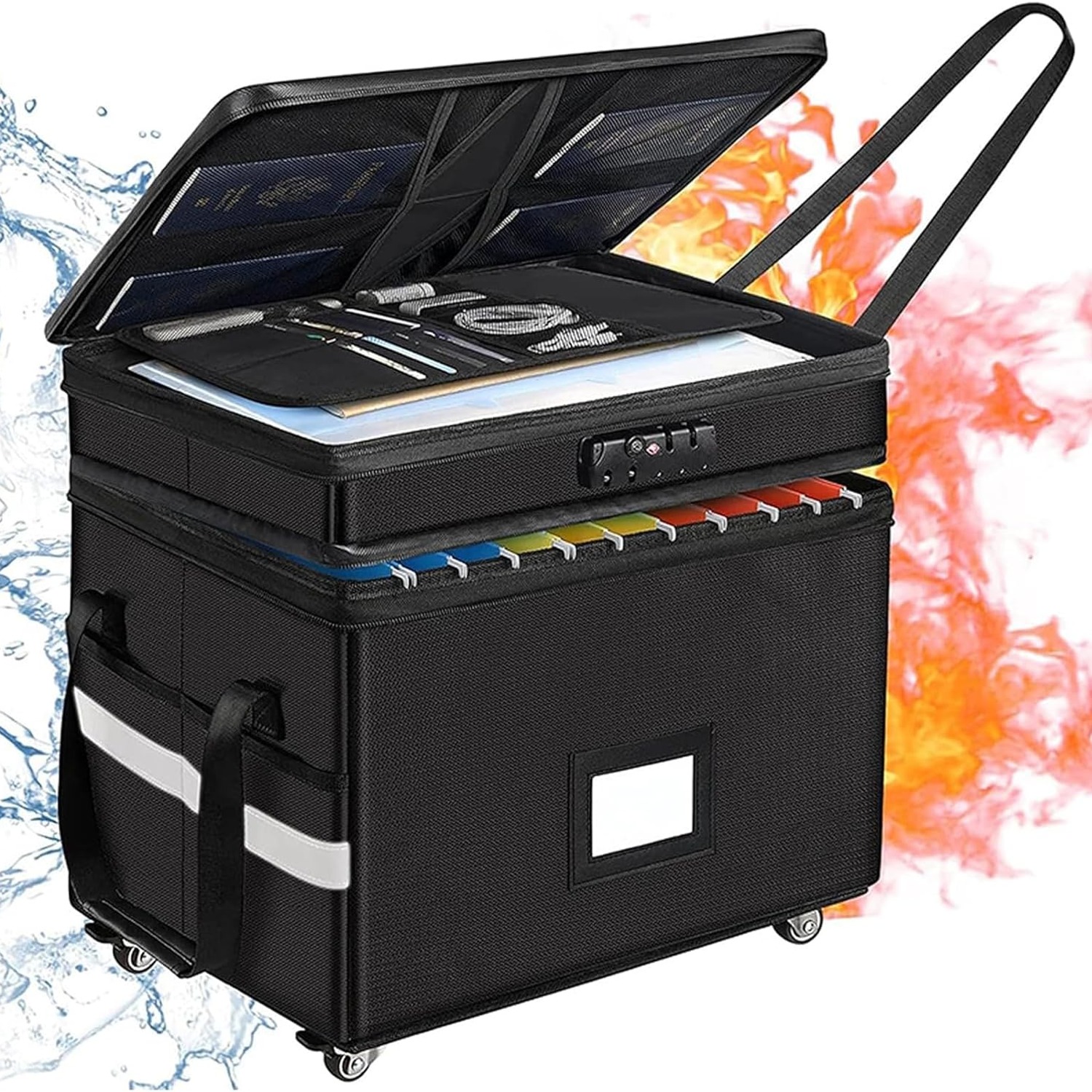
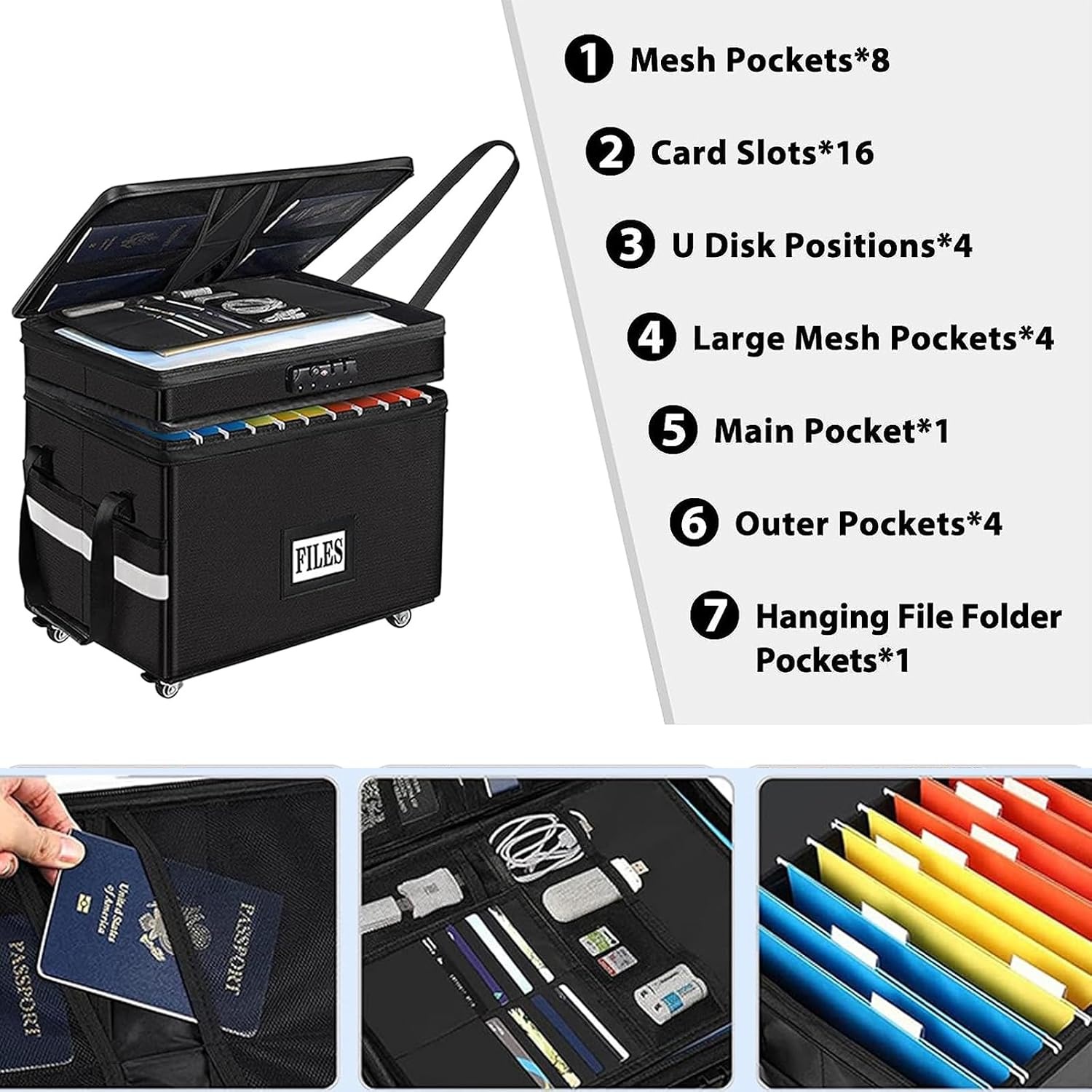
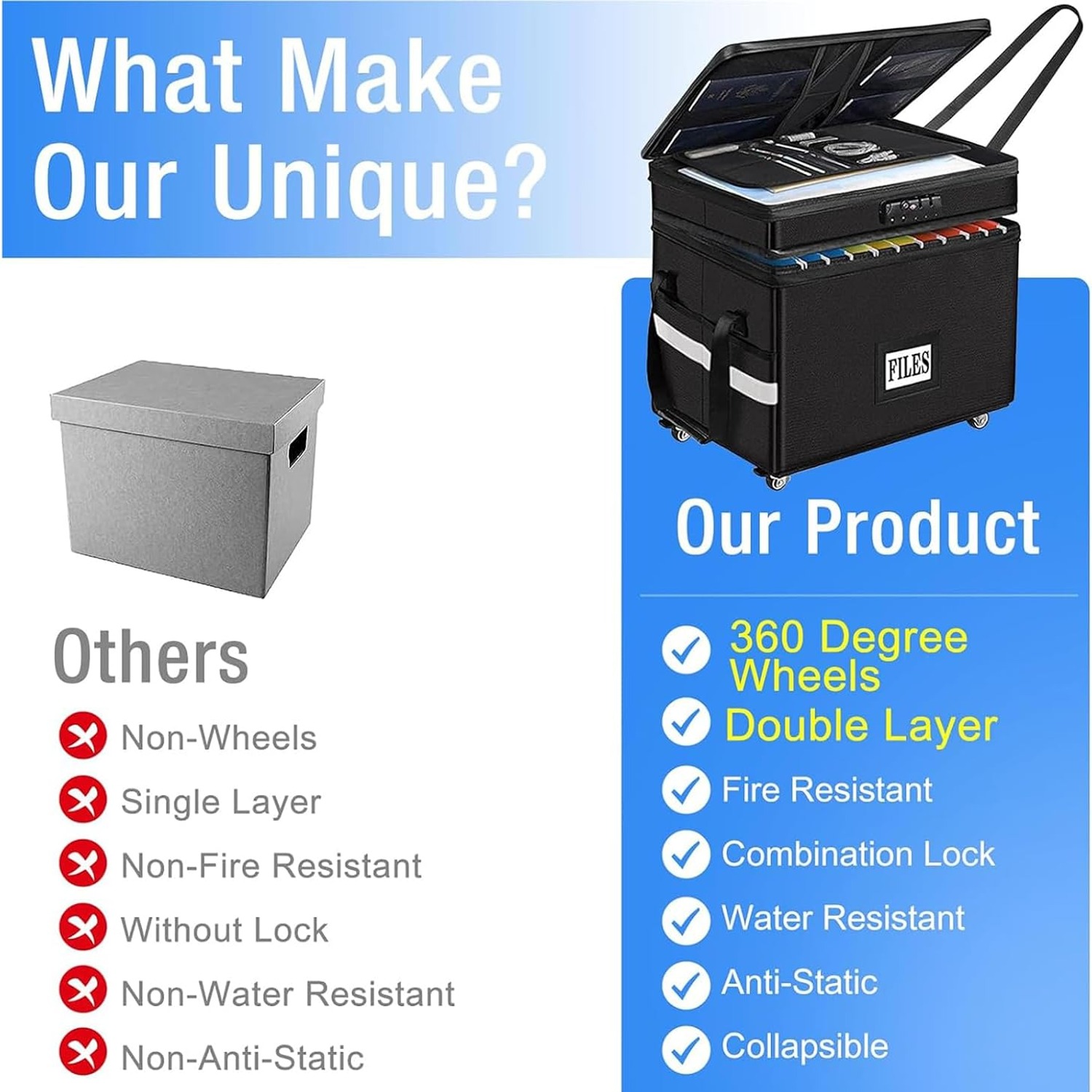
This rolling fireproof file box combines two storage compartments with removable wheels, a pull strap and side handles. The main buying question is whether its layout, mobility and stated protection features match your needs. Some important details remain unconfirmed, including dimensions and a verified fire rating.
How the rolling design works
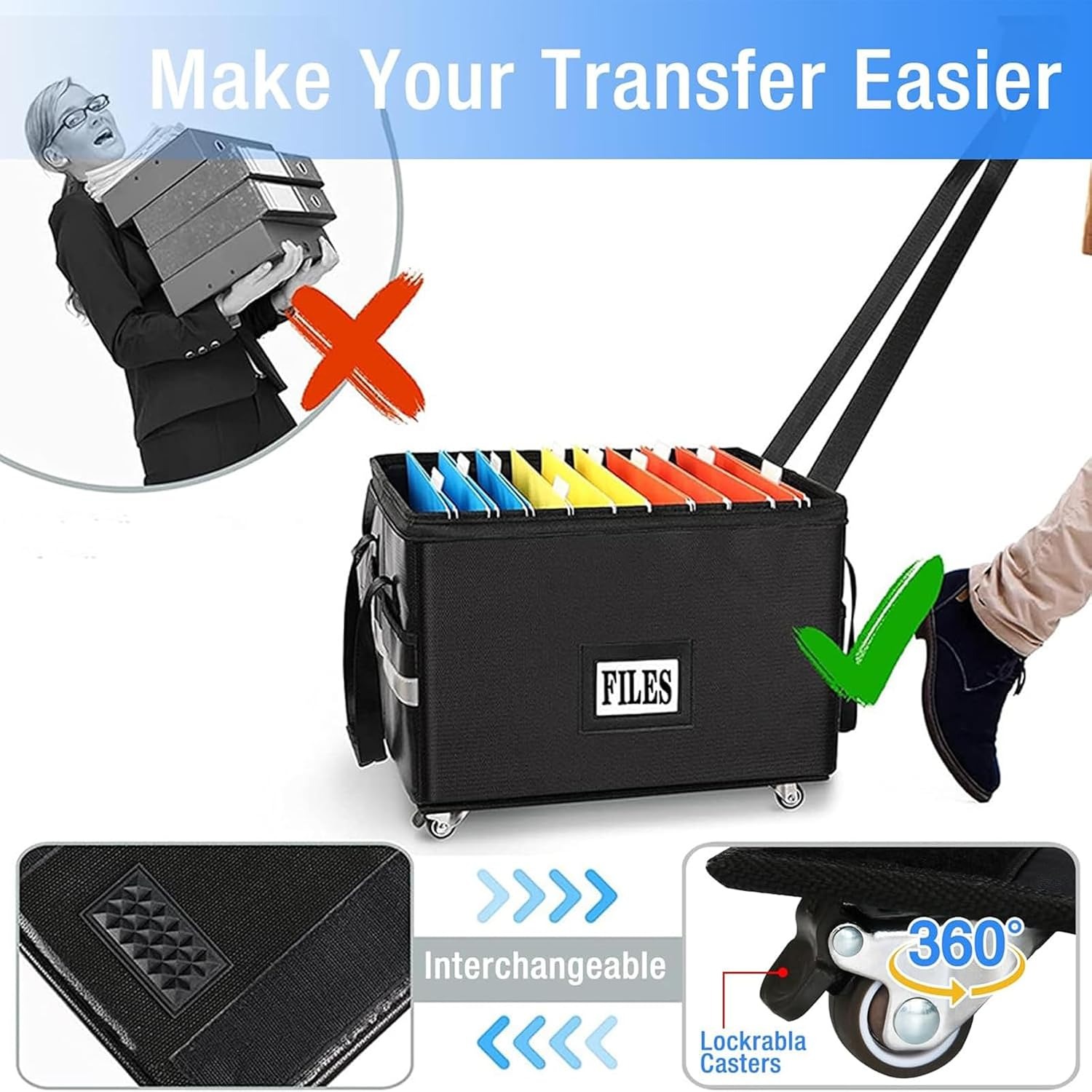
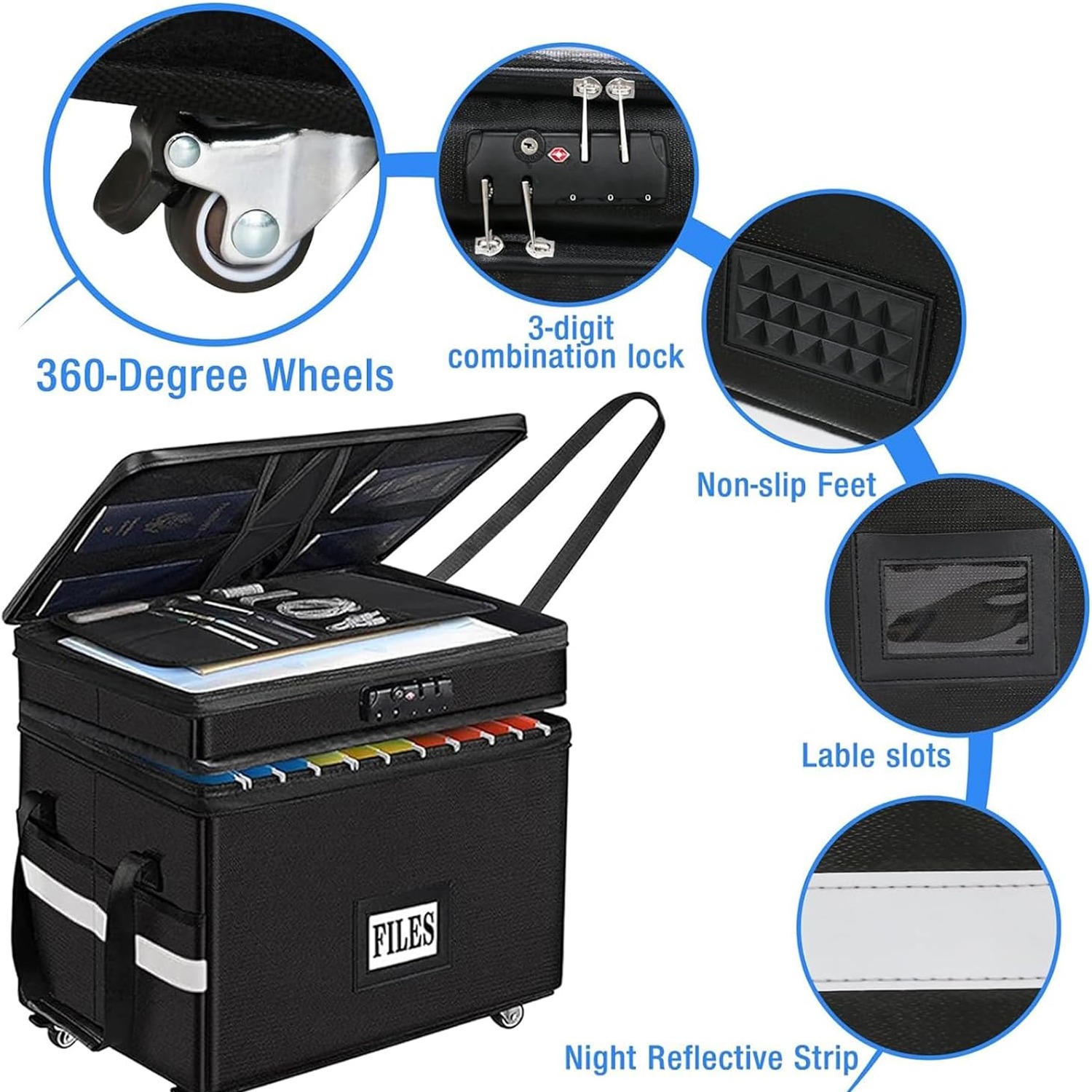
The box has four wheels that turn through 360 degrees. This allows changes of direction without having to lift the entire box each time. A pull strap provides a way to move it, while two wheel brakes help keep it still when parked.
Think about the route between your storage spot and your working area. A clear, level path is more practical for wheeled storage than a route with steps, clutter or rough ground. The record does not provide wheel size or floor-surface compatibility, so do not assume it will handle every threshold or thick rug.
Side handles give you another option when rolling is not possible. However, the listed 2 kg weight is for the item, not a full load of paperwork. Before lifting, consider how much you have added and whether you can move it comfortably.
What the two compartments offer
A two compartment file box can help separate items by how you use them. The supplier describes an upper section for smaller belongings, such as passports and keys, with a lower section for papers.
That layout gives you a starting point rather than a fixed filing method. You might keep frequently needed documents separate from records you rarely open. Another approach is to group items by person, project or household task.
Side pockets and label slots add sorting options. Labels are most helpful when they describe contents clearly enough for someone else to understand. A label such as “household insurance” is usually more useful than “important papers”.
Avoid filling every space simply because it is available. Leaving enough room to see and remove a folder makes daily use less frustrating and helps prevent papers from catching in the zipper.
Understand the protection claims
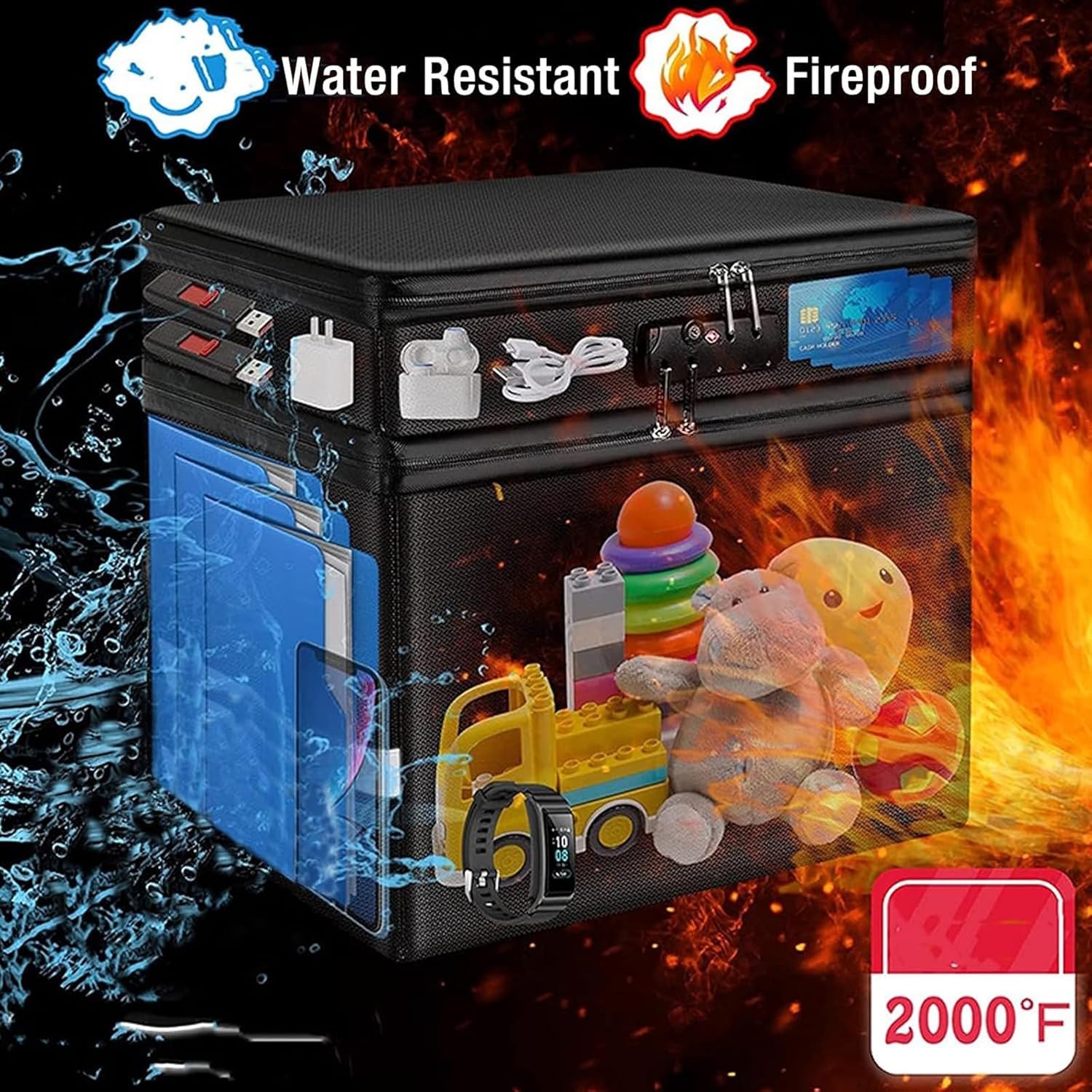
The product name uses “fireproof”, while the listed features describe fire resistance. Those words should not be taken as proof of a particular level of protection. No independently verified fire certification or protection duration is supplied in this record.
The supplier description includes a high-temperature claim, but it does not provide enough verified testing information to establish how stored documents would perform in an actual fire. Temperature alone does not tell you how long contents remain protected or how the closure performs.
If a tested fire rating is essential, ask for supporting documentation before buying. A fire resistant document box without a confirmed rating should not be treated as equivalent to a certified fire safe.
The same care applies to security. This is described as a lockable file box, but the lock type is not specified. Do not assume a particular locking method, burglary rating or level of resistance to forced access.
Water resistant is not waterproof
The listed water resistance level is water resistant. The product details also use the term weatherproof, but no waterproof rating or immersion protection is provided.
For everyday planning, keep the box away from places where water can collect. Avoid storing important paperwork directly beneath plumbing or in a spot with a known leak. A water resistant file box is not a reason to accept an otherwise unsuitable storage location.
If the outside becomes damp, check the contents and allow the box to dry before closing it around papers again. Do not assume that the zipper or other openings will stop standing water from getting inside.
Check size before choosing
The biggest unanswered fit question is size. External dimensions and usable internal measurements are not supplied. That means compatibility with A4 folders, legal-size papers, binders and hanging files cannot be confirmed from this record.
Start by measuring what you actually intend to store. Include folder tabs, binder rings and protective sleeves rather than measuring only a bare sheet of paper. These extra edges can make a difference to whether a compartment closes comfortably.
Next, measure the intended storage space. Allow room to reach the handles, operate the zipper and remove the box without scraping nearby furniture. If it will sit beneath a desk, consider legroom as well as the space occupied by the box itself.
Ask for confirmed measurements before ordering if fit is a deciding factor. Guessing from product photos is not a reliable way to choose important document storage.
Who this style of organiser suits
Portable file storage may suit someone who works at a dining table and clears it after use. It may also appeal to a household that wants shared records gathered in one place rather than spread across several drawers.
The foldable design is useful when storage needs change. An empty collapsible file box can be put away between uses instead of occupying the same space all year. The removable wheels give you another way to reduce its footprint when stored.
It is less straightforward for buyers who need a confirmed load rating, fixed shelving fit or verified fire-safe performance. Those needs depend on details that are not supplied here. Resolve them before treating this box as your main storage solution.
Make a simple filing plan
Before moving everything into a new organiser, sort your paperwork. Separate current records from duplicates and documents you no longer need to keep. Follow any relevant record-retention guidance rather than discarding papers just to save room.
Choose broad folder groups that reflect how you search. Household bills, property records, personal documents and work files are possible starting points. Keep the system simple enough that putting a paper away takes little effort.
For a passport storage box setup, use the upper section to keep travel documents separate from bulk paperwork. For work records, group papers by active task or client where appropriate. Protect sensitive information according to your own privacy needs.
A good filing system also needs occasional attention. Review labels when contents change and remove outdated duplicates. The aim is to make retrieval easier, not simply to hide a larger pile inside a box.
Materials and details worth confirming
The material information in the source is inconsistent. Product details list cotton blend, while the supplier description refers to double-layer silicone-coated fibreglass. The record does not explain whether these descriptions refer to different parts.
If material affects your decision, ask for clarification. Do not assume the whole box has one uniform construction or that a listed material description establishes a tested safety result.
Other unanswered details include the maximum carrying load and lock mechanism. Folder compatibility is also unknown. These are sensible questions to settle before purchase, especially if you plan to store heavy files or need a particular form of access control.
The box is listed in black with a rectangular shape. Those details may help with appearance, but fit and function deserve more weight than how closely it matches your furniture.
Care and day-to-day handling
Keep the zipper path clear when loading the box. If closing it requires force, rearrange or remove contents rather than pulling harder. Papers that stick out can crease or obstruct the opening.
Check wheels for loose threads and debris, particularly before moving a loaded box. Use the brakes when parked on a level surface, and keep walkways clear of the pull strap.
For basic cleaning, empty the box and gently wipe away surface dirt with a soft cloth. Let it dry before putting paperwork back. Follow any supplied care instructions, and do not use flame or heat to test its protective claims.
When folding it away, remove the contents first. Follow the supplied directions for wheel removal rather than forcing the attachments. Keep detached parts together so the box is ready when you next need it.
The short version
This file box offers movable, two-compartment storage with removable wheels, brakes, side handles and a foldable body. It is worth considering when your main goal is to gather paperwork and move it between spaces.
Confirm dimensions, folder fit and locking details before buying. Treat the fire and water resistance descriptions with care, since verified protection ratings are not supplied. Choose it for the functions you can confirm, and keep suitable backup copies of essential records elsewhere.