
The complete guide
Choosing an Electronic Safe for Everyday Home Storage
Give small valuables a dedicated place
Loose keys, jewellery and important papers can end up spread across drawers and cupboards. That makes them harder to find and leaves you without a clear plan for keeping them behind a lock. An electronic safe gives those belongings a dedicated storage spot.
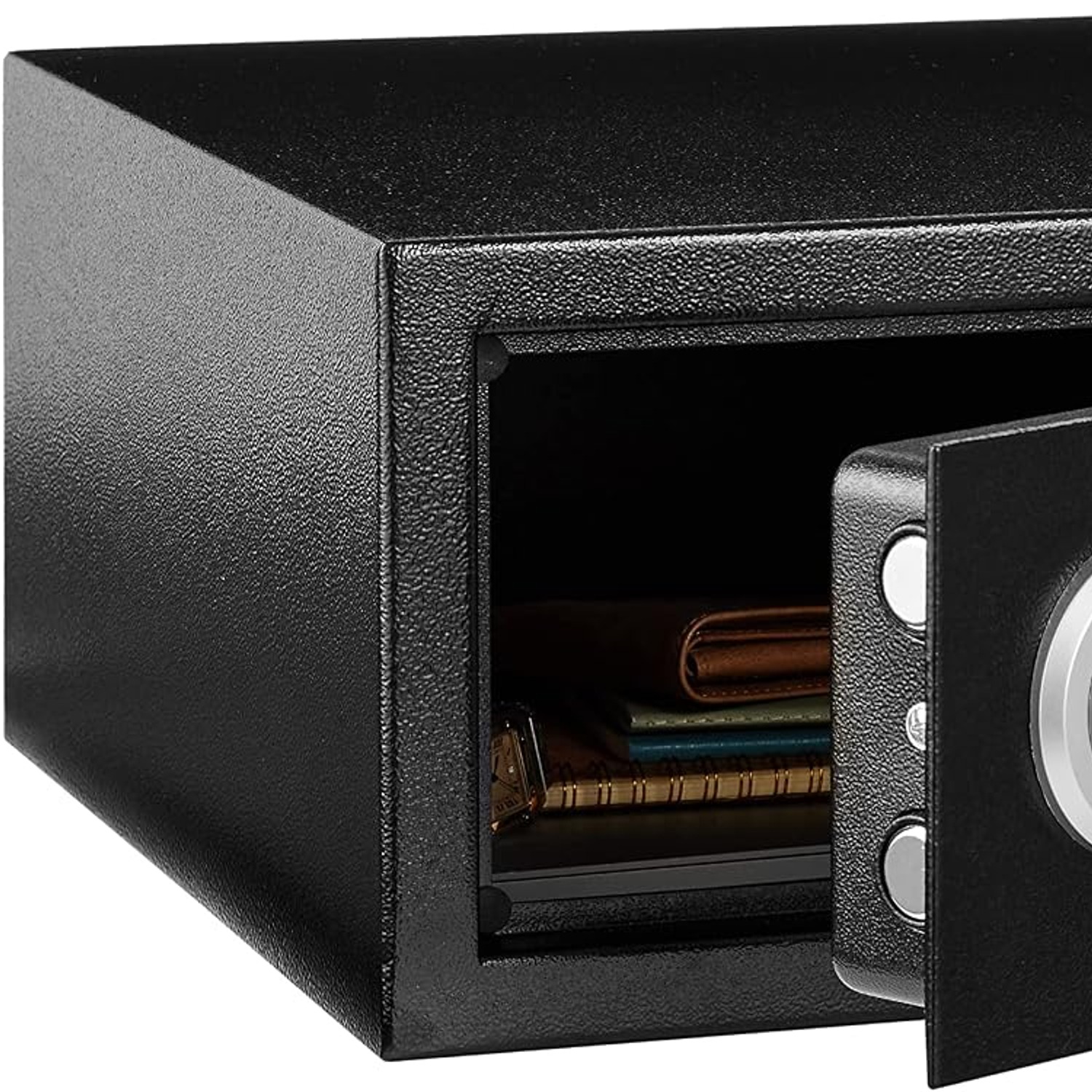
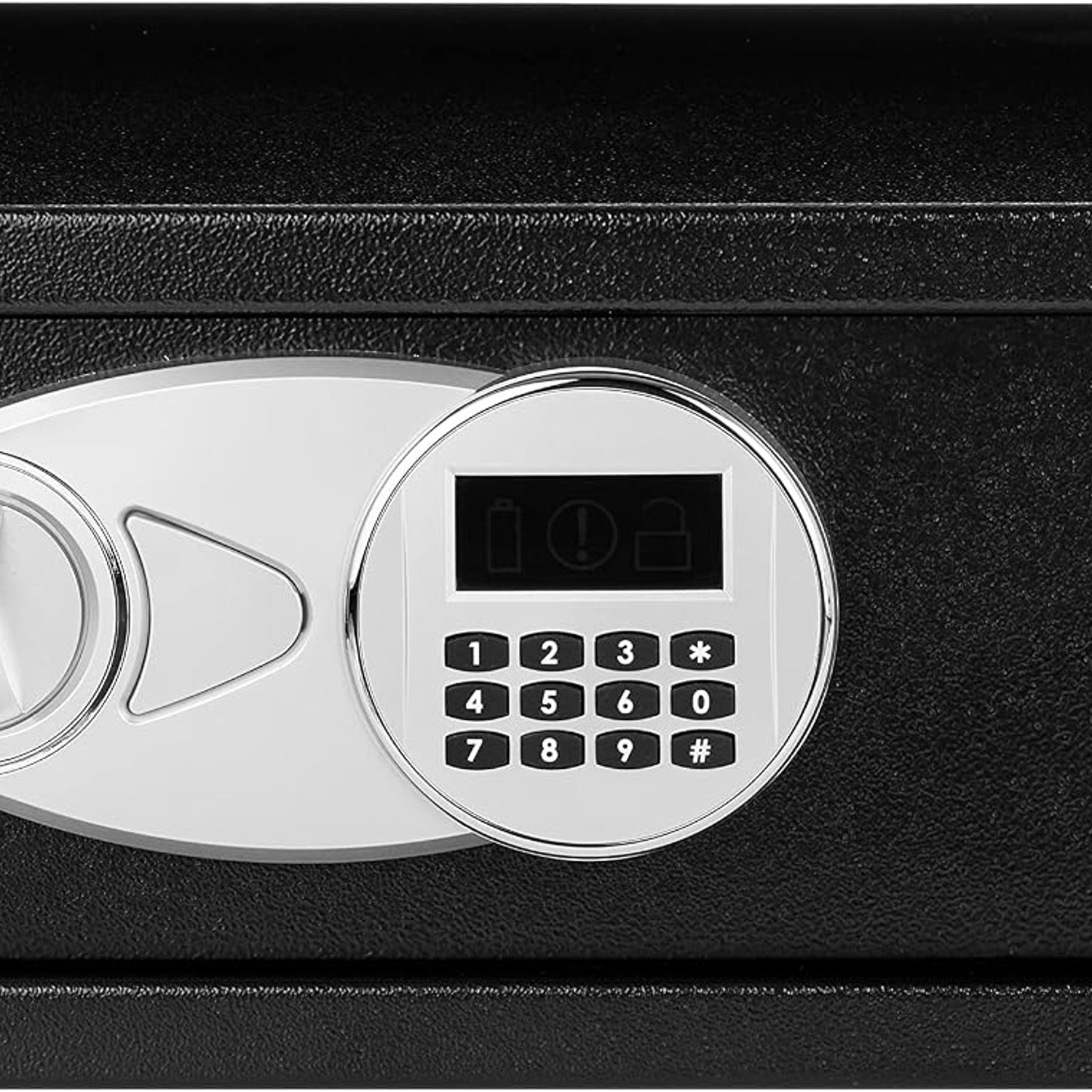
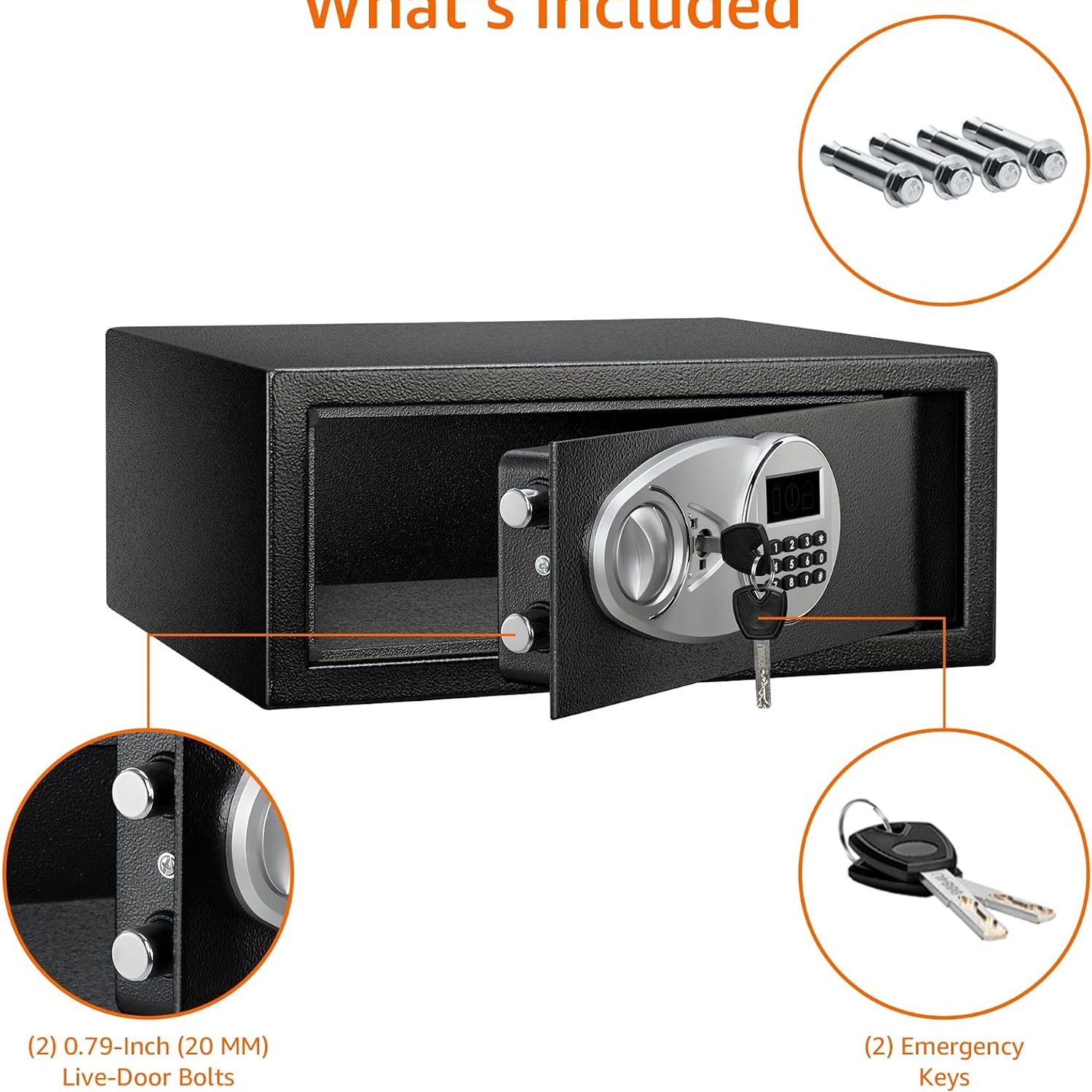
This model combines a reprogrammable keypad with two emergency override keys. Its low exterior profile may suit a planned position in a cupboard or home office, provided there is enough room to use the door and controls.
The important question is not simply whether you want a safe. It is what you expect that safe to do. Convenient locked storage, tested burglary resistance and rated fire protection are different needs. Start with your own requirements, then compare them with the facts available here.
How the electronic lock fits daily use
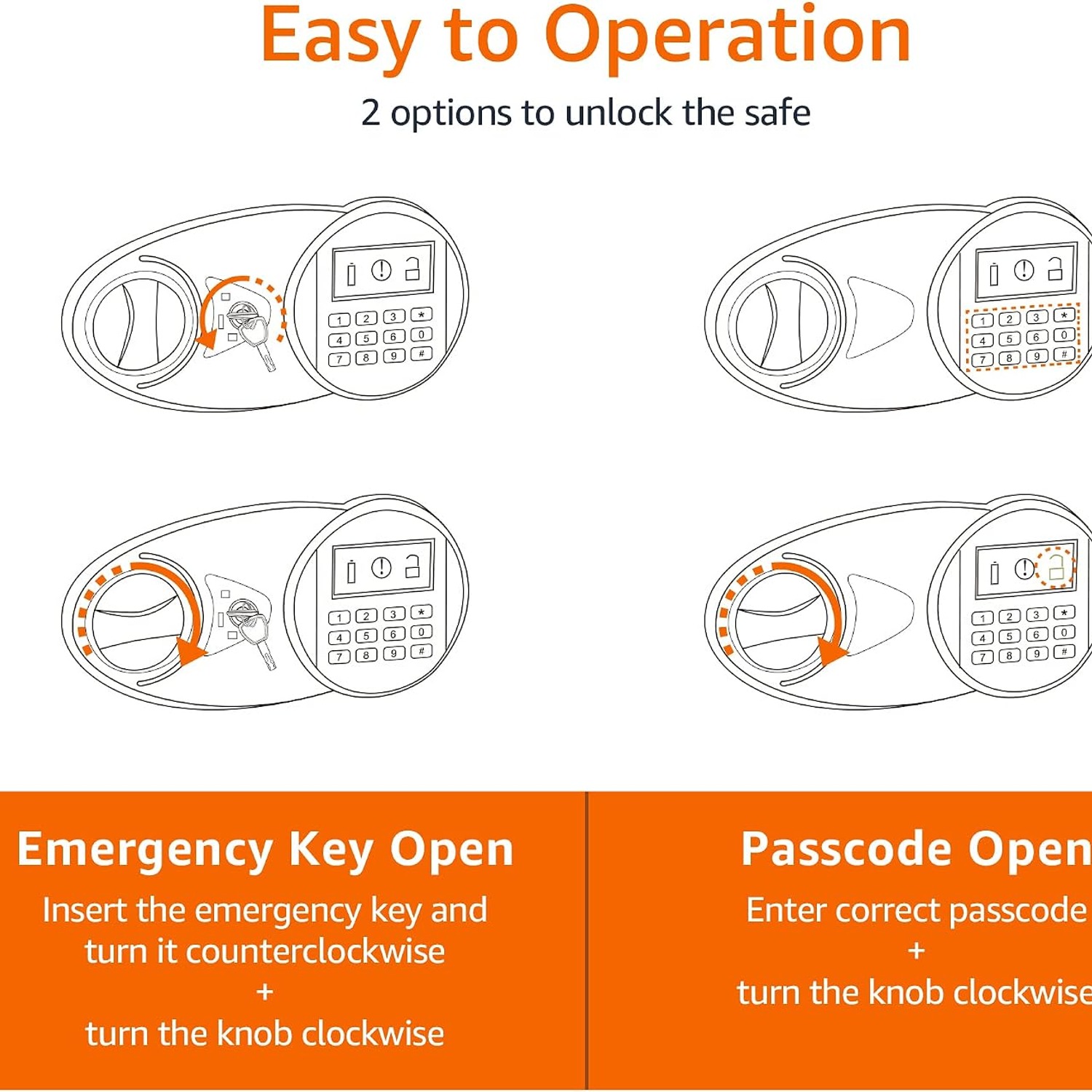
A digital keypad safe lets you use a code for routine access. This model has reprogrammable digital access, so the code can be changed by following the supplied instructions. The maker does not specify the code length or programming steps.
Four AA batteries power the electronic lock. They are not included, so add them to your setup plan rather than waiting until the safe arrives. Follow the manual for the correct battery fitting and replacement procedure.
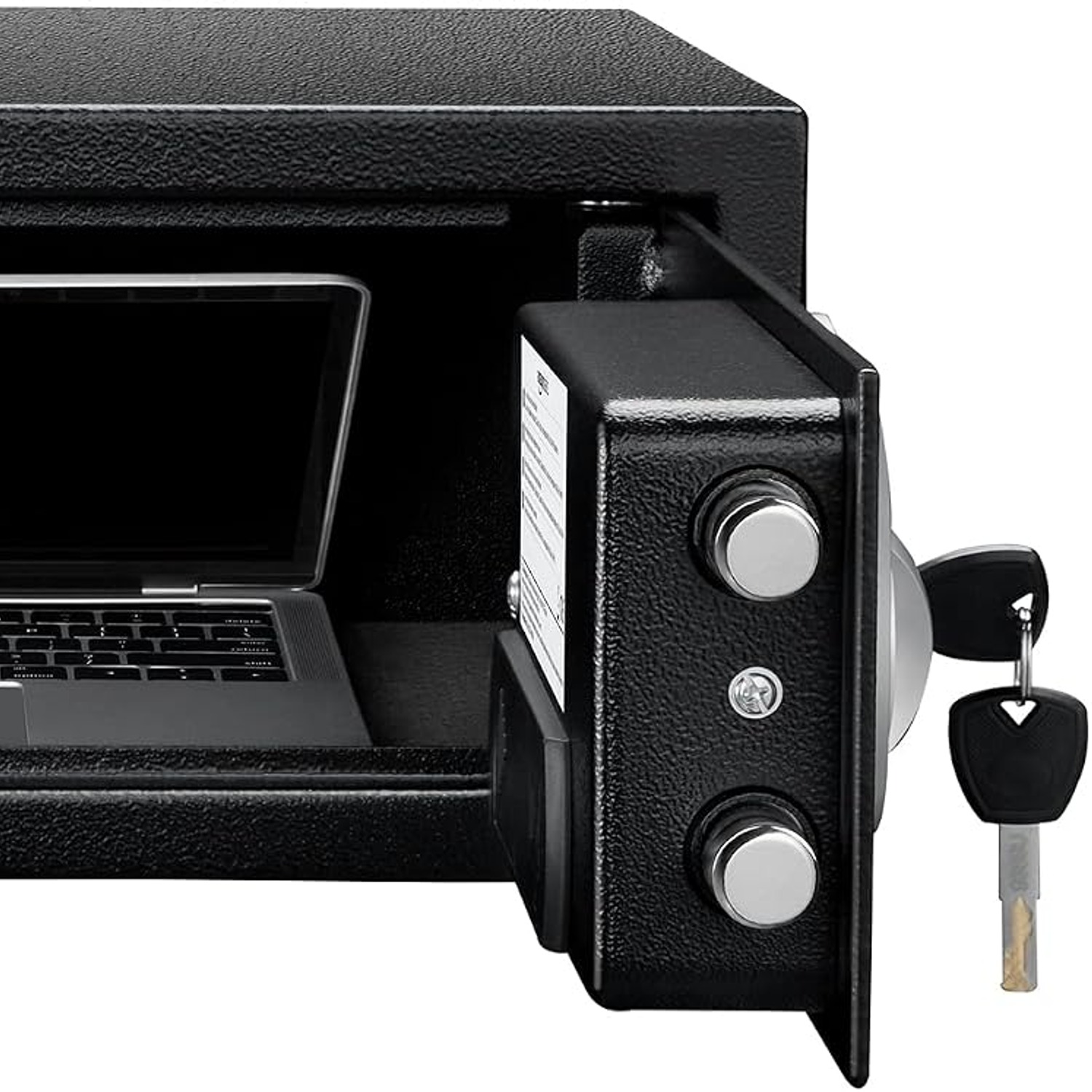
Two emergency override keys are also supplied. Think about their storage before you begin using the safe. A key locked inside cannot help you gain access from outside. Choose a separate secure location that you can reach when needed, without making the keys easy for others to find.
Understand the body and door features
The maker describes alloy steel construction with two live-door bolts. The door also has concealed hinges described as pry-resistant. These features explain the basic physical design, but they do not tell you how the safe performs under a tested attack.
No independent burglary rating or insurance approval is supplied. If an insurer requires a particular safe grade, cash rating or installation method, ask about those conditions before buying. A steel security box should not be assumed to meet them just because it has a keypad.
Inside, a carpeted floor helps reduce scratches where belongings rest against the base. That is useful for small personal items, although it does not replace separate protection for delicate surfaces. Keep jewellery pieces apart in suitable pouches or cases rather than allowing them to rub together.
Measure the location before the contents
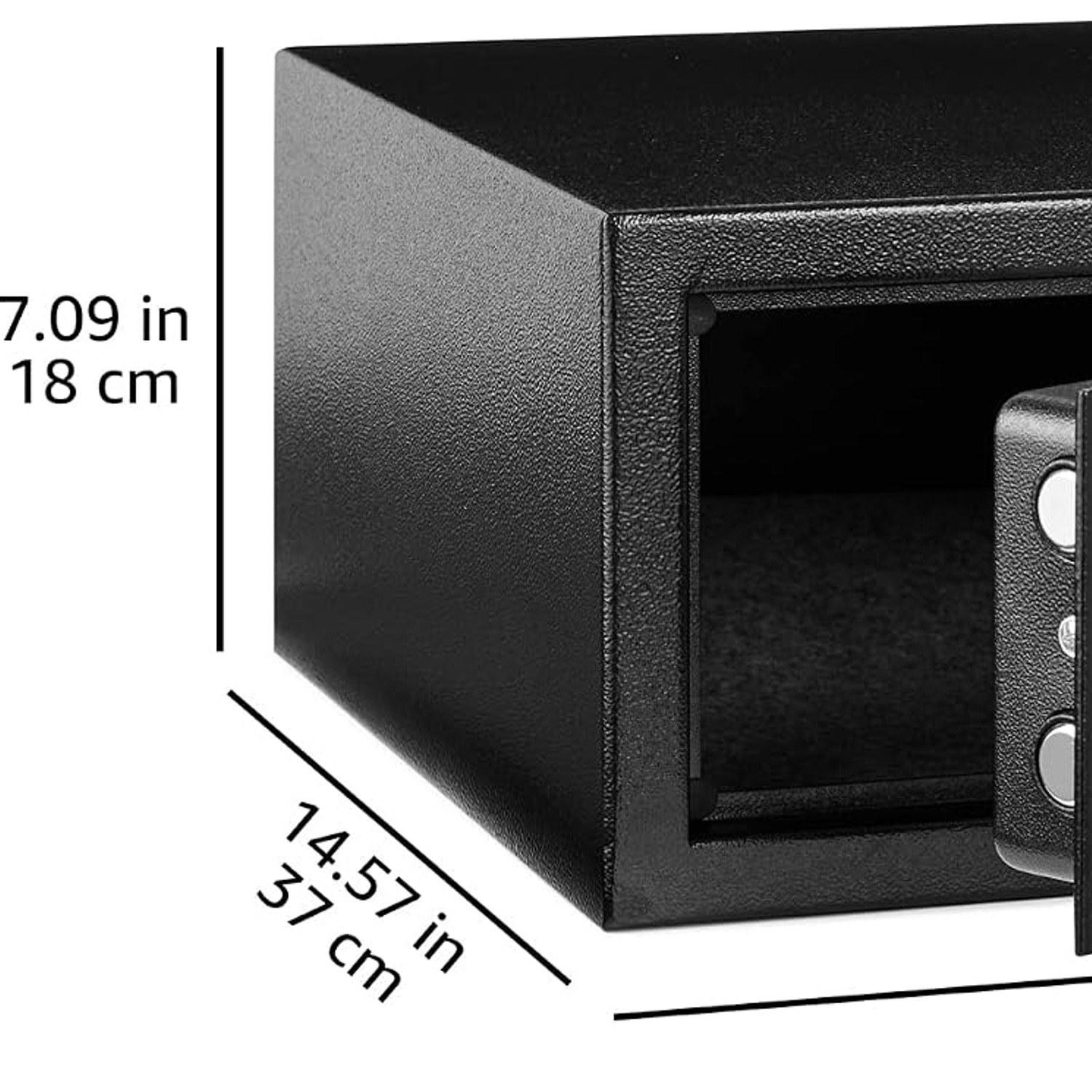
The exterior measures 43 cm wide, 37 cm deep and 18 cm high. Mark out that footprint in the intended location. This simple check can reveal a narrow cupboard opening, a shelf edge or a nearby hinge that would get in the way.
Allow space beyond the closed box. You need to open the door, reach the keypad and remove your belongings without an awkward angle. A space that matches the safe's measurements exactly may still be unsuitable for daily use.
The listed weight is 8.98 kg before you add contents. Check the strength of the supporting surface, especially if you are considering a raised shelf. A shelf mounted safe depends on the shelf, brackets and surrounding structure, not just the safe's own mounting points.
Also consider how you will carry it into position. Clear the area first and arrange help if needed.
Check usable space rather than litres alone
The nominal capacity is listed as 19.8 litres and rounded to 20 litres in the maker description. That number is useful for broad comparisons, but it cannot confirm whether a folder, box or device will pass through the opening.
The description gives interior measurements of 42.6 cm wide, 28.9 cm deep and 17.6 cm high. Other chamber fields in the maker's description give different dimensions. Because those figures do not agree, confirm usable internal space before ordering for a close-fitting item.
For a document storage safe, measure the folder or envelope you will actually use. For jewellery, measure the case rather than the loose pieces. Packaging and protective cases can take up much more space than expected.
Leave some room to reach in, too. Storage is easier to use when you can remove one item without emptying everything around it.
Choose a sensible mounting position
The maker describes wall, floor and shelf mounting options, with four bolts included. That gives you several possible locations, but it does not mean every surface is suitable or that the supplied bolts suit every building material.
A wall mount safe needs an appropriate fixing surface. A floor installation needs the same care, along with checks for anything that could be damaged by drilling. If you do not know what is behind or beneath the intended fixing points, get qualified advice.
For a shelf installation, consider the whole support system. The board may look solid while its brackets or cupboard fittings are not suited to the load.
Choose a position you can use comfortably. A safe tucked into an awkward corner may encourage you to leave frequently used belongings elsewhere. Good placement balances access with a considered installation, rather than choosing the first empty space.
Know what protection has not been established
Some maker detail fields use the words fireproof and waterproof. However, the maker provides no supporting test standard, fire exposure time, temperature limit or water exposure rating. Those claims are not enough to establish protection for a particular emergency.
If fire protection is your main concern, look for documented testing that matches what you plan to store. Paper records and electronic media can have different protection needs. Do not assume that steel construction alone answers either question.
The same care applies to water. Without clear test details, the maker's description does not establish how the safe would handle a leak, flooding or immersion.
This distinction helps you buy for the right reason. The stated keypad, keys and mounting features are useful facts. Unverified protection claims should not become the basis for storing irreplaceable items.
Decide whether it suits your household
An electronic home safe may suit someone who wants a regular place for small valuables and prefers code entry for routine access. The backup keys provide another opening method, while the carpeted base offers a gentler resting surface than bare metal.
It may also work as a home office safe when the intended contents fit. Start by laying out what you want to store. That gives you a more useful picture than choosing by capacity alone.
Think about who will need access and how you will manage code changes. Keep access details private and make a plan for the override keys.
If you are buying it as a gift, check the practical details with the recipient. They will need room for it, batteries and a suitable installation location. A safe is more useful when those arrangements are clear from the start.
Set it up before storing anything important
Read the supplied instructions before programming or mounting the safe. The exact setup sequence is not included by the maker, so avoid relying on instructions for a different keypad model.
Have the four AA batteries ready. Keep both override keys outside, then test the opening and locking process with the door open. This gives you a chance to understand the controls before your belongings are behind a closed door.
Check that the intended contents fit without pressing against the door or blocking access. Do not force an oversized case into place simply because its measurements looked close on paper.
Before drilling, confirm that the safe suits your needs and review the applicable returns terms. Mounting or modifying a product can affect how a return is handled, so ask us if anything is unclear.
Keep care simple and regular
Use a soft, dry cloth to remove dust. Keep moisture away from the keypad and battery compartment, and avoid abrasive cleaners that could damage surfaces.
Follow the manual for battery changes and any lock care. Do not add oil or other products to the lock unless the instructions call for it. Store the manual somewhere accessible outside the safe.
Check the mounting fixings from time to time. If anything feels loose, stop treating the installation as secure and arrange a check of the fixings and support surface.
It is also worth reviewing the contents occasionally. Needs change, and a safe chosen for a few small items may no longer suit a growing collection or a new insurance requirement.
The short version
This electronic safe offers reprogrammable keypad access, two override keys, a carpeted floor and mounting hardware. Its exterior size and 8.98 kg weight give you clear starting points for planning a location.
Before choosing it, confirm usable interior space and the suitability of your mounting surface. If you need tested burglary, fire or water protection, seek documented ratings rather than relying on general maker labels. The right choice is the one that matches both your belongings and the level of protection you actually need.