
The complete guide
How to Choose a Large Home Safe for Everyday Valuables
Passports in one drawer, spare keys in another and jewellery left on a shelf can make everyday storage feel scattered. A home safe gives those belongings a dedicated place. It also adds a locked barrier rather than leaving everything within easy reach.
Choosing one takes more than finding a box that looks big enough. You need to think about the items going inside, how you will open it, where it will sit and what kind of protection you expect.
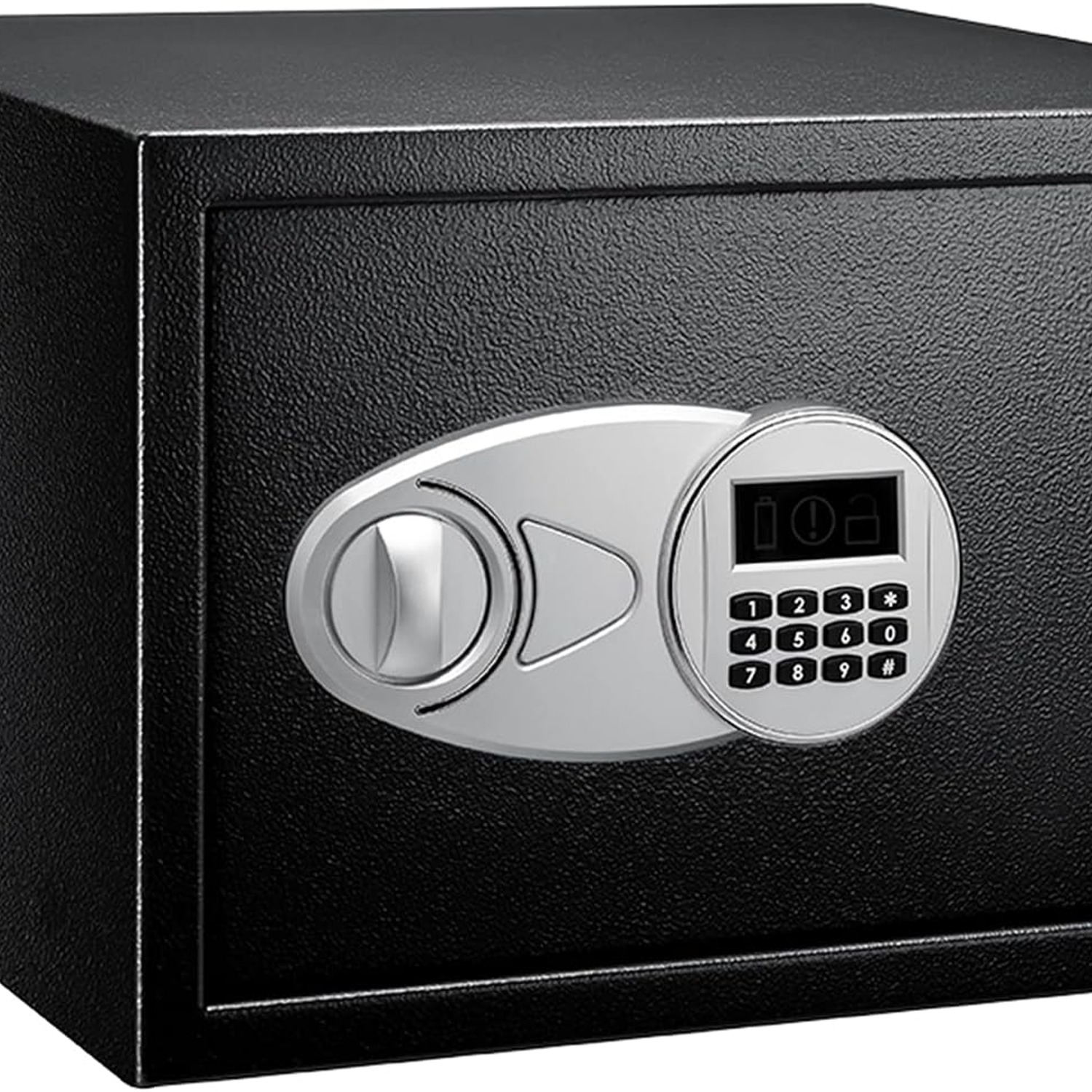
This large home safe has electronic access, backup keys and a flexible interior. There are also limits worth knowing before you buy, including conflicting capacity figures and no stated fire protection.
Start with what you want to store
Before comparing safes, gather the items you want to keep together. Lay them out as you would store them rather than stacking them into the smallest possible pile.
Passports, small cases and spare keys need different layouts from document folders or a bulky electronic device. A little planning helps you see whether a shelf will be useful or simply take up needed height.
Think about access too. Something you use every week should not be buried under items you rarely touch. The right household valuables safe should make storage more orderly, not turn every visit into a search.
Leave room for protective cases where needed. A safe provides locked storage, but it does not replace a jewellery box or a sleeve for something that scratches easily.
Understand the capacity figures
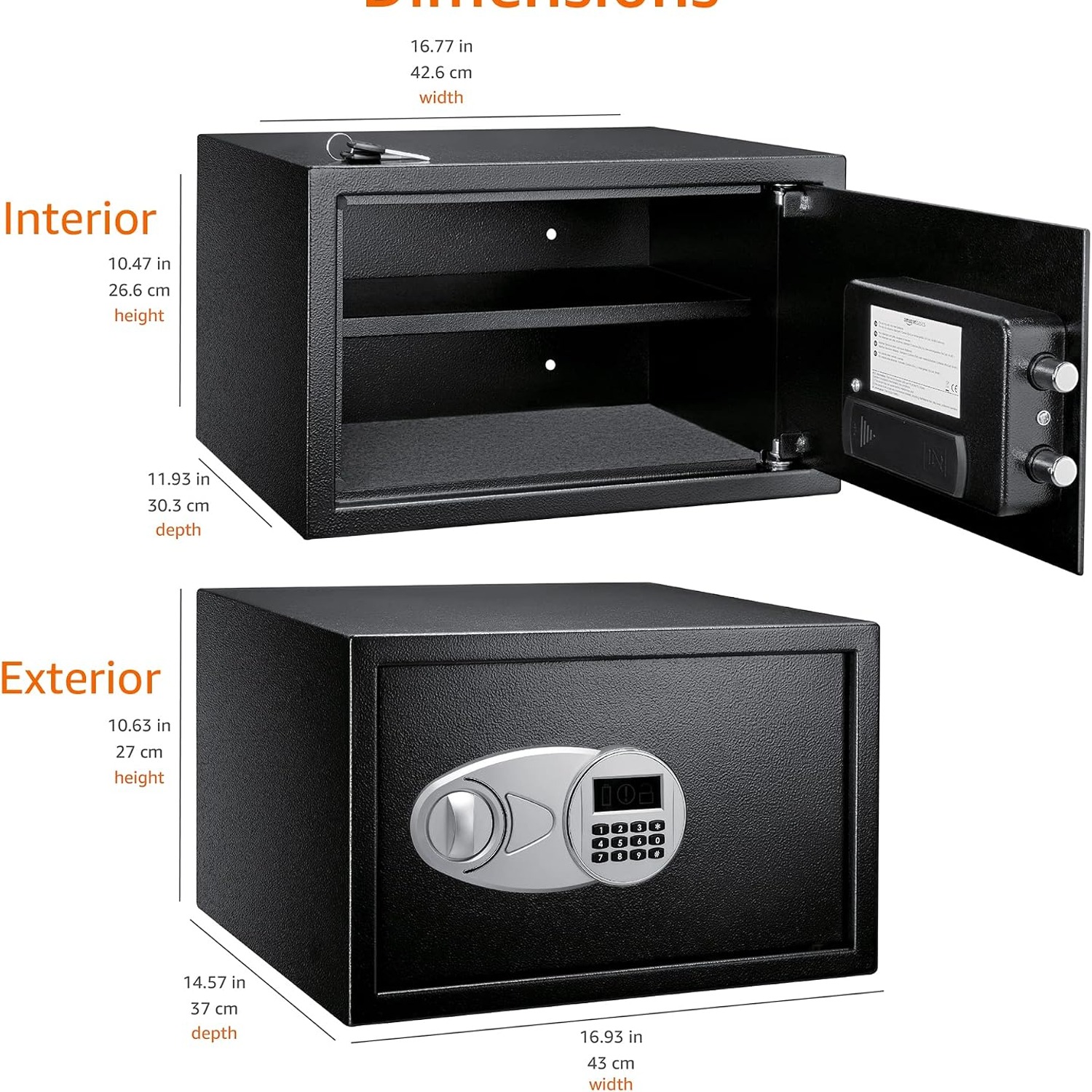
The maker gives the capacity as 33.9 litres, which we round to 34 litres in the name. Measure what you plan to store against the inside dimensions.
For a purchase decision, physical fit matters more than either capacity figure. Two safes with similar volumes can have quite different shapes. A wide, shallow space may work for one item but not another.
The listed outside measurements are 37.1 cm deep, 42.9 cm wide and 26.9 cm high. These describe the space the safe occupies, not the room available for belongings.
Walls, the door and the locking parts take up space. Ask for confirmed usable interior and door opening measurements if you have a particular folder, device or case in mind. Do not assume it will fit because its measurements are smaller than the exterior.
Check the installation space carefully
Measure the location before ordering. Look beyond the footprint and consider whether the door can open far enough for comfortable access.
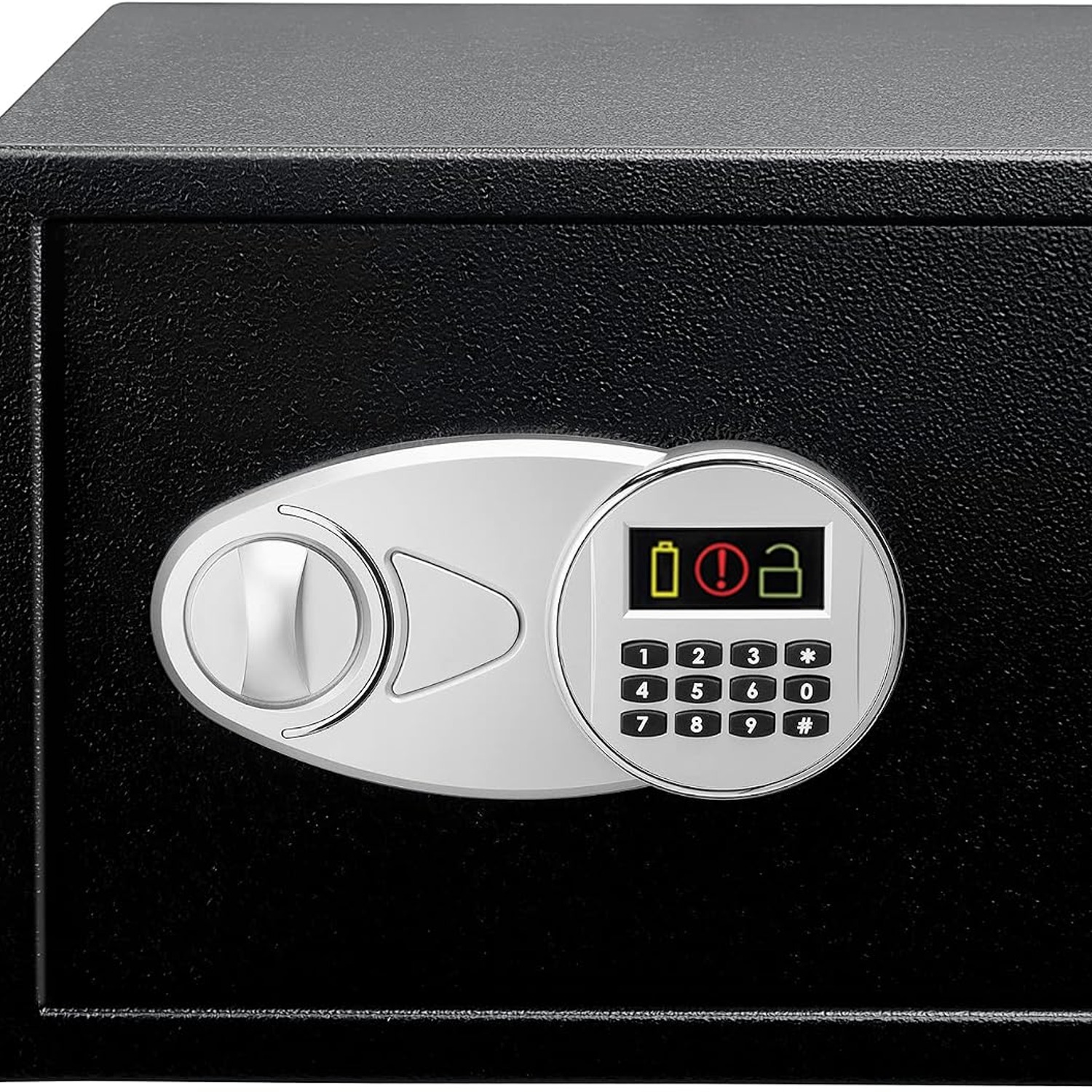
A cupboard can appear spacious while a hinge, door frame or nearby shelf gets in the way. You also need a clear view of the keypad and room to reach the override lock when necessary.
The safe weighs 12.2 kg. Plan a clear route to its final position and get help moving it if needed. Avoid placing it on furniture without checking that the furniture can support it and its contents.
For a black home safe installed in a cupboard, lighting is another practical detail. You should be able to read the controls without awkward reaching or moving stored items out of the way.
Know how everyday access works
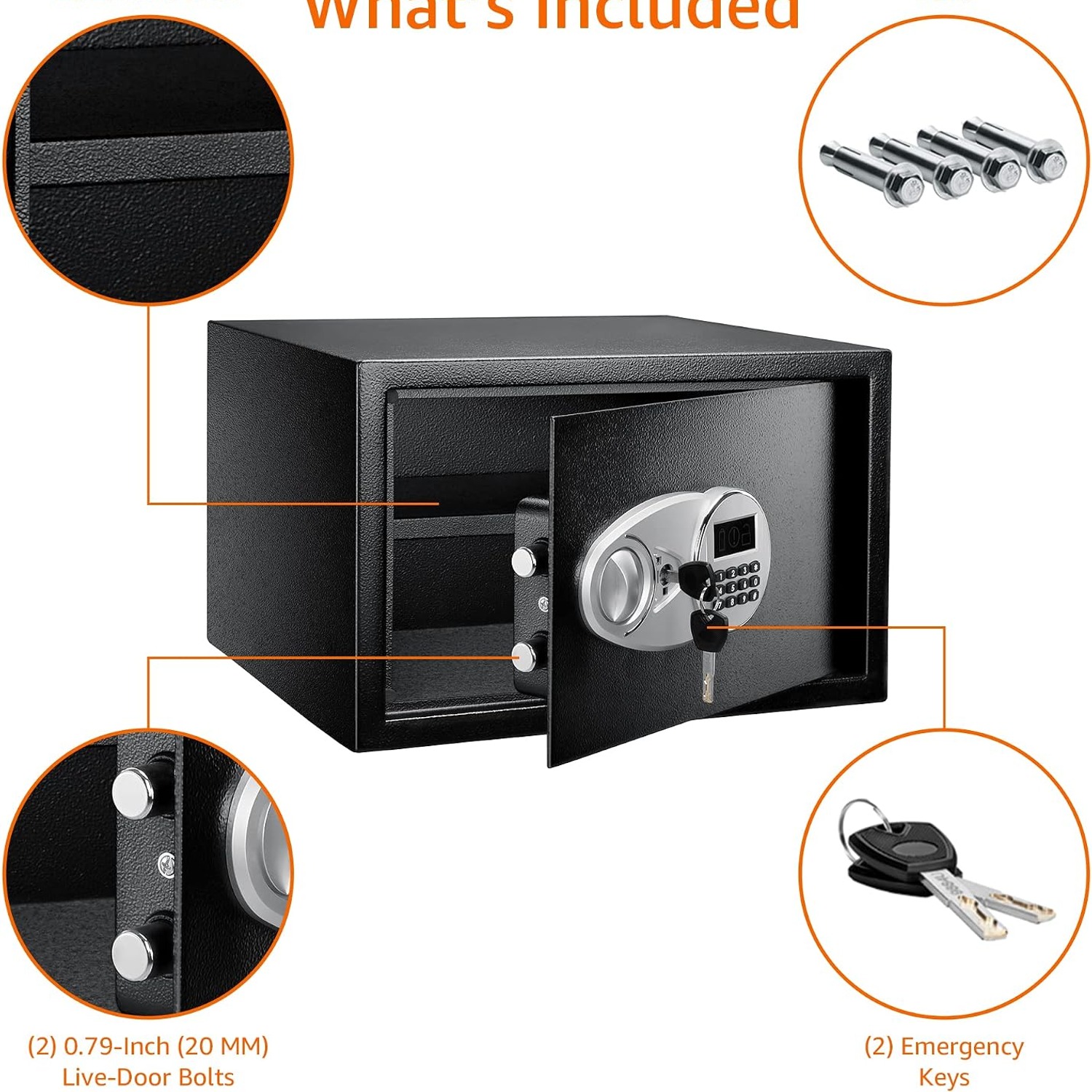
This digital security safe has a push button electronic lock with reprogrammable access. That means you can set a code for routine opening and change it by following the supplied instructions.
Before putting valuables inside, read the setup steps and test the lock with the door open. Check that you understand both the normal opening process and the backup method.
Choose a code that is not obvious to other people. Avoid leaving a written copy beside the safe or using a number that is widely known in your household.
Electronic access is useful when you do not want to fetch a key each time. Still, a push button safe needs careful setup and sensible code handling. The keypad alone does not remove the need for good storage habits.
Plan for batteries and backup keys
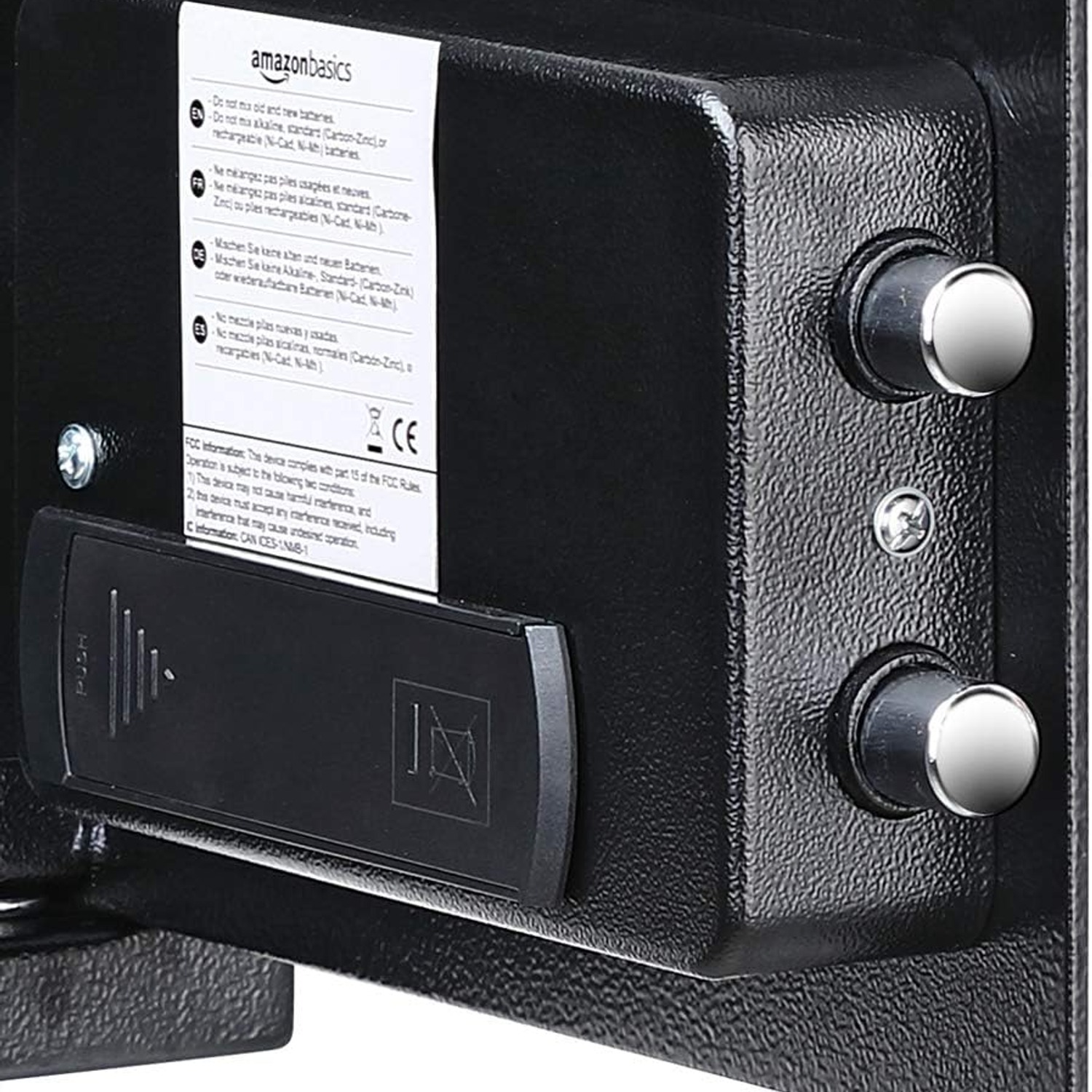
The lock needs four AA batteries, and they are not included. Have them ready so you can set up and test the safe when it arrives.
Battery replacement steps are not given by the maker. Use the product instructions rather than guessing how the compartment opens or how settings behave during a change.
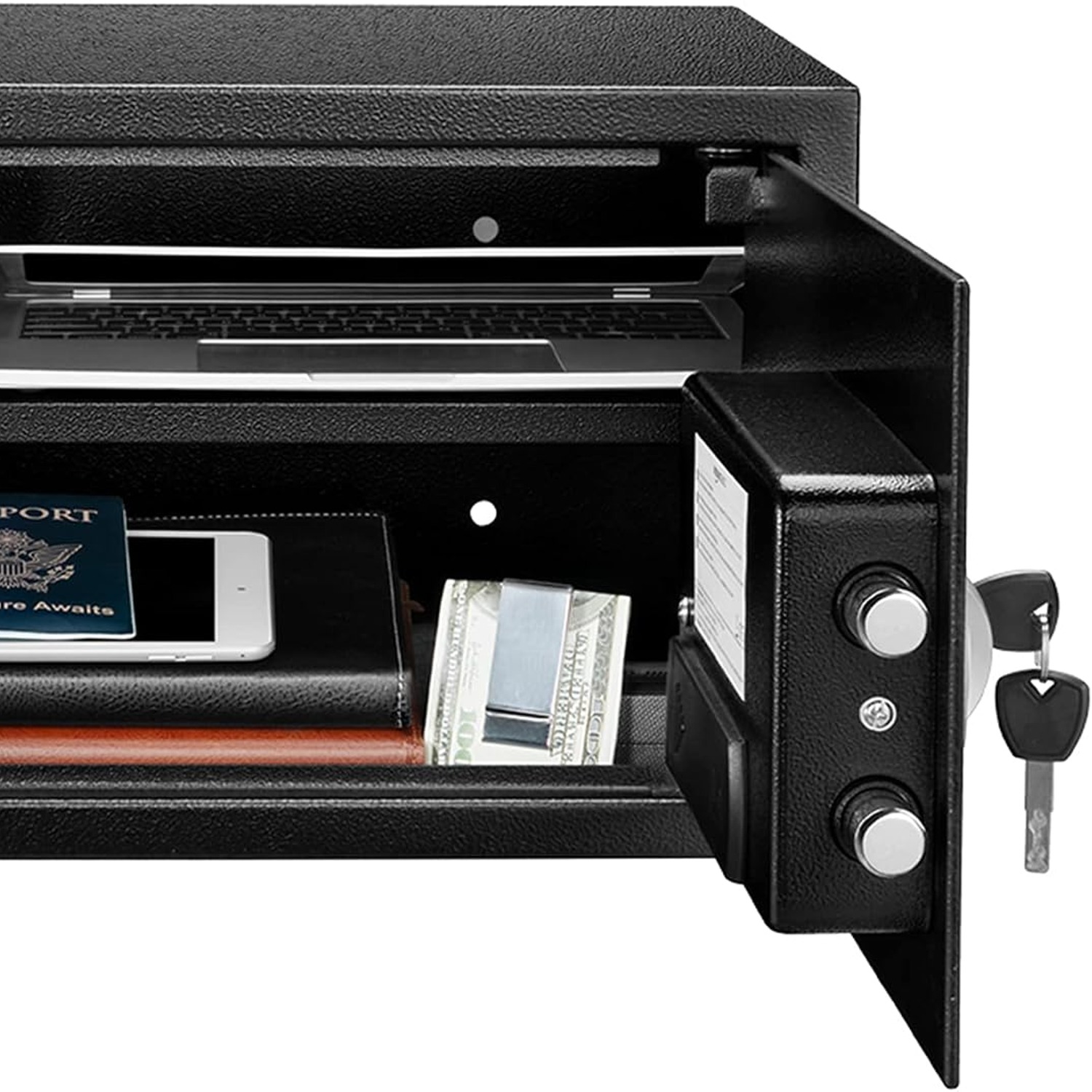
Two emergency override keys are supplied. Store them securely somewhere other than inside the safe. This sounds simple, but it is easy to overlook while setting up a new storage space.
A battery operated safe also needs occasional attention. Make checking its operation part of your household routine, especially before leaving home for an extended period. Do not wait until you urgently need a document to discover an access problem.
Use the shelf to suit your belongings
The adjustable and removable shelf is one of the more useful features here. It gives you a way to separate smaller items or make room for taller ones.
With the shelf in place, you may find it easier to keep pouches and small cases apart. Removing it can suit a different arrangement, provided the items fit through the opening.
The floor is carpeted to help reduce contact scratches. That is helpful for everyday storage, but it is not a promise that loose objects cannot damage each other.
Keep delicate pieces in their own cases. Avoid overfilling the safe or forcing the door against stored belongings. A tidy layout makes access easier and reduces the chance of something catching near the closing edge.
Treat mounting as part of the purchase
The maker notes list wall, floor and shelf mounting, with four bolts included. That gives you installation options, but it does not mean every surface is suitable.
For home safe mounting, the strength of the surface matters as much as the supplied hardware. A thin furniture panel and a solid structural surface are not interchangeable.
Follow the supplied installation instructions and check what lies behind any drilling point. If you are unsure about the surface, fixing method or nearby services, ask a qualified installer.
If you rent, get permission before drilling where required. It is better to resolve that question before ordering than to discover that your planned wall mount home safe location cannot be used.
Separate security features from security ratings
This safe has steel construction, two live-door bolts and concealed hinges described as pry-resistant. Those are listed construction features.
They are not the same as an independently tested burglary rating. No security certification, steel thickness or tested attack resistance is specified in the maker's description.
That distinction matters if you want to store high-value items or meet an insurer's conditions. Ask your insurer what evidence and installation standard they require before choosing a safe.
Likewise, do not assume this product meets rules for firearms or other regulated items. A general metal security safe should only be used for those purposes when the relevant compliance has been established.
Be clear about fire and water limits
The maker record contains a waterproof claim in the product details, but the maker feature notes explicitly say the safe is not fireproof or waterproof.
The cautious buying decision is to treat it as offering neither form of protection. Do not choose it for expected flood exposure or rely on it to protect paper during a fire.
This is especially important when shopping for a document storage safe. Locked storage and protection from heat or water are different needs, even when the same belongings are involved.
If those risks are central to your purchase, look for documented protection suited to them. A general claim without a stated test or clear supporting detail is not enough to confirm performance.
Keep care simple and consistent
Use a soft, dry cloth for routine cleaning. Keep the keypad, lock and inside of the safe dry, and avoid spraying cleaning products into openings.
Check that belongings are not blocking the door or interfering with normal closure. Do not force a stiff lock or door. Refer to the instructions and seek support if operation changes.
If the safe is mounted, inspect the fixings from time to time. Movement or loose hardware should be addressed rather than ignored.
Keep the instructions somewhere accessible outside the safe. They are most useful when you need to check a setup step, replace batteries or understand the backup access process.
Check the practical details before ordering
A good final check covers fit, access and installation. Confirm that your planned contents fit, your chosen location works and you can mount the safe appropriately.
Check our delivery and returns pages information for your address and review the returns terms before purchasing.
If buying it as a gift, discuss the practical side with the recipient. A large digital safe needs a suitable home, batteries and a plan for installation, so a surprise is not always the easiest approach.
The short version
This large home safe offers electronic code access, two backup keys, a removable shelf and included mounting bolts. It suits buyers looking for organised, locked household storage who have checked the fit and installation requirements.
Confirm the usable interior space because the capacity figures differ. Treat it as neither fireproof nor waterproof, and do not assume a security rating that is not stated. Choose it for the features documented here, with a clear plan for where and how you will use it.