
The complete guide
How to Choose a Small Digital Safe for Everyday Valuables
Give small valuables a dedicated place
Cash in one drawer, spare keys in another, and a passport tucked somewhere you meant to remember. Small belongings are easy to scatter around a home. A dedicated storage spot can make them easier to manage while adding a lock between those items and casual access.
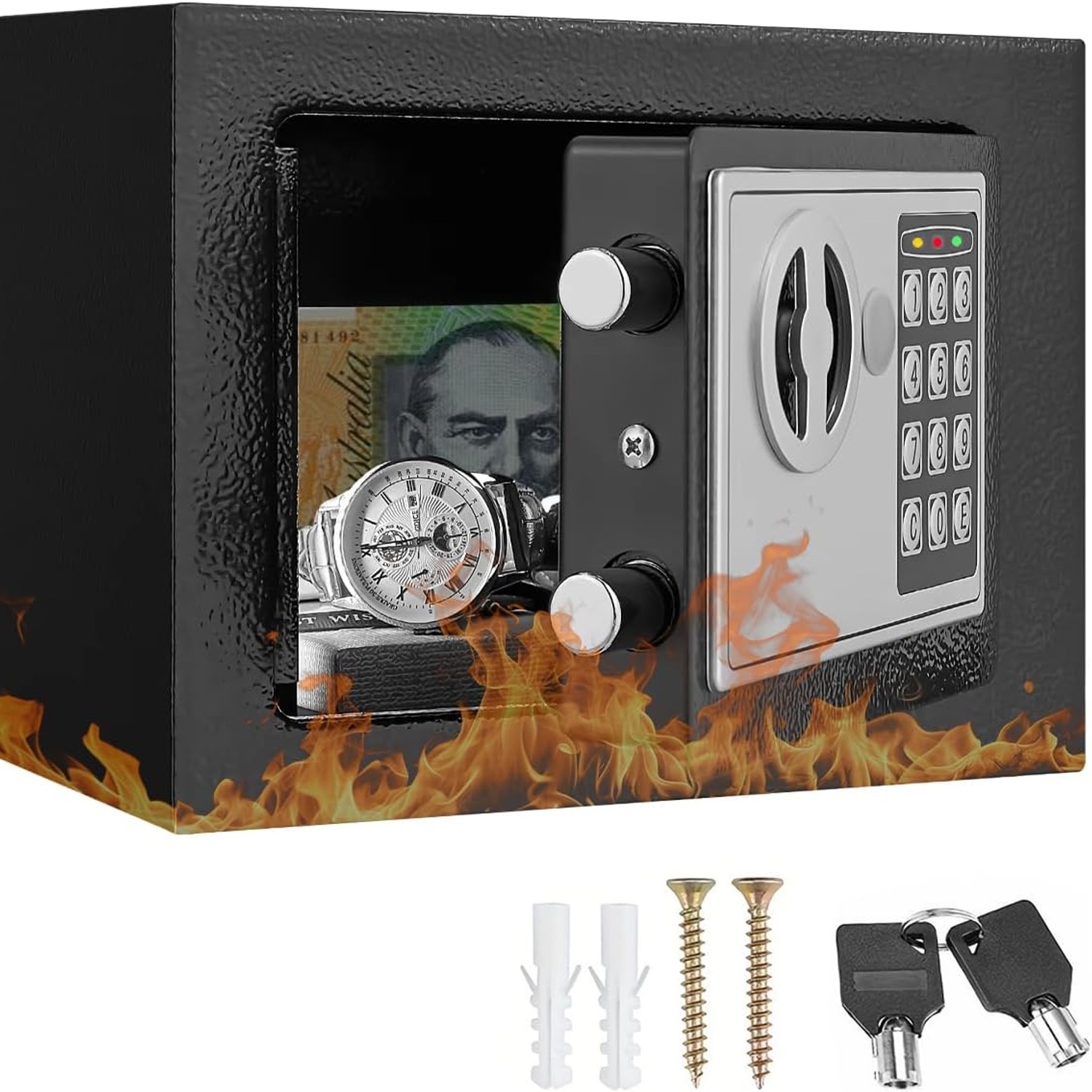
This Small Digital Safe is intended for that kind of everyday personal storage. It has a listed 6.4L capacity, electronic code access and backup keys. Its compact size makes it worth considering when a larger safe would take up too much space.
The important part is matching it to the job. A small lockable box is not automatically a fire safe, a flood-safe container or a tested burglary safe. Before buying, think about what you want to store and which risks you need to address.
Start with the items, not the capacity
The supplier describes this model for cash, keys, jewellery, passports and small documents. That gives you a useful starting point, but it does not guarantee that every wallet, jewellery box or document holder will fit.
Gather the items you expect to store. Measure the largest one, including any case or cover you plan to keep around it. Think about how you will reach things at the back without emptying the safe each time.
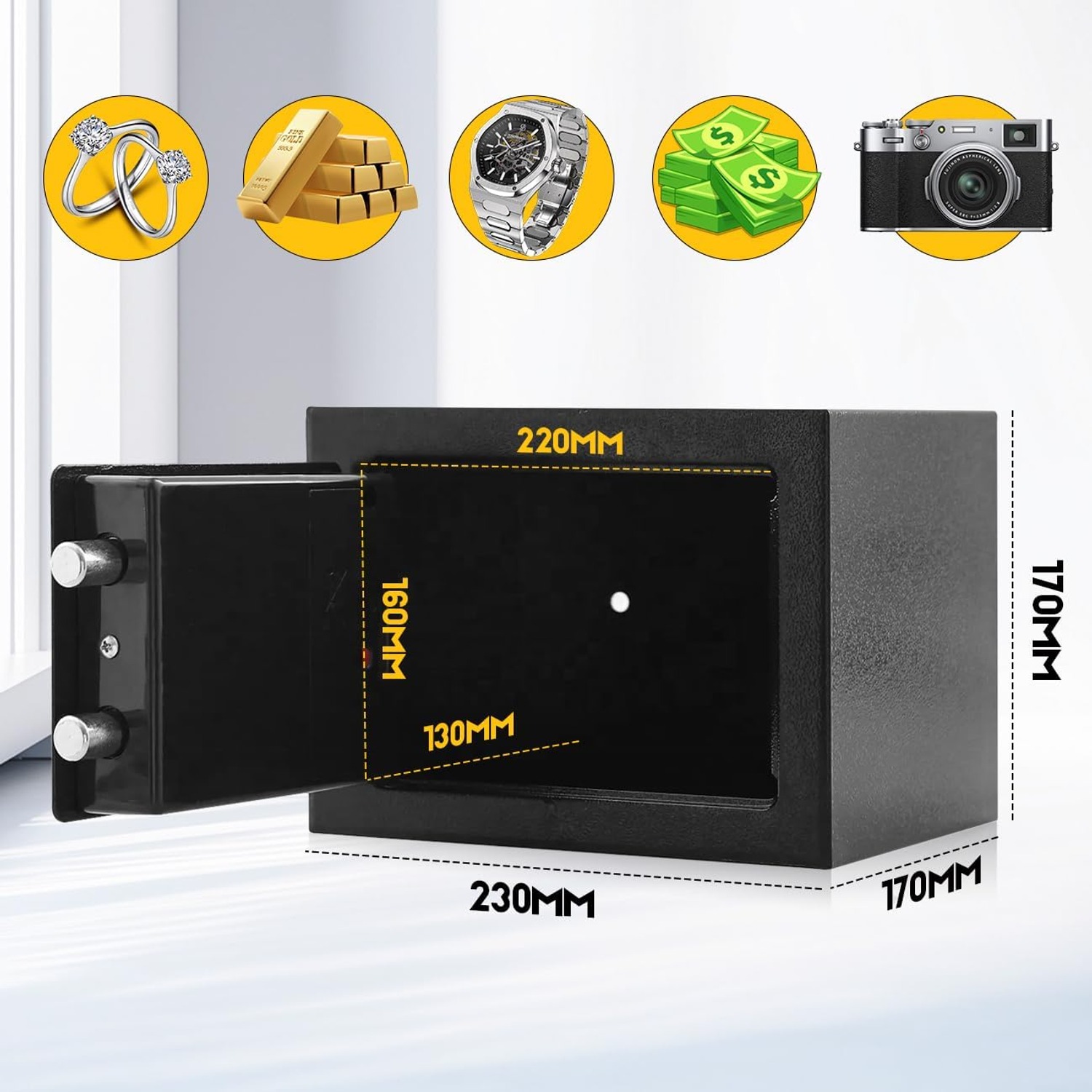
A 6.4 litre safe describes storage volume, not the shape of the opening. The usable internal dimensions and door-opening measurements are not supplied here. If one particular item must fit, ask for those measurements before ordering. This matters more than a general capacity figure.
Leave some spare room in your plan, too. A safe packed tightly with loose objects can be awkward to use, especially when you need one small item quickly.
Check the space around the safe
The listed dimensions are 17 x 23 x 17 cm. The supplier detail table gives these as depth, width and height. Use those measurements to mark out the footprint on your intended surface before deciding where it will go.
Do not measure only the box-shaped space. You also need clearance for the door to swing open, your hand to turn the knob and a clear view of the keypad. A shelf safe is less useful if a cabinet edge prevents the door from opening properly.
The safe weighs 2.5 kg before you add contents. Choose a stable surface that can support the combined load. If you are considering a drawer, check its load limit as well as its inside measurements.
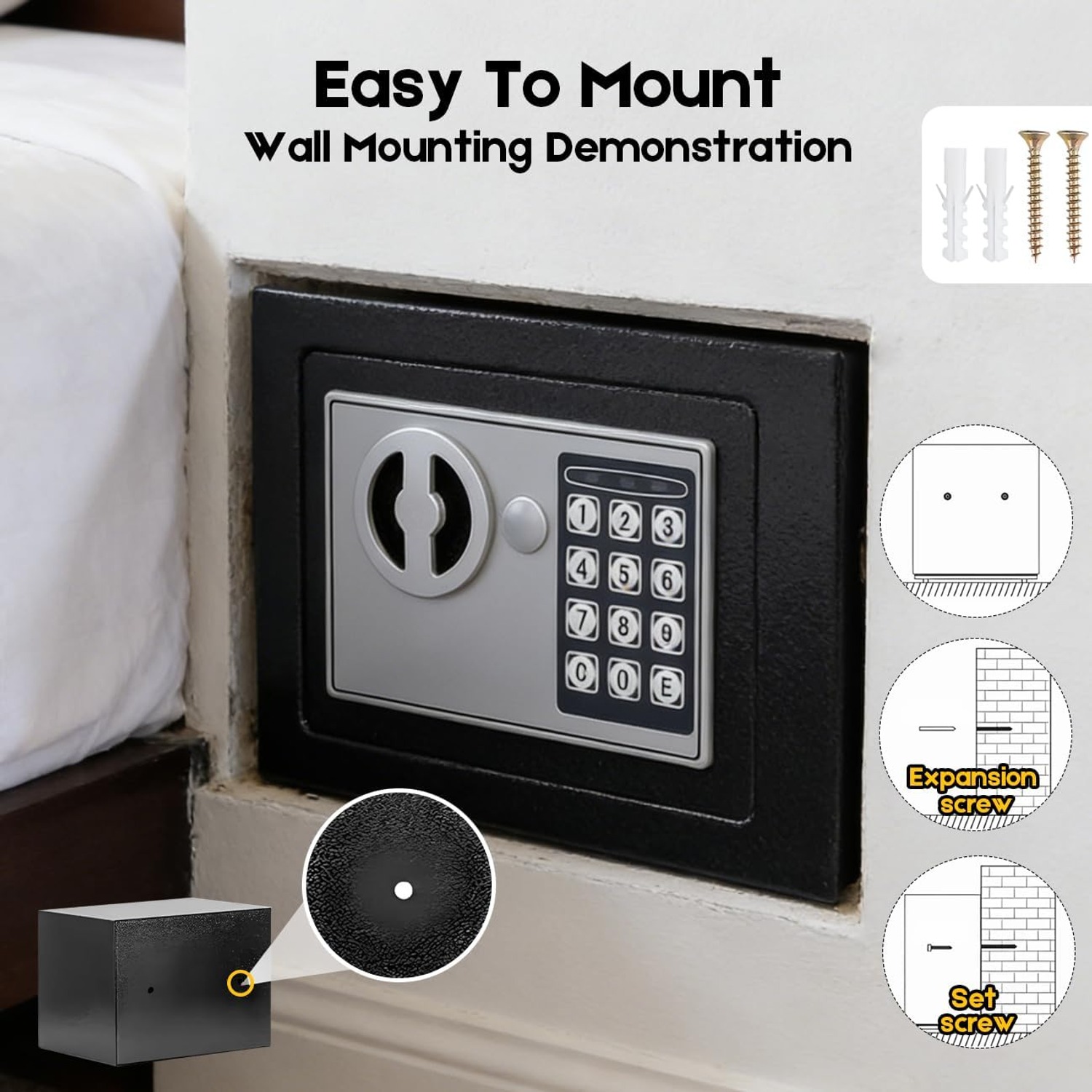
Mounting details are not provided. Do not assume that fixing holes, bolts or wall anchors are included. If securing the safe to furniture or a building is part of your plan, confirm the installation options first.
Understand keypad and key access
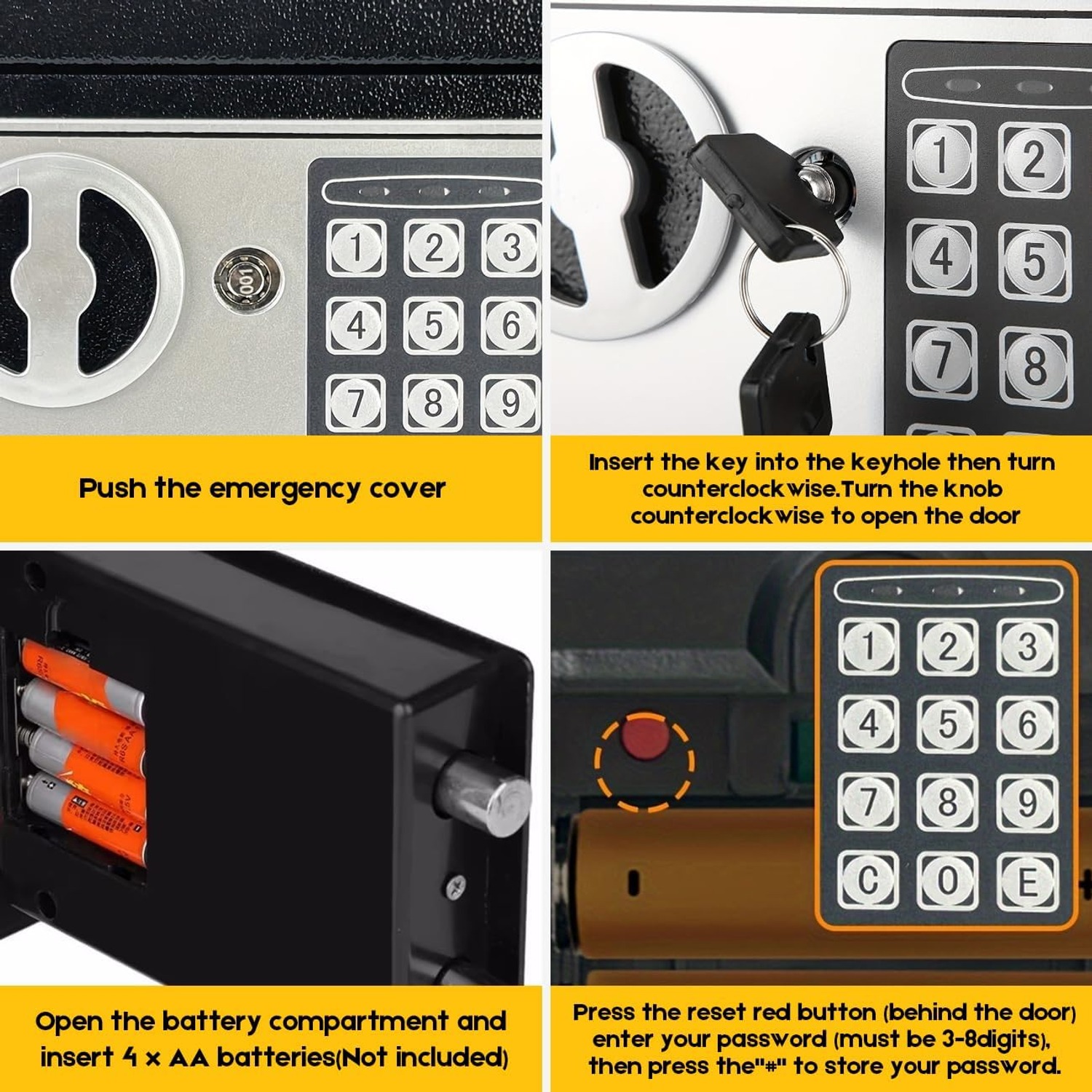
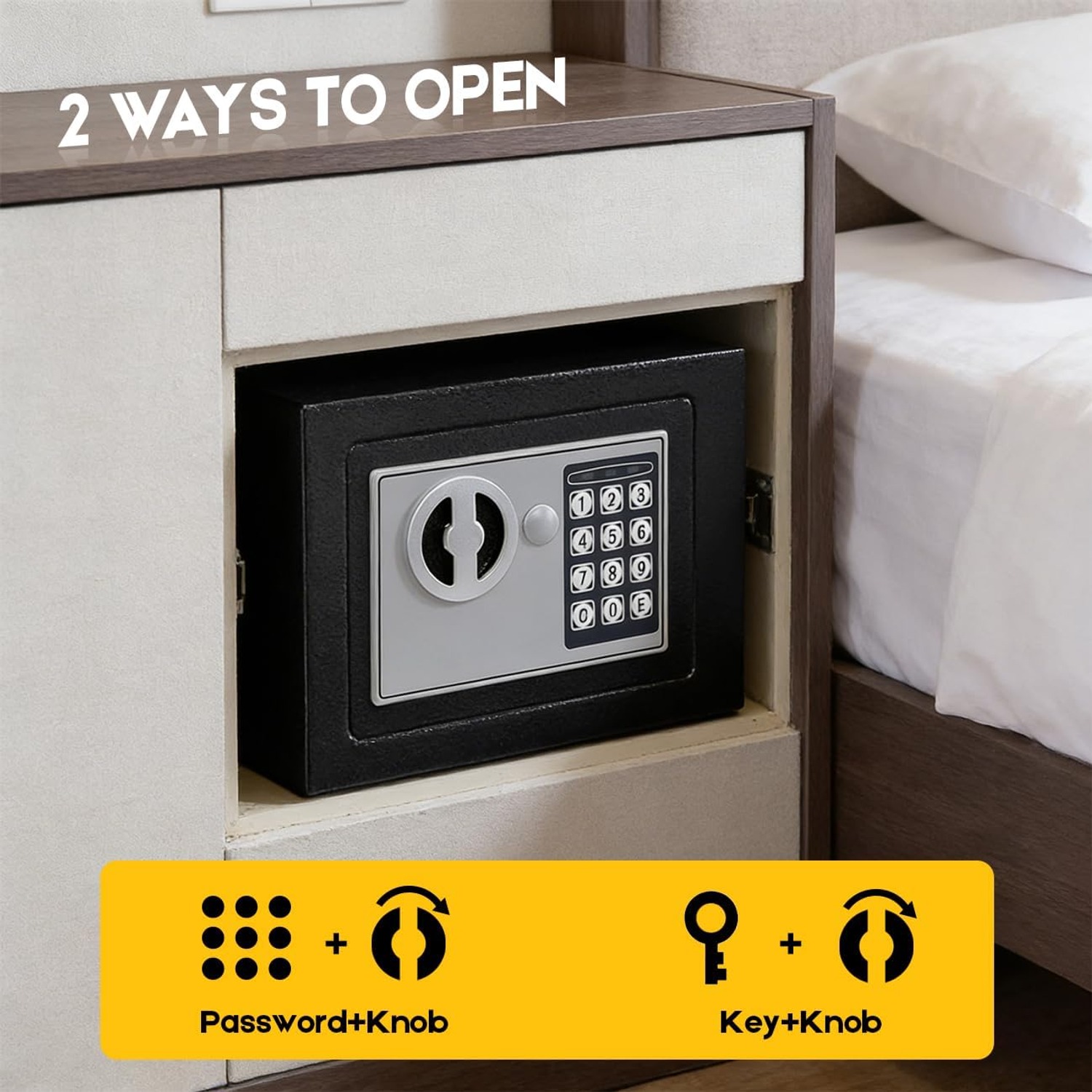
An electronic keypad safe lets you use a code for routine access rather than handling a key each time. The supplier describes a programmable code of 3 to 8 digits and a turning knob used to open the door.
The exact programming sequence is not included in this record. Read the supplied user manual and set the code with the door open. Test it several times before placing anything inside, so you know the sequence and can spot setup mistakes early.
Choose a code that other people are unlikely to guess. Avoid obvious choices such as a birthday known to the household. Keep the code private rather than writing it on or beside the safe.
Two emergency override keys are also described as included. A safe with backup keys gives you another access route, but only if you can reach those keys when needed. Keep them separately, not inside the locked box.
Plan for battery changes
This model requires four AA batteries, which are not included. Have them available before setup so you can test the electronic lock before storing valuables.
Supplier copy describes LED indicators for battery condition and lock status. The exact signals are not explained in the record, so learn their meaning from the manual rather than guessing when a light appears.
Make battery checks part of your normal household routine. Follow the manual for replacement and confirm that your code still works afterwards, with the door open. Avoid waiting until you urgently need a passport or spare key to discover a power problem.
Backup access does not remove the need for battery care. It simply provides another option when the electronic route is unavailable. Knowing where the keys are is just as important as remembering the code.
Match security expectations to the evidence
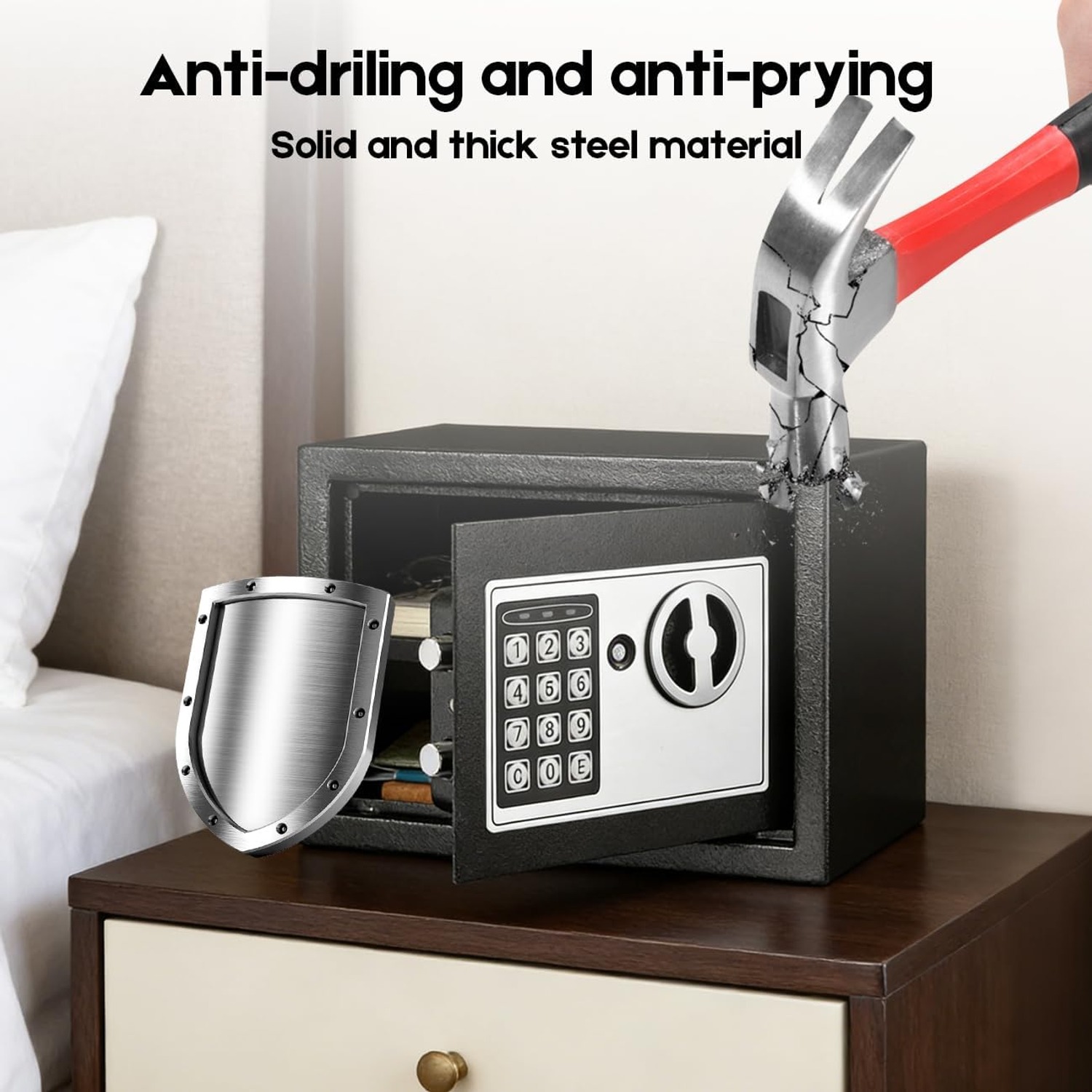
The product details list metal construction, while the descriptive copy identifies steel and a powder-coated finish. These details describe the build, but they do not establish a tested level of resistance to forced entry.
No verified burglary rating is supplied. That distinction matters if you intend to store high-value jewellery, substantial cash or items covered by specific insurance conditions. Check your insurer's requirements before choosing a safe for those purposes.
Also consider the difference between controlling access and preventing removal. A compact home safe placed loose on a shelf should not be assumed to be protected against being carried away. Its weight alone does not establish theft resistance.
For basic personal storage, a small safe may still be a useful choice. The key is to buy it for the protection that is documented, not for protection suggested by its appearance or by the word “safe”.
Be careful with alarm and water claims
Two points in the supplier information need particular care. The first is the alarm. One specification says there is no alarm, while the descriptive copy says an alert sounds after three incorrect code attempts.
Those statements conflict. If an alarm is important to your purchase, ask for confirmation before ordering. Until then, do not include it in your security plan as a confirmed feature.
The second point is water protection. The specification uses the word waterproof, but no test rating, exposure duration or depth is given. That does not provide enough detail to judge protection during a leak or flood.
No fire rating is supplied either. If your main concern is protecting documents from heat or water, choose a product with clear test information for that risk. A lock, a metal body and a compact shape do not establish disaster protection.
Decide whether it suits your routine
A small safe for home can make sense when you want a consistent place for modest quantities of everyday valuables. It may suit someone who wants to keep spare keys and travel documents together rather than spread through several drawers.
An office safe box may serve a similar personal-storage role. However, business cash handling, shared access and workplace rules can create needs that go beyond a small personal safe. Check those requirements before making it part of an office process.
The supplier also mentions hotel-room use. If that is your plan, consider the 2.5 kg weight, available placement space and accommodation rules. Do not assume that bringing a safe creates the same protection as a fixed, rated installation.
For gifting, focus on the recipient's actual needs. A compact storage box may be useful, but it is worth checking that their items fit and that they are comfortable managing a code and separate backup keys.
Keep everyday use simple
Once you have followed the setup instructions, give each item a sensible place inside. Keep frequently needed belongings easy to reach. Avoid packing the safe so tightly that objects press against the door or interfere with closing it.
If you want to use it as a jewellery safe, check whether you need your own small pouches or cases. An interior lining and fitted compartments are not specified, so do not assume they will be present.
For cleaning, use a soft, dry cloth on the outside. Keep moisture away from the keypad, lock and battery compartment. Avoid spraying cleaner directly onto the safe.
Keep the manual somewhere you can reach without opening the safe. It may be useful when changing batteries or checking a signal. Store purchase details separately as well, especially if you need to ask about service or returns later.
Check the purchase details before ordering
The described package contains one safe box, two emergency override keys and a user manual. Batteries are separate. Check the current offer details if any included item is essential to your purchase.
Delivery timing, warranty terms and a return window are not specified in this record. Read the storefront information before paying, particularly if the safe is needed before a trip or as a gift.
If internal fit, anchoring or a protection feature remains unclear, ask before ordering. A short measurement check or a clear answer about a feature can prevent choosing a safe that does not suit the task.
The short version
This black digital safe offers a listed 6.4L capacity, code access and two backup keys in a compact format. It is intended for small personal belongings and uses four AA batteries, purchased separately.
Choose it only after checking fit, placement and your security needs. Confirm any feature you depend on, especially the conflicting alarm information. For verified fire, flood or burglary protection, look for documented ratings rather than assuming this small valuables safe provides them.