
The complete guide
Choosing a Fire Resistant Chest for Important Papers
Important papers have a habit of ending up in different places. A passport goes into one drawer, insurance records sit in a folder, and a certificate gets tucked somewhere safe enough to forget. A dedicated chest gives those items a known home.
This fire resistant chest combines A4 document storage with a key lock and a supplier-described heat-resistant construction. It is worth considering if you want selected papers together in a box you can move. The key is to understand its size, weight and protection claims before deciding whether it fits your needs.
Start with the papers you want to store
Before choosing an important papers box, gather the items you plan to put inside. You might have certificates, household records, insurance documents or passports. The useful question is not how many drawers you want to clear. It is which originals and records you want in this particular chest.
Make a small stack and measure it, including any covers. That gives you a more useful starting point than capacity alone. A few thick document wallets may take up more space than a much larger number of loose sheets.
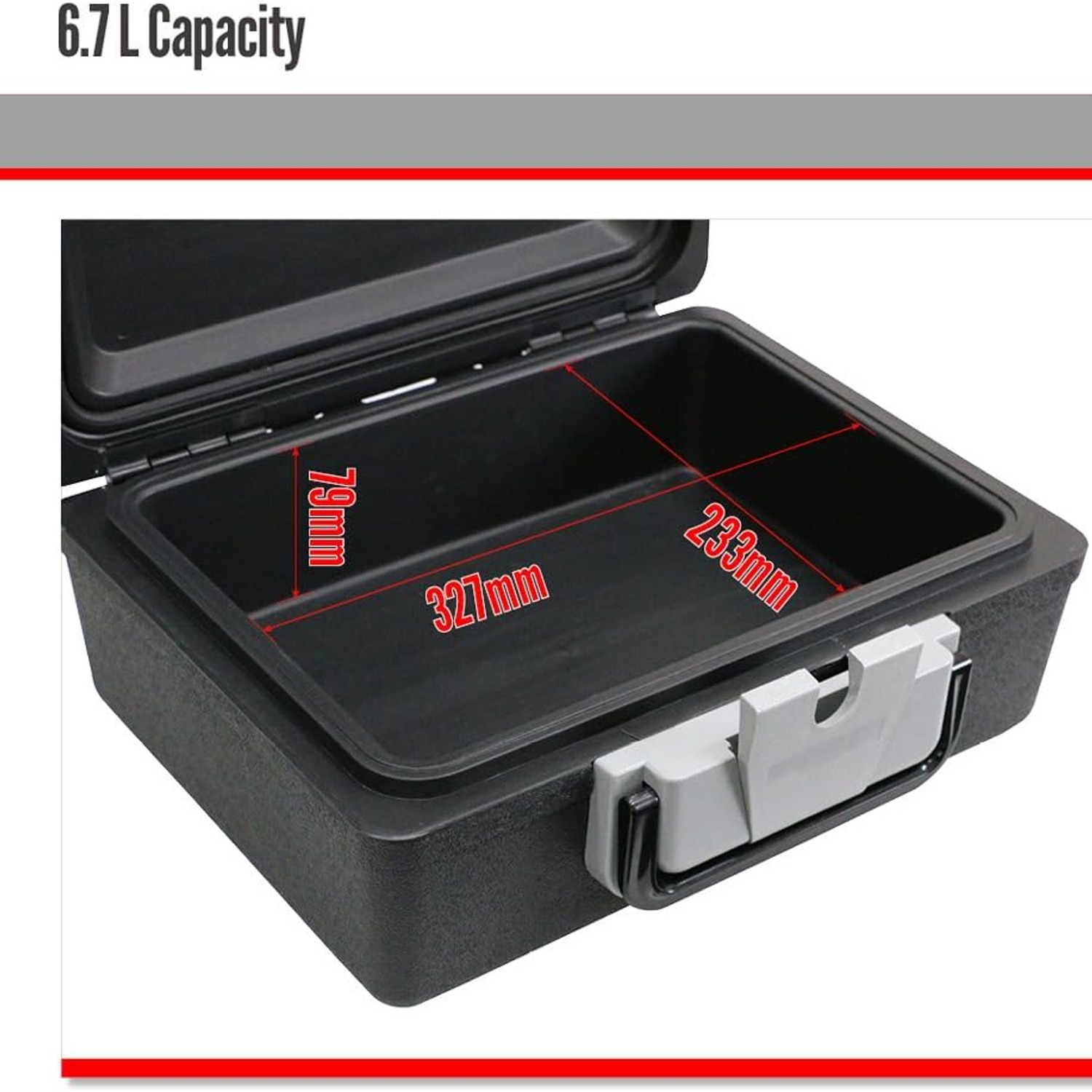
This chest has a listed capacity of 6.7 litres. Think of it as storage for selected essentials rather than a whole filing cabinet. Leaving some spare room also makes it easier to find and remove a paper without disturbing everything else.
Understand the fire-resistance claim
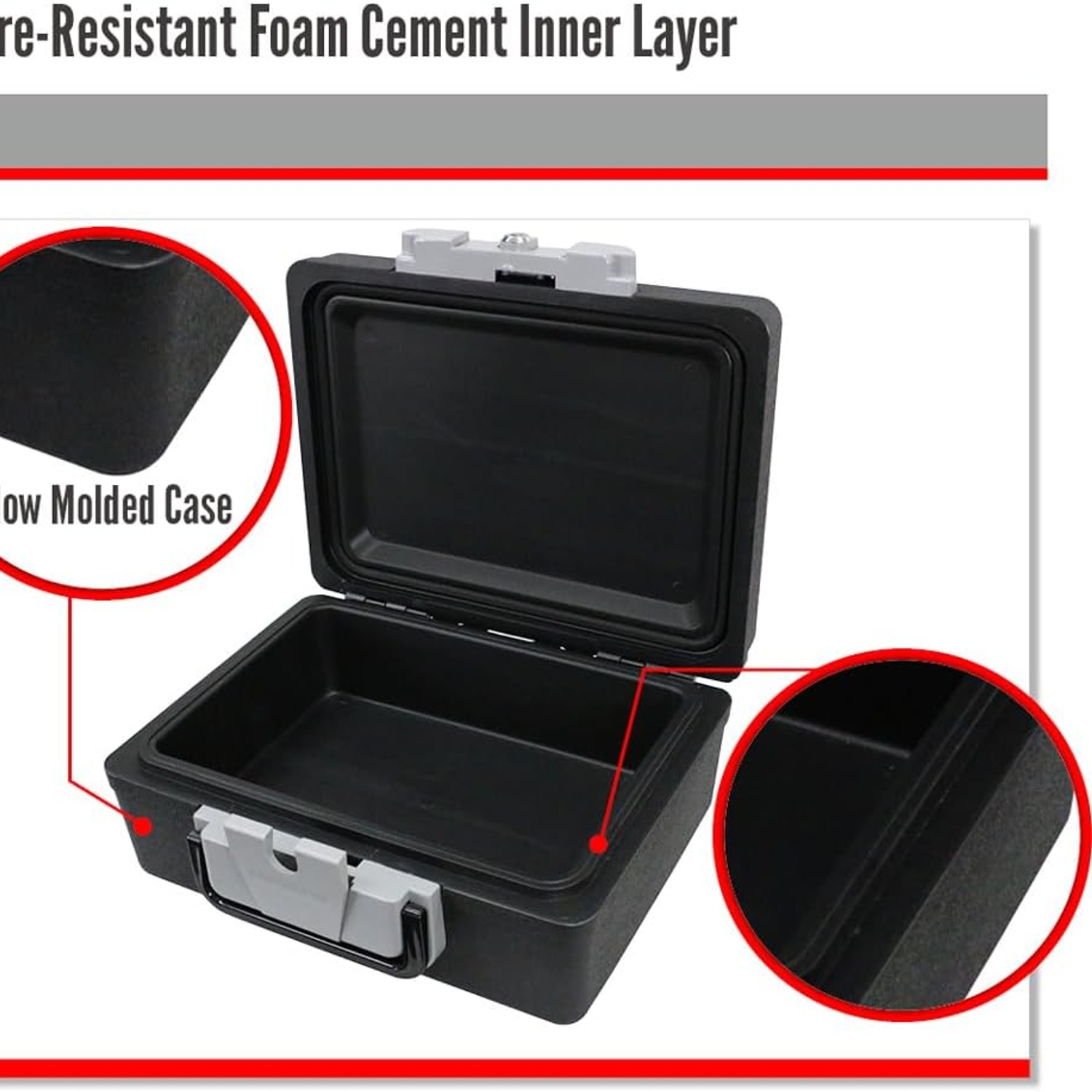
The supplier describes a foam cement fire-resistant construction. Its stated performance is that the interior stays below 177°C while exposed to 845°C for 30 minutes.
Those figures describe a particular claim, not protection from every possible fire. No independent certification or named test standard is provided in this record. If your purchase depends on meeting an insurance requirement or a formal storage standard, ask for supporting documents before ordering.
Keep the wording in perspective when comparing a compact fire resistant safe with other products. A temperature figure, a time period and a recognised certification are different pieces of information. Do not treat one as proof of the others.
The practical aim is to make an informed choice. This product has a stated heat-performance claim, but the available record does not establish every condition under which that performance applies.
Check A4 fit and folder fit separately
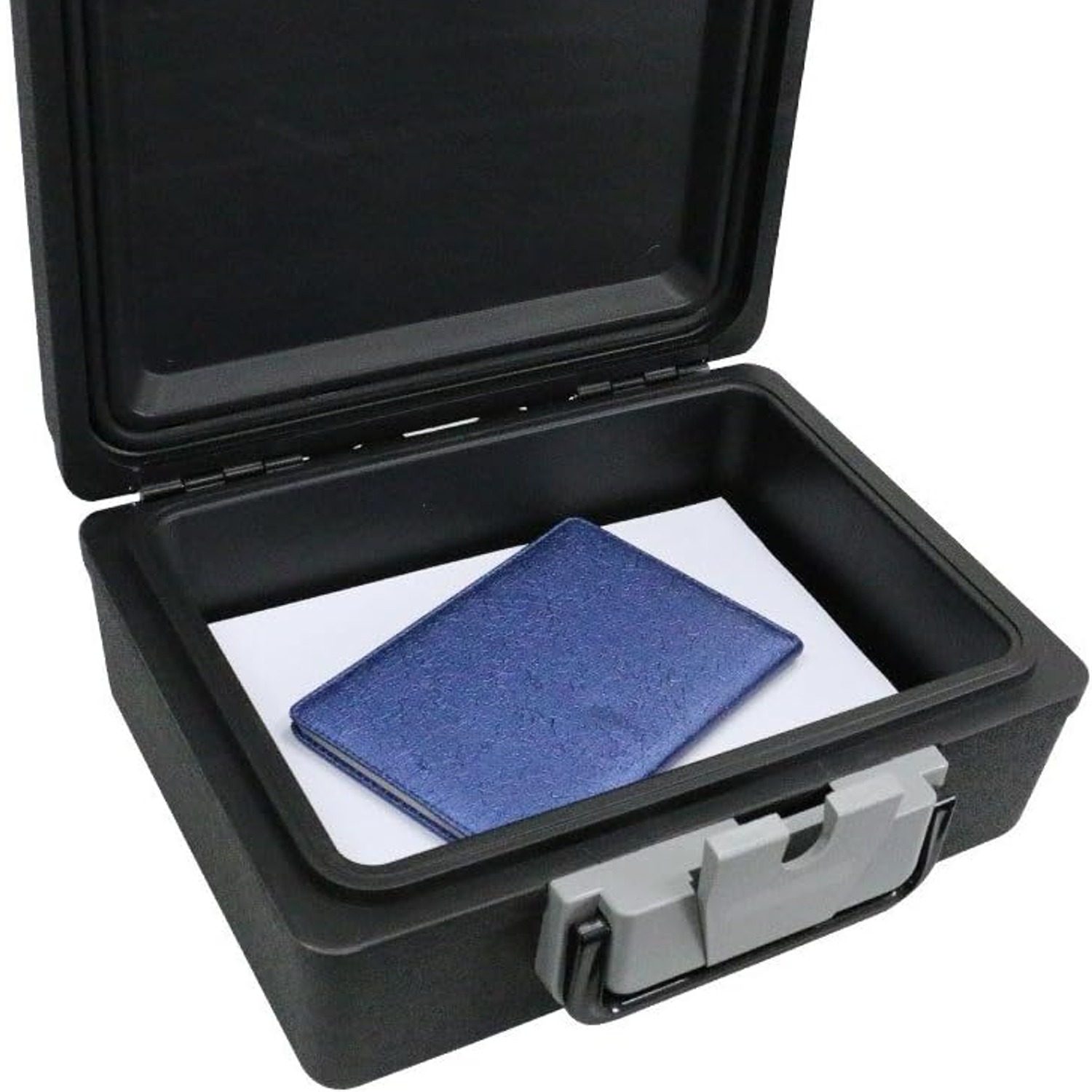
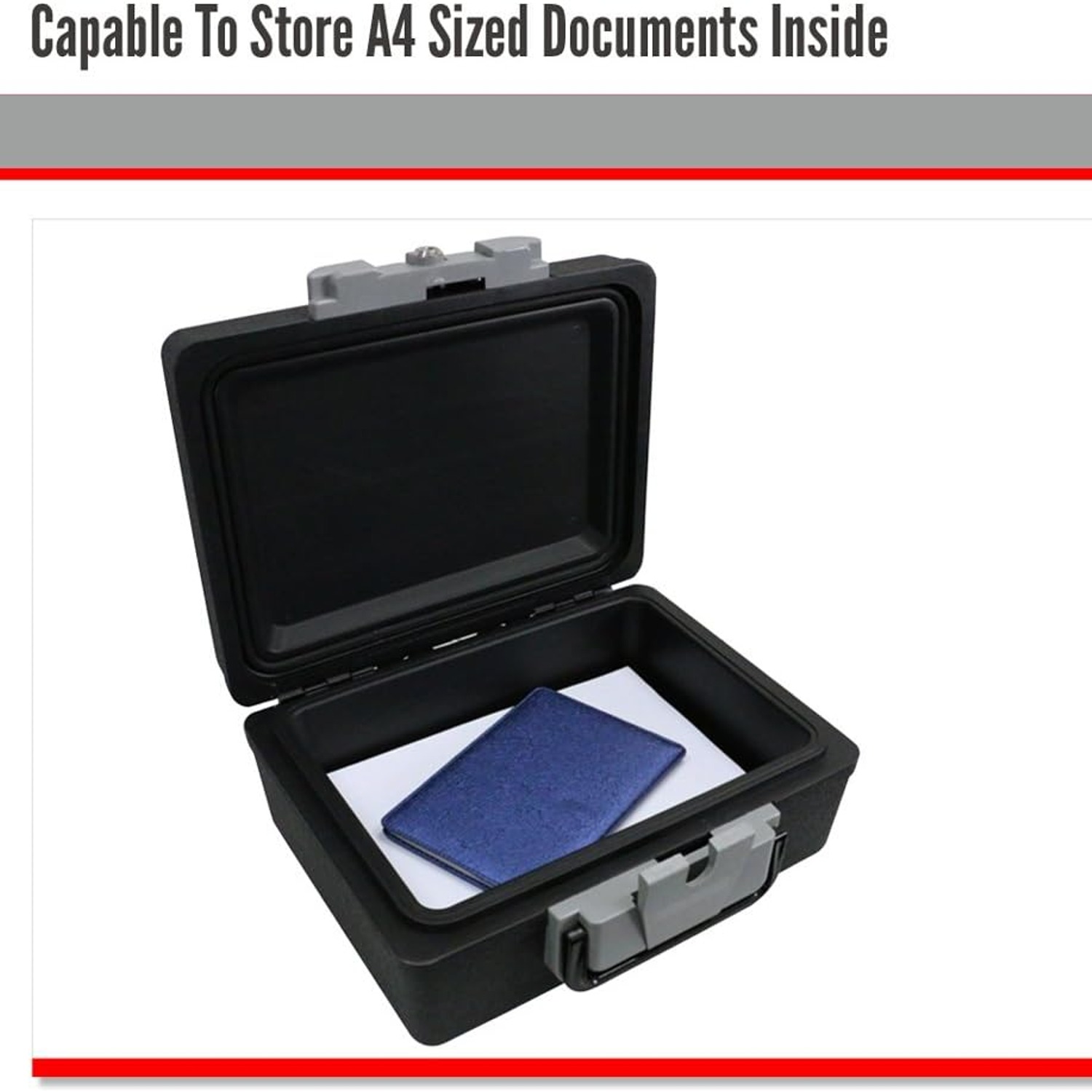
The supplier states that this A4 document storage box accepts A4 papers. Its internal dimensions are 7.9 x 32.7 x 23.3 cm.
That is useful for loose documents, but folders need a separate check. A cover can extend beyond the edges of the paper inside. Rings, tabs, zip closures and stiff corners all take up room that a sheet of A4 does not.
Measure the widest and longest points of each folder you want to use. Then check the thickness of the full stack. Avoid planning a fit so tight that papers must bend or the lid needs pressure to close.
If you mainly need lockable paperwork storage for a few records, a flat arrangement may work well. If your system depends on thick binders, compare those binders with the chamber dimensions first. A4 compatibility alone is not enough to settle that question.
Allow for the outside size too
The external dimensions are 30 x 39.5 x 17 cm. Mark that footprint on the proposed surface with paper or a tape measure before buying.
The space needed for use is larger than the closed box itself. You need access to the lock and room to open the lid. A shelf that fits the chest closely may still be awkward if you cannot see or reach the contents.
Also consider how you will remove it from its storage spot. Deep cupboards and high shelves can make a heavy box harder to handle. A stable, accessible position is more useful than a neat fit that makes every document check a struggle.
Check the support surface as well. It must suit the chest's 8.2 kg empty weight plus whatever you put inside.
Portable means movable, not lightweight
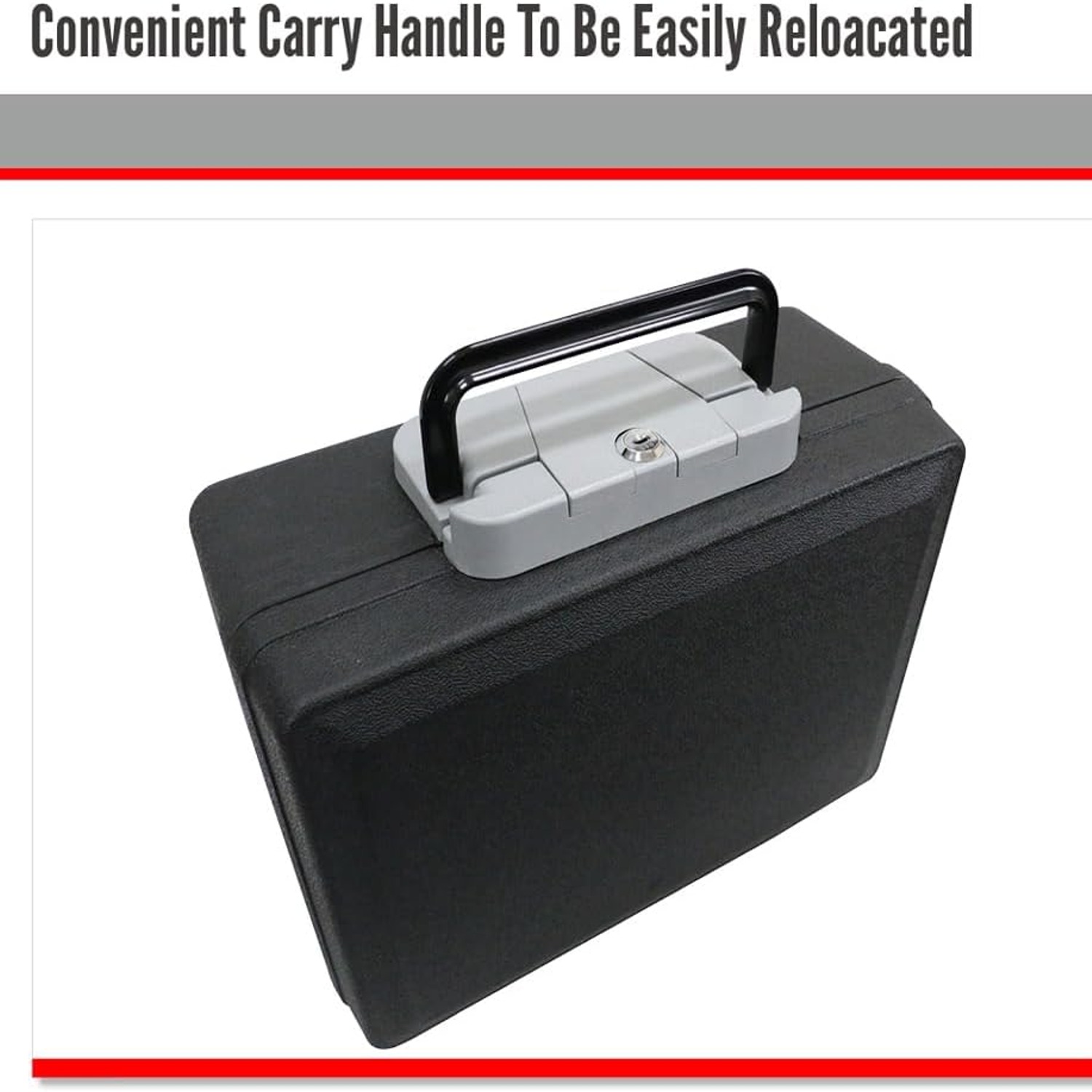
The listing describes this as a portable fire chest. At 8.2 kg before contents, it is still a substantial object to lift.
That distinction matters if you expect to move it often. Consider the distance, any stairs and whether you can handle the loaded chest comfortably. Its low shape and compact footprint do not reduce its stated weight.
For emergency document storage, plan where the chest belongs before an emergency happens. Make sure authorised household members know where it is and how access works.
Do not make your safety plan depend on collecting it during a fire. Personal safety comes first. A movable storage box should never be a reason to delay leaving a dangerous area or to go back inside.
Decide what you need from the lock
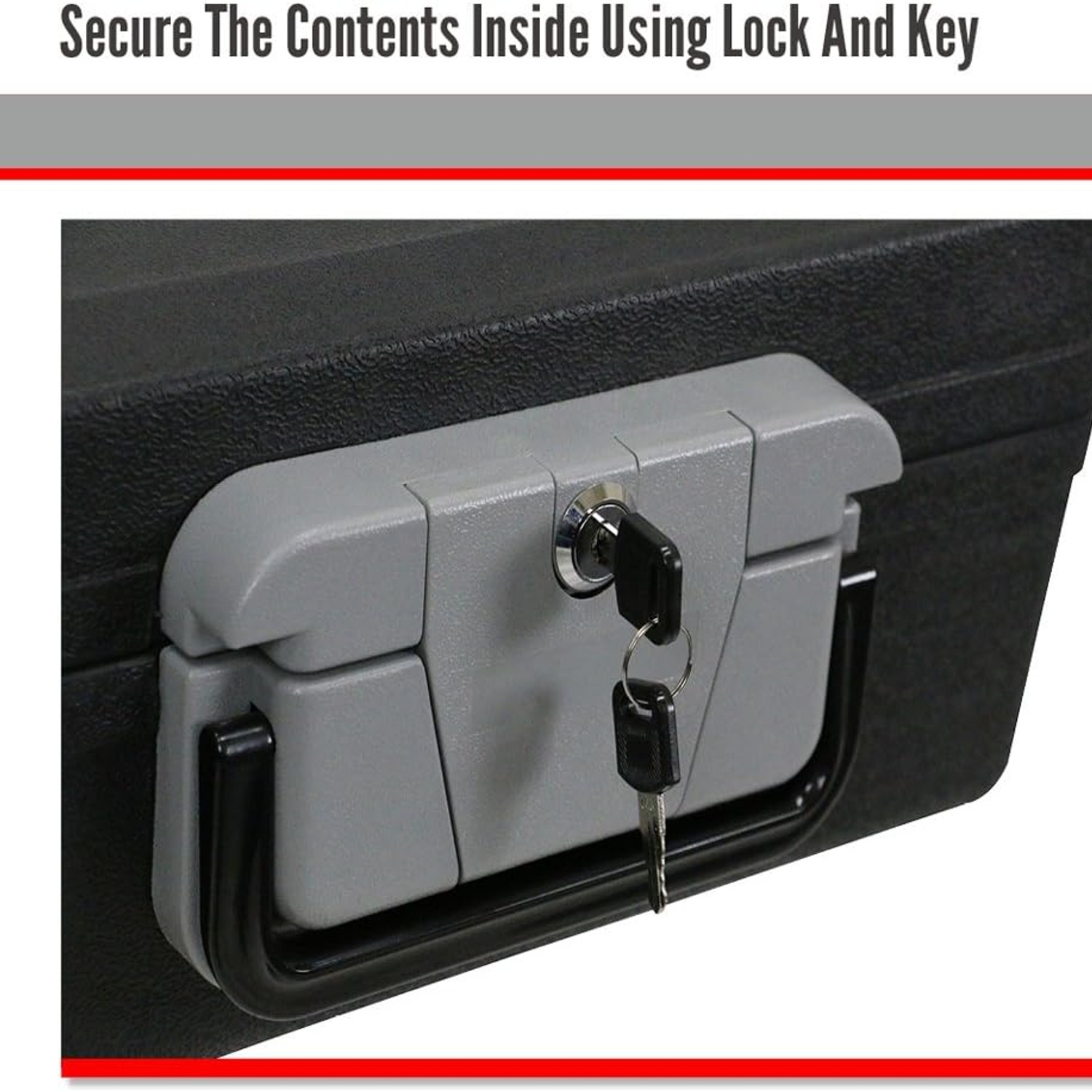
This key locking document chest comes with two keys. A key lock offers a straightforward way to limit casual access without remembering a code.
Decide who should hold the main key and where the spare should stay. Keeping both keys inside the chest defeats the purpose of having a spare. Keep them secure, but make sure the right people can access them when needed.
There is no burglary resistance rating specified in the record. That matters if theft protection is your main reason for buying. A movable box with a lock is not the same thing as a rated, installed security safe.
The supplier details also contain an unclear alarm entry and a push-button control entry. Neither establishes an alarm or electronic keypad function. Base your choice on the stated key lock, not on features that the record does not explain.
Treat water protection as an open question
The listing calls the chest waterproof, but it does not supply a water test rating. There is no stated immersion depth, exposure time or set of test conditions.
That leaves a limit on what you can conclude. If your main concern is a flood-prone room, water entering a building or prolonged immersion, ask for clearer evidence before buying.
The same care applies when comparing a fire chest for home use with other boxes. Fire and water claims need their own supporting details. A product's heat claim does not establish its water protection.
For everyday storage, put only dry papers inside and choose a sensible location. Do not treat the word waterproof as permission to store the chest in a wet area.
Match the chest to the contents
Paper storage is the clearest use described in this record. A passport storage chest or a box for selected household records can be useful when the contents fit and the stated limits suit your expectations.
Digital media needs a different check. The record does not state protection for USB drives, hard drives, memory cards or other electronics. Do not assume that a chest intended for papers offers the conditions those items require.
The same rule applies to anything with special storage needs. Start with the item, then look for evidence that the box suits it. Empty space inside the chest is not, by itself, proof of suitability.
For records you can copy, keeping a separate backup may help you avoid relying on one storage location. A chest is one part of organising important information, not a replacement for that wider plan.
Keep the storage system easy to use
Once you have chosen the papers, arrange them in a way you can maintain. Simple groups are often enough. You might separate identity records from property papers, or keep documents for each household member together.
Use folders only if their dimensions suit the chamber. Avoid filling every available gap. Space to lift a paper out makes routine checks easier and reduces the temptation to leave newly received documents elsewhere.
Review the contents now and then. Remove records you no longer need and check that the documents you expect to find are actually there.
This is where a 6.7 litre document chest can earn its place. Its value is not just that it holds papers. A clear, repeatable storage habit helps you find the right one when you need it.
Care, checks and purchase questions
For general care, wipe the exterior with a soft cloth and dry it before storage. Keep the lock free from soaking and follow any instructions supplied with the chest.
Check that the lid closes and the key works without force. If the box is too full, remove some contents rather than pressing it shut. Keep paperwork dry before placing it inside.
Before ordering, review the current delivery estimate and returns terms. This record does not specify a delivery lead time, warranty period or returns window. Ask about those details if timing or after-sales cover affects your decision.
If you need certified fire protection, a verified water rating or rated theft resistance, resolve those questions before purchase rather than assuming they are included.
The short version
Choose this chest if you want a key-locking home for selected A4 papers and its 6.7-litre chamber suits your stack. Check folders against the internal measurements and allow for an 8.2 kg empty weight.
The supplier states a 30-minute heat-performance claim, but independent certification and water-test limits are not specified. Match those known facts to your needs, choose an accessible storage spot and keep the key plan simple.