
The complete guide
A Practical Guide to Choosing a Top Opening Safe
A drawer can keep valuables out of view, but an ordinary drawer does not control who can reach them. A top opening safe adds a lockable compartment while keeping access from above. That can be useful when a front-opening door would be awkward or when you want storage tucked into suitable furniture.
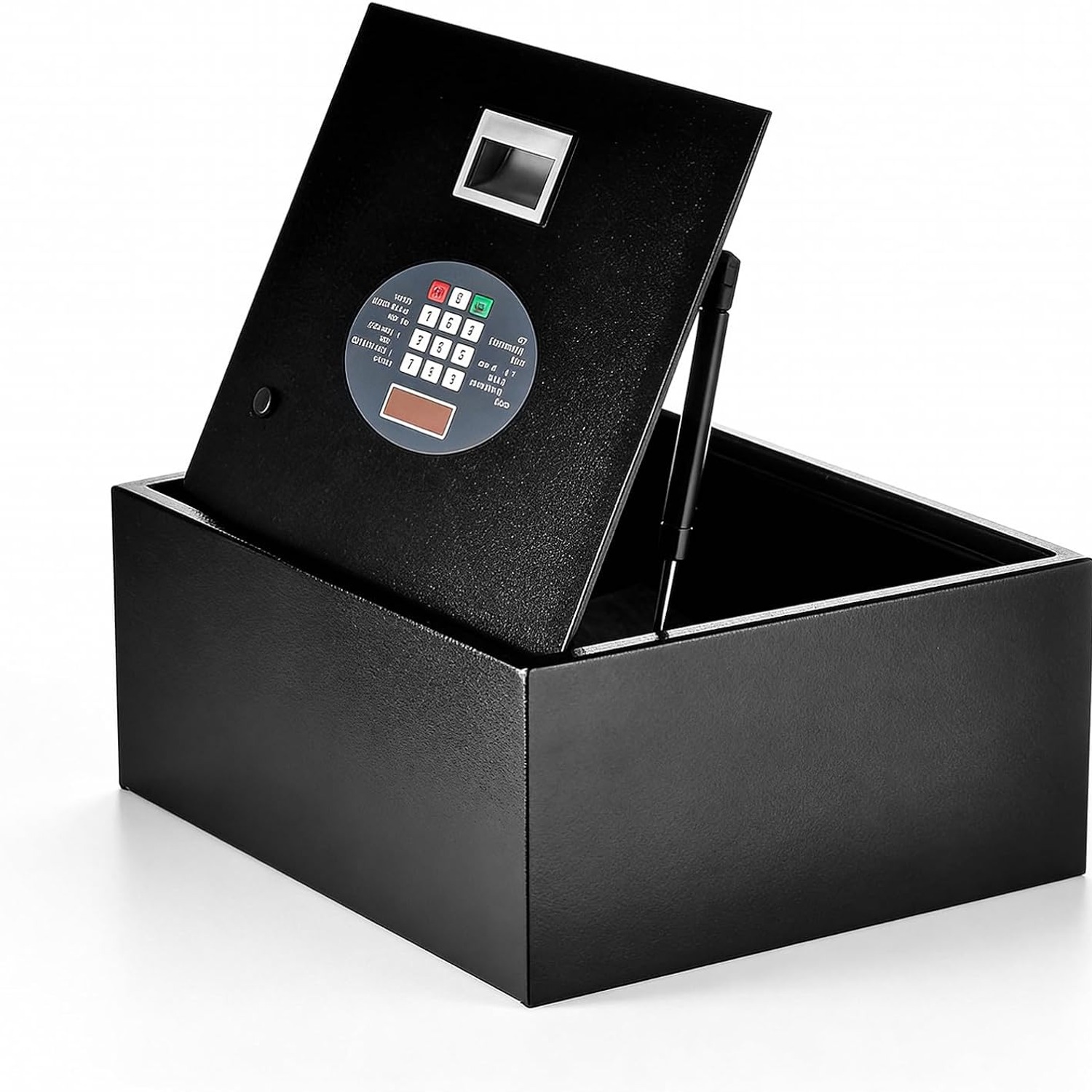
The key is choosing a safe that fits both your space and your needs. This model has digital entry, a backup key and mounting holes in its base. Before buying, look beyond the outer size. Lid clearance, support strength and the items you plan to store all matter.
Why choose a top-opening layout?
A lift lid safe opens upward instead of into the space in front of it. In a suitable drawer, that puts the opening where you can reach down into it. It may also work on a low shelf, provided nothing above blocks the lid.
That layout is not right for every cupboard. A tight shelf opening may fit the closed box but leave too little room to lift the lid. A drawer may also need to extend far enough to bring the opening clear of the furniture above it.
Think through the whole movement before choosing a location. Open the drawer fully, check what sits overhead and consider where your hands will go. Easy access matters because an awkward installation can make even routine use frustrating.
How this digital drawer safe works
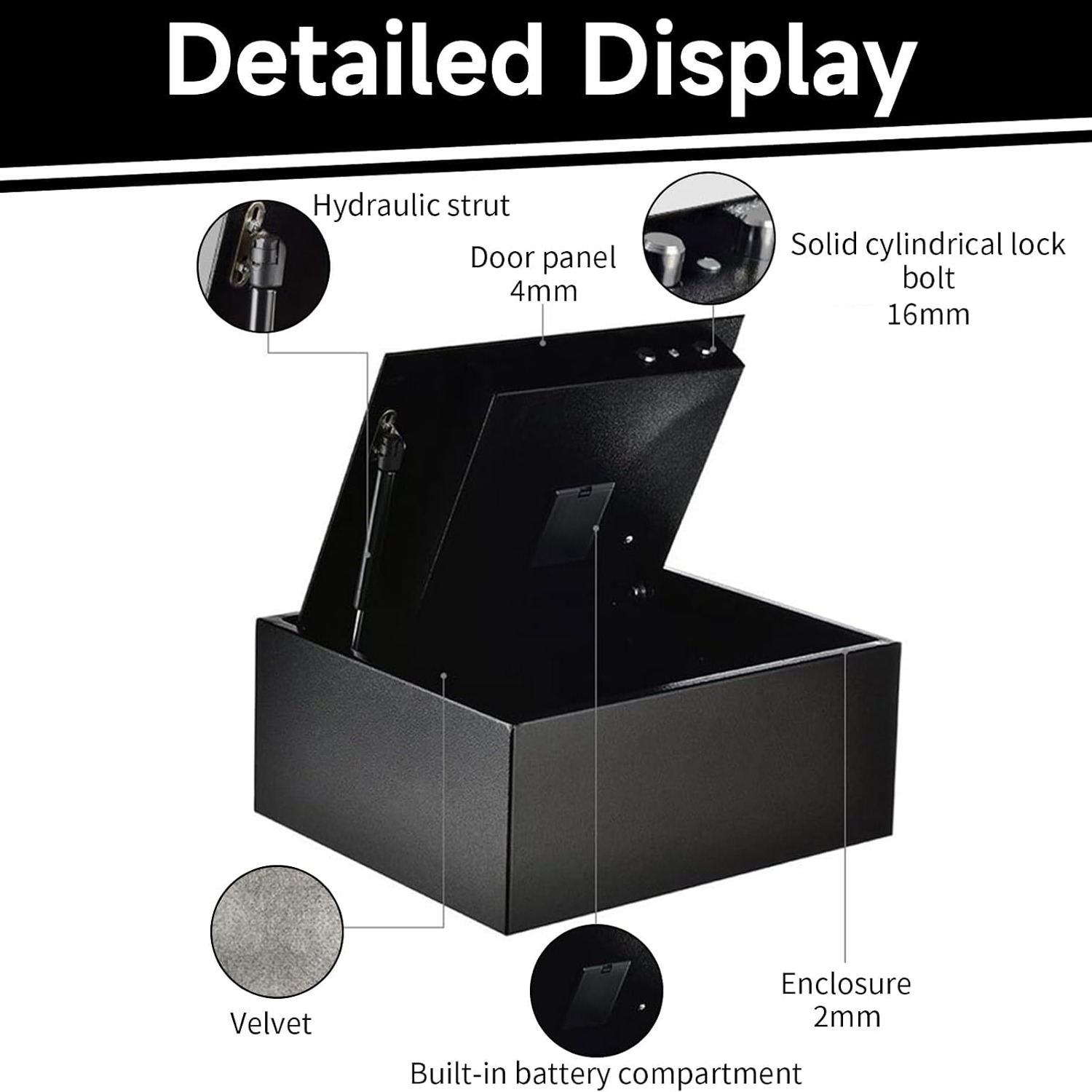
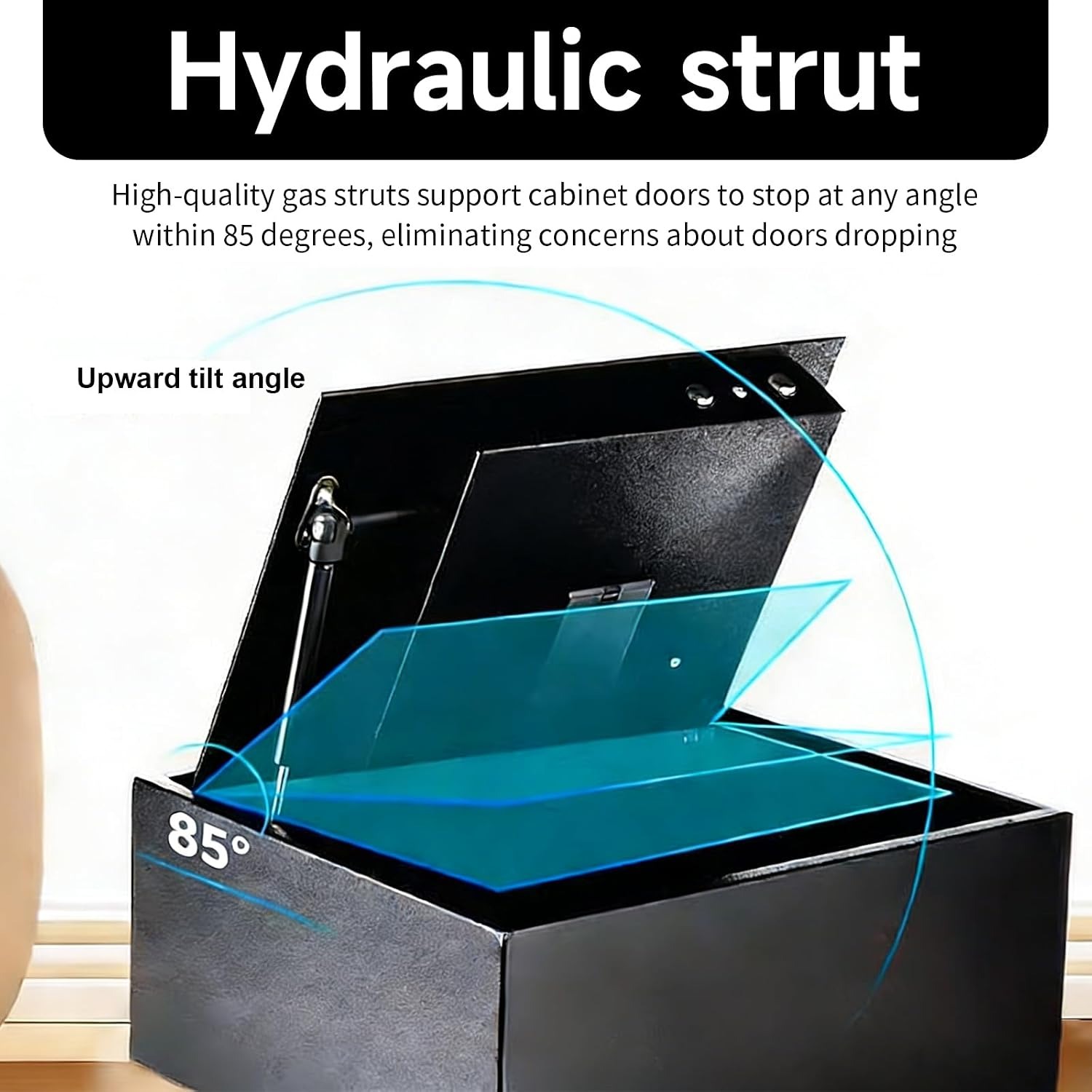
This model uses a digital lock for code-based entry. It runs on four AA alkaline batteries, which are not included. The supplier also lists motorised operation and hydraulic lid supports, with supported lid positions up to 85 degrees.
One physical override key is included as another way to gain access. That is useful if you forget the code or the batteries run flat. It only helps, though, if you can reach the key without opening the safe.
Keep the key in a separate, secure place. When the safe arrives, follow the instructions and test its operation with the lid open before putting anything valuable inside. The record does not give the code length, setup steps or battery life, so use the supplied manual for those details.
Measure more than the closed box
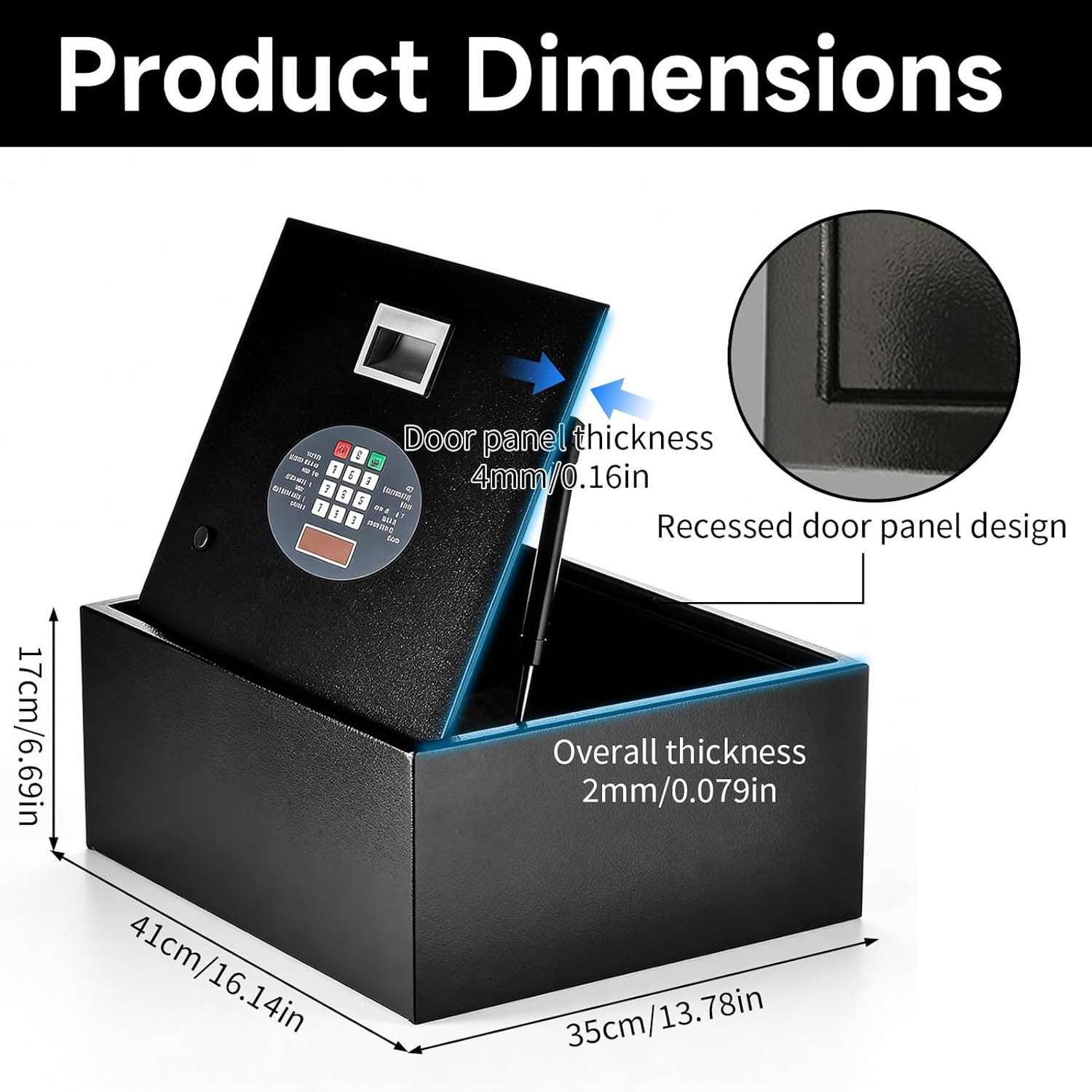
The listed dimensions are 15 x 35 x 41 cm. These figures are a starting point, not a complete installation plan. Confirm which measurement applies to each direction before you order furniture or drill mounting holes.
Internal dimensions are not supplied. Neither are the clear opening size or storage capacity in litres. You should not assume that a folder, jewellery case or document wallet will fit simply because one outer measurement looks large enough.
Measure the actual items you want to store. Include cases, covers and any space needed to lift them out. For a small document safe, the difference between holding folded papers and an unfolded folder can be important.
A paper outline can help you picture the footprint in a drawer. It cannot confirm the internal fit or lid movement, but it can reveal obvious space conflicts before you commit.
Check the supporting furniture
This safe weighs 8.5 kg before you add any contents. A drawer or shelf needs to support that weight as well as what you put inside. Check the furniture maker's load guidance rather than judging strength by appearance.
For a drawer, consider the runners, base panel and joints. The safe may fit neatly while still being too heavy for that drawer's intended use. If the load limit is unclear, ask the furniture supplier or a qualified installer.
Also think about access when the safe is loaded. You should be able to open the drawer and lid without tipping, binding or forcing anything. A stable supporting surface is part of a practical installation, not an optional extra.
What the mounting holes offer
Four holes in the base provide fixing points. This makes the product a mountable safe box, but the holes alone do not tell you which screws or anchors to use. The right choice depends on the supporting material and the installation instructions.
The record does not confirm whether mounting hardware is included. Check the package contents before starting work. Avoid choosing screws only by whether they pass through the holes.
If you are unsure about the surface, get installation advice. This is especially important when drilling near hidden services or attaching the safe to furniture with a thin base. Concealment and secure fixing address different concerns, so consider both when planning the location.
Match the storage to your needs
The supplier lists cash, jewellery, passports and important documents as intended contents. A home valuables safe can provide one place for these items rather than leaving them spread across several drawers.
Start with what you expect to use most often. Someone storing a passport for occasional travel may choose a different location from someone who needs regular access to cash. Both should be able to open the safe without moving heavy objects out of the way.
For jewellery, allow room for existing pouches or cases if you use them. For passports, measure the holder as well as the booklet. Internal padding and compartments are not specified, so do not plan around storage fittings that may not be present.
Understand what the security details mean
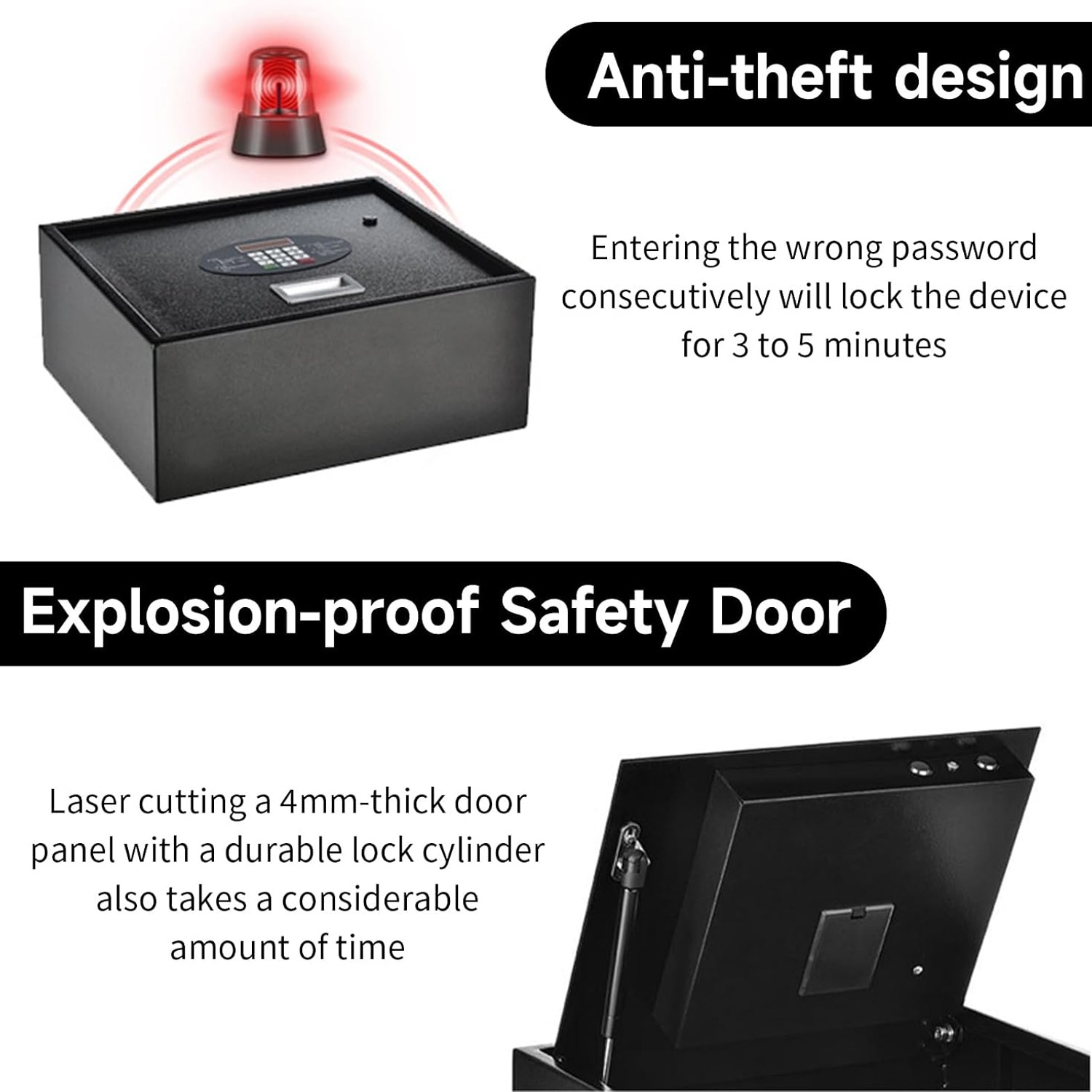
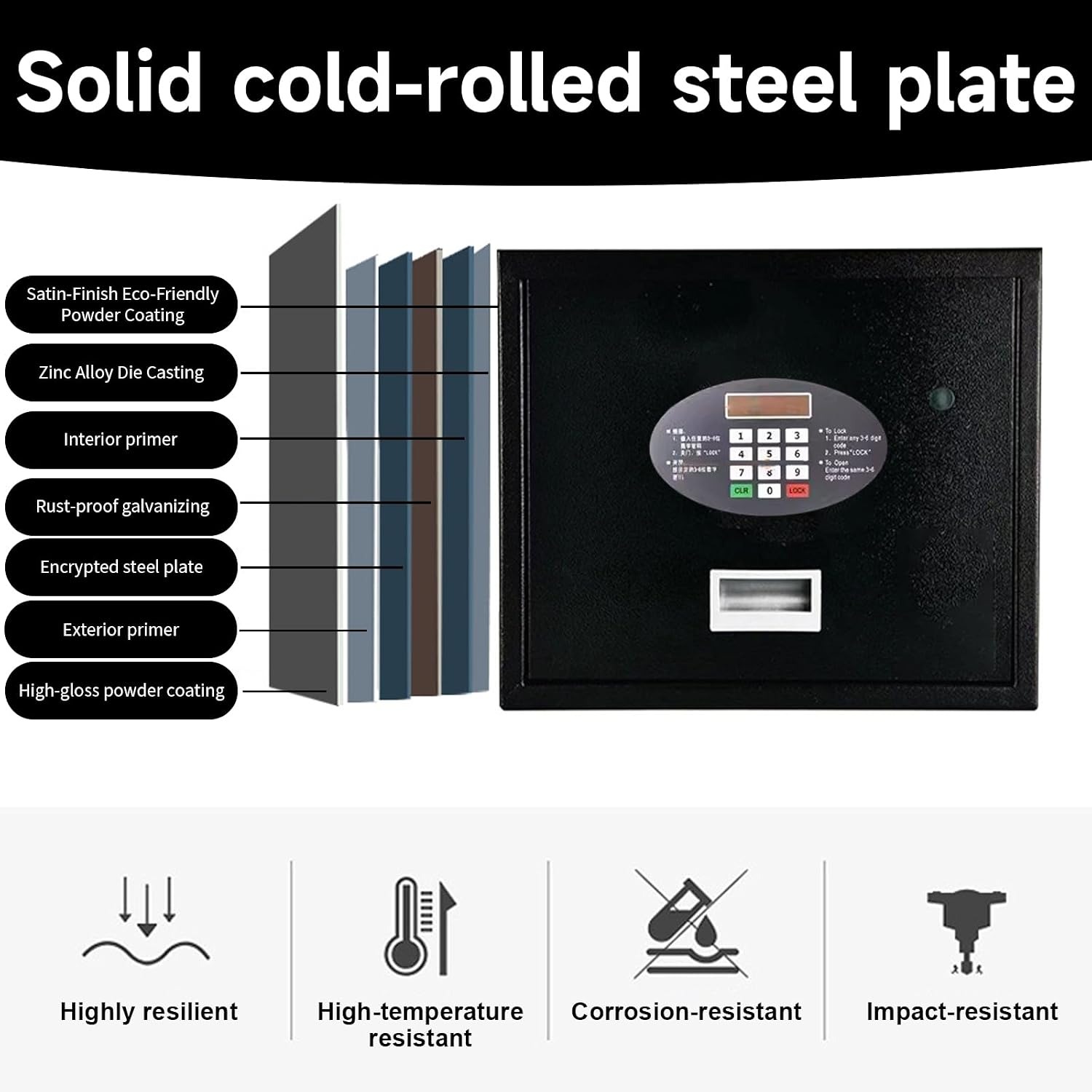
The supplier describes a powder-coated, cold-rolled steel body, a 4 mm door and 2 mm body panels. These are useful construction details. They are not the same as an independently tested burglary rating.
Repeated incorrect code entries cause a temporary lockout of three to five minutes. That limits immediate further attempts after the lockout is triggered. The exact attempt threshold is not given in the record.
No tested fire or water resistance rating is specified either. If those risks are central to your purchase, look for documented test results that meet your needs. For insured valuables, ask your insurer what rating and installation conditions it requires before selecting a safe.
Consider home, office and hotel use separately
This digital security safe is listed for home, office and hotel settings. That gives you several possible uses, but it does not mean every installation has the same needs.
At home, the main questions may be placement and who should know the code. In an office, you may also need rules about access and the kinds of records allowed inside. Check workplace requirements before choosing storage for sensitive information.
For a hotel drawer safe, confirm any guest-use functions you need. The record does not specify a management code, automatic guest reset or an audit trail. Do not assume those features are present just because hotel use is listed.
Build a sensible access routine
A safe with key backup needs a little planning at the start. Decide where the override key will live and who may use it. Avoid storing it beside the safe where it would be easy to find.
Follow the manual when setting a code. Choose one you can remember without leaving it written nearby, and share it only with people who need access. Keep the instructions somewhere you can reach if a problem arises.
Check battery guidance in the manual too. No low-battery warning or expected battery life is specified here. Do not wait for an access problem before finding out how replacement works.
Care and everyday handling
Keep the safe in a dry indoor location. A soft, dry cloth is a sensible choice for routine surface cleaning. Avoid getting liquid into the keypad, lock or battery compartment.
Keep objects clear of the lid edge and supports. If the lid catches or does not move as expected, stop rather than forcing it. Check for an obstruction and consult the supplied instructions.
Take similar care inside. Do not fill the safe so tightly that belongings press against the lid or prevent it from closing properly. Leave enough room to remove items without pulling hard on delicate jewellery or document covers.
Before you place the order
Confirm the measurements and ask about any unknown detail that could change your decision. Internal capacity is a good example. If a particular item must fit, an estimate based on outer dimensions is not enough.
Check delivery information for your address, along with the current return terms. A firm delivery timeframe, warranty term and return window are not supplied in this product record.
When it arrives, inspect the safe and test it according to the instructions before mounting it. Keep the packaging while you confirm fit and operation. If the space is unsuitable, discuss the available options with the storefront before drilling or altering anything.
The short version
This top opening drawer safe combines digital entry, a physical backup key and an upward-opening lid. It has four base mounting holes and requires four AA alkaline batteries, bought separately.
Choose it only after checking the space, furniture load capacity and lid clearance. Confirm internal fit for anything that must go inside, and do not treat the listed construction details as a tested security rating. Those checks will help you decide whether this format suits your everyday storage needs.