
The complete guide
How to Choose an XL Fireproof Bag for Important Documents
Important papers often end up spread across drawers, folders and cupboards. That works until you need an insurance policy, a passport or a birth certificate quickly. A dedicated document bag gives those records a shared home and makes it easier to see what you have.
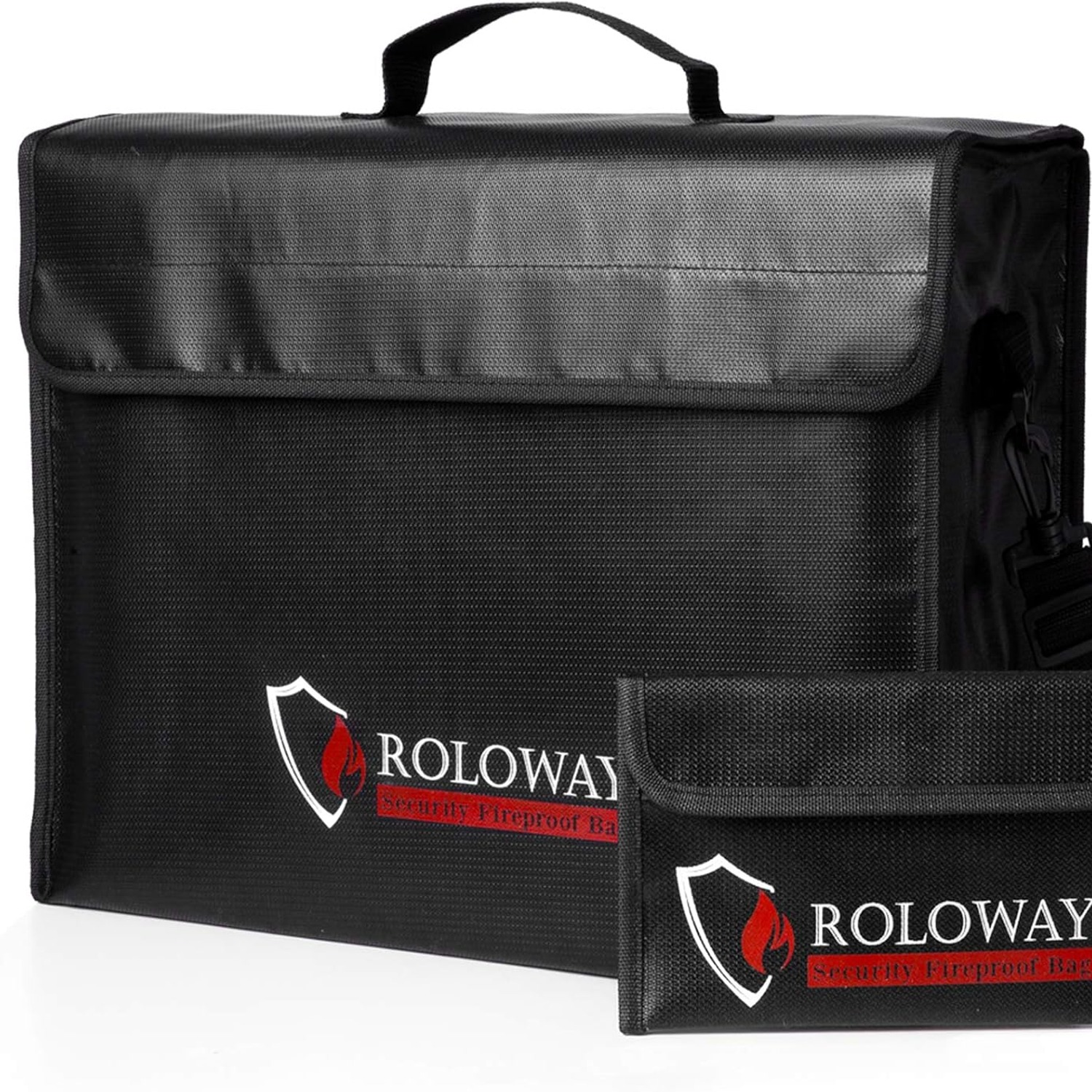
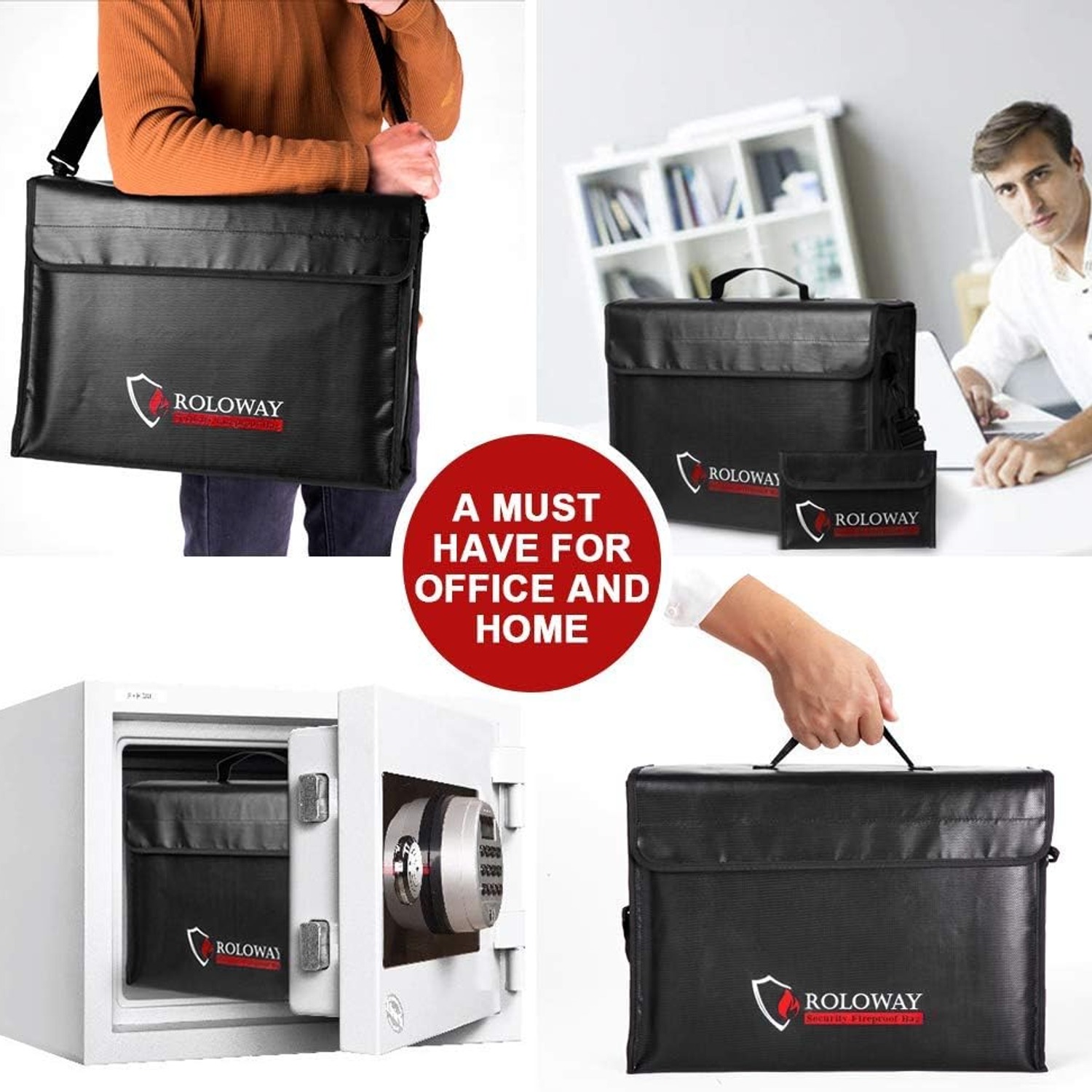
This XL Fireproof Bag offers one large compartment, a small wallet and an adjustable shoulder strap. It is designed for storing and carrying paperwork, with materials described as fireproof and water resistant. The key is choosing it for what the maker's description supports, without assuming it provides the same protection as a tested safe.
Start with the papers you need to keep
Before choosing a large fireproof document bag, gather the items you expect to store. Lay them out in their folders rather than measuring loose sheets alone. Folder tabs, binder covers and document sleeves all take up space.
You might want a place for household insurance papers, certificates, copies of legal records or passports. Some documents need regular access, while others may sit untouched for years. Separating those groups makes a bag easier to use.
Keep the selection focused. A bag packed with old statements and duplicate copies can make an important record harder to find. Check any record-retention requirements before discarding papers, and keep secure digital copies where appropriate. Physical storage is one part of a wider plan, not the whole plan.
Understand what the construction tells you
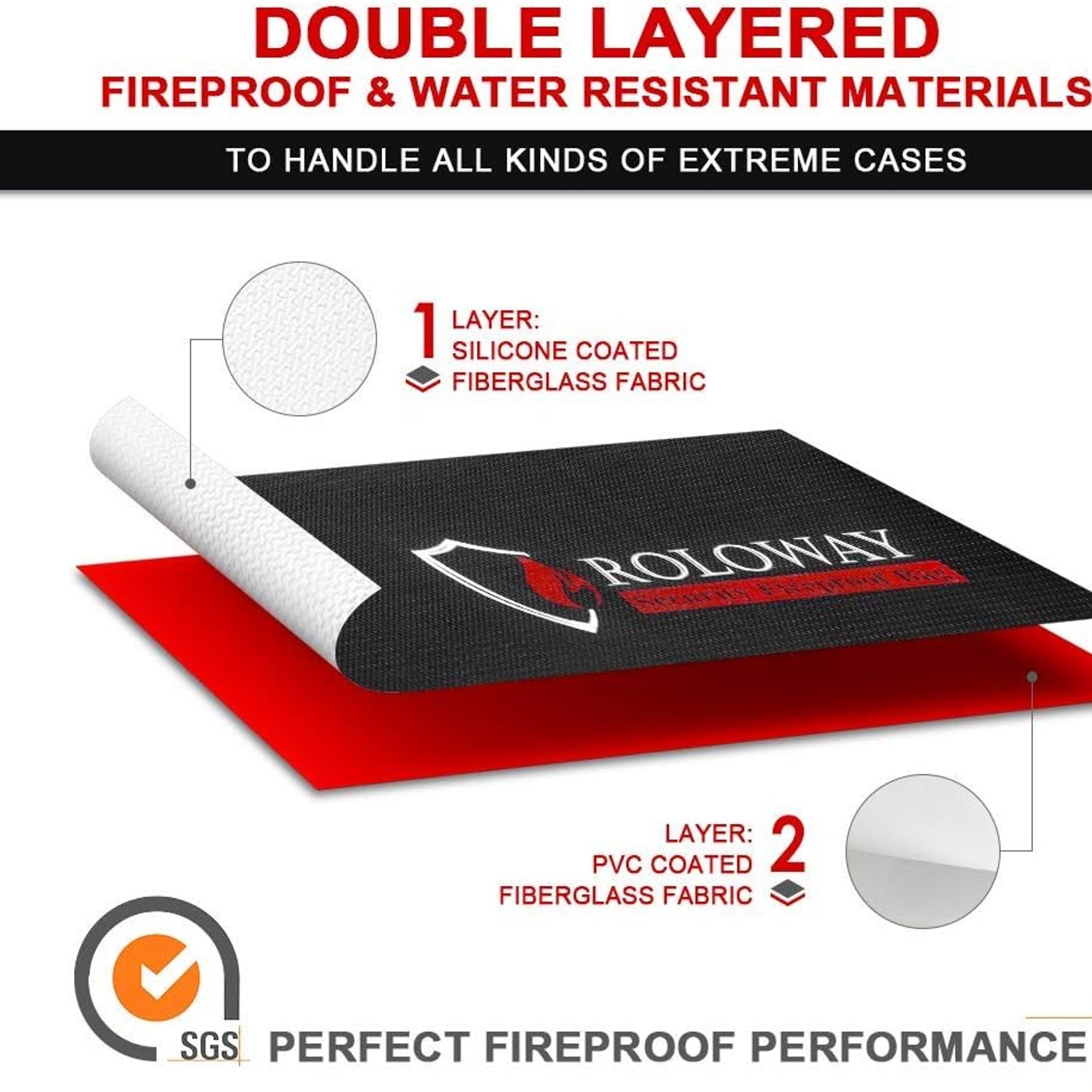
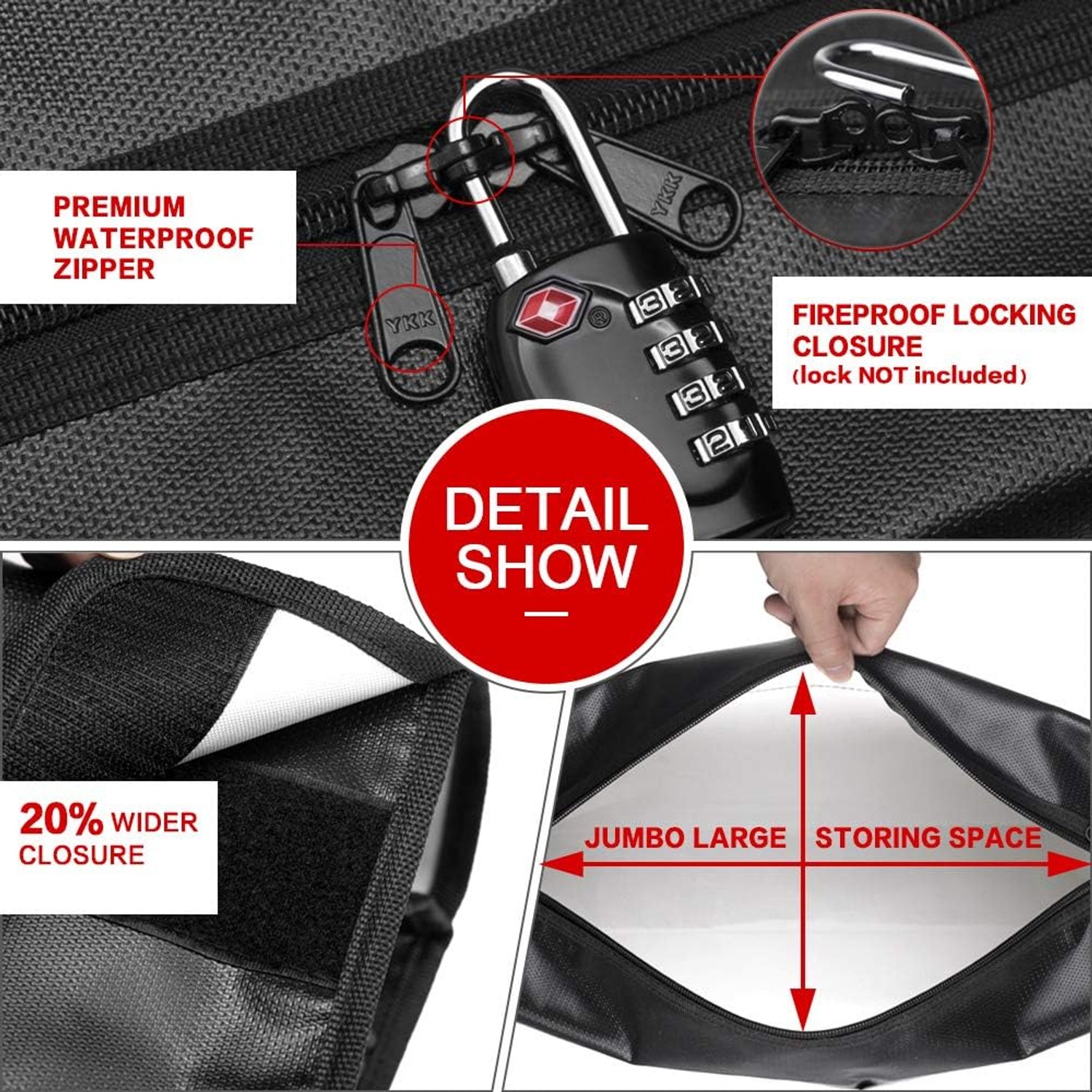
The listed material is dual-layer fiberglass with a silicone coating. The opening has a zipper and a hook-and-loop closure. These are the main construction details to consider when comparing this bag with ordinary fabric storage.
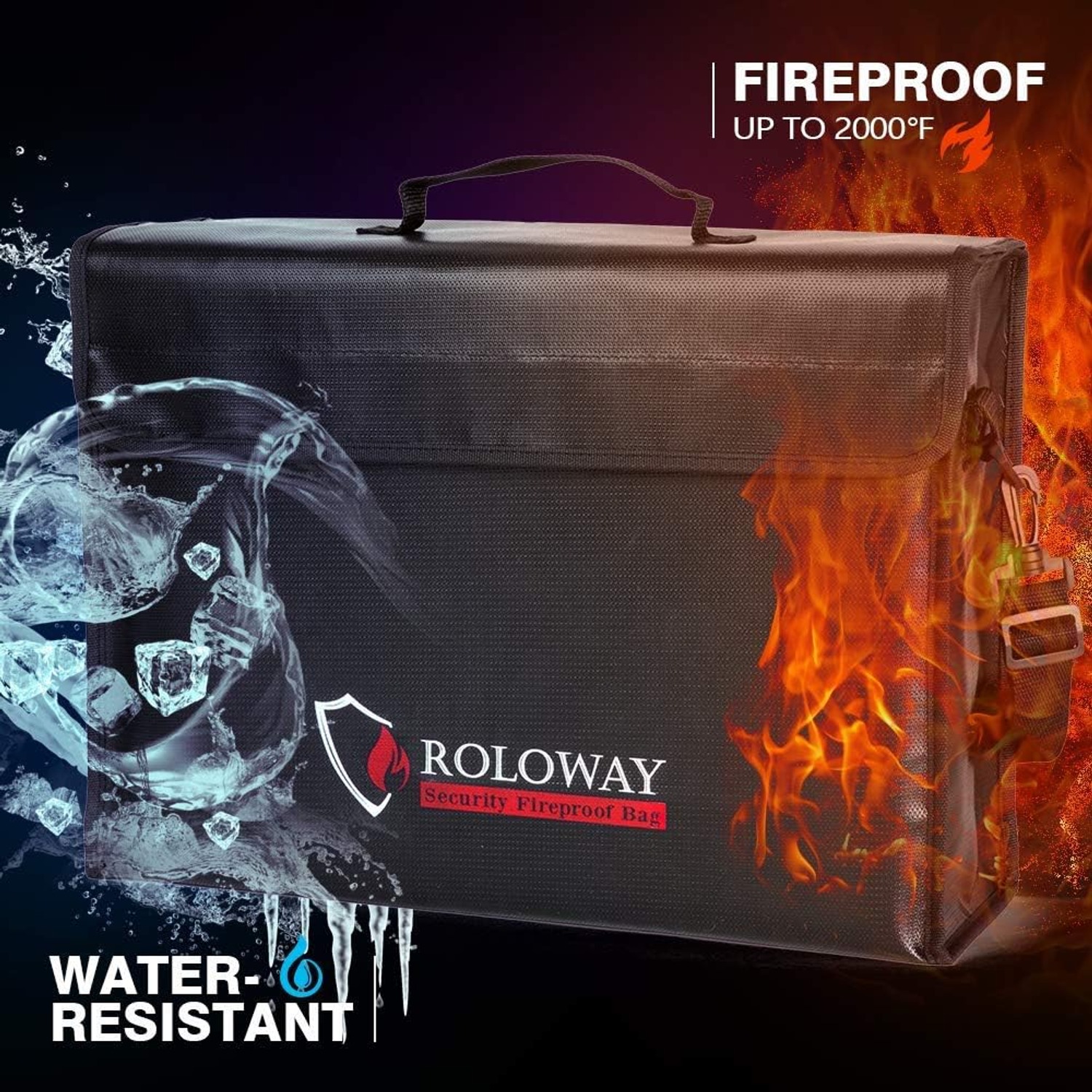
The maker describes the product as fireproof. However, the maker's description does not provide a verified whole-bag fire endurance time or a defined outcome for the contents. A material claim alone does not tell you how every document will fare in a real fire.
For that reason, treat fire resistant document storage as an added precaution. Do not expose the bag to flames to test it, and do not store it close to a heat source. No document is worth delaying a safe exit during an emergency.
If you need a stated level of fire protection, look for clear evidence covering the complete storage product and its intended contents.
Check the size against actual folders
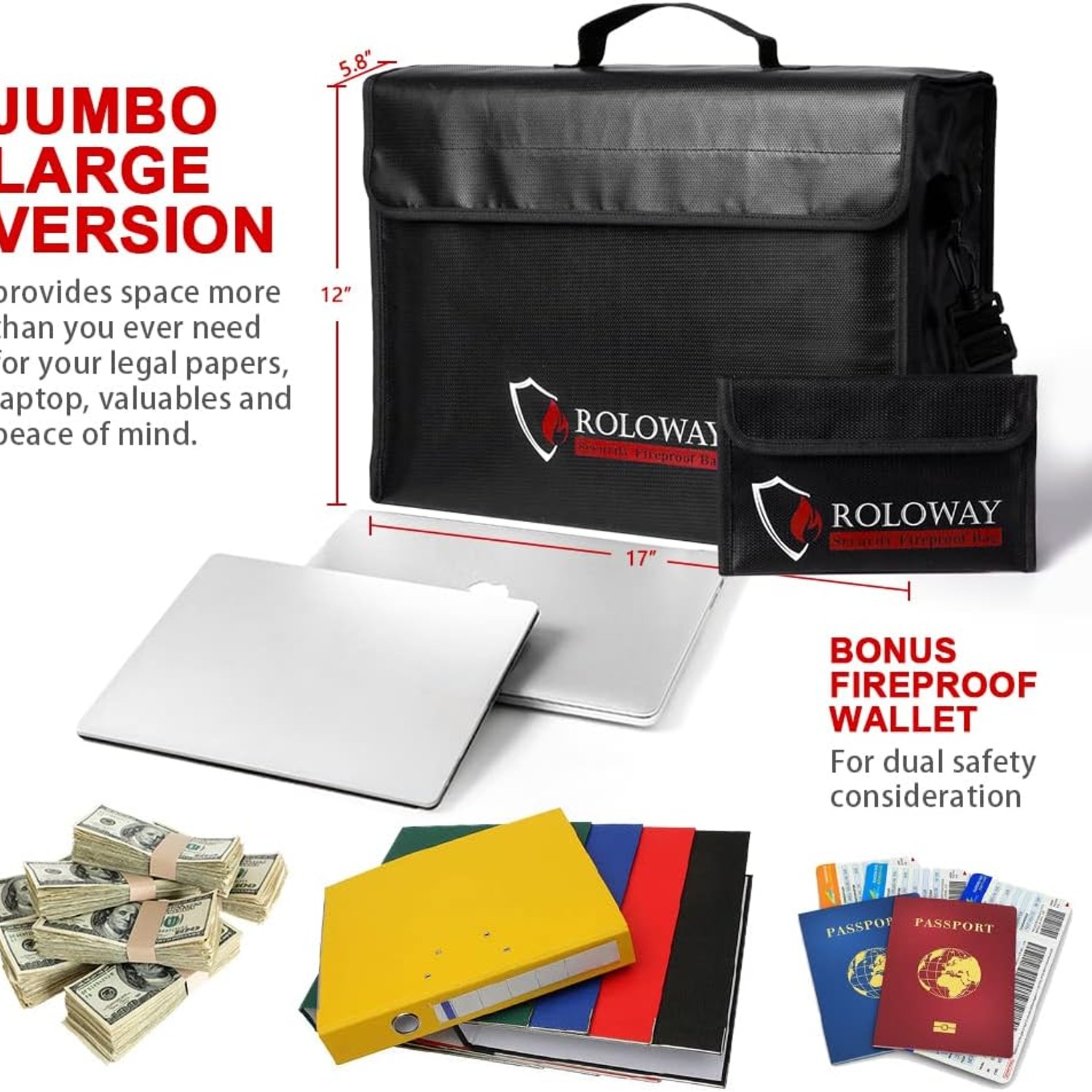
The listed dimensions are 43.2 x 30.5 x 14.7 cm. The size option is called XX-Large + Small, and the details also list a capacity of 1137.6 cubic inches.
Those figures are useful starting points, but they do not replace a fit check. Internal usable measurements are not given by the maker. Seams, the opening and the way contents stack can affect what fits comfortably.
Measure the tallest and widest folders you plan to use. Then consider their combined depth. Leave room to operate the zipper and fold the closure into place without forcing it.
The maker suggests that a 3-inch binder can fit. If you are shopping for a fireproof bag for binders, measure the binder's outside cover rather than relying on its ring size. Oversized covers and projecting tabs can change the fit.
Decide whether one compartment suits you
This bag has one main compartment. That can be helpful if you prefer to choose your own folders or need room for items with different shapes.
The trade-off is that you provide most of the organisation. Without a simple system, smaller papers may slip between larger folders. Labels and a consistent order can save time later.
For family document storage, consider a folder for each person, with a separate section for shared household records. Another approach is to sort by purpose, such as property, insurance and travel. Pick whichever method you can maintain.
The included small fireproof wallet gives smaller items their own place. Its dimensions are not listed, so do not assume a particular passport bundle or card holder will fit until you can check.
Think about carrying weight
The listed empty weight is 772 g. Paper can add weight quickly, especially when stored in thick binders. A bag that feels manageable when half full may be awkward once every folder is inside.
An adjustable shoulder strap lets you change the carrying length. Before moving a loaded bag, check the strap attachments and make sure the closures are secure. Keep the load within what you can comfortably carry.
A document bag with shoulder strap may suit occasional moves between a cupboard, desk and car. That does not mean it should become a place for every heavy item you own.
If portability matters, review the contents from time to time. Keep what belongs there, rather than letting the spare space fill with unrelated objects.
Know the limits of water resistance
This product is listed as water resistant. That is not the same as waterproof, and no immersion rating is supplied.
Do not assume the bag can protect documents if left in standing water or submerged during a flood. The maker does not establish that level of protection. Storage location still matters.
Choose a dry place where practical, and avoid putting damp paperwork inside. Moisture trapped with documents can cause damage even without water entering from outside.
When comparing a water resistant document bag with other options, ask what kind of exposure concerns you. Occasional splashes and prolonged flooding are very different problems. If flooding is a major risk, seek storage with clearly stated performance for that situation.
Consider closure and security separately
The zipper pulls can be secured together with a combination lock. A lock is not included, and you will need to check that your chosen lock fits.
This feature can help restrict casual opening. It should not be confused with the protection of a secure, fixed safe. The bag is flexible and portable, which is useful for carrying but also relevant when thinking about theft.
Close the zipper fully, then secure the hook-and-loop closure as intended. Keep folder corners, loose paper and straps away from the opening so they do not prevent a proper closure.
A lockable document bag is most useful when its limits match your needs. For high-value items or records that need stronger access control, consider suitable secure storage as well.
Plan where the bag will live
A storage system works better when everyone who needs it knows where it belongs. Choose a consistent location that is practical for normal access.
The maker suggests using the bag inside a fire safe for added security. Before planning that arrangement, measure the safe's internal space and door opening. The outside dimensions of a safe do not tell you what will fit inside.
Allow room for the filled bag, not just the empty fabric. A foldable document bag may pack down when unused, but stored folders still need their full space.
Avoid squeezing the bag so tightly that you strain the opening or bend important papers. If the fit is awkward, a smaller set of documents or a different storage format may be more sensible.
Build a sensible emergency document plan
An emergency document bag can help keep selected records together. The useful part is the preparation you do before anything goes wrong.
Make a short inventory of the contents and keep it somewhere separate. Check expiry dates on travel documents and update insurance papers when policies change. Remove outdated copies when it is appropriate to do so.
Think about who may need access. A trusted household member should know where essential records are kept, while access to private information should remain controlled.
Most importantly, do not make retrieving the bag a condition of leaving safely. During a fire or another immediate danger, follow emergency advice and put people first. Documents and storage products come second.
Care for the bag and its contents
Follow any care instructions supplied with the bag. The maker does not include a detailed cleaning method, so avoid assuming that machine washing, soaking or strong cleaning products are suitable.
Inspect the seams, closure and strap attachments regularly. Check that the zipper moves properly and that the hook-and-loop surfaces can meet without trapped paper or debris.
Keep the bag and its contents dry before closing it for storage. If you notice moisture, remove the papers and address the cause rather than simply shutting the bag again.
Do not run home flame tests or deliberately soak the bag. Such tests can damage it without giving reliable evidence of future protection. If it shows visible damage, reconsider using it for important records.
The short version
This XL Fireproof Bag may suit someone who wants a roomy, portable place for important paperwork. It has one main compartment, a small wallet, an adjustable shoulder strap and a foldable format.
Check your folders against the listed dimensions, allow space for the closure and consider the loaded weight. Treat water resistance and fire-related claims with care, because verified whole-bag endurance and immersion performance are not specified by the maker.
The most useful choice is the one that fits both your documents and your storage plan. Good organisation, a sensible location and realistic expectations matter just as much as the bag itself.