
The complete guide
How to Choose a Fingerprint Safe for Your Home
A drawer can hold your passport, spare cash and jewellery, but it can also become the place where everything gets lost. A home safe gives those belongings a dedicated spot. The real question is whether its size, lock and installation options fit the way you live.
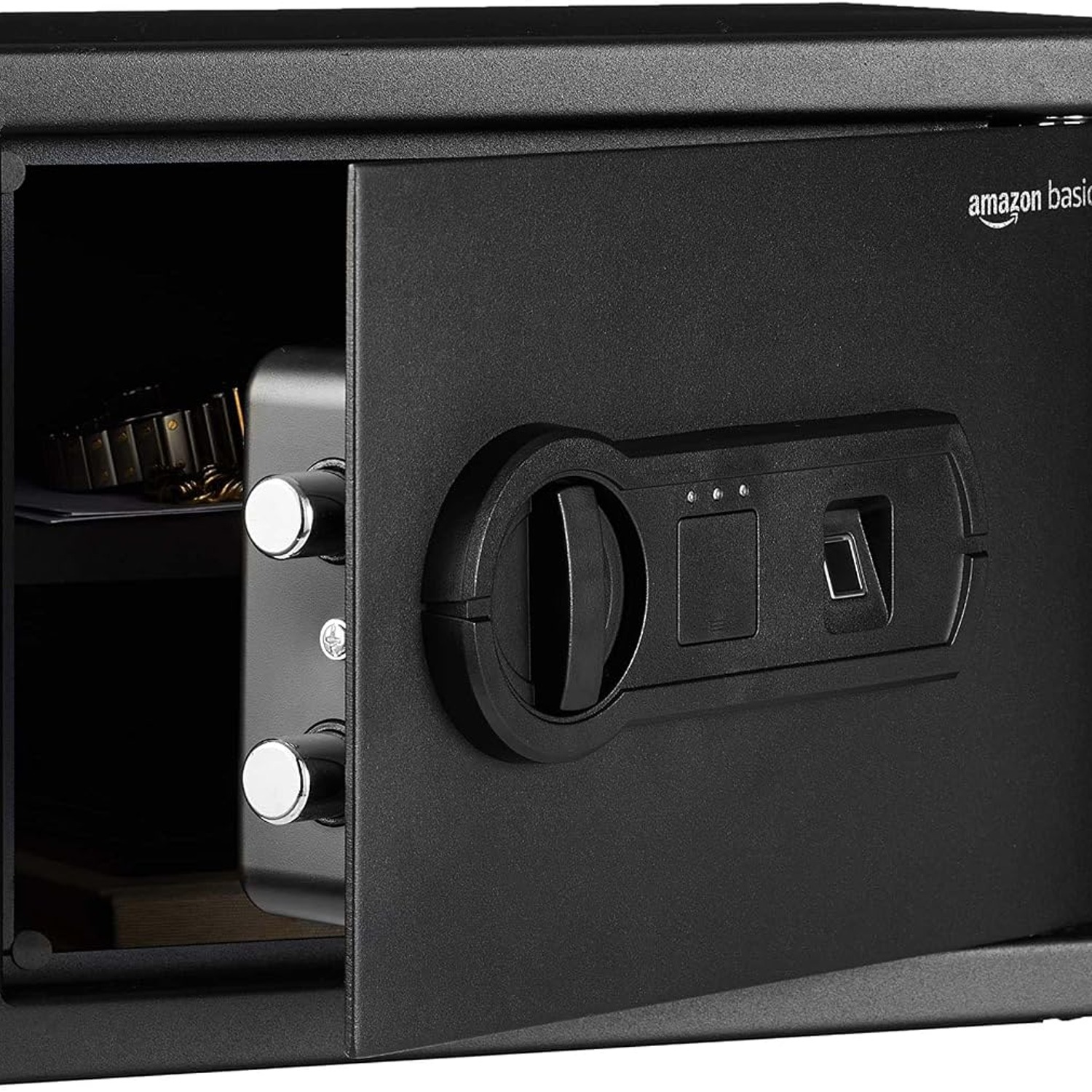
This fingerprint safe combines a 14L storage capacity with biometric access, an interior shelf and a backup key. It also supports floor or wall mounting. Those are useful starting points, but choosing well means looking beyond the fingerprint sensor.
Before buying, think about what you plan to store, who needs access and where the safe will sit. Just as importantly, separate everyday security features from protection claims that need test evidence.
Start with the belongings, not the litre figure
A 14 litre safe gives you a capacity figure, but it does not tell you whether a particular folder, jewellery case or device will fit. Shape matters. So does the space taken up by the door, locking parts and shelf.
Gather the items you expect to store and measure them in their usual containers. A watch in a presentation box needs more room than the watch alone. Paperwork in a rigid folder may also need more space than a loose stack.
This model is intended for documents, jewellery, cash, small devices and other valuables. That does not confirm compatibility with every paper format or laptop size. If one item is the main reason for buying, get its fit confirmed first.
The maker's chamber measurements are not clear enough to use as a reliable fit guide. Ask for verified usable internal dimensions rather than working backwards from the outer case.
Understand what fingerprint access offers
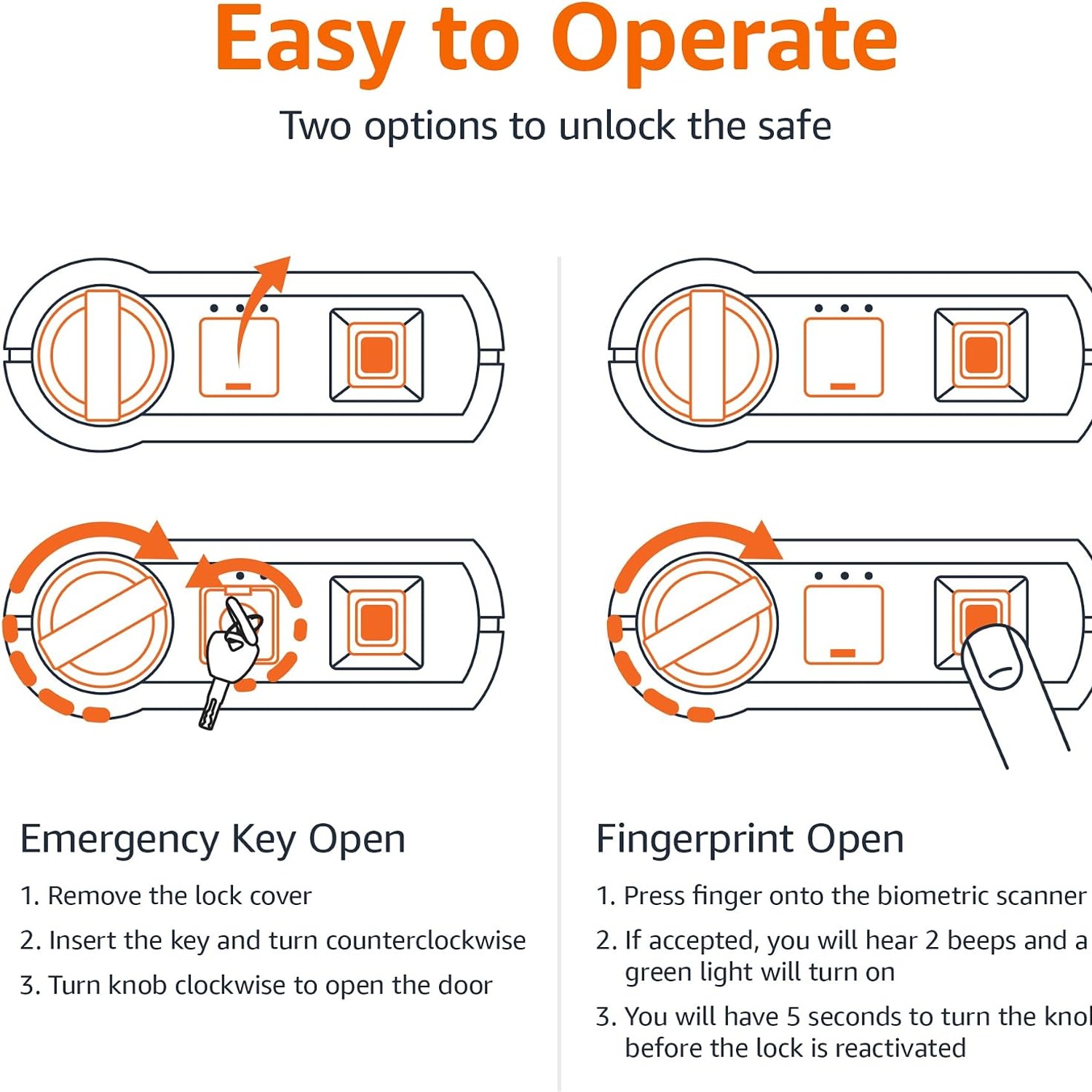
A biometric safe uses a registered fingerprint as an access method. For someone who opens the safe regularly, that can be a practical alternative to finding a key each time.
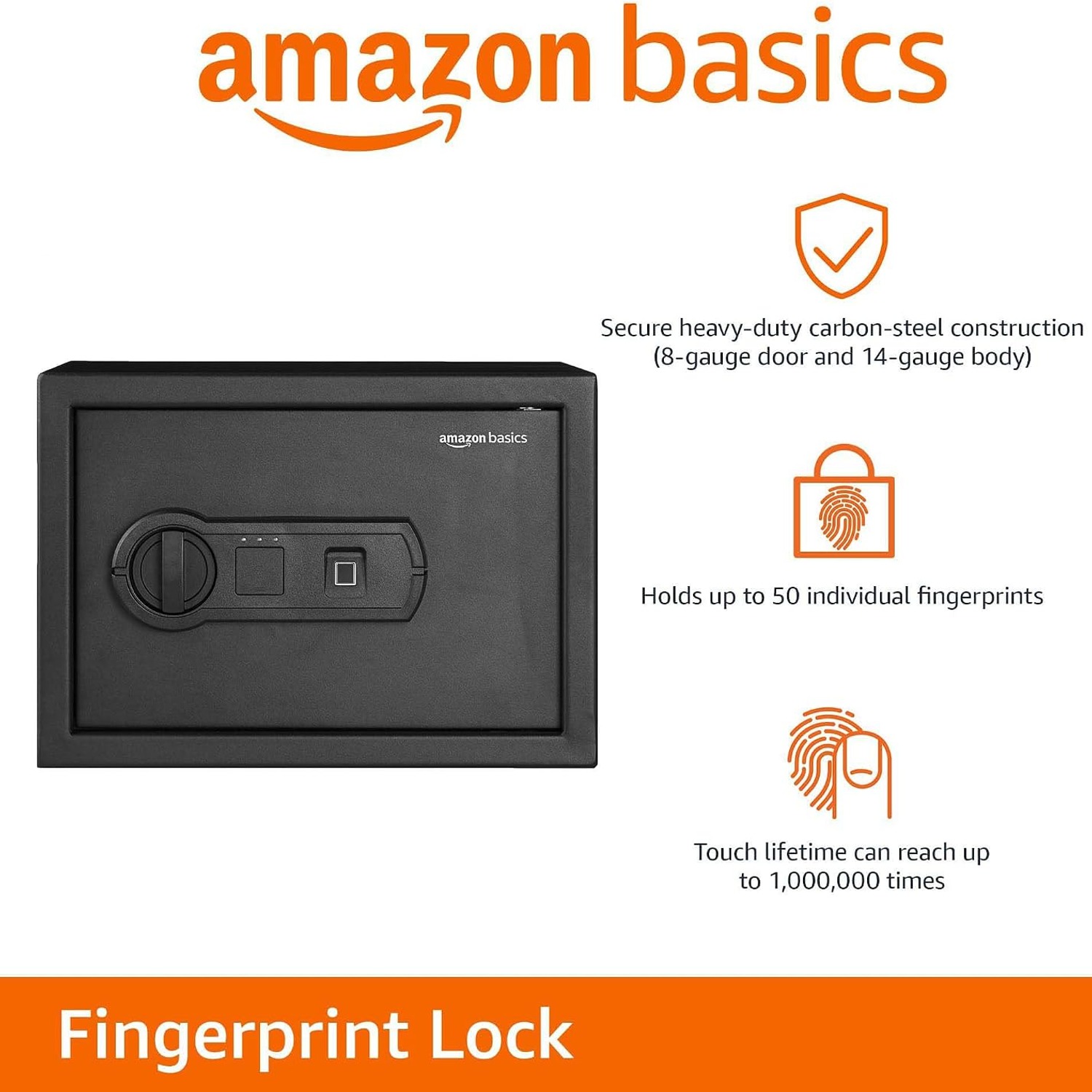
This model stores up to 50 individual fingerprints. That gives scope for authorised household access or more than one registered finger per person, subject to the setup instructions. It does not mean you need to register that many, or that 50 people should share access.
Keep the access list deliberate. Think about who actually needs to open the safe and review that choice when circumstances change. Follow the manual for registration, testing and any process for removing stored fingerprints.
Recognition speed and performance under different conditions are not specified. Avoid choosing on an assumed opening time or a promise that the sensor will read every touch.
Plan for the backup key before you need it
A safe with backup key access gives you another way to open the door. This model includes a key, so fingerprint access is not the only stated entry method.
The important part is deciding where that key will live. Keeping it inside the safe defeats its purpose. Leaving it in a nearby, obvious drawer can also weaken your access plan.
Choose a separate secure location that an authorised person can reach. In a shared home, make sure the arrangement is understood without making the key easy for everyone to find.
Power requirements are not included by the maker. Check the manual or request that information before buying batteries or planning a maintenance routine. Push button control is listed, but PIN entry is not confirmed.
Measure the space around the safe
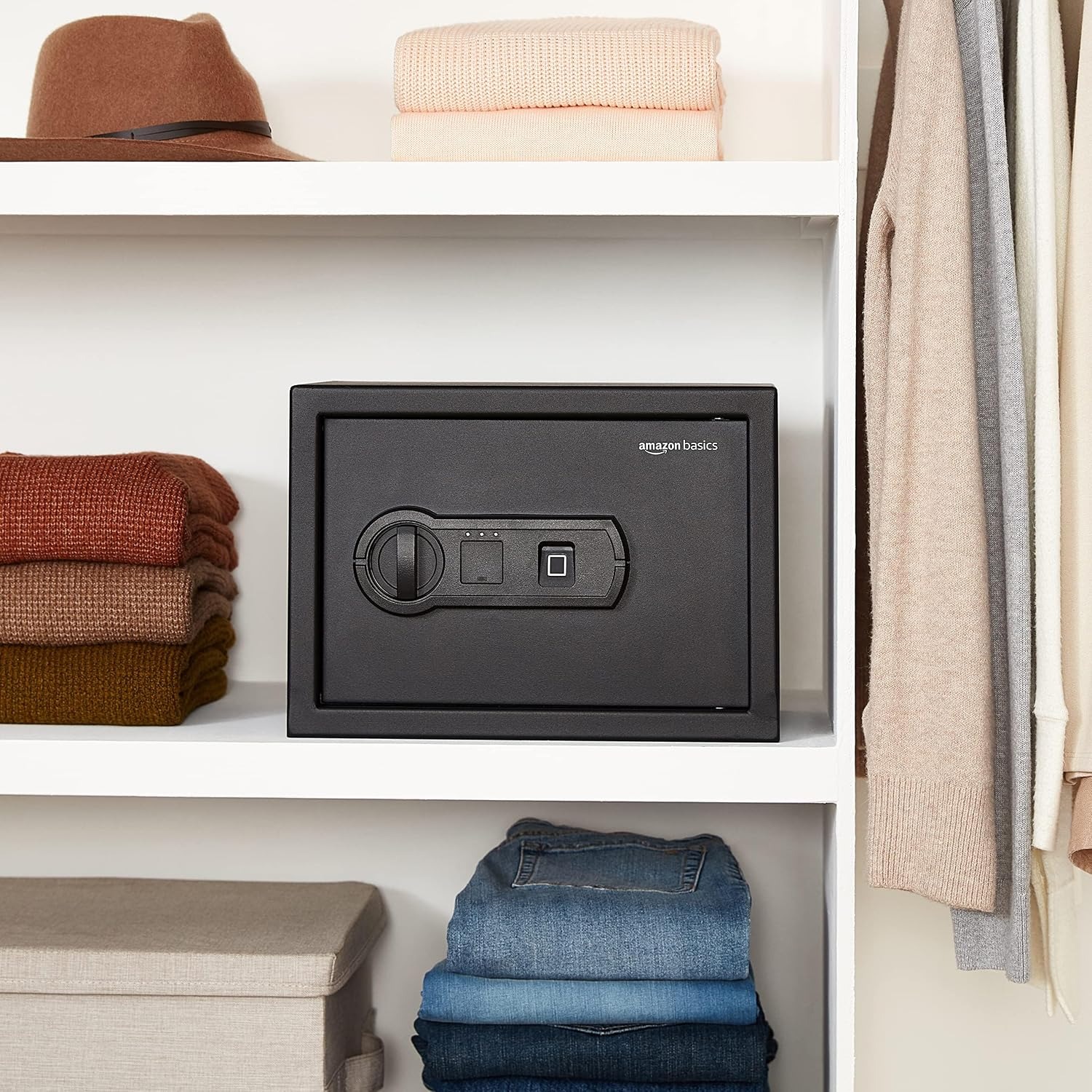
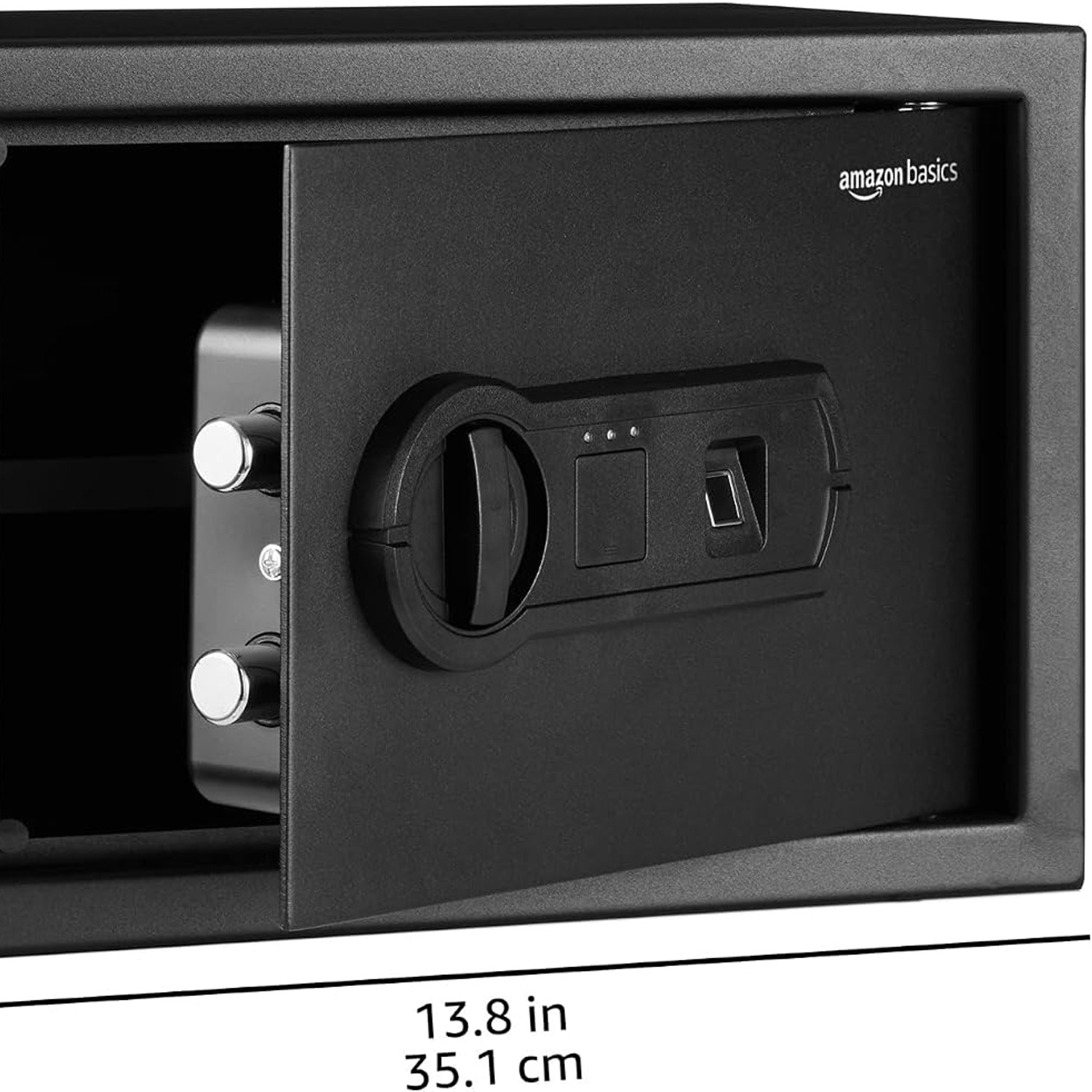
The external measurements are 24.9 cm deep, 35.1 cm wide and 24.9 cm high. Those dimensions help you check whether the case will fit in a cupboard or another chosen location.
Do not measure only the empty rectangle where it will sit. You also need room to open the door, reach the fingerprint sensor and move belongings in and out. A space can fit the closed safe while making daily use awkward.
Consider your posture as well. If you expect to use it often, a position that requires a deep crouch or an awkward reach may soon become frustrating.
At 9.84 kg, this compact biometric safe still needs a suitable support surface. Check the strength of shelving and cabinetry rather than assuming a small case can go anywhere.
Choose a mounting position with care
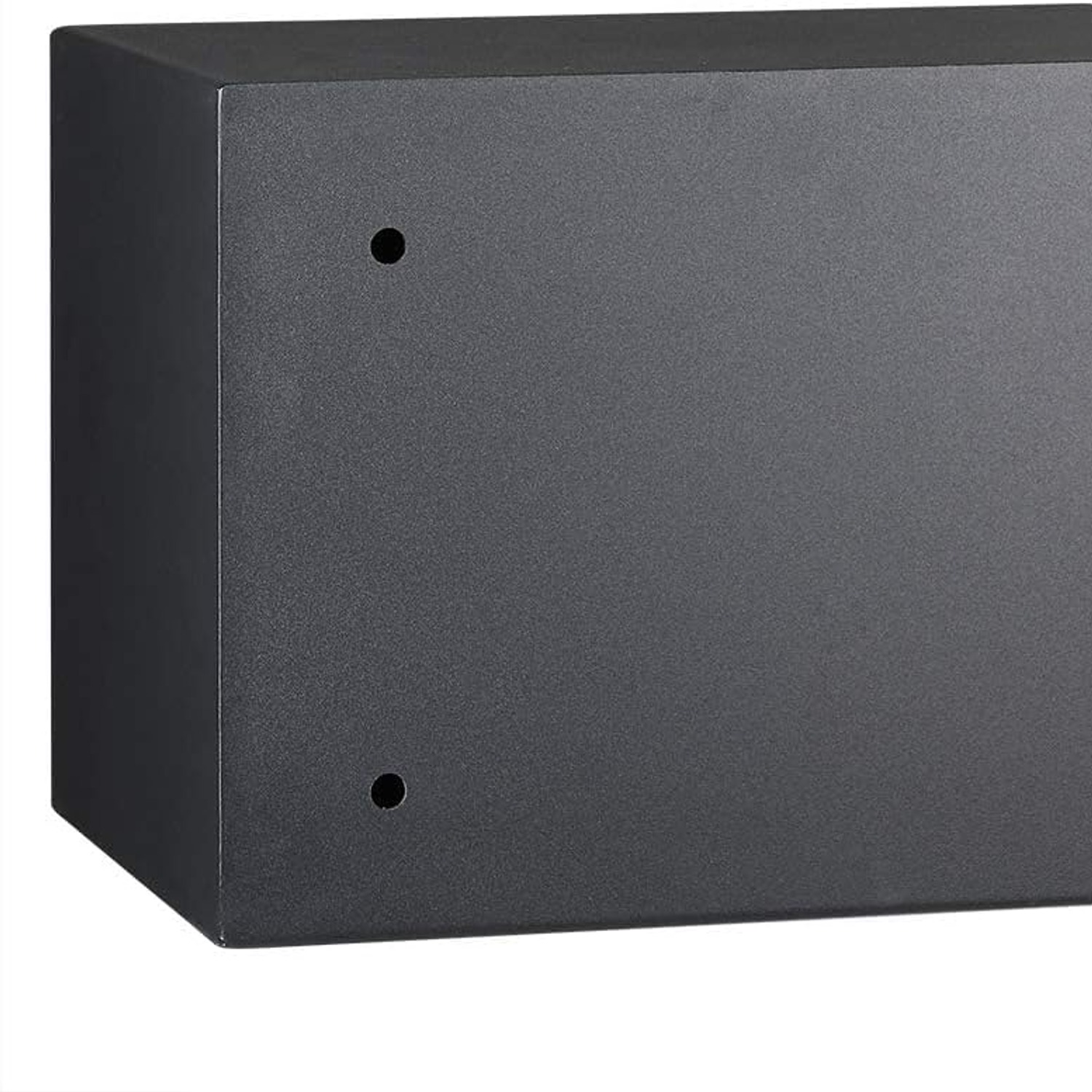
The safe has pre-drilled mounting holes and comes with mounting hardware. Both floor and wall installation are listed options.
Start with the structure, not just the most hidden spot. A wall mount safe needs a suitable fixing surface. A floor mount safe also needs a floor that can accept the intended fixings without creating other problems.
Included hardware does not mean every wall or floor is covered. Different building materials can call for different anchors and installation methods. Follow the supplied instructions and get qualified advice if you are unsure.
Before drilling, check for concealed services and any restrictions that apply to the property. Renters should seek permission where needed. Installation planning is easier before the safe arrives than after holes have been made.
Read the construction details in context
The maker lists alloy steel construction, an 8-gauge steel door and a 14-gauge steel body. It also describes two live-door bolts and concealed, pry-resistant hinges.
These details help explain how the steel security safe is built. They are not, on their own, an independent burglary rating or proof of resistance for a stated length of time.
That distinction matters if you are storing high-value items. Your insurer may have specific requirements for the safe, its rating and how it is installed. Check those requirements before treating any home valuables safe as suitable for insured storage.
No safe should be treated as a reason to stop thinking about wider home security. Location, controlled access and sensible key storage remain part of the plan.
Be clear about fire and water limits
This model is listed as not water resistant. Choose a dry indoor location, away from likely leaks or water exposure. A damp floor or a cupboard beneath vulnerable plumbing deserves careful thought.
The maker's description also includes a fireproof feature label. However, it gives no fire-test standard, temperature rating or protection duration. That leaves an important gap.
If protection from fire is your main goal, ask for supporting documentation before deciding. Do not assume that steel construction provides a tested level of protection for paper or electronics.
A fingerprint lock safe and a rated fire safe answer different questions. One describes an access method; the other requires evidence about performance under fire conditions. Choose according to the risk you actually need to address.
Use the shelf to make storage easier
The interior shelf helps divide the storage area, which can make smaller belongings easier to find. It is useful to have a plan rather than filling every available gap.
For a jewellery storage safe, small pouches or suitable cases can keep pieces separate. For cash and paperwork, simple organisers may make it easier to retrieve one item without moving everything else.
Check that your chosen containers fit before buying them. Shelf adjustability and removability are not specified, so do not build a storage plan around either feature.
Leave the door and bolt areas clear. Before closing, check that no paper edge, pouch or loose item is caught where it could interfere with the lock.
Decide whether it suits your household
This fingerprint home safe may suit someone who wants a dedicated place for modest-sized valuables and expects to access them regularly. The shelf and multiple fingerprint registrations may also be useful in a shared household.
It is less straightforward if your main need is confirmed fire protection, water resistance or storage that must meet a particular insurance standard. Those needs call for evidence beyond the listed features.
Think about routines, too. Who will register fingerprints? Who will keep the backup key? Who will read the setup instructions and check any power requirements?
The best small home safe for a household is one that fits both the belongings and the habits of the people using it. A feature only helps if it solves a real need.
Keep care simple and consistent
Use a soft, dry cloth for routine cleaning, especially around the fingerprint sensor. Avoid abrasive cleaners and follow the manual for any product-specific care.
Keep the installation area dry and easy enough to inspect. If you notice a change in door movement or lock operation, consult the instructions rather than forcing the mechanism.
After setup, test the stated access methods as directed before relying on the safe for important belongings. Keep the backup key available outside it during that process.
Before ordering, also check delivery information, warranty details and the return policy. The maker does not provide a delivery timeframe, warranty terms or return window, so those points need separate confirmation.
The short version
Choose this 14L fingerprint safe if its size, biometric access, backup key and mounting options match your storage plan. Measure your belongings, confirm usable interior space and choose a suitable dry installation point.
Treat the protection limits just as seriously as the convenience features. Water resistance is not provided, and a verified fire rating is not given by the maker. With those points clear, you can make a decision based on what the safe is documented to offer.