
The complete guide
A Practical Guide to Choosing a Large Key Lock Safe
Passports in one drawer, cash in another, jewellery tucked into a box somewhere else. It is easy for important belongings to end up scattered around the house. A dedicated safe gives them a shared storage place and puts a locked door between those items and casual access.
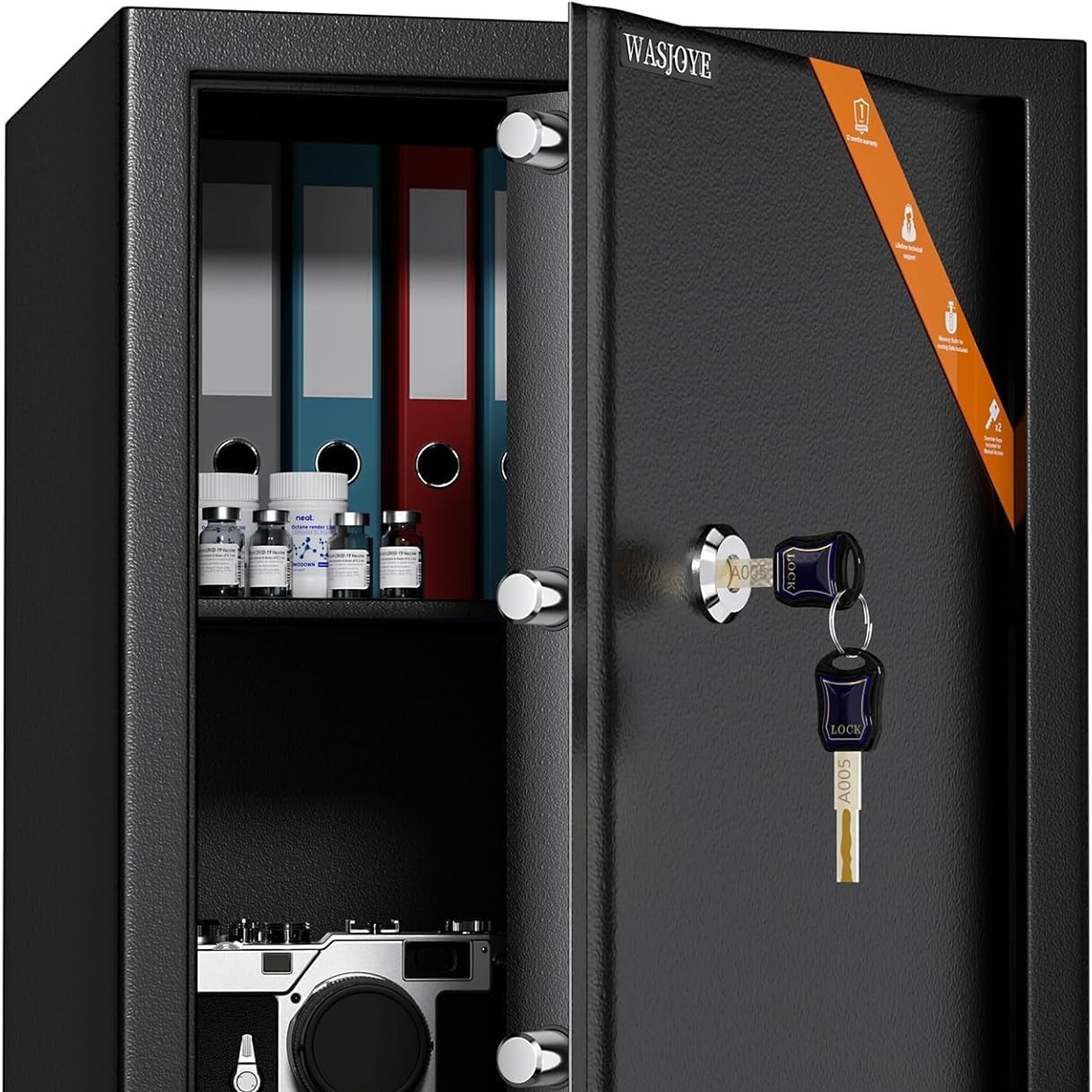
This large key lock safe offers a physical key lock, a removable shelf and a steel body. It may suit a household or office that wants straightforward locked storage. The useful question is not just whether it looks big enough. You also need to consider what fits, where it will sit and which risks it is designed to address.
Start with what you need to store
Before choosing a large home safe, gather the items you expect to keep inside. Measure the largest folder, jewellery case or storage pouch. Think about how often you will need access and whether someone else needs to use the safe too.
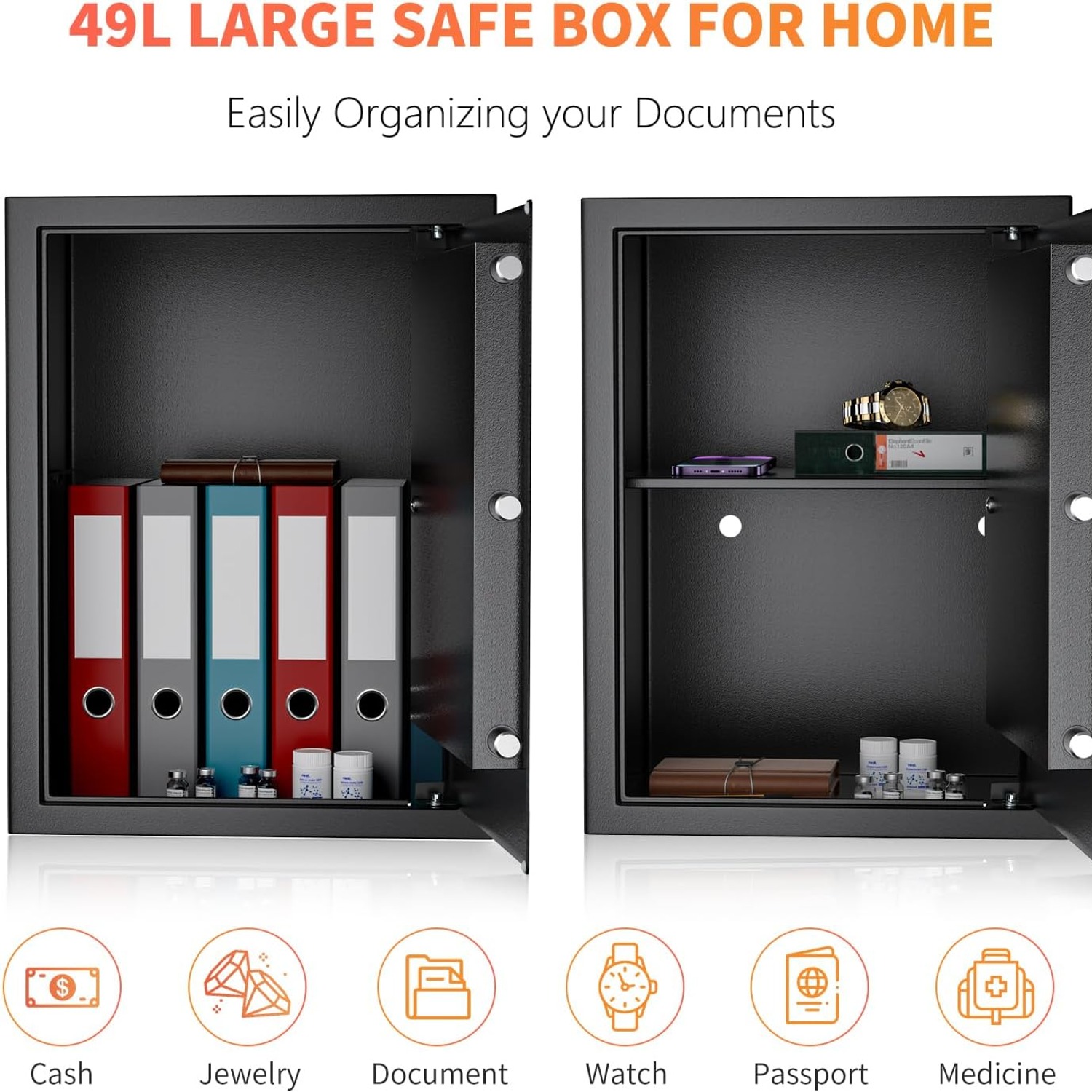
The maker describes this model for cash, passports, jewellery, medicine and important documents. That gives you a starting point, not a promise that every container will fit. A folder can be much larger than the papers it holds. Rigid cases also need room to pass through the door.
If you plan to store medicine, follow its storage instructions. A locked box does not control temperature or humidity, and the maker does not state a child-resistance certification.
Leave some room for your hands. A tightly packed safe may hold your belongings but make them awkward to retrieve. An arrangement you can use easily is more helpful than a layout that only works when every item sits at a precise angle.
Understand the capacity difference
There is an important mismatch in the maker's details. The product is marketed as a 49L steel safe, while the product detail table lists 47 litres. Neither figure should be treated as a confirmed usable capacity without further checking.
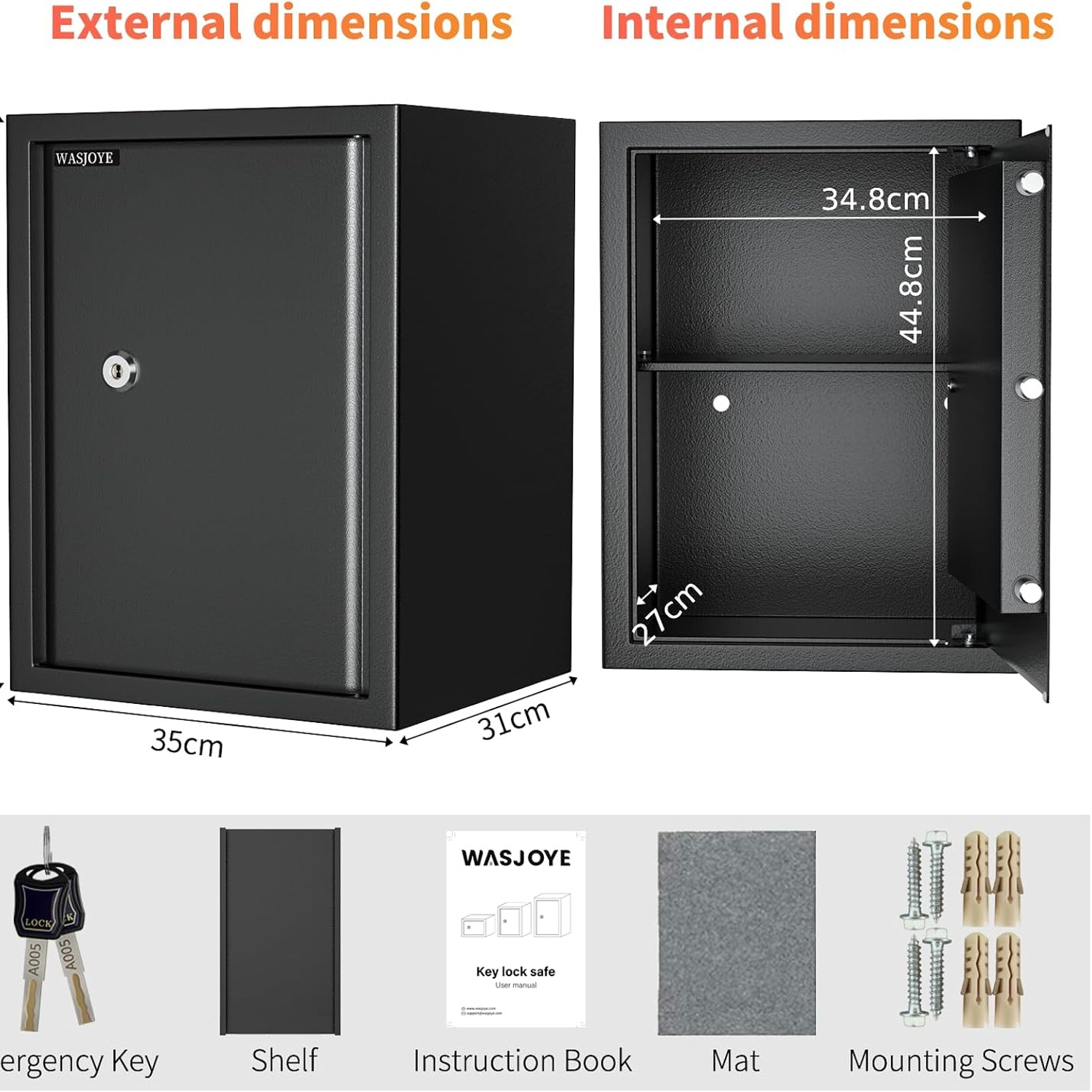
The external dimensions are clearer. They are listed as 31 cm deep, 35 cm wide and 45 cm high. The safe weighs 11.5 kg.
Internal measurements are given as 34.8 x 44.8 x 27 cm, with a separate chamber depth of 27 cm. The order of those internal measurements is not labelled. There is also no measurement for the clear door opening.
For small belongings, this uncertainty may not change your decision. For a particular document case or a box that is close to the listed limits, ask for confirmation first. Litres alone cannot tell you whether a rigid object will pass through the opening.
Decide whether a key lock suits you
A key operated safe is straightforward to understand. Access depends on having the physical key, rather than remembering a code. The maker describes turning the key clockwise to open and counterclockwise to lock.
Two keys are listed in the package. Decide where both will go before you begin using the safe. Keeping the spare inside creates an obvious problem if the main key is lost.
Shared use also needs thought. In a household, you may want another trusted adult to know where the spare is kept. In an office, it helps to agree who holds each key and what happens when staff responsibilities change.
The product details also list an audible alarm. However, they do not explain its trigger, power source or operation. If an alarm is central to your buying decision, confirm those points rather than assuming how it works.
Look at construction without assuming a security grade
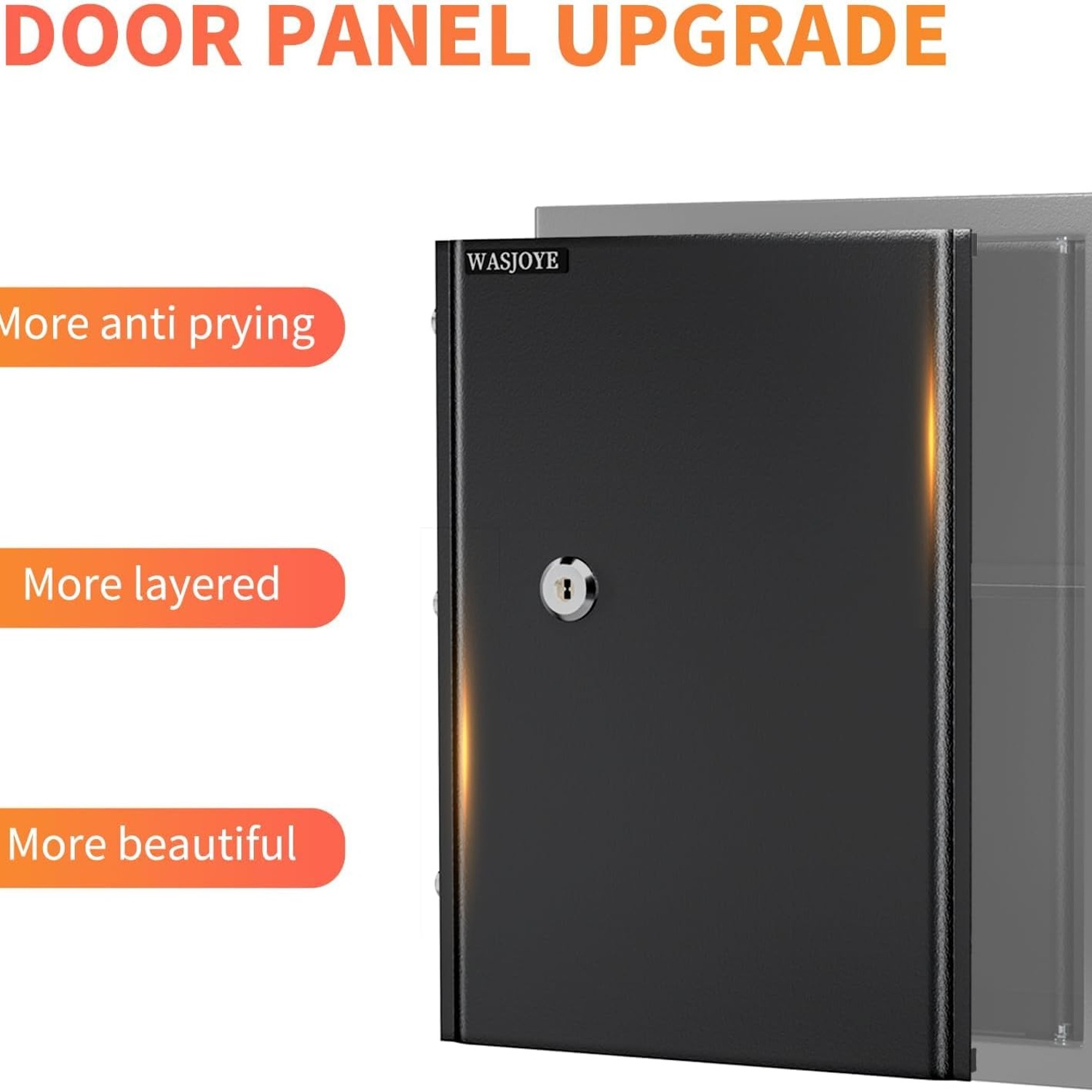
The product details list alloy steel, and the maker describes a pry-resistant door with concealed hinges. A scratch-resistant powder-coated finish is also listed.
Those are relevant construction details, but they do not establish a tested burglary rating. Steel thickness, lock certification and a recognised security grade are not given by the maker by the maker.
That distinction matters when comparing a home valuables safe with a model required by an insurer. If your policy sets conditions for cash or jewellery storage, ask the insurer what evidence it needs. A general description such as anti-theft is not the same as an approved rating.
Think of the safe as part of your storage plan. Its location, installation and key handling all deserve attention alongside its door and lock.
Choose a location before ordering
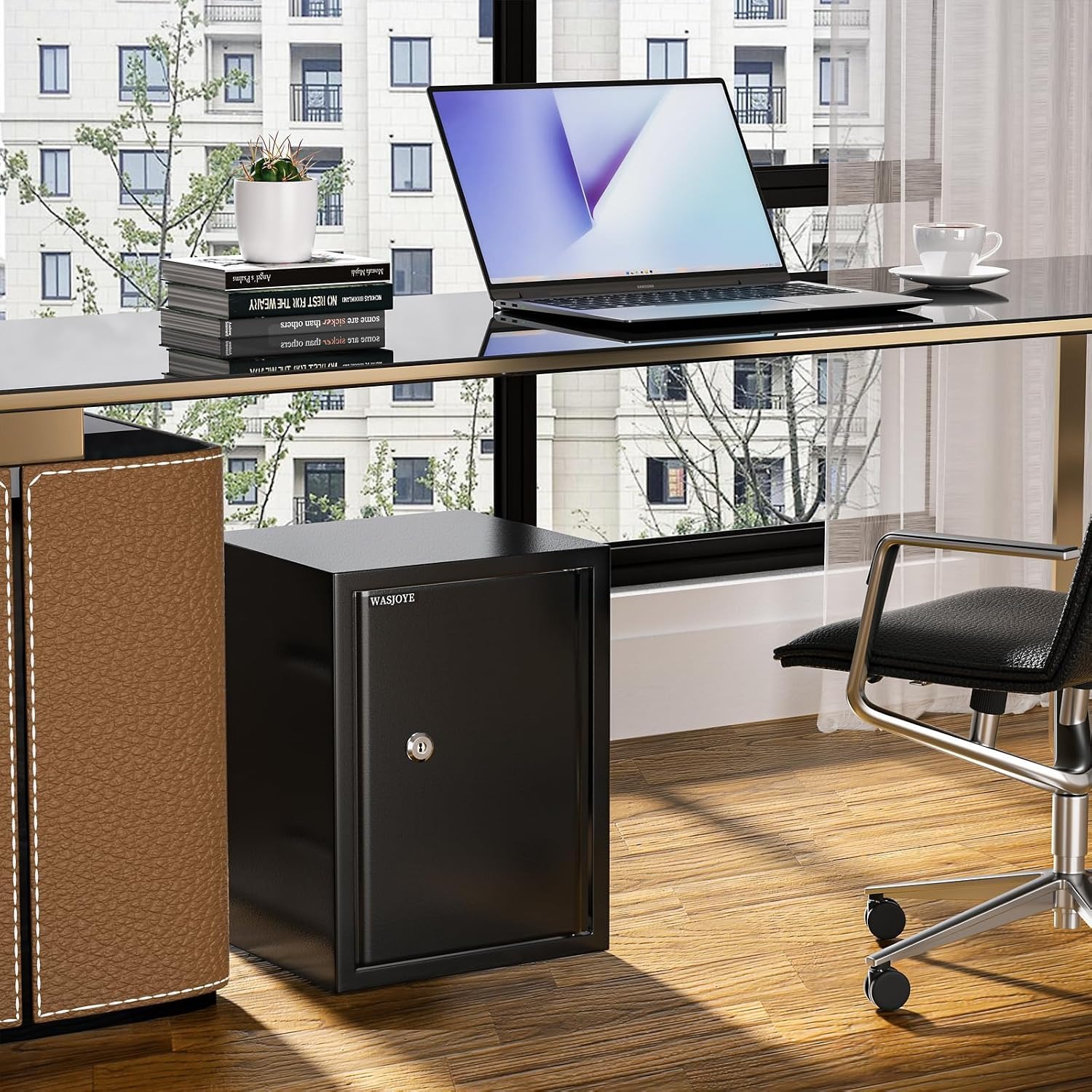
A black key lock safe may look simple to place in a wardrobe or cabinet, but the measurements are only the beginning. You need enough space to open the door and reach the contents without working around shelves, clothing or nearby furniture.
Check the route to the final location as well. At 11.5 kg before contents are added, the safe needs careful handling. Arrange help if you cannot move it comfortably.
A shelf or cabinet base must support both the safe and its contents. Do not judge this from appearance alone. Check the furniture's stated load limit or seek advice where needed.
Choose a dry indoor position. This safe is explicitly listed as not water resistant, so a location near leaks, wet floors or damp walls is a poor choice. Easy access should not come at the expense of a suitable environment.
Plan the mounting method
Floor mount is listed in the product details. The maker also describes mounting to a wall or cabinet, using four pre-drilled holes on the back and bottom.
Four expansion bolts are included. Their presence does not mean they suit every surface. Concrete, masonry, timber and furniture panels need different fixing decisions.
Follow the supplied manual and assess the structure before drilling. If you are unsure what is behind a wall or beneath a floor, get qualified help. Check permission requirements if you rent the property.
For a floor mount safe, consider whether the position leaves enough room to use the door comfortably. For a cabinet installation, check that the fixing point is sound rather than just a thin decorative panel.
Plan the work before filling the safe. It is easier to inspect the holes and position the body when the interior is empty.
Make the removable shelf useful
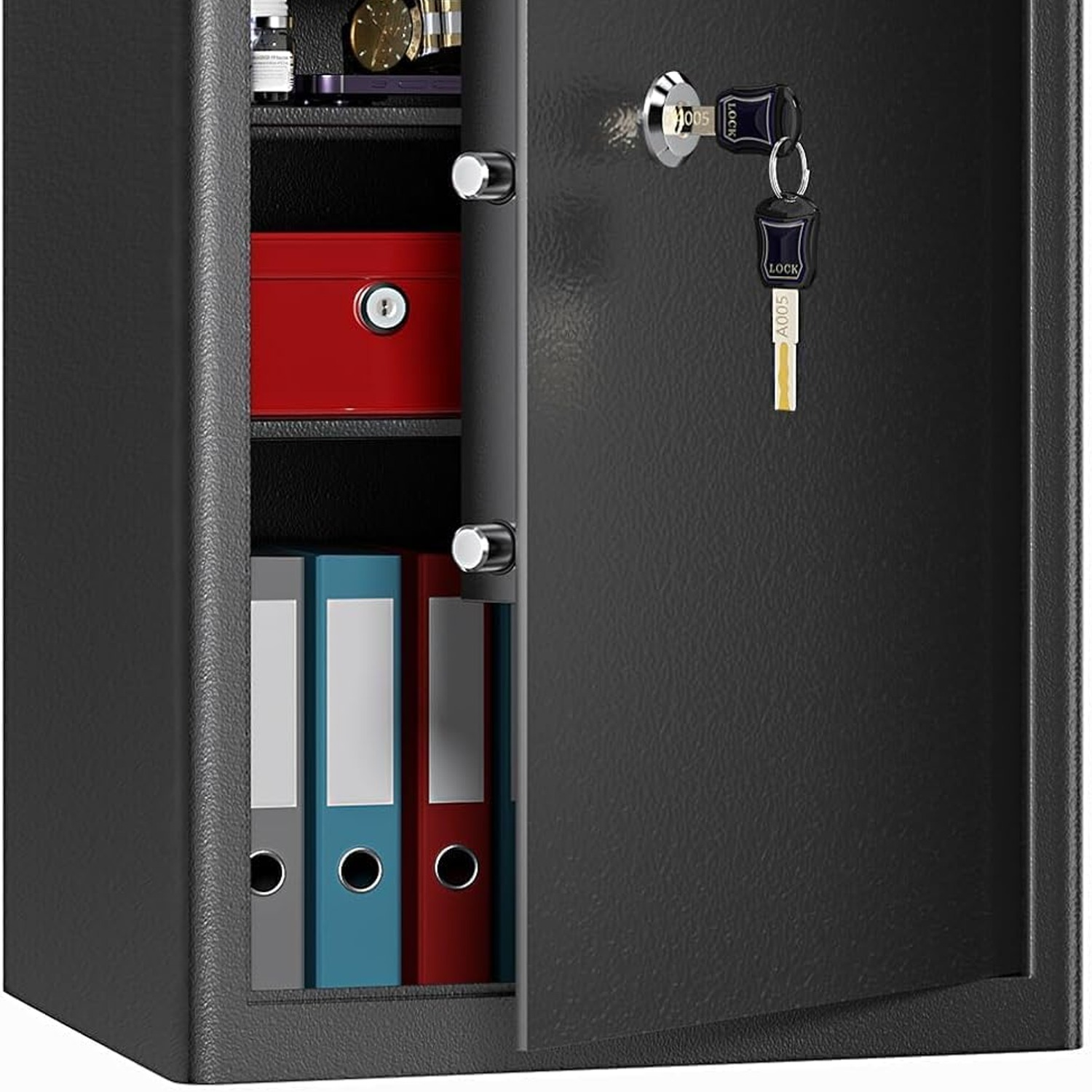
A safe with removable shelf storage gives you a choice about how to divide the space. You might keep small pouches together on one level and larger items below, depending on their size.
Removing the shelf can help when a taller object needs room. The maker does not specify shelf adjustment positions or load limits, so do not assume it works like a fully adjustable cabinet.
Use simple containers where they help. A small pouch can keep jewellery pieces together, while a document sleeve can stop loose papers from spreading around the interior. Measure these containers as part of your fit check.
A protective floor mat is listed in the package. It provides a base for stored belongings, but it should not be treated as waterproofing or evidence of impact protection.
Be clear about water and fire limits
A document storage safe can provide locked storage without providing fire protection. No fire rating is specified for this model.
It is also not water resistant. That matters for paper records, passports and other belongings that can be damaged by moisture. A steel outer body alone does not establish protection from flooding, leaks or firefighting water.
If protection from fire or water is your main concern, compare products with documented ratings for those risks. Check what the rating covers and whether it applies to the items you intend to store.
For this model, make the decision based on the features that are actually listed. Avoid filling missing details with assumptions, even if a safe looks similar to another product.
Check the package and care routine
The listed package contains one safe, two keys, four expansion bolts, a protective floor mat and a user manual. Check everything when the parcel arrives, before drilling holes or placing valuables inside.
Read the manual and test normal lock operation with the door open, following its instructions. Do not force a key that will not turn. Keep packaging and purchase information while you check the product and any applicable return conditions.
For routine care, use a soft, dry cloth. Avoid abrasive cleaners and keep dirt out of the lock opening. Follow the manual for any maintenance beyond basic cleaning.
The maker states a 12-month warranty, but detailed terms are not given by the maker by the maker. Delivery timing and the returns window are also unspecified. Check our delivery and returns pages policies before purchase, especially if you need the safe by a particular date.
The short version
This large safe box offers key access, a removable shelf and mounting options for a suitable surface. It may fit a home or office that wants a dedicated place for everyday valuables without relying on a code.
Measure first. Confirm the 49L versus 47-litre capacity difference if space is tight, and ask about the alarm if that feature matters. Keep its lack of water resistance and unspecified fire rating in view.
The right choice is the one that fits your belongings, your installation space and your actual security needs. A few checks before ordering can prevent a much harder decision after the safe arrives.