
The complete guide
Choosing a Metal Cash Box for Everyday Cash Handling
Loose coins tend to spread. Notes end up under receipts, a float gets mixed with personal spending money, and counting takes longer than it should. A small cash box gives that money a set place, whether you are running a weekend table or keeping household cash separate.
The right box depends on how you use it. Easy access matters during a busy sale, while clear sorting matters when you count up afterwards. Security matters too, but a portable cash box and a rated safe serve different purposes.
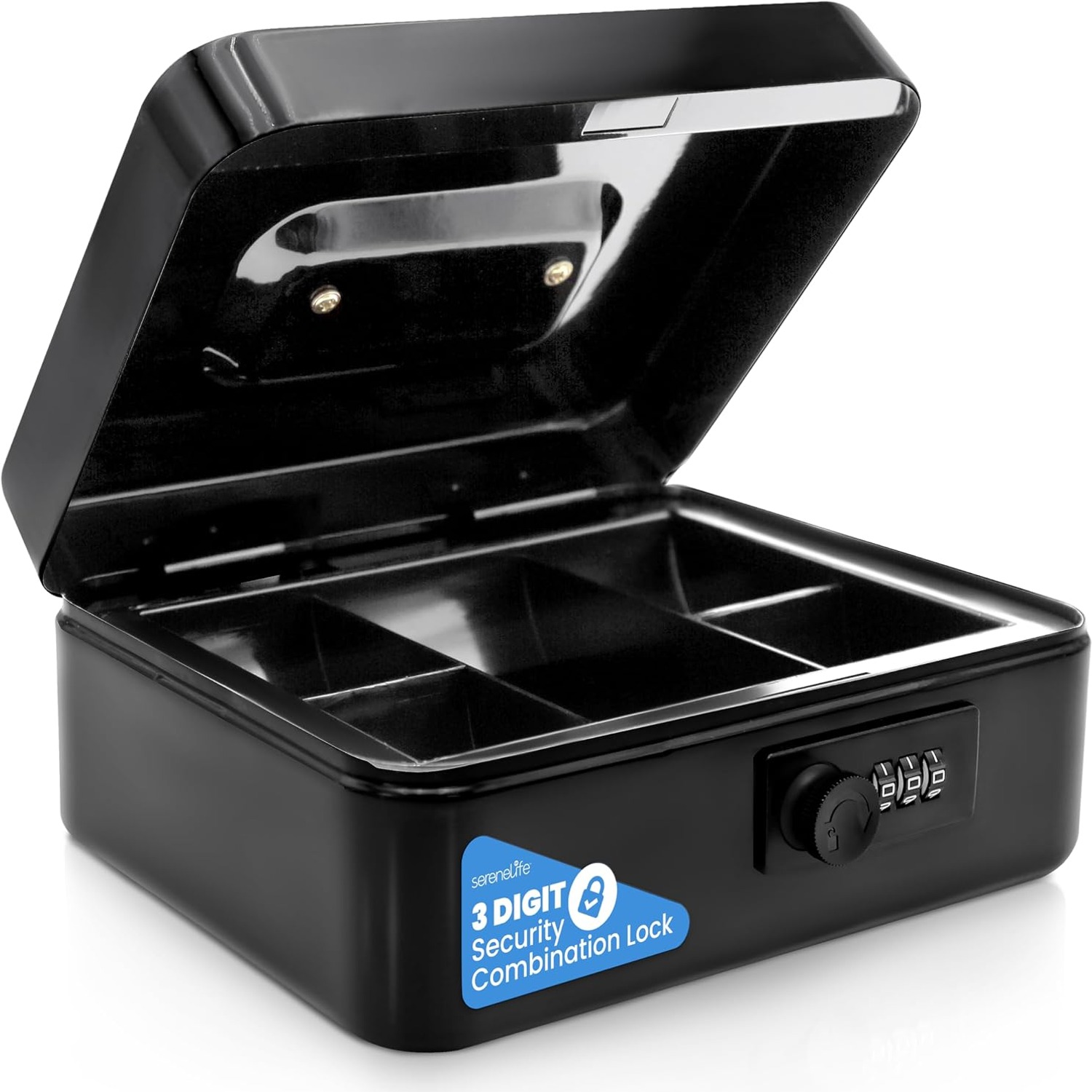
This model has a removable five-compartment tray, a carry handle and a compact footprint. Here is how to decide whether that layout fits your routine, along with the details worth checking before you buy.
Start with the job you need it to do
Think about a normal cash-handling session. You might begin with a small float, take payments for a few hours, then count the balance and put the money away. In that case, a petty cash tin can help keep your working money separate from everything else.
A home cash storage setup may be different. You might only open the box when putting aside money for a planned expense. Access speed matters less, but knowing where the cash belongs still helps.
For an office float, the box is only part of the system. You also need a record of money taken out and receipts put back. Physical storage cannot explain a missing balance. A clear record can help you find the cause.
How the tray helps with daily use
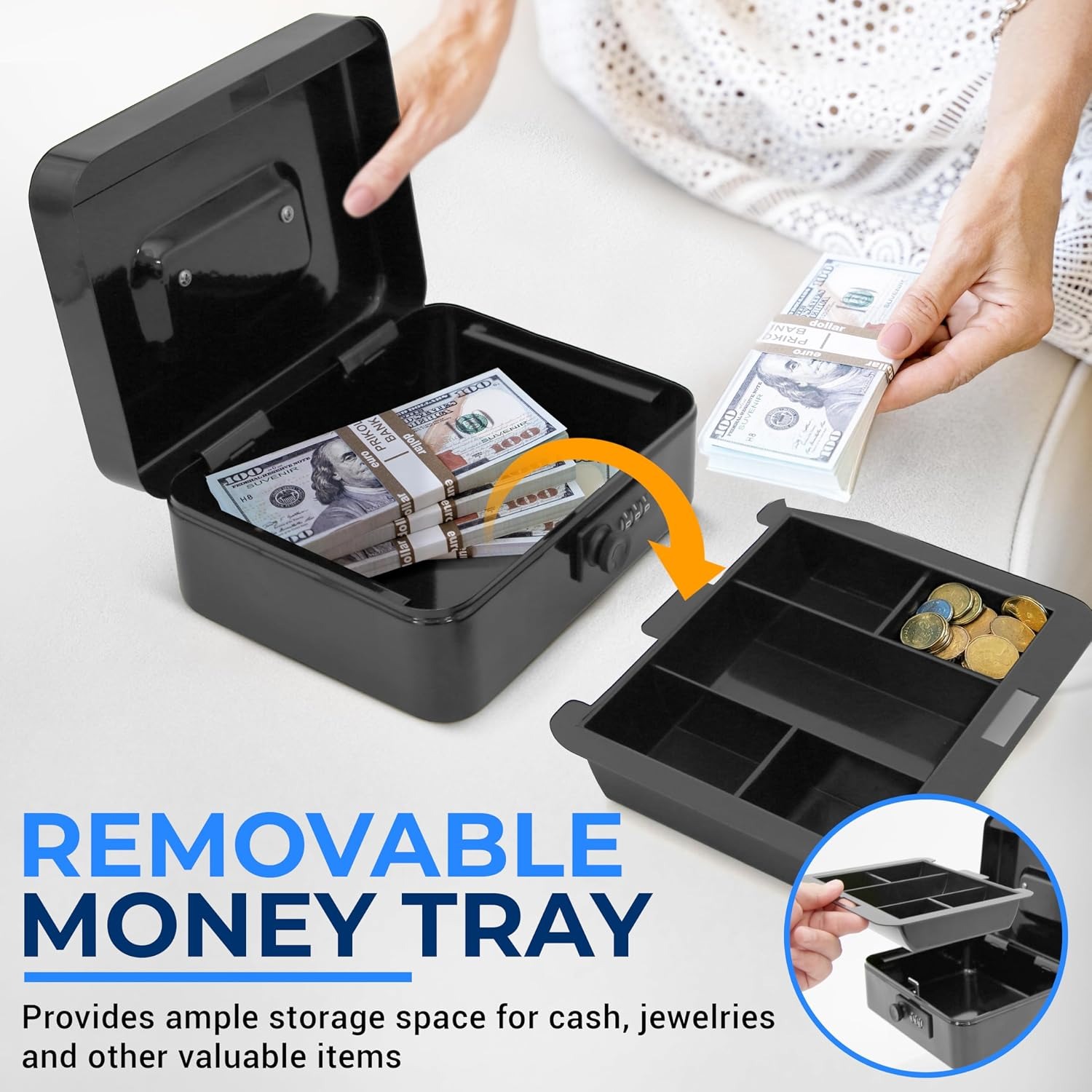
The removable cash tray has five compartments. That gives you separate places for coins rather than one mixed pile. Assign each space a purpose that matches the money you handle most often.
You do not have to use every compartment for a different coin value. Your local currency may have more denominations than the tray has sections. You could group less-used coins together while keeping common change easy to reach.
Lifting out the tray gives access to the lower storage area. Think about what belongs there before your first sale. Notes and receipts may need different spaces or separate envelopes, depending on their size. The maker does not give usable internal measurements, so do not assume that a particular document will fit flat.
Check the footprint before ordering
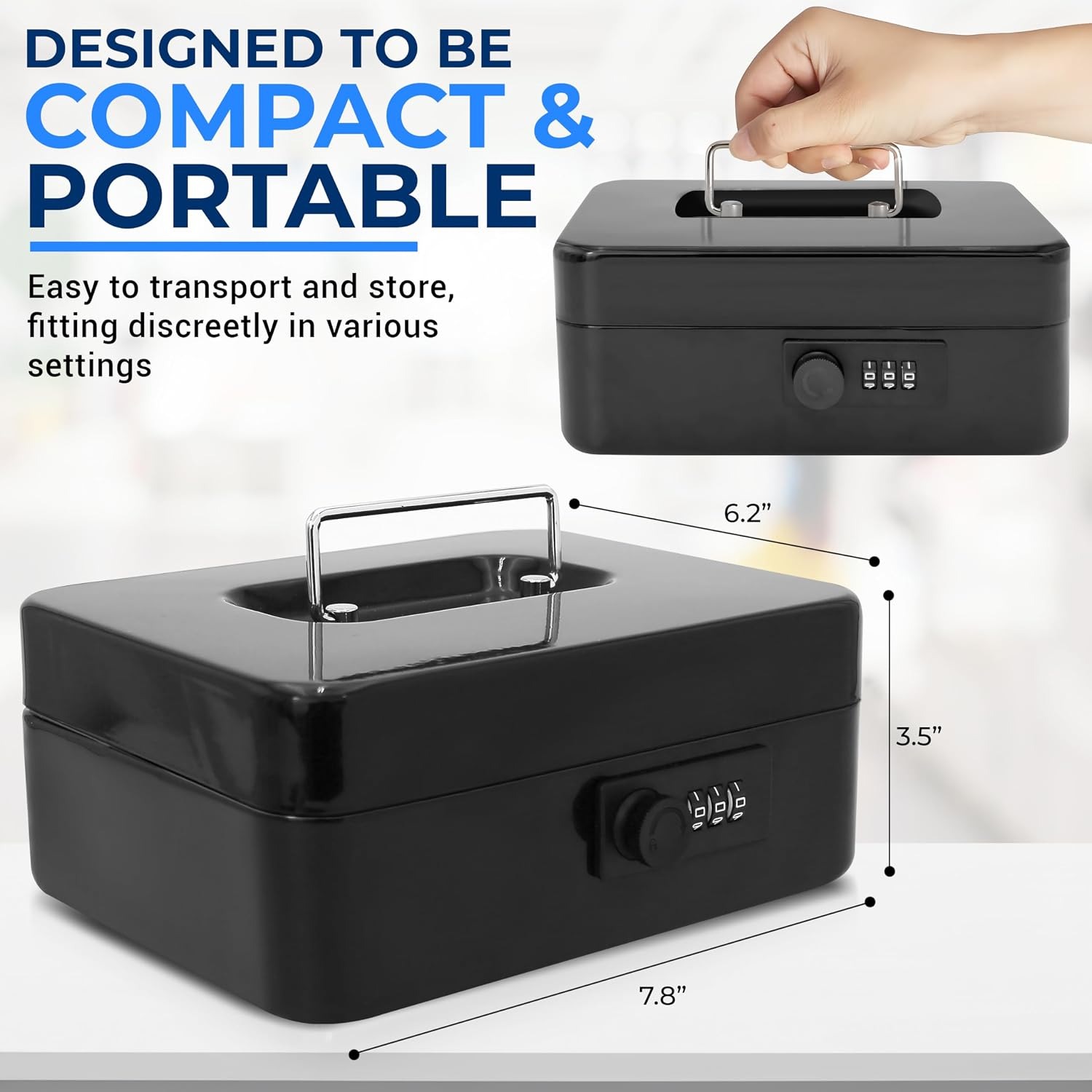
This small cash box measures 19.8 x 15.7 x 8.9 cm. Mark out that footprint on your counter or shelf using a ruler and a piece of paper. It is a simple way to judge the size without relying on a product photo.
Leave room around the box for your hands and for opening the lid. A drawer that accepts the closed box may still require you to lift it out each time you need access. That could be fine at home but less convenient during a busy event.
The listed weight is 866 g before adding cash. Coins can add noticeable weight, so consider the loaded box rather than the empty figure when planning how you will carry it.
Resolve the lock details first
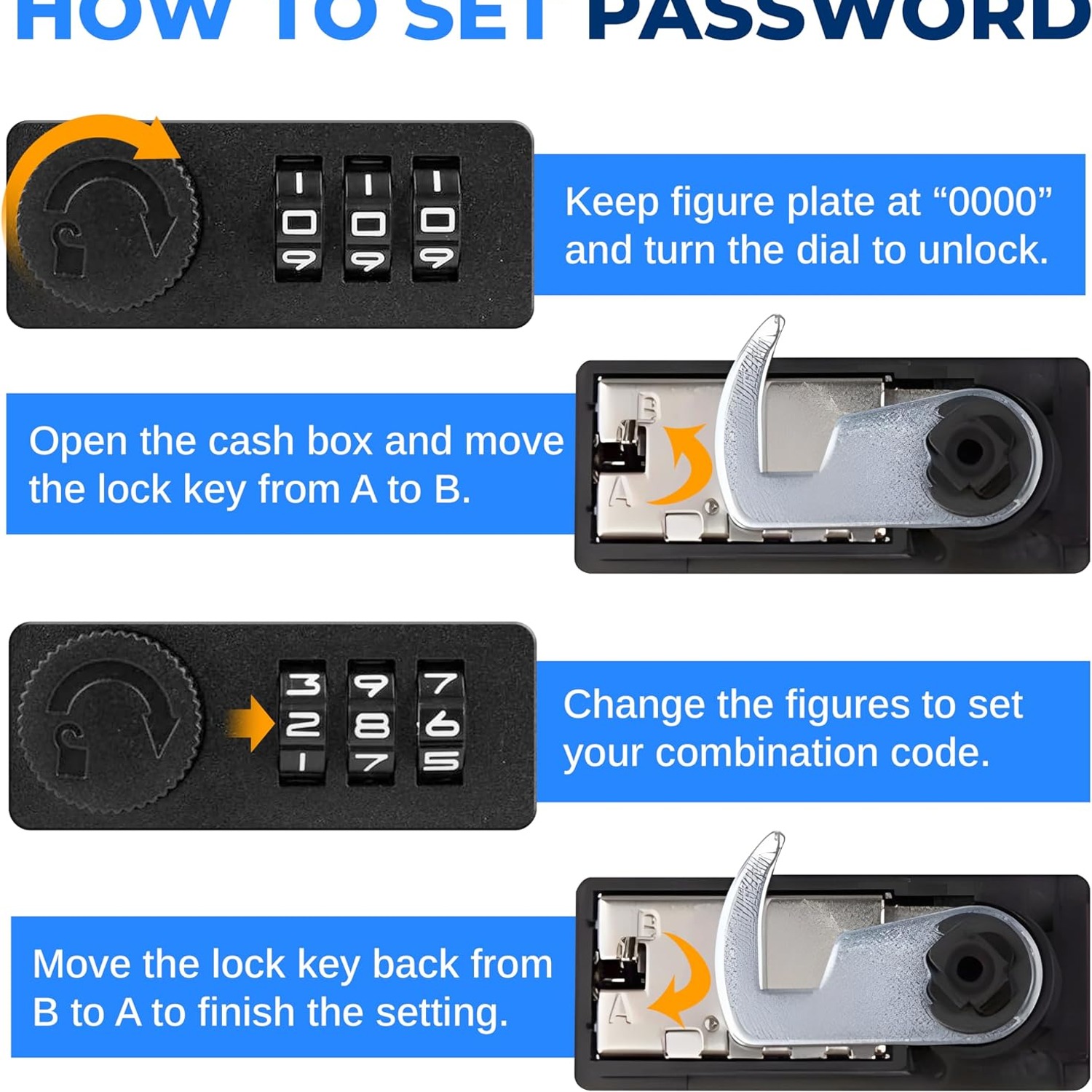
There is an important mismatch in the maker information. The specifications list a mechanical code lock, but the description also mentions a key lock. Those are different arrangements, and the maker does not settle which one is supplied.
If you specifically need a combination cash box, confirm the mechanism before purchasing. The same applies if you want keys rather than a code. Do not assume that both options are included.
Code length, reset steps and spare-key availability are not stated. Ask about any feature that affects your daily use. Once the box arrives, read the supplied instructions and test the lock with the box empty before putting money inside.
Keep security expectations realistic
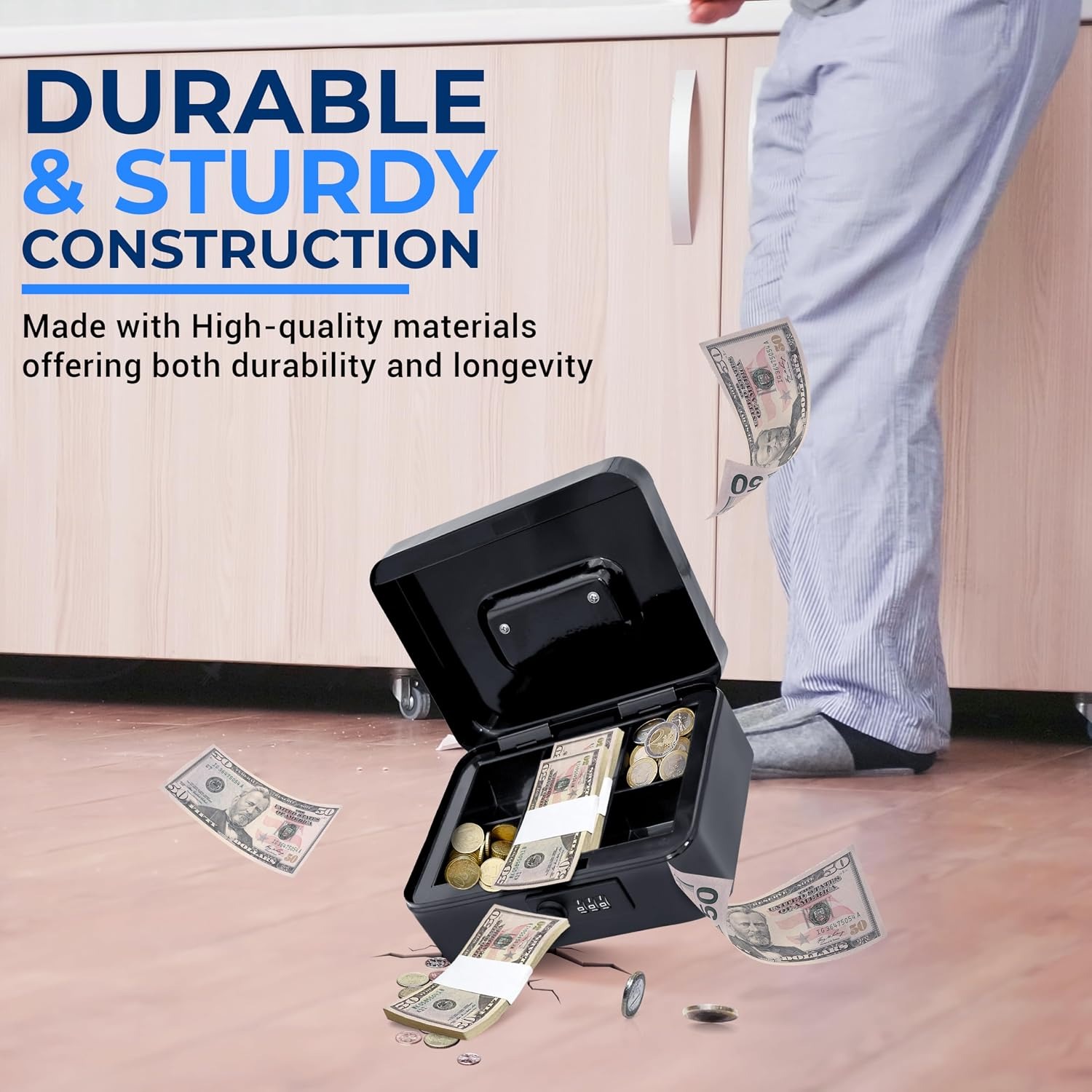
A lockable cash box helps control routine access to cash. It is not proof that the contents will be protected against forced entry, removal or fire. No tested security rating is provided for this model.
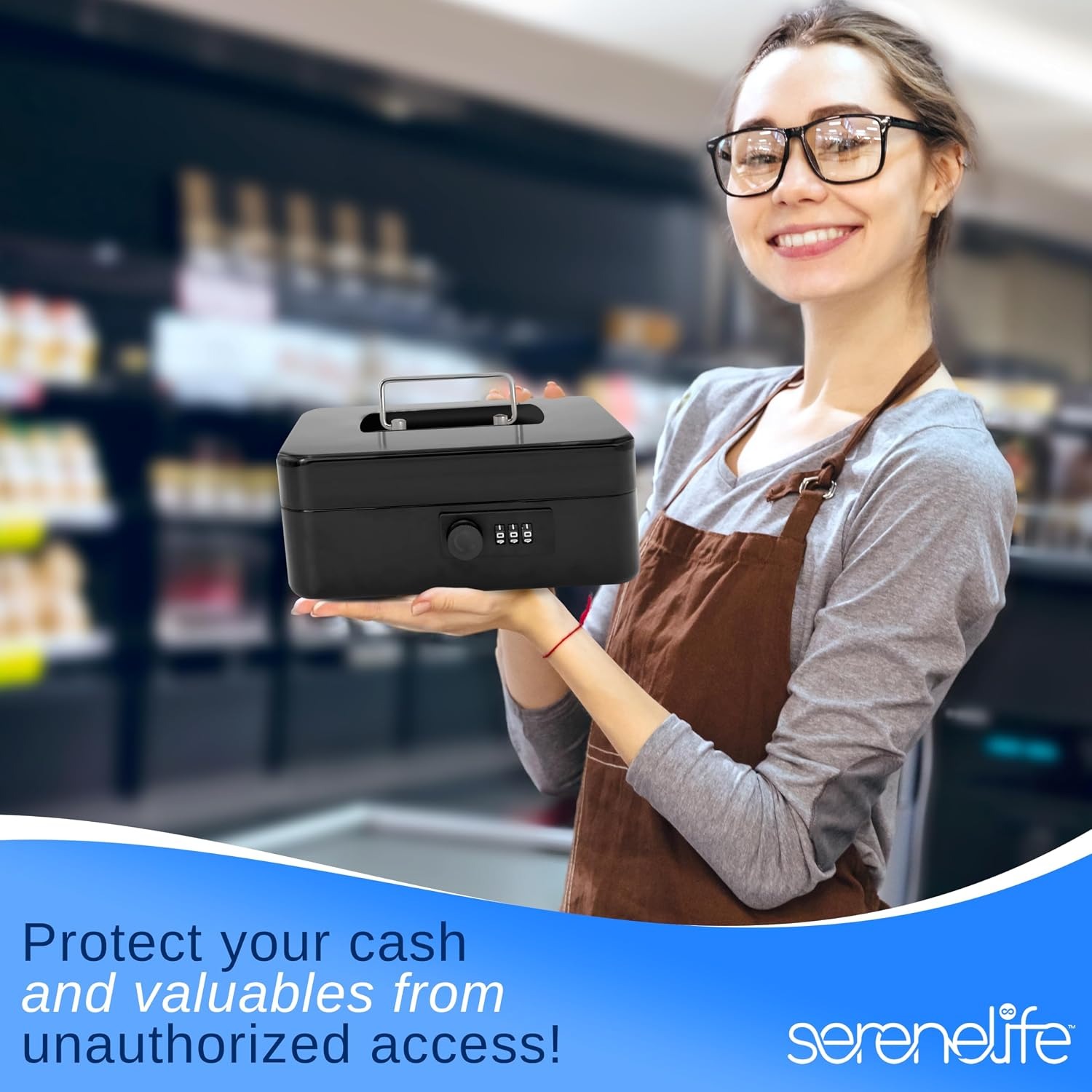
Portability also means the box can be moved. The carry handle is useful when setting up, but a box should not be left unattended just because its lid is locked. Keep it under the care of a named person during sales or events.
For larger sums, consider a storage arrangement with security suited to the amount and risk involved. Check any insurance requirements separately. Avoid leaving the day's full takings in a small portable container longer than needed.
Is it right for a stall or event?
A market stall cash box works well only when its layout matches your sales routine. Think about the prices you charge and the change customers usually need. A five-compartment tray may be enough for a simple float, but your actual coin mix should guide the choice.
Place the box where you can reach it without leaving it exposed to customers. Keep the work area clear so bags, drinks and stock do not crowd the lid or tray. The box is not water resistant, which matters at outdoor events.
A cash box for events also benefits from a clear handover routine. When a new person takes over, count the float together and note the amount. This is more reliable than trying to remember who handled which payment later.
Make petty cash easier to check
For petty cash storage, begin with a written opening balance. Whenever someone takes money, record the amount and purpose. Put the receipt back promptly rather than waiting until the end of the week.
Keep personal money out of the box. Even a small personal purchase can make the balance harder to explain if there is no record. A simple notebook or suitable digital log can sit alongside the physical cash system.
Count at regular intervals that suit the level of use. A busy shared float needs more frequent checks than a small household reserve. The aim is to spot a difference while the transactions are still easy to recall.
Look beyond the material name
The product details describe a black cash box made from stainless steel. The dedicated colour and material attribute fields are blank, and the maker gives no steel grade or wall thickness.
That means the material name should not be used to guess how much force the box can withstand. Construction details, lock design and tested performance would be needed to make a stronger security claim.
The listed capacity is also unclear. It is shown as 2 Pounds, which does not tell you how many coins or notes will fit. Use the physical dimensions as a starting point, then ask for internal measurements if a specific load must fit.
Treat mounting claims with care
The maker lists floor mounting, but it does not explain the fixing points or identify mounting hardware. That is not enough information to plan an installation.
If you need a box that attaches to a surface, confirm the actual provisions before buying. Ask whether fixing holes are present and what instructions apply. Do not drill or alter the box based only on the mounting label.
For ordinary portable use, focus instead on a stable, dry surface. Choose a location where the box is unlikely to be knocked over and where the person handling payments can keep it in view.
Keep care simple and dry
Empty the box before cleaning it. Wipe the surfaces with a soft, dry cloth, and remove loose debris from the tray. Avoid abrasive cleaners that could mark the finish.
Because the box is not water resistant, do not wash or soak it. Keep it away from rain and spills, and avoid damp storage areas. A steel cash box should not be treated as weatherproof simply because it is metal.
Follow the supplied lock-care instructions rather than adding oil or other products on guesswork. If the mechanism becomes difficult to use, stop forcing it and seek guidance. Check the closure before each trip, especially when carrying a loaded box.
Before you decide
Compare your needs with the confirmed details. You have a compact box weighing 866 g, a removable five-section tray and a carry handle. You do not have confirmed lock instructions, detailed internal measurements or a tested security rating in the maker's description.
Check delivery estimates for your destination and read our delivery and returns pages return terms before paying. No product warranty is given by the maker, so ask if warranty coverage is important to your decision.
The short version
This metal cash box is worth considering when your main goal is keeping a small cash float organised. The removable tray gives coins separate spaces, and the compact size makes it easier to plan where the box will sit.
Confirm the lock type before ordering, check the dimensions against your routine, and keep it dry and supervised. Good cash handling comes from both a suitable box and a clear habit of counting, recording and putting money away.