
The complete guide
How to Choose a Money and Document Pouch
Give important papers a proper home
Important papers tend to spread out. A passport ends up in a bedside drawer, a certificate stays in an old folder, and emergency cash gets tucked somewhere that seemed memorable at the time. When you need them, finding everything can take longer than it should.
A money and document pouch gives a selected set of essentials one home. That is its simplest and most useful role. You still need to decide what belongs inside, where to keep it and what level of protection you require.
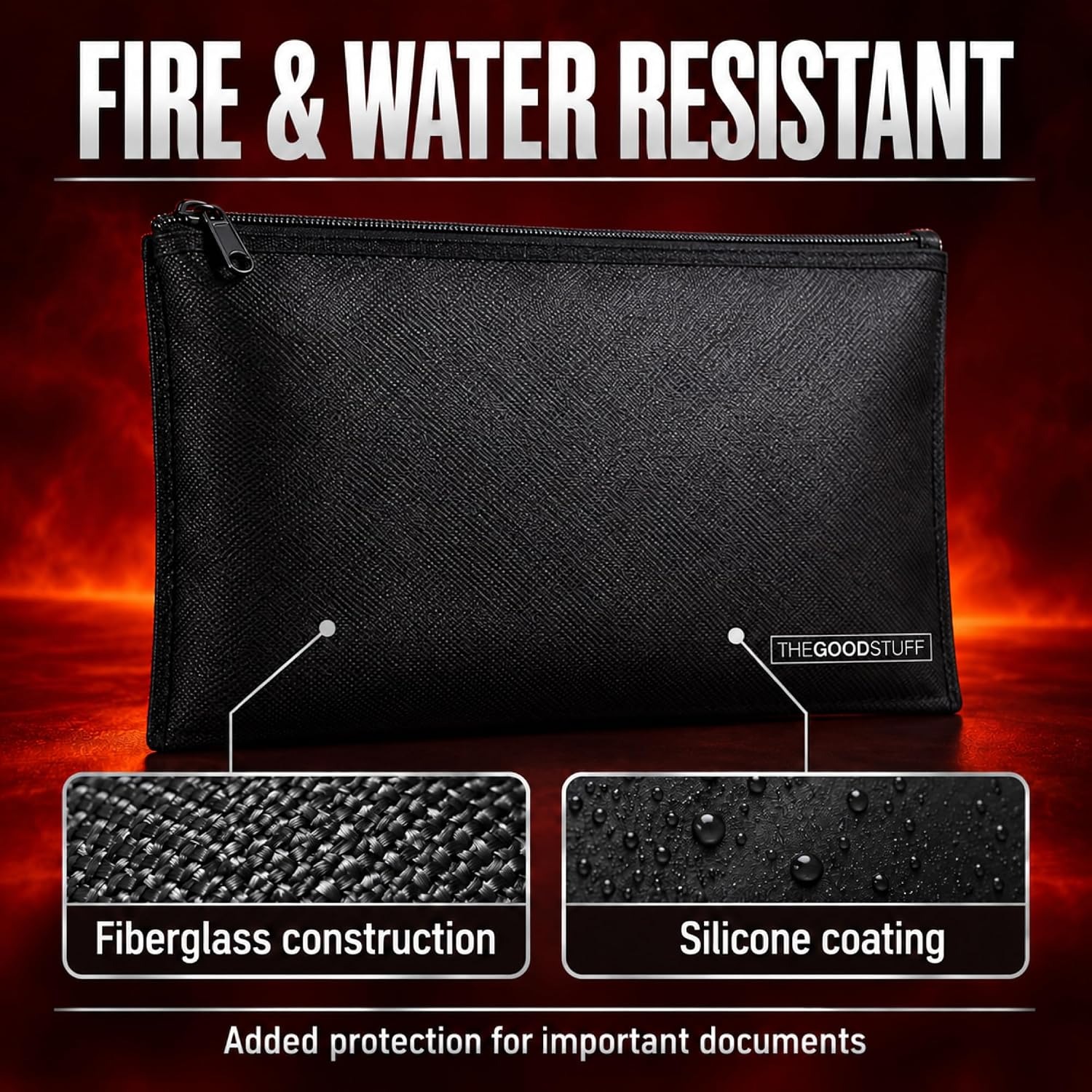
This Fireproof Money Bag is a soft pouch with one compartment and a listed zipper and velcro closure. It is marketed for fire protection and listed as water resistant. Those descriptions need care, though. The available record does not provide a verified fire rating, test duration or complete dimensions.
The right buying decision starts with those limits, not with the product name alone.
Start with what you want to store
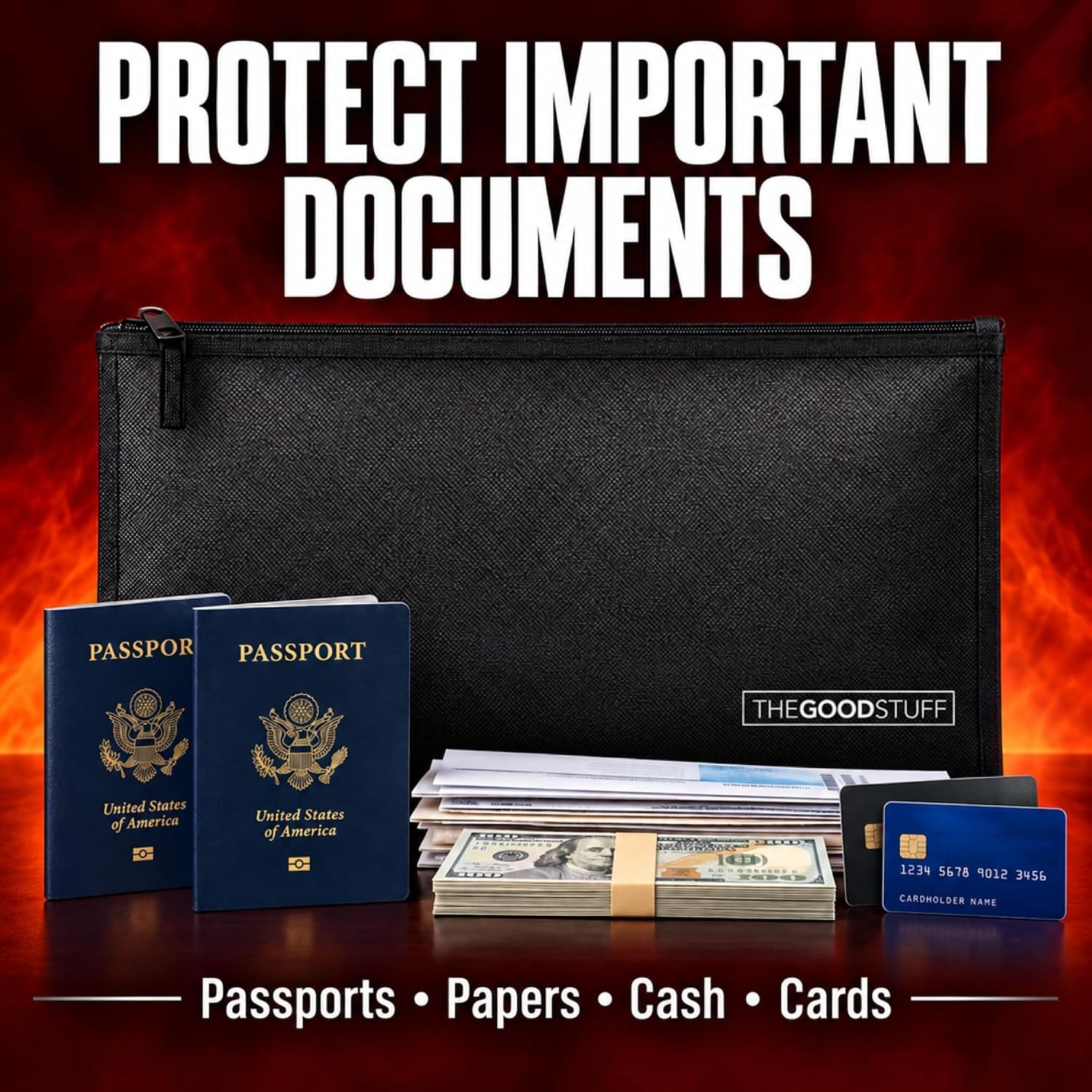
Before choosing a cash storage pouch, gather the items you plan to put inside it. A few banknotes and passports make a different storage task from a thick stack of legal papers.
Look at the largest document first. Does it need to stay flat? Is it already in a sleeve? Would folding it create a problem later? A certificate may need more room than its paper size suggests if you want to keep it in a folder.
Next, look at the whole stack. Paper can build up quickly, especially when envelopes, covers and sleeves are included. A pouch that accepts one sheet may not close comfortably around a full bundle.
Choose a focused collection rather than trying to move your entire filing system into one bag. This is a single-compartment pouch, so a smaller set of essentials will usually be easier to sort through.
Understand what the closures do
The listed closure uses both a zipper and velcro. These are practical fastening features, but they still need to be used with care.
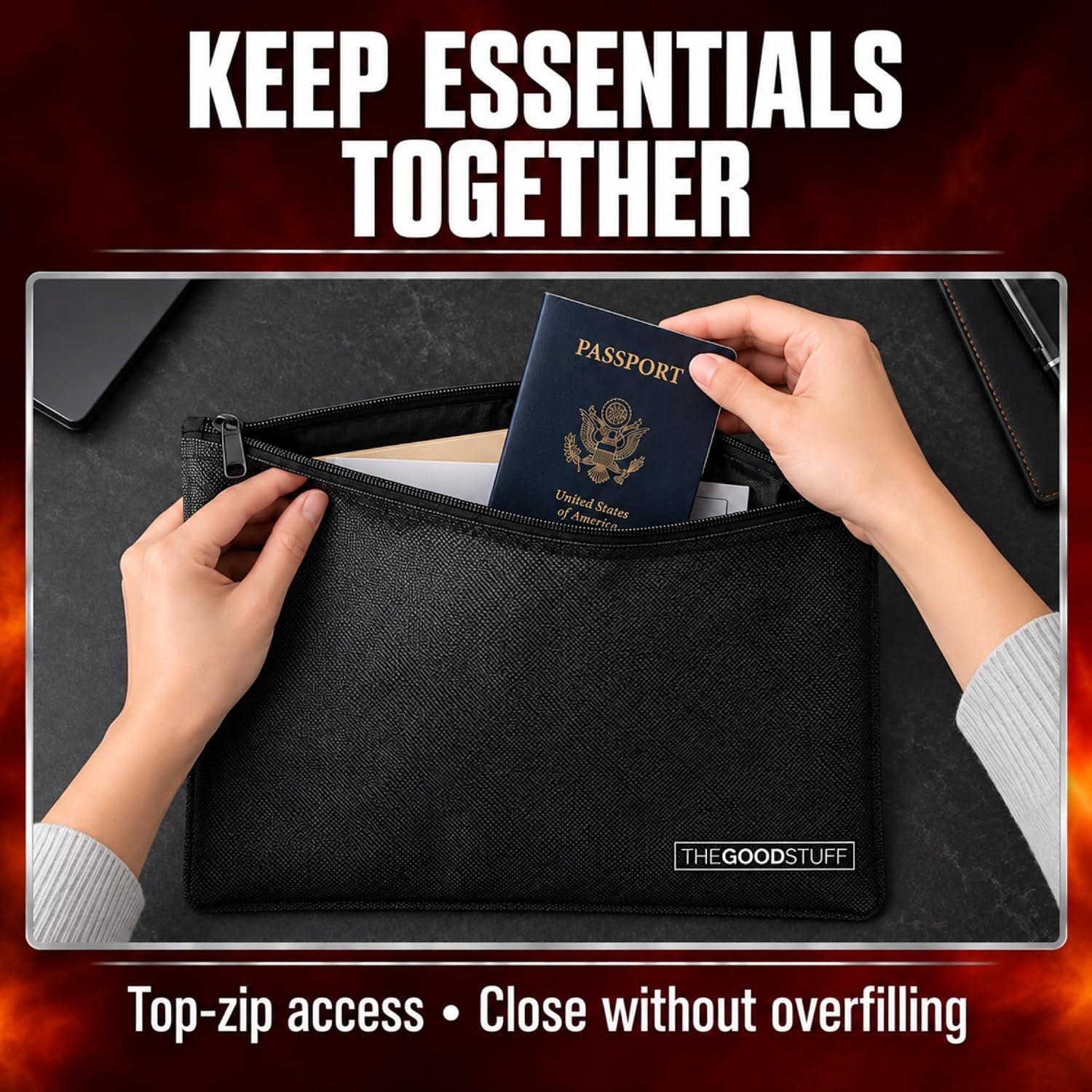
Keep paper corners clear of the zipper path. Close the zipper without forcing it, then secure the velcro. If either part struggles to close, remove some contents rather than pressing harder.
A closure is also not the same thing as a lock. No built-in lock, key or tested theft-resistance feature is confirmed in the maker's description. If you need to restrict access to money or private records, think about the security of the place where you store the pouch.
For a money bag with zipper, easy access and secure storage are separate questions. Make sure your plan covers both.
Read fire protection claims carefully
The words “fireproof document bag” can sound like an absolute promise. In practice, a useful assessment needs more detail. Temperature, exposure time, test method and closure conditions all matter when evaluating a fire protection claim.
The maker does not provide a verified independent test report or a stated fire classification. It therefore does not support a promise that the pouch or its contents will survive a house fire.
If your main need is tested fire protection, ask for evidence that matches that need. Look for clear documentation rather than relying on a name or a broad temperature claim.
A soft document pouch and a fire-rated safe are different products. The pouch may help organise papers, but that does not establish the same protection as a safe with a documented rating. Choose your storage plan around the value and importance of the contents.
Water resistant does not mean waterproof
The product details describe this as water resistant. That is narrower than saying it is waterproof, and it should guide how you use it.
Do not assume a water resistant document pouch can be submerged or left in standing water. The maker does not include an immersion depth, exposure duration or waterproof rating.
Start with dry papers and dry hands when packing. If the outside becomes wet, deal with the moisture before returning the pouch to storage. Follow any care instructions that arrive with the product.
Storage location matters here as well. Avoid places where water already collects or leaks are known to happen. A pouch should not be the only step you take to protect records from a damp cupboard or a flood-prone area.
Check the size before ordering
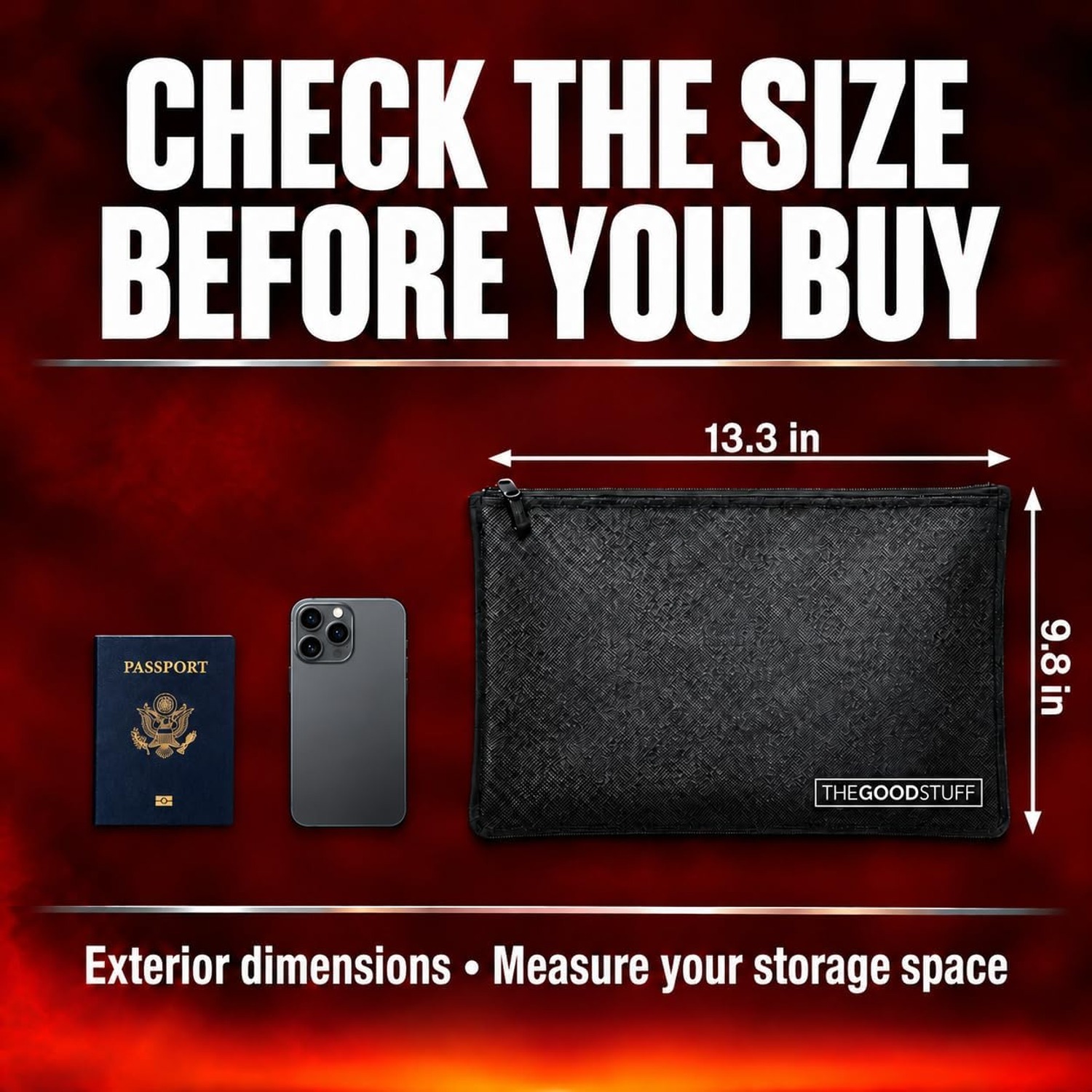
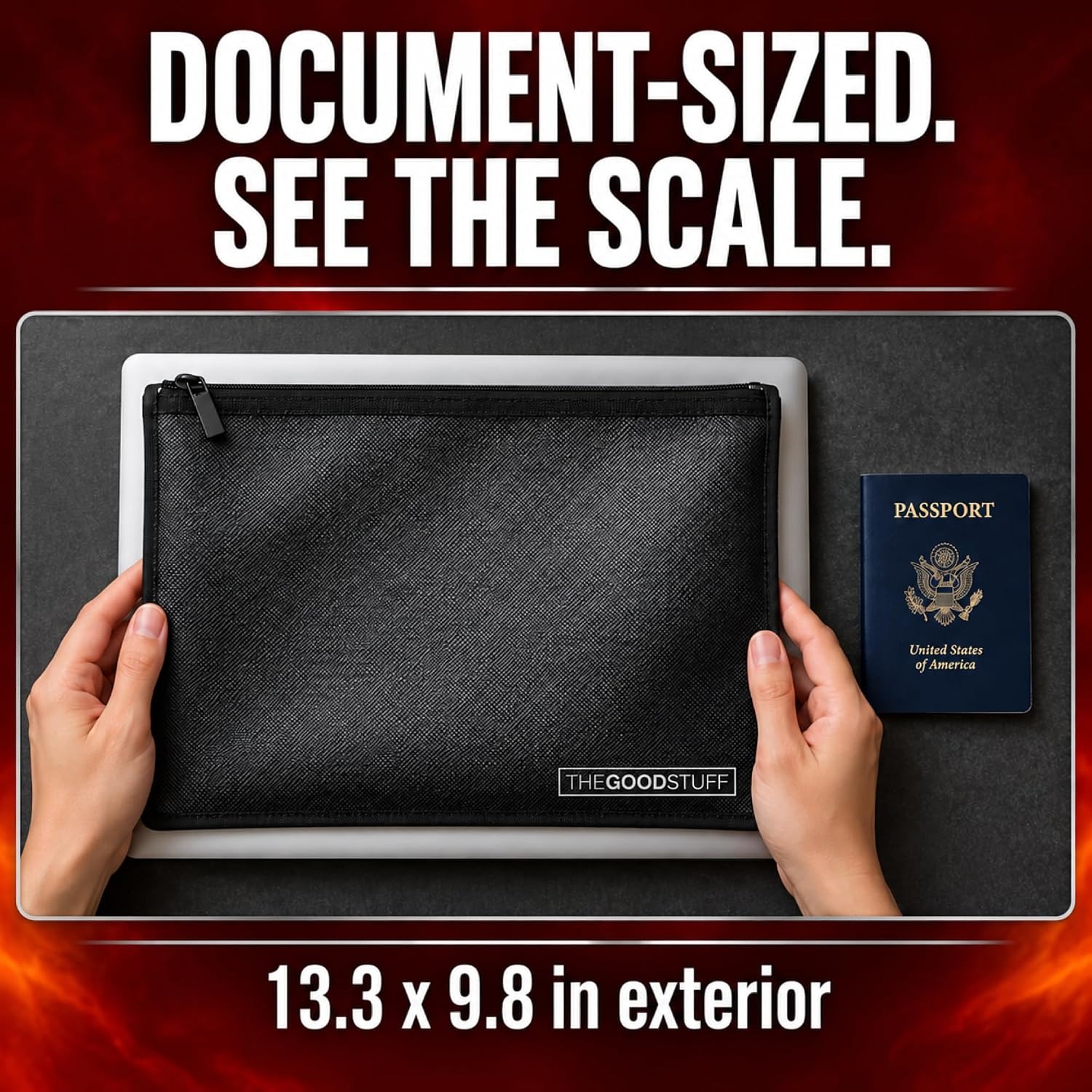
The available details contain one measurement of 33 cm. They do not clearly identify which side it describes, and they do not give a complete set of dimensions.
That means you cannot reliably confirm A4 fit, folder fit or internal capacity from the maker's description. External size would not settle every question anyway, because seams and closures can reduce usable space.
If you need an important document holder for unfolded sheets, request the internal width and height. If your papers sit inside a rigid folder, measure the folder rather than the sheets.
The same care applies when choosing a document pouch for a safe. Measure the safe's usable space, including room near hinges, shelves and the closing door. Do not buy on the assumption that a soft bag will fit anywhere.
Decide whether one compartment suits you
One compartment keeps the layout simple. You open the pouch and have one space to check, rather than several pockets.
The trade-off is that small items can sit among larger papers. If you plan to use it as a cash and passport bag, think about how you will separate banknotes from documents without adding too much bulk.
Thin sleeves can help if there is room, but avoid building a thick filing system inside a small pouch. Each extra layer takes space away from the closure.
This layout may suit someone with a short list of essentials. If you want labelled sections for different family members, receipts or currencies, a multi-pocket organiser may fit your routine better. Choose the layout you will actually keep tidy.
Consider weight and carrying details
The listed empty weight is 90.7 g. That is useful to know when comparing pouches, although your documents and other contents will add weight.
The product details also list a basic handle and a shoulder or cross-body strap type. They do not clearly confirm strap length, adjustment details or every included part.
If carrying it on your shoulder is a deciding factor, check those details before ordering. A listed strap type is not enough to establish how the pouch will sit or whether it will suit your preferred way of carrying it.
For home storage, carrying comfort may matter less than access and fit. For a travel document organiser, it may matter much more. Think about where you will use it most often.
Make it part of a wider storage plan
A document bag for home works best when everyone who needs access knows where it belongs. Choose a consistent place rather than moving it between drawers.
Keep an inventory of what you store, but consider keeping that list separately if it contains private information. Review it when documents change, not only when something goes missing.
Copies are worth planning too. Where appropriate, keep secure digital copies or separate paper copies of important records. A single pouch should not be the only place where essential information exists.
If you use it inside a safe, follow the safe maker's guidance and avoid overcrowding the interior. If you put it in an emergency bag, do not let that create pressure to retrieve it during a dangerous situation. People come before possessions.
Care for the pouch and its contents
Simple checks are more useful than rough home testing. Look over the seams, shell and closure from time to time. Check that the zipper moves normally and that the velcro still fastens.
Do not force an overfilled pouch shut. Remove unneeded papers and check whether a sleeve or folded corner is blocking the opening.
Cleaning instructions are not confirmed by the maker, so follow the guidance supplied with the item. Avoid assuming that machine washing, soaking or strong chemicals are suitable.
Never test a fireproof bag for cash with a lighter, oven or other heat source. A home flame test can damage the pouch and put you at risk. It also cannot replace controlled testing or prove how the bag would behave in a real fire.
The short version
This pouch offers a simple storage layout, a soft shell, zipper and velcro closure, and a listed empty weight of 90.7 g. It may suit a small collection of cash and important papers, provided you confirm fit.
The main questions are clear. Full dimensions are missing, fire performance is not independently verified in the maker's description, and water resistance is not a waterproof rating.
Choose it for a defined role in your storage routine. If your priority is certified fire protection, guaranteed sheet fit or locked security, get those requirements confirmed before you buy.