
The complete guide
Choosing a Fireproof Chest for Papers and Small Valuables
Important papers often end up wherever there is space. A passport goes into one drawer, a backup drive into another, and a small keepsake sits on a shelf. Finding them later takes time. Choosing one storage place can make that part of household life easier.
A fireproof chest adds another question to the decision. You need to know what protection is actually listed, which items it covers and whether your belongings will fit. The name alone does not answer those questions.
This key-operated chest has a listed capacity of 0.18 cubic feet and weighs 5.9 kg. It includes some useful storage features, but its maker record also contains conflicting details. Here is how to assess it without reading more into the maker's description than it supports.
Start with the items you need to store
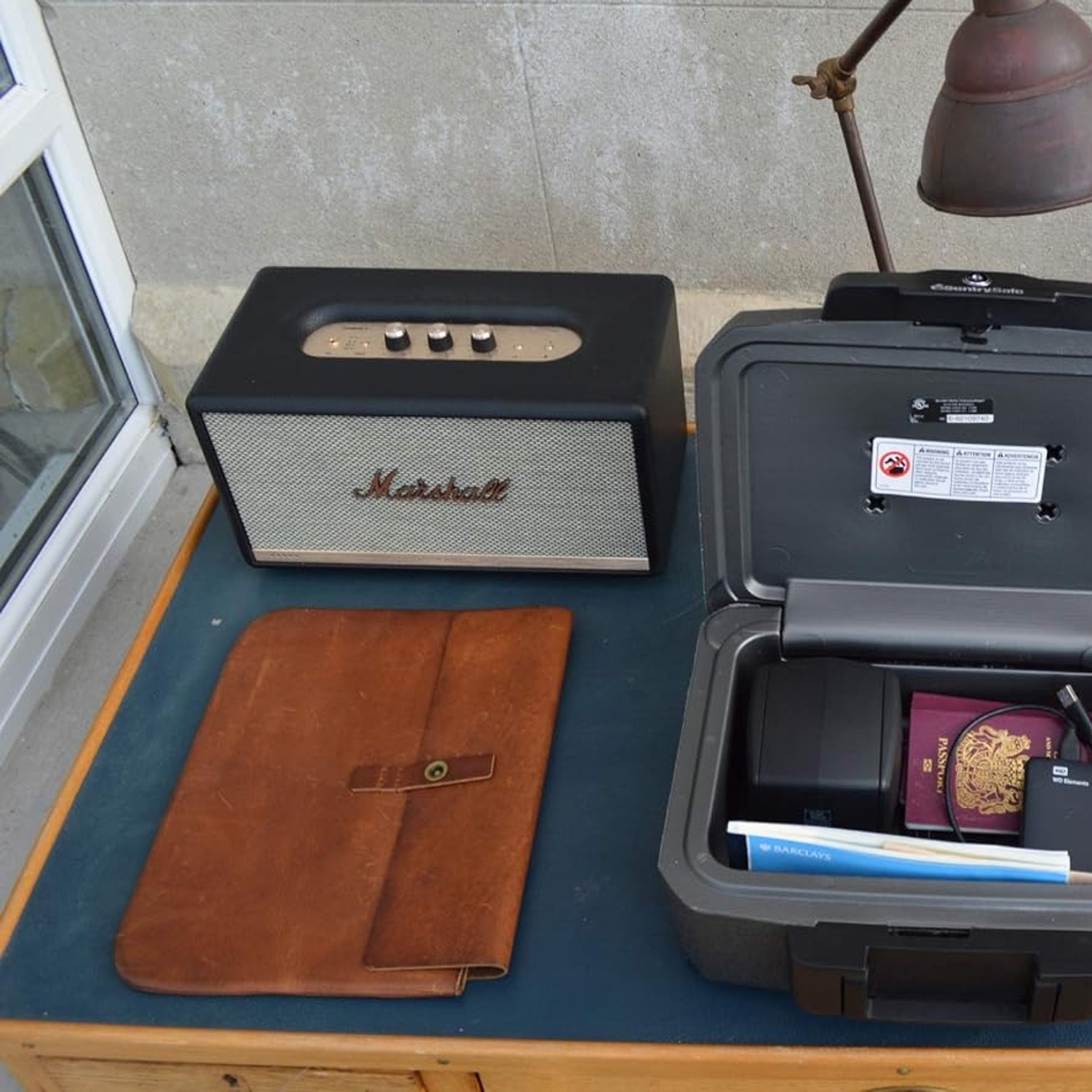
Before comparing a fire resistant document box with other options, gather the items you want to keep inside. Measure the largest item, including its folder, sleeve or case. A bare document and a thick folder need different amounts of room.
Think about how often you will need access. A passport used once a year is different from cash handled every week. The right storage arrangement should make normal use manageable while keeping the key under control.
This chest is listed for important papers, selected digital media and small valuables. That makes it worth considering for a focused collection rather than assuming it can hold an entire household archive. Start with a short list of items that matter most.
Keep copies of important records separately where practical. One container should not be the only place you can find essential information.
Understand what the fire claim means
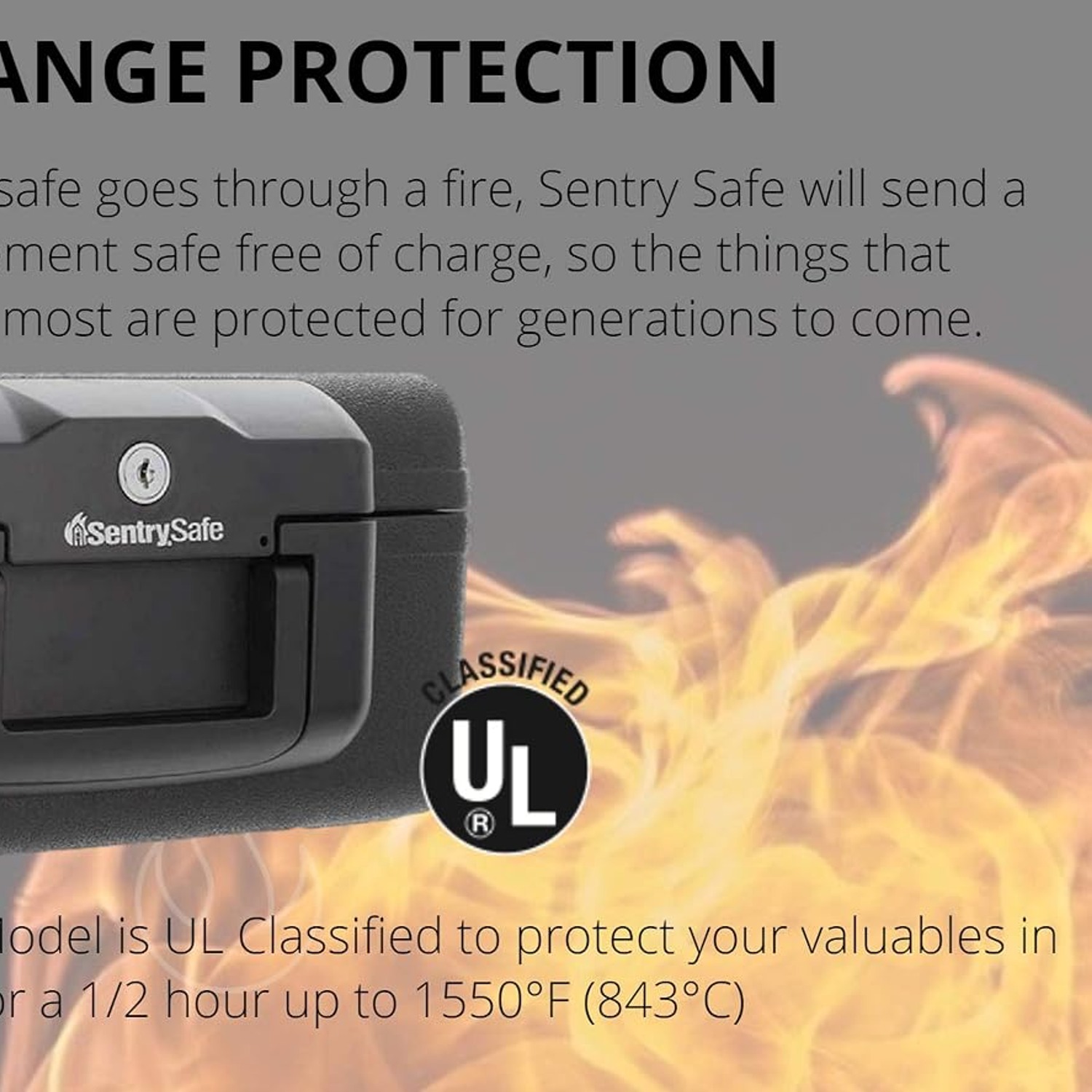
The maker claims UL-classified fire endurance for documents and valuables for 30 minutes at 1550°F. It also claims ETL verification for CDs, DVDs, memory sticks and USB drives under the same stated time and temperature conditions.
Those are specific claims, not a promise that everything inside will survive any fire. A stated test period has limits. The word fireproof is a product search term here, not a reason to assume protection lasts without end.
The maker does not include the model-specific certification documents. If the fire rating is central to your decision, ask for those documents and check that they relate to the exact chest being supplied.
It also helps to separate paper storage from media storage. A claim about documents should not automatically be extended to every electronic item. For fire resistant media storage, check that the named media match what you plan to keep.
Resolve the measurements before buying
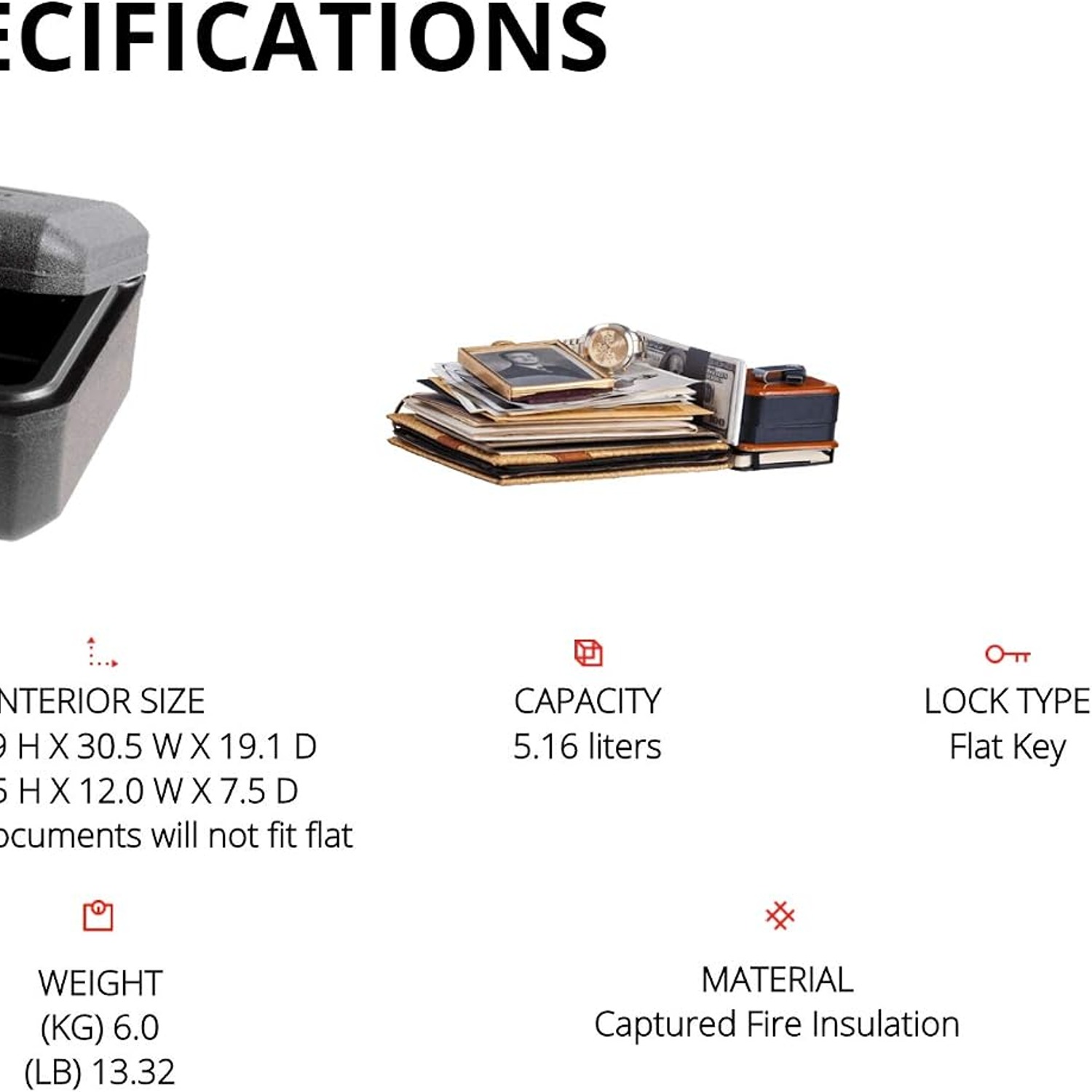
Size is the biggest point that needs clarification in the maker's description. The recorded overall dimensions are 11 x 14.3 x 6.1 cm. The chamber is separately listed as 12 inches wide, 7.5 inches deep and 6.1 inches high.
Those internal measurements cannot fit within the stated external measurements. The maker description adds another overall size in inches. There is no sound basis for choosing one set and quietly ignoring the others.
Ask for confirmed exterior dimensions, usable interior dimensions and the size of the opening. Each answers a different question. Exterior measurements tell you whether the chest fits its intended location. Interior measurements help establish what it can hold.
The opening matters because a rigid item may not pass through even when the listed volume sounds large enough. Until these details are confirmed, do not assume that A4 papers, folders or a particular storage pouch will fit flat.
Use capacity as a starting point
The listed capacity is 0.18 cubic feet. This is useful for a broad comparison with other chests, but volume alone is not a fit guide.
Two containers with similar capacity can have different shapes. One may suit wider papers, while another has more height for small objects. A document storage chest should be chosen around your largest item, not just its headline capacity.
Leave enough room for the lid to close as intended. If you need to press down hard on a stack of papers or bend a folder to make it fit, reconsider the storage plan.
For a compact security chest, a selective approach usually makes more sense than filling every available gap. It also makes individual items easier to find.
Know what the privacy lock offers
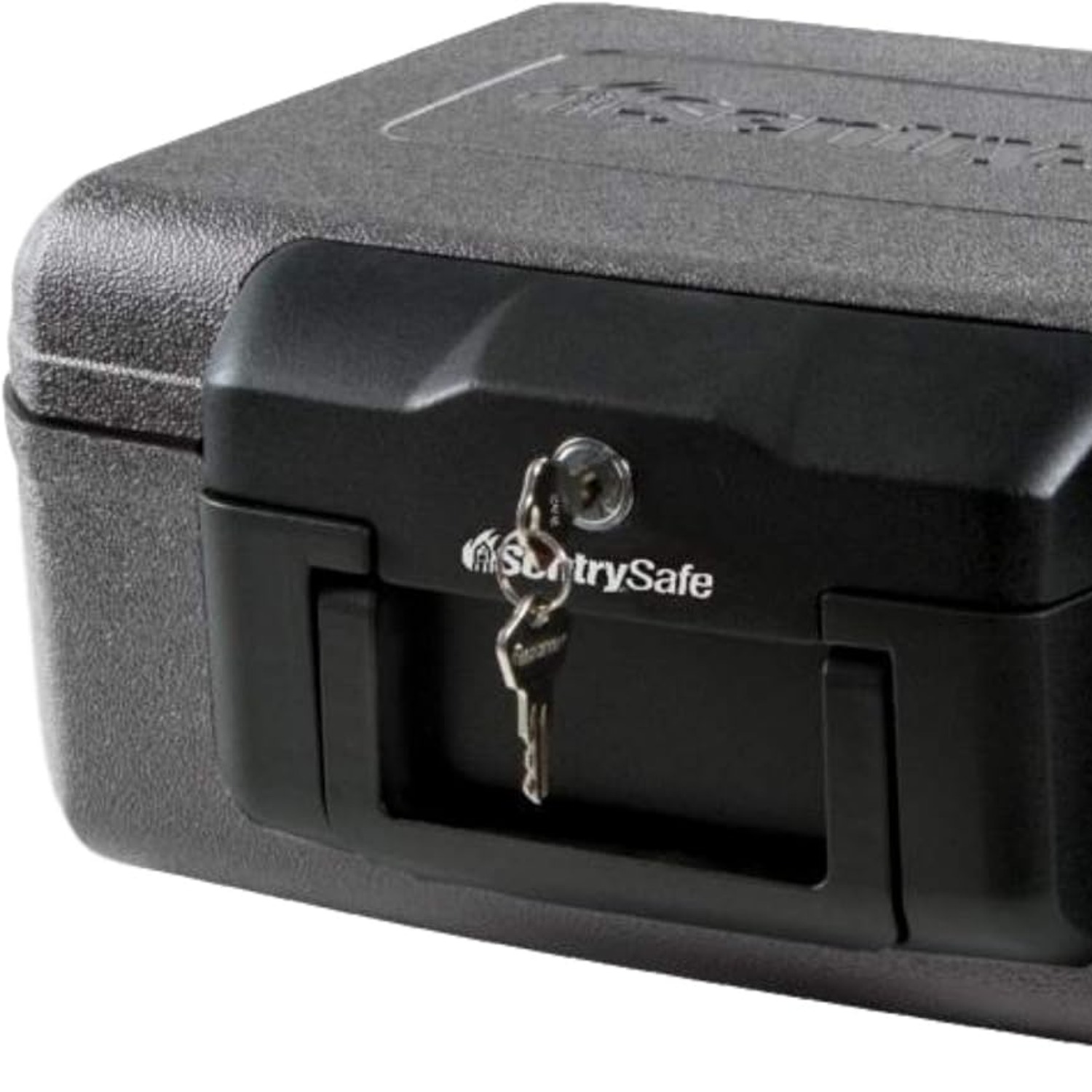
This model is described as having a privacy key lock. That provides a way to control everyday access and keep contents away from casual viewing.
It is not the same as a documented burglary rating. No forced-entry rating is specified in the maker's description. If theft resistance is your main concern, compare products using verified security information rather than weight or appearance.
The maker lists two keys. Plan where both will go before filling the chest. Keeping the spare inside would make it unavailable if the main key were lost.
A separate maker field says Push Button Control, but that does not establish a digital keypad. Follow the actual operating instructions rather than assuming how the lid release works.
Keep water protection separate
The structured specification says Not Water Resistant. The maker prose makes conflicting claims about water protection, so the safer purchasing approach is to treat this chest as not water resistant.
This distinction matters even when your main concern is fire. You may also be thinking about leaks, damp storage or water used during firefighting. The available record does not support a promise of protection in those conditions.
Choose a dry indoor location and avoid places where water collects. If water protection is essential, look for a product with clear documentation covering that need.
Do not assume that an added pouch changes the rating of the chest. Any separate storage accessory needs to be assessed on its own terms and used according to its instructions.
Consider placement and moving weight
At 5.9 kg empty, this is an item to place with some care. The listed carrying grips provide handholds, but they do not remove the weight of the chest or its contents.
Choose a stable support surface that suits the full load. Think about access too. A location that requires awkward lifting every time you need a document may become frustrating.
The maker lists Floor Mount as the mounting type and mentions bolt-down hardware. That is a reason to ask for the installation instructions, not a reason to drill into the chest without guidance.
Check the approved mounting method and suitable surface before fitting a floor mount chest. If you rent, also consider any permission needed for fixing it in place.
Decide whether it suits your household
This key operated safe box may suit someone who wants a dedicated place for a small group of papers and valuables. Key access may also appeal if you prefer not to manage a code.
It is a less certain choice when your needs depend on verified A4 fit, documented burglary resistance or water protection. Those are important requirements, not details to work around after delivery.
A fireproof cash box is another common search, but storing money raises more than one concern. Fire endurance and resistance to theft are separate questions. Decide which matters most for your use.
Do not rely on the maker's description for firearm storage suitability. The maker's description does not establish compliance with local storage laws or provide the security documentation needed for that decision.
Build a simple storage routine
Once the chest arrives, check its contents and instructions before putting important items inside. The maker lists two keys and bolt-down hardware, so compare the delivery with the current order details.
Practise opening and closing it while empty. Make sure you understand the lock and lid action before relying on it for emergency document storage.
Keep a basic inventory somewhere else. You do not need an elaborate system. A short record of what is stored can prevent repeated searches and help another trusted household member understand the arrangement.
Review the contents from time to time. Remove papers you no longer need, update copies when details change and keep access plans current. A storage chest works better when its contents stay relevant.
Care and checks before checkout
Keep routine cleaning simple. Wipe the exterior with a soft cloth, dry it afterwards and avoid soaking the chest. Keep dirt away from the lock and do not force a key that will not turn.
Follow the supplied manual for any maintenance. The brief does not identify a particular cleaner, lubricant or replacement schedule, so there is no basis for recommending one.
Before ordering, resolve the size conflict and ask for the protection documentation if it affects your choice. Check the current delivery estimate for your address as well.
Warranty and return terms are also not specified by the maker. Read us policies before purchase, especially if fit remains uncertain. A useful answer before checkout is better than discovering a mismatch after delivery.
The short version
This fire safe chest offers a privacy key lock, listed carrying grips and a stated capacity of 0.18 cubic feet. The maker claims time-limited fire protection for documents and specified media.
The decision rests on a few checks. Confirm the actual dimensions, review the relevant fire documentation and treat the chest as not water resistant. If those limits match your needs, it may be a practical place to bring a small collection of important items together.