
The complete guide
How to Choose a Fire and Water Safe for Important Documents
Important paperwork has a way of spreading out. A passport ends up in a bedside drawer, insurance records sit in a cupboard, and certificates get tucked inside a folder nobody can find. That makes everyday admin harder. It also leaves you without a clear plan for protecting the originals.
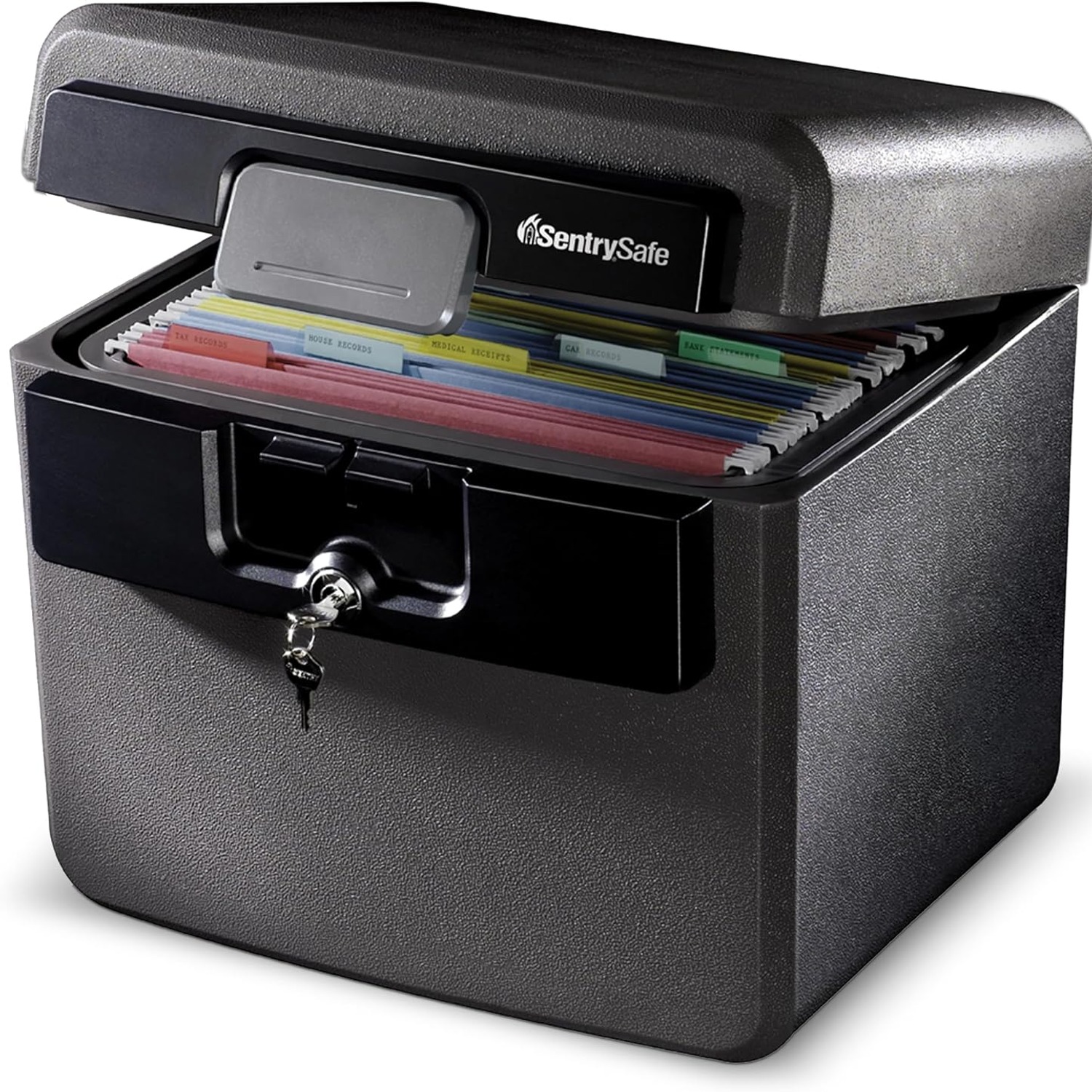
A fireproof waterproof safe gives those records a dedicated place. This model combines file storage, a key lock and defined fire and water protection ratings. The useful question is not simply whether you need a safe. It is whether its size, layout and tested protection match the documents you want to keep.
Start with the records you need to protect
Before comparing safes, gather the paperwork you would find difficult to replace. That might include birth certificates, passports, property records and signed agreements. Your own list may be shorter or longer.
Separate originals from copies. Some papers need to be close at hand, while others are rarely used. This helps you judge how much storage you need and how often you will open the box.
A document storage safe works best when its contents have a clear order. Putting every old bill inside can make the important records harder to find. Start with the items that matter most, then allow space for future paperwork rather than filling every gap on day one.
Understand what the fire rating means
The words “fireproof document safe” are useful search terms, but the test details tell you more than the name alone.
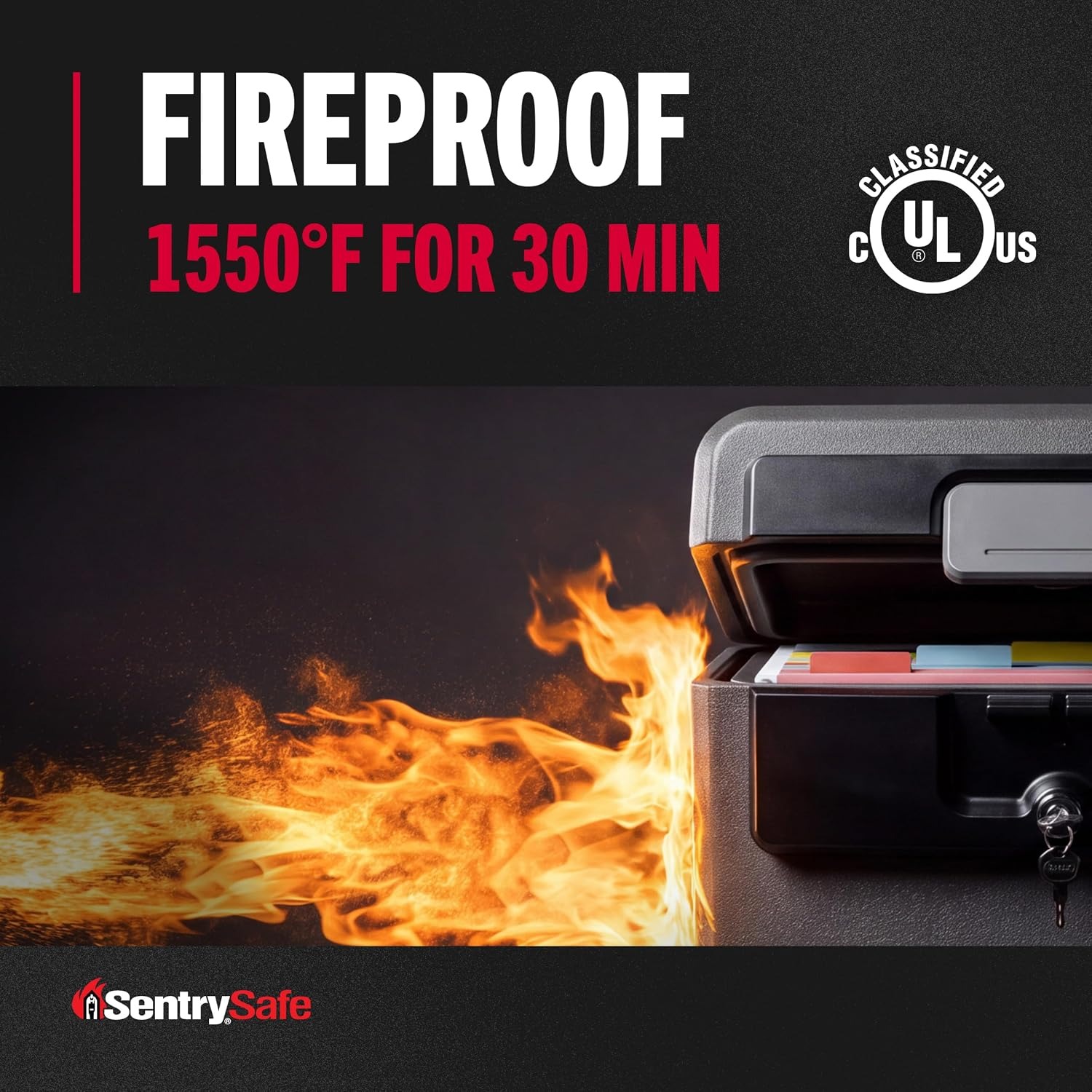
This safe is listed as UL Classified for half an hour at 1550°F. That gives you a defined time and temperature to use when comparing products. It does not mean the contents are protected through any fire, regardless of how long it burns or how hot it becomes.
Look for those limits when assessing any fire resistant file box. A rating should be read as a stated level of tested protection, not an unlimited guarantee.
The maker also describes documents, DVDs and USBs as intended contents. Separate media-specific test details are not given by the maker by the maker. If a digital file matters, keep another copy elsewhere rather than relying on one storage location.
Read the water rating just as carefully
Water can threaten paperwork as well as fire. When choosing a waterproof document box, depth and duration deserve close attention.
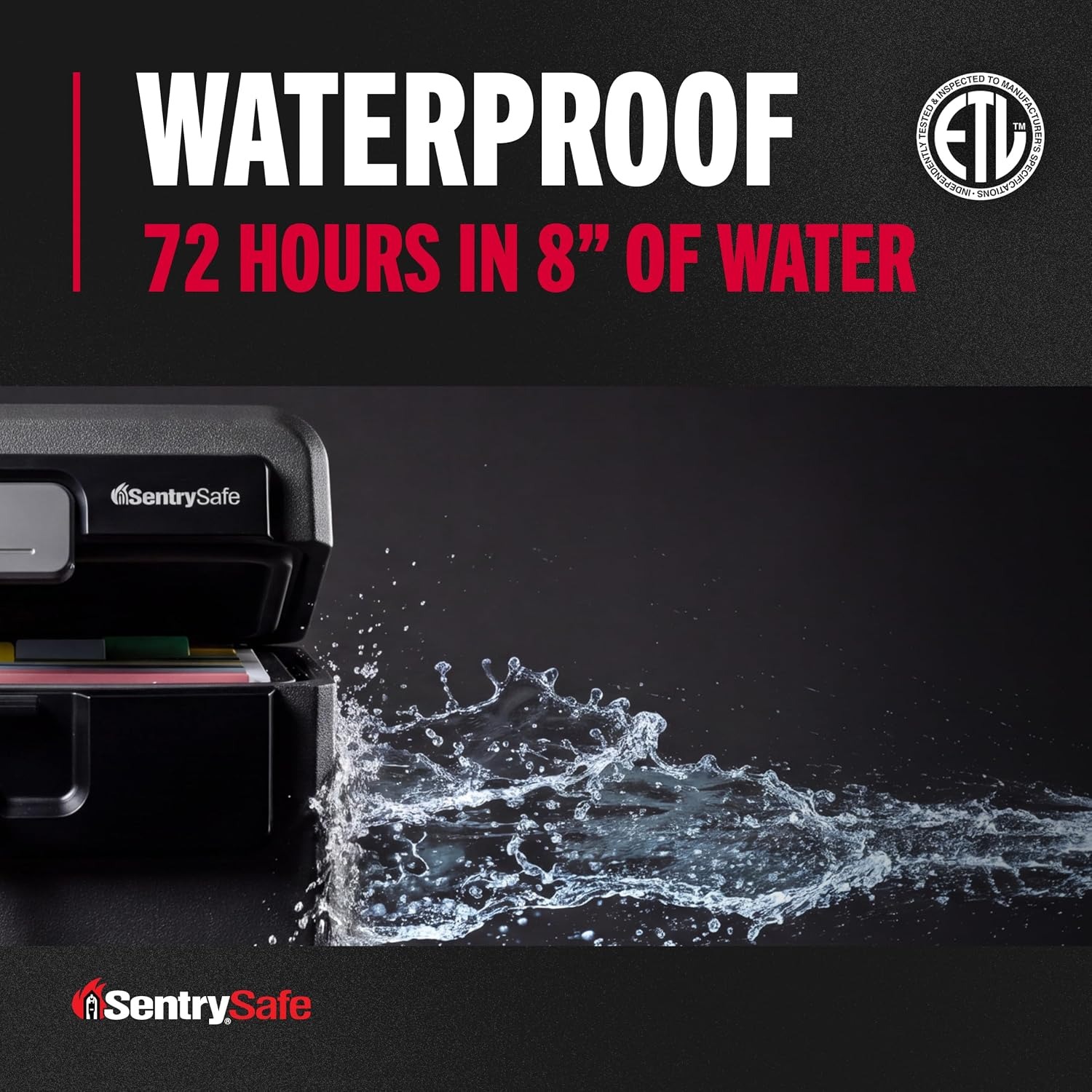
This model is listed as ETL Verified for 72 hours in water up to 8 inches deep. Both parts matter. The maker does not support a claim that it can stay fully submerged at greater depths, or remain exposed beyond that period.
This is why comparing products by the word “waterproof” alone can be misleading. A water resistant safe with clear test conditions gives you something specific to assess against your concerns.
Think about your intended storage location, too. Do not assume that a rated box makes every location equally suitable. Follow its supplied placement and closure instructions, and keep expectations within the stated limits.
Check the outside size before choosing a spot
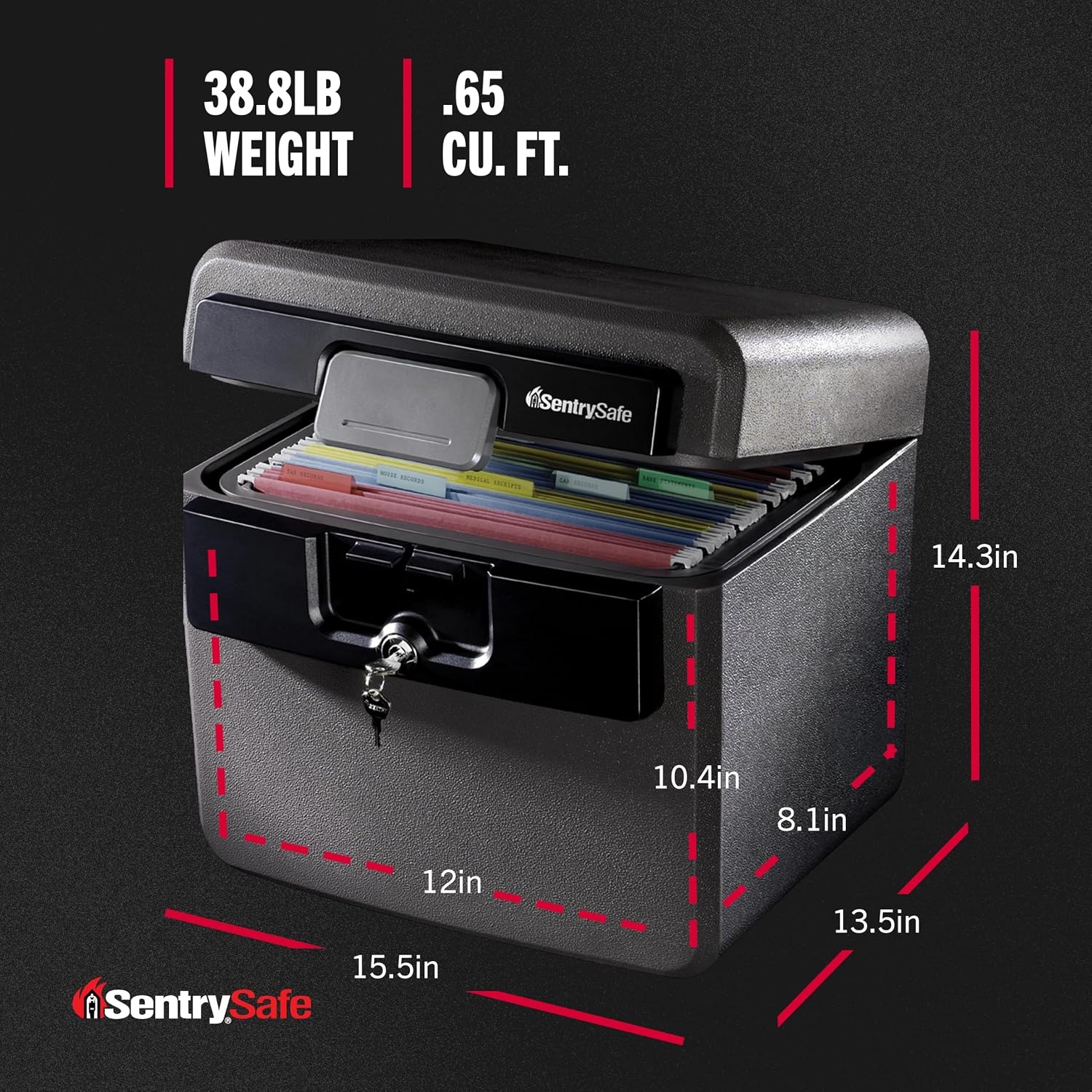
The exterior dimensions are 34.3 x 39.4 x 36.3 cm. Measure your proposed location with a tape measure rather than judging from product photos.
The safe needs room for use, not just room to sit. You must be able to reach the key lock and open the lid without nearby shelves or stored items getting in the way. An exact lid-opening clearance is not provided, so confirm this if the space is tight.
Its weight is also important. At 17.6 kg, this is not an ordinary lightweight filing box. Choose a stable position that can support it, and think through how you will get it there.
If you are considering a cupboard or raised surface, check that support carefully. Plan for safe handling rather than trying to shift it alone if the weight is uncomfortable.
Compare the chamber with your actual folders
External size does not tell you how much usable document space is inside.
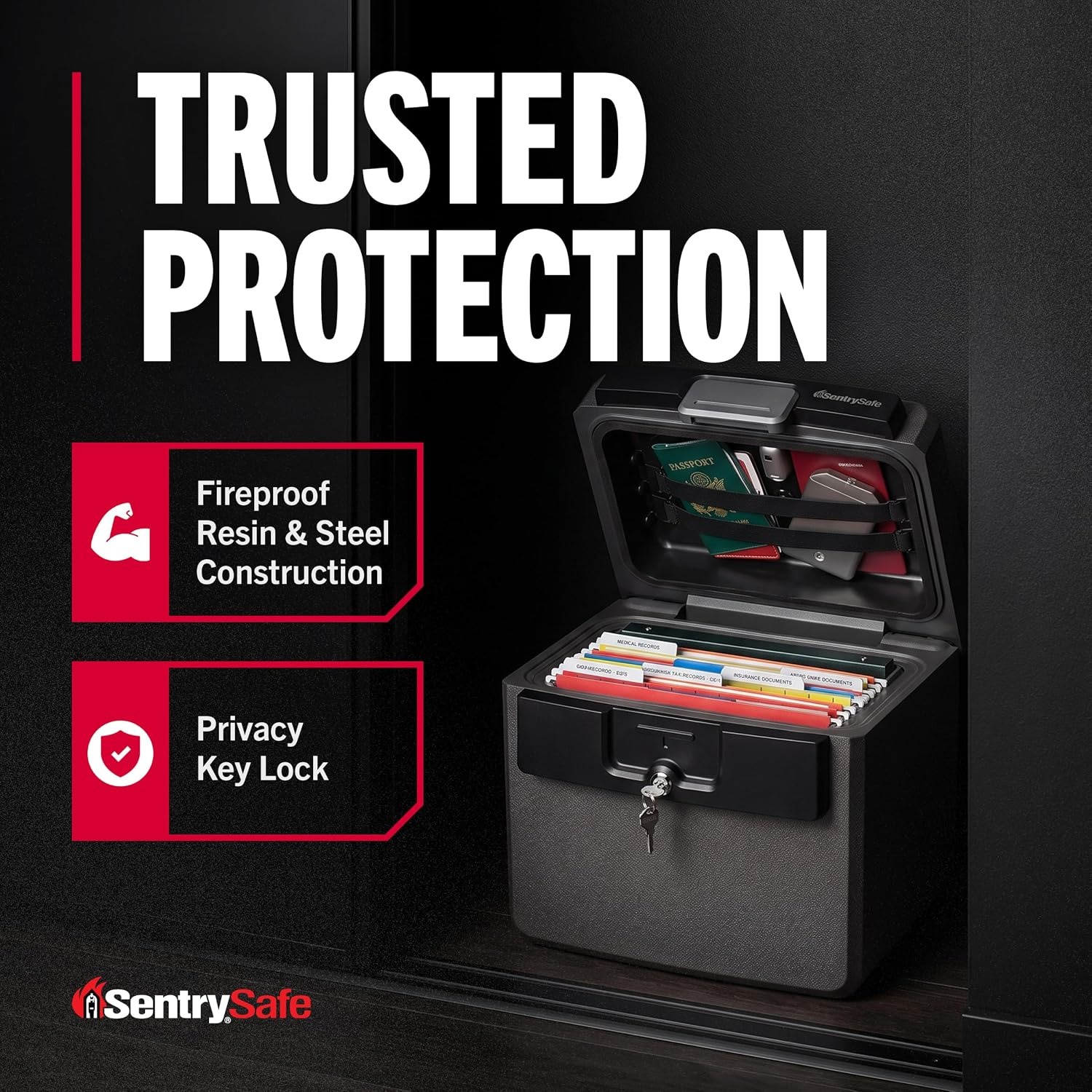
The listed capacity is 0.65 cubic feet. The chamber measures 12 inches wide, 8.1 inches deep and 11.5 inches high. Use those figures to check your intended contents.
Measure folders with their tabs, covers and sleeves included. A bare sheet of paper and a filled folder can need quite different amounts of room. A thick bundle of certificates may also take more space than expected.
Hanging-folder storage is a listed feature, but compatible folder formats are not specified. Do not assume every hanging folder will fit because the safe is designed for filing. If you need a particular paper format, confirm the fit before ordering.
Folder inclusion is also unconfirmed. Check the package details if you expect to set up your filing system as soon as the safe arrives.
Decide how you want to organise smaller items
Loose documents are easy to lose among larger folders. This safe has built-in straps intended to help organise smaller records, including passports and birth certificates.
That makes it worth planning the layout before filling the main chamber. Keep frequently needed items easy to reach, and group related records so that you can find them without emptying the safe.
An important document organiser does not need an elaborate filing system. Clear labels and a few sensible categories may be enough. You might separate identity records from household agreements, then keep less-used paperwork behind them.
Avoid packing the storage area so tightly that papers are hard to remove or the lid is difficult to close. Follow the product instructions whenever you load and secure it.
Know what the key lock does
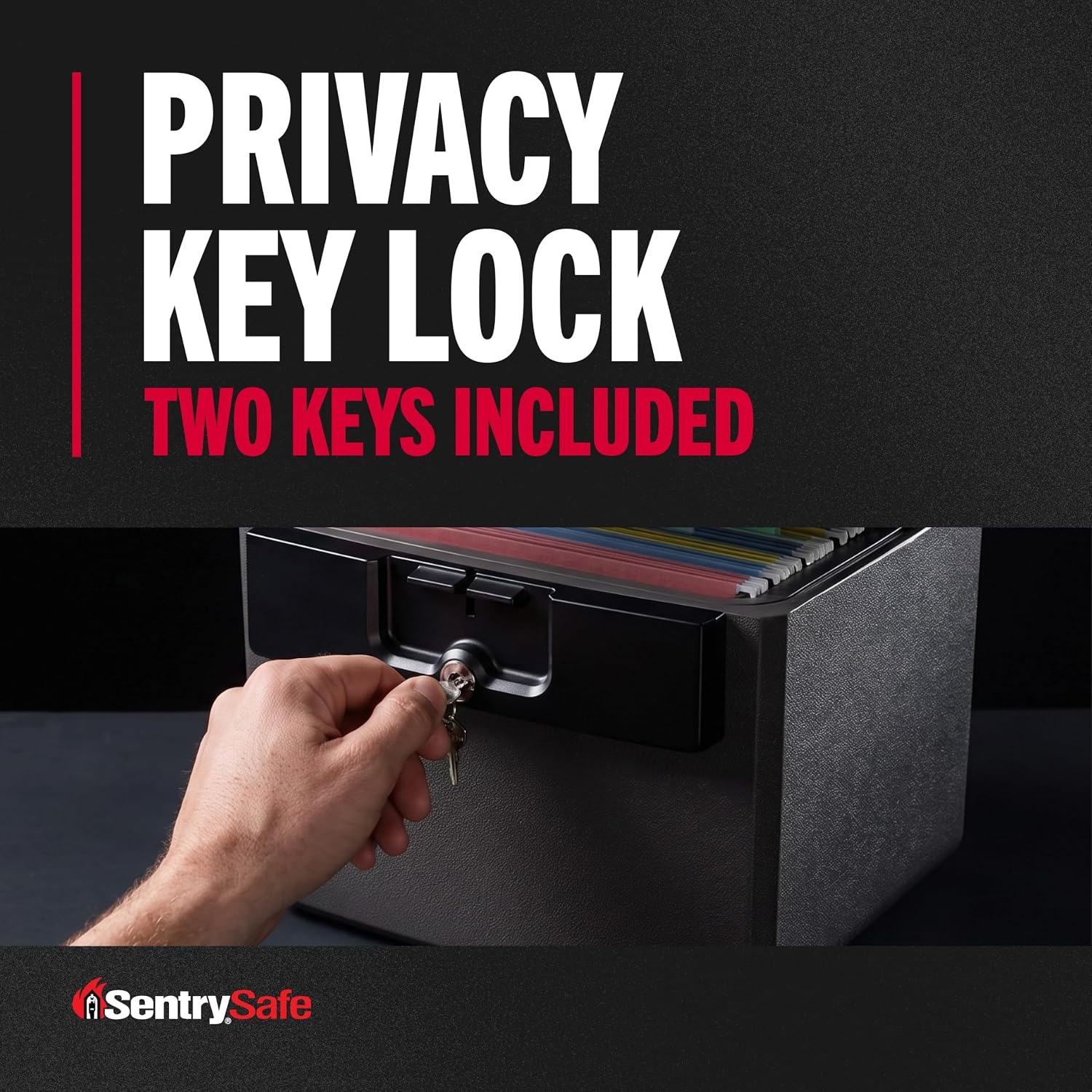
This model uses a key-operated privacy lock and includes two keys. It offers a simple way to control access without an electronic keypad.
Key storage needs a plan of its own. Keep the spare separate from the safe, somewhere secure that an authorised person can access when needed. Leaving both keys beside the box defeats much of the purpose of locking it.
It is equally important not to confuse a privacy lock with a burglary rating. No tested forced-entry classification is supplied in the maker's description.
If theft resistance is your main concern, ask for that information before deciding. Fire and flood document protection and burglary protection are different requirements, even when products share the name “safe”.
Check installation details rather than guessing
The specifications list the mounting type as floor mount. However, the maker does not confirm anchor holes, fixing hardware or a particular installation method.
That distinction matters if you want to secure the safe in place. Do not assume that floor mount means a bolt-down kit is included.
Check the supplied instructions or request the relevant installation details before planning any work. Do not drill into the box based on a general mounting label.
A home office safe should fit both the available space and your intended setup. If anchoring is essential to your purchase, resolve that question before ordering rather than after delivery.
Think about who will use it
This safe may suit a household that wants a central place for original records. It may also suit someone organising a home office who prefers a key lock and hanging-folder layout.
Consider everyone who needs access. Can they reach the storage position comfortably? Do they know where the authorised key is kept? Will the filing system make sense to them?
A passport storage safe is less useful if only one person can find a needed document. Keep a simple inventory somewhere separate, without exposing sensitive personal details.
For gifting, practical fit matters more than surprise. Confirm that the recipient has space for a 17.6 kg file safe and would find this style of storage useful.
Keep care simple and follow the instructions
Read the supplied instructions before first use. They should guide closure, locking and any product-specific care.
For general cleaning, use a soft cloth on the exterior and avoid abrasive cleaners. Keep dirt away from the lock, and do not force a key that does not turn as expected.
When you review your paperwork, check that the safe still closes and locks as instructed. Keep the storage area clear enough for easy access.
After fire or water exposure, seek manufacturer guidance before relying on the safe again. The maker does not explain inspection, repair or replacement procedures after an incident, so appearance alone should not determine whether it remains suitable.
Plan beyond the box
A family document safe is one part of a wider records plan. It is still sensible to keep separate copies of important information where appropriate.
Digital backups can help you retrieve details if originals become unavailable. They do not necessarily replace original documents, so consider what each record is used for.
Before purchase, also check the practical terms. Delivery timing is not specified by the maker. Warranty is mentioned among the included components, but its duration and conditions are not provided.
Read our delivery and returns pages return policy, especially any arrangements for returning a heavy item. Sorting out those details early makes the buying decision clearer.
The short version
Choose this fire and water safe if its file layout, key access and stated protection limits match your needs. Check the chamber against your folders and measure the intended storage space.
Its useful features are specific: 0.65 cubic feet of capacity, hanging-folder storage, built-in straps and two keys. Fire protection is listed for half an hour at 1550°F, while water protection is verified for 72 hours at up to 8 inches deep.
Treat those limits as part of the decision. A well-chosen safe should fit your records, your space and the way you manage important paperwork.